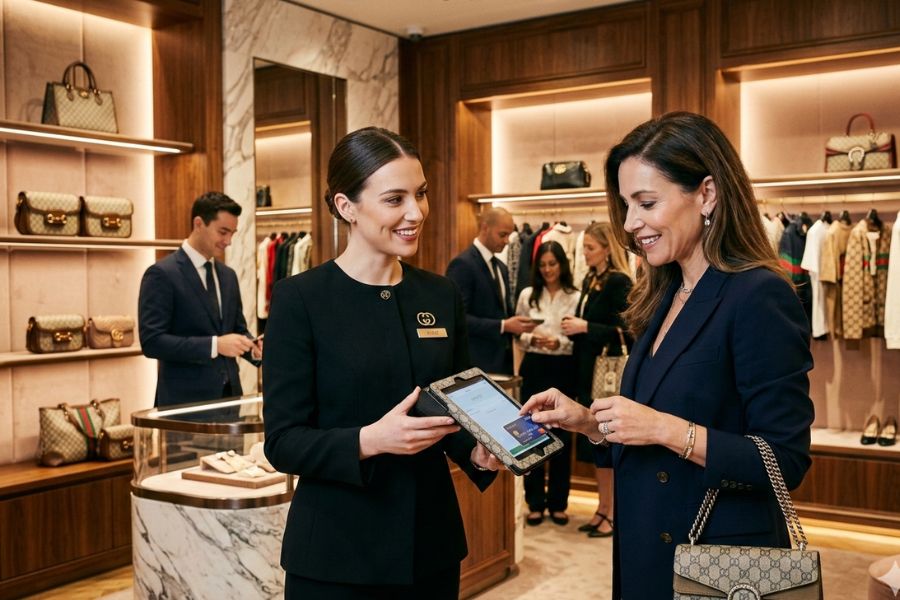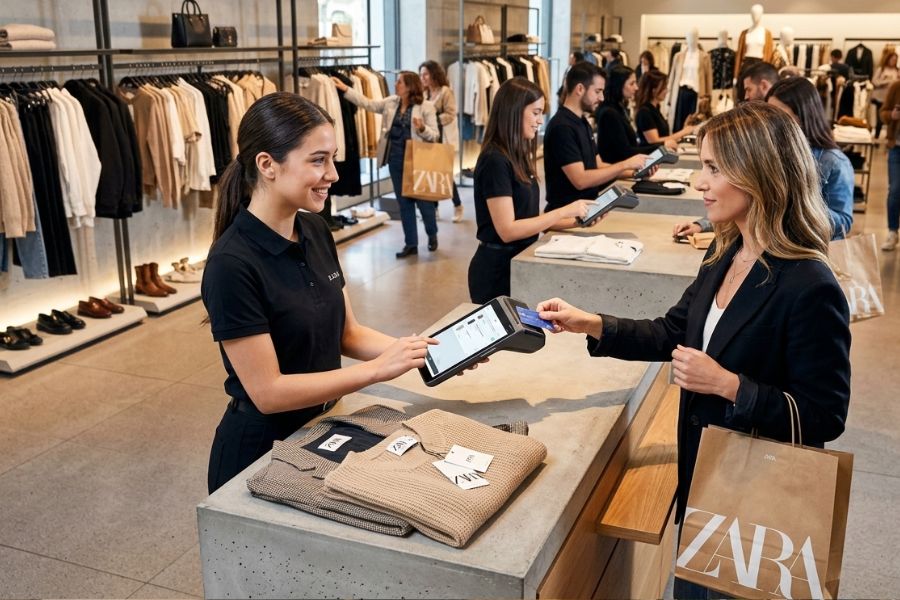
Fast fashion moves at lightning speed, and few brands manage it as precisely as Zara. Behind its ability to deliver the right styles at the right time is a powerful POS system built around real-time data and just-in-time inventory. The Zara POS system does far more than process transactions; it connects store activity directly with design, production, and replenishment decisions. In this article, we’ll explore how Zara uses POS-driven insights to react quickly to customer demand, reduce overstock, and keep collections fresh. It’s a clear example of how real-time retail data can turn speed and flexibility into a competitive advantage.
Highlights
- Zara uses POS systems as a real-time intelligence hub, connecting store-level sales and inventory data directly to design, production, and replenishment decisions to support its fast fashion model.
- The Zara POS-led approach offers clear lessons for other retailers, showing how data-driven demand forecasting, agile inventory control, and scalable POS infrastructure can improve speed, efficiency, and responsiveness across retail operations.
Overview of Zara’s Fast Fashion and Just-in-Time Retail Model
Zara stands out in retail with a fast fashion strategy powered by real-time responsiveness and tight supply-chain control. Today, the brand operates more than 2,000 stores worldwide and generates tens of billions in annual revenue – Zara alone contributed over €26 billion in sales in recent years.
Speed and inventory agility are central to Zara’s success. Unlike traditional retailers, which plan collections months ahead, Zara can take a design from concept to store in as little as 15 days, and stores receive fresh shipments twice a week. The result: higher inventory turnover, frequent product rotation, and a dynamic store experience that keeps customers returning (some studies note customers visit Zara stores around 17 times per year).
This rapid cycle depends on technology and data. Zara’s systems gather real-time sales and inventory data from stores globally, feeding insights directly into design and production decisions. High-precision tracking, such as RFID tagging, helps minimize unsold stock to under 10%, significantly below industry averages, and supports a lean, demand-driven inventory model.
Together, these capabilities enable Zara to master just-in-time retailing in an industry where trends evolve weekly rather than seasonally.
The Role of POS Systems in Zara’s Retail Operations
At Zara, the POS system is a critical data engine that connects store activity with global decision-making. Every transaction provides real-time insights to headquarters, enabling the brand to respond quickly to what customers actually want.
The Zara POS system serves as a real-time data collection point across all stores, capturing detailed information at the moment of sale. This includes product performance, stock movement, and buying patterns, all at the store level and SKU level. The result is a constant, accurate view of demand across regions and markets.
Key POS-driven capabilities include:
- Live sales tracking to identify bestsellers and slow-moving items within days, not weeks
- Real-time inventory visibility to support fast replenishment and limit overstock
- Store-level customer behavior insights, such as size preferences and color popularity
- Automatic data synchronization between stores and central systems, reducing manual reporting
This store-to-HQ data flow allows design, production, and logistics teams to make rapid adjustments. By turning POS data into immediate action, Zara keeps its fast-fashion engine running at speed, with precision and minimal waste.
►►► Optimal solution set for businesses: Multi store POS, Next-gen POS, Inventory Management Software (MSI), Self Service, Automation, Backorders

How Real-Time POS Data Enables Just-in-Time Fashion at Zara
Real-time POS data powers Zara’s just-in-time fashion model. By capturing sales information the moment a product is purchased, Zara can sense demand instantly and adjust decisions across design, production, and distribution without waiting for end-of-season reports.
POS-driven demand sensing allows Zara to spot patterns as they emerge. Fast-selling items are flagged early, while slower styles are identified before excess stock builds up. This continuous feedback loop supports smarter, faster inventory decisions across the entire network.
Key ways real-time POS data supports just-in-time fashion include:
- Immediate demand signals that show which styles, colors, and sizes are gaining traction
- Rapid identification of fast- and slow-moving items, enabling quick replenishment or early phase-out
- Reduced overproduction, as manufacturing volumes are adjusted based on actual sales data
- Fewer markdowns, since inventory is aligned more closely with real demand
- Shorter design-to-shelf cycles, with designers refining or replacing styles based on live store feedback
- Localized assortment decisions, using store-level POS data to tailor stock by region
By turning real-time sales data into actionable insights, Zara minimizes risk while maximizing speed. The Zara POS system helps close the gap between what customers buy today and what appears in stores next, keeping collections fresh, relevant, and tightly aligned with demand.
Read more: How Zara’s Smart Apparel POS System Drives Success in the Fast Fashion Industry 2026
POS-Driven Inventory Management Across Zara’s Store Network
Zara’s fast-fashion model depends on knowing exactly what’s selling, where it’s selling, and how quickly stock needs to move. A POS-driven inventory system plays a central role in connecting store-level sales activity with inventory decisions across the entire network. Instead of relying solely on forecasts, Zara uses real-time sales data to keep inventory lean, responsive, and aligned with local demand.
Key inventory management capabilities include:
- Centralized inventory visibility across locations: POS systems provide a unified view of stock levels across stores, warehouses, and distribution centers, allowing teams to track item availability in near real time.
- Frequent restocking with smaller batch sizes: Sales data from POS terminals helps trigger rapid replenishment cycles, reducing overstock while keeping popular items available.
- Store-level inventory adjustments based on live data: Managers can adjust stock allocations, transfers, or replenishment priorities based on actual sales performance rather than static plans.
- Support for regional demand differences: POS insights reveal local preferences by city or region, enabling assortments to be fine-tuned for climate, trends, and customer behavior.
- Fast stock transfers between locations: Inventory movement between stores is guided by POS sales velocity, helping balance supply across the network.
What US Retailers Can Learn from Zara POS-Led Approach
Zara’s success shows that POS systems can be a strategic asset, not just a checkout tool. While few US retailers operate at Zara’s scale, the principles behind its POS-led model are highly transferable across industries, store sizes, and channels.
At the core is the use of real-time data to replace guesswork with action. Instead of relying solely on historical reports, retailers can use live POS insights to respond more quickly to changing customer behavior and market conditions.
Key takeaways US retailers can apply include:
- Real-time demand forecasting, using live sales data to adjust purchasing and replenishment plans
- Inventory turnover optimization, identifying fast and slow movers early to reduce carrying costs
- Just-in-time principles beyond fashion, such as electronics, beauty, grocery, or seasonal merchandise
- Store-level decision-making, allowing local performance data to influence assortments and stock levels
- Fewer markdowns and stockouts, by aligning inventory more closely with actual demand
- Scalable, data-driven POS infrastructure, capable of supporting growth across locations and channels
The biggest lesson is the importance of a POS system that can scale with the business. A flexible, data-centric POS foundation allows retailers to move faster, operate leaner, and adapt continuously, turning everyday transactions into insights that drive smarter retail decisions.
Read more: Fashion POS Success: Learn from Zara, Nordstrom, and Nike
How Modern POS Systems Like ConnectPOS Support Real-Time Retail
Real-time retail requires more than fast checkout. It depends on a POS platform that can capture sales data instantly, sync it across systems, and turn it into actionable insights for inventory, operations, and customer experience. Modern POS solutions like ConnectPOS are built with this real-time mindset at the core, helping retailers stay responsive as demand changes.
Key capabilities include:
Real-time omnichannel inventory tracking
Stock levels are updated immediately across stores, warehouses, and online channels, reducing overselling and improving order fulfillment accuracy.
API-first, microservices architecture for rapid data flow
A modular system design allows data to move quickly between POS, inventory, payments, and third-party tools without slowing down store operations.
Offline mode POS with seamless data synchronization
Stores can continue selling during internet disruptions, with transactions automatically synced once connectivity is restored.
Scalability for multi-store and high-SKU retail environments
The platform supports large product catalogs, multiple locations, and high transaction volumes without performance issues.
Deep integrations with eCommerce POS and ERP systems
ConnectPOS integrates seamlessly with platforms like Shopify, Magento, and ERP systems, keeping pricing, inventory, and orders in sync.
Centralized control with store-level flexibility
Retailers can manage rules, workflows, and inventory centrally while still adapting operations to each store’s needs.
By combining advanced inventory management with integrated POS CRM, loyalty programs POS, and mobile POS, ConnectPOS improves both inventory performance and the customer experience across every retail touchpoint.
Read more: Inside the Nike POS: Powering the Ultimate Omnichannel Customer Experience
FAQs
How does POS data support just-in-time inventory?
POS data provides immediate visibility into what is selling, where, and in what quantities. By tracking sales and stock levels in real time, retailers can replenish fast-moving items quickly and keep inventory aligned with actual demand. This reduces overproduction, excess stock, and heavy markdowns.
Can small retailers use POS-driven JIT strategies?
Yes. Small and mid-sized retailers can apply just-in-time principles by using POS systems that offer real-time sales tracking and inventory visibility. Even with fewer stores, POS insights help owners reorder smarter, limit overstock, and respond faster to local demand.
Which POS features are essential for fast-fashion brands?
Key features include real-time sales tracking, centralized inventory management, SKU-level reporting, frequent stock updates, and strong integration with inventory and supply chain systems. Support for multi-store operations and rapid data synchronization is also critical for fast-moving assortments.
How real-time does POS data need to be for JIT success?
For effective JIT inventory, POS data should update within minutes, not hours or days. Near-instant data synchronization allows retailers to spot trends early, make timely replenishment decisions, and keep pace with rapidly changing customer demand.
Read more: POS System Inventory Tracking in the US: How to Implement It Effectively?
Summing Up
Zara’s success proves that real-time POS data can be a powerful driver of speed, precision, and profitability. By turning every store transaction into actionable insight, the Zara POS system has mastered just-in-time retailing – reducing waste, responding faster to demand, and keeping assortments constantly relevant. For retailers aiming to compete in today’s data-driven market, the lesson is clear: a modern, scalable POS system is essential. If you’re looking to build a POS foundation that supports real-time inventory, rapid decision-making, and omnichannel growth, ConnectPOS is ready to help. Contact our team to see how the right POS strategy can transform your retail operations.
►►► Optimal solution set for businesses: Shopify POS, Magento POS, BigCommerce POS, WooCommerce POS, NetSuite POS, E-Commerce POS