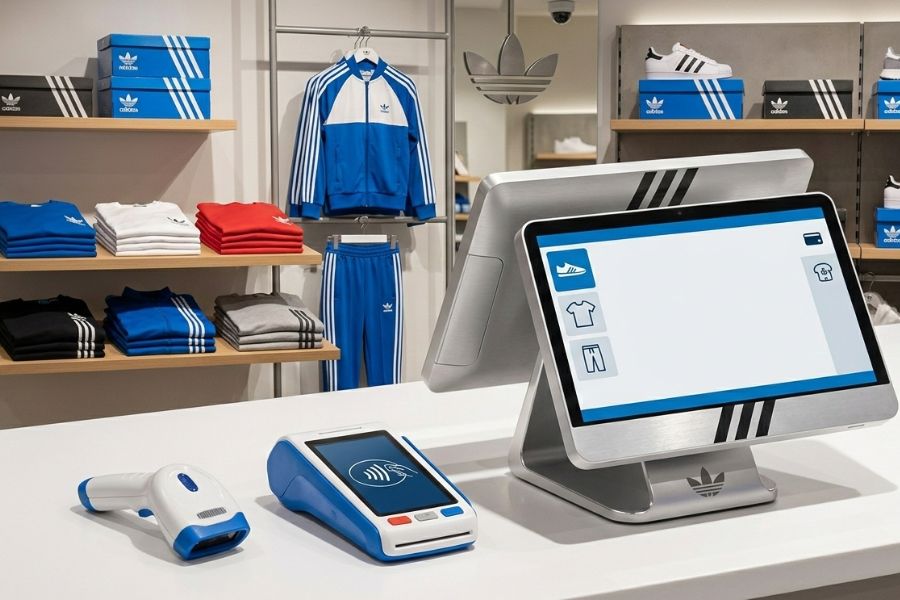
Retail operations demand a Point of Sale (POS) system aligned precisely with business scale. Choosing between a comprehensive retail management platform and a specialized payment tool impacts long-term growth and operational agility. This expert evaluation contrasts ConnectPOS, built for complex, multi-channel commerce, with PayPal Point of Sale (Zettle), focused purely on simple, transactional payment acceptance.
We examine core functionality, scalability, and suitability for retail requirements. This article, from ConnectPOS, advises on making the most informed infrastructure decision.
Highlights:
- ConnectPOS serves as a comprehensive retail management platform for unified commerce, seamlessly integrating physical stores with e-commerce and centralizing inventory.
- PayPal Point of Sale (Zettle) operates as a transaction processing tool for simple, mobile sales with basic tools.
Overview of ConnectPOS vs PayPal Point of Sale
Point of sale systems form the backbone of retail operations, translating customer interactions into structured business data. They manage payments, inventory, and sales insights while connecting physical and digital channels. Understanding the differences between solutions helps retailers select systems aligned with operational complexity, scale, and strategic priorities.
ConnectPOS
ConnectPOS integrates online and offline retail channels into a single operational framework. Orders, inventory, and customer interactions are recorded in real time, allowing retailers to manage multiple storefronts without fragmentation. The system supports complex workflows for order routing, fulfillment, and reporting, providing visibility across all stages of the sales process.
ConnectPOS also enables retailers to track performance metrics, monitor stock movement, and identify operational bottlenecks. Retail teams can focus on decision-making and exception handling while automated processes maintain consistency and accuracy throughout the business.
PayPal Point of Sale
PayPal Point of Sale is designed for merchants who prioritize payment flexibility and quick transactions. It captures sales through card readers, mobile devices, and contactless payments, synchronizing payment data with online accounts. Inventory and sales reporting provide insight into product movement, while customer transaction history is recorded to support loyalty programs and personalized promotions.
The system supports integration with existing PayPal accounts and simplifies financial reconciliation, making it suitable for small to mid-sized retailers. Its straightforward setup and focus on payments allow staff to process transactions efficiently while maintaining reliable records for sales and inventory tracking.
Feature Comparison – ConnectPOS vs PayPal Point of Sale
The right POS system separates thriving retail operations from struggling ones. For decision-makers assessing their next technology investment, a deep comparison of ConnectPOS and PayPal Point of Sale reveals distinct architectural philosophies and functional capacities. This analysis cuts through marketing speak to present a clear, human-written assessment based on decades of experience in retail technology deployment.
Transaction and Payment Processing
ConnectPOS accepts payments through multiple gateways via direct integrations, such as Stripe, Adyen, and Authorize.net. This open approach gives retailers the freedom to choose payment processors and negotiate competitive transaction rates independently of the POS provider. It handles complex tenders, layaways, split payments, refunds, and supports self-checkout, mobile payments, and click-and-collect, all smoothly integrated into the main retail workflow.
PayPal Point of Sale mandates the use of PayPal for all credit/debit card processing. This lock-in simplifies setup but removes processor choice. Transaction rates are transparent and competitive for small businesses, but large merchants may find better overall rates elsewhere. Its core design focuses on speed and acceptance for standard card transactions, making more complex tender types less intuitive.
►►► Optimal solution set for businesses: Multi store POS, Next-gen POS, Inventory Management Software (MSI), Self Service, Automation, Backorders

Inventory and Order Management
ConnectPOS provides deep inventory control. It manages stock across several locations, warehouses, and online channels from a single interface. Key functions include precise stock counts, transfers between stores, cycle counting, detailed product matrix management, and purchase order generation. It excels at fulfilling complex orders: Buy Online, Pick Up In Store (BOPIS) and Ship From Store (SFS).
PayPal Point of Sale provides basic inventory tracking. It registers what stock is sold and provides a current count. The system is adequate for tracking single-location inventory with straightforward products. It generally lacks the functionality for cross-location transfers, multi-warehouse logic, or sophisticated reordering rules demanded by multi-site retailers. Order management typically ends at the point of sale.
Omnichannel and Integration Capabilities
ConnectPOS is built to be the in-store hub of a truly unified commerce strategy. Its native connections with major e-commerce POS platforms mean that online and offline stock, customer data, and sales are synchronized in real-time. It operates as one component in a greater enterprise resource planning (ERP) or e-commerce framework.
PayPal Point of Sale is a self-contained system centered on payments. While data flows into the PayPal business account, its third-party connectivity is limited. It functions well as a stand-alone register but lacks the foundational architecture necessary to govern complex omnichannel scenarios where real-time synchronization between digital and physical channels is mandatory.
Analytics and Reporting
ConnectPOS provides granular, drill-down reporting. Executives receive data on everything from sales per hour and cashier performance to inventory turn rates and specific product category margins. Its strength lies in combining sales data with deeper inventory and customer relationship management (CRM) metrics to provide strategic business intelligence.
PayPal Point of Sale delivers clean, simple sales reports focusing on revenue, taxes collected, and net profit. The data is sufficient for tax purposes and basic performance checks. It lacks the capacity for complex financial modeling, cross-channel sales attribution, or custom report building required by financial controllers and merchandising teams in large organizations.
Compliance, Security, and Support
Both systems adhere to the mandatory Payment Card Industry Data Security Standard (PCI DSS) standards.
ConnectPOS provides robust, 24/7 technical support appropriate for enterprise operations, including dedicated account managers depending on the subscription tier. Data security extends to server-level protocols suitable for storing large customer databases.
PayPal Point of Sale relies heavily on PayPal’s corporate security structure. Support is primarily delivered via chat, email, and knowledge base articles, which is standard for small business tools but insufficient for mission-critical, large-scale retail operations that require immediate, dedicated technical intervention.
Pricing and Scalability
ConnectPOS uses a subscription model priced at US$49–99 per register per month, with higher tiers and Enterprise options for large deployments. This predictable structure suits retailers who need stable, fixed operating costs as they scale. Its architecture supports hundreds of registers and large product databases without performance issues. While upfront software costs are higher, the total cost of ownership is often lower for high-volume or multi-location businesses.
PayPal Point of Sale has no monthly software fee, with hardware starting at US$29 for the first card reader and around US$79–199 for additional devices. It relies on a pay-as-you-go transaction model, typically 2.29% + US$0.09 per in-person payment. This makes it cost-effective for small, single-store retailers, but it scales poorly. The system becomes limiting when handling large product catalogs, complex pricing, or multi-location management, reducing its value as business complexity grows.
POS System Analysis: ConnectPOS vs. PayPal Point of Sale – Pros and Cons
For retailers investing in retail infrastructure, the decision between ConnectPOS and PayPal Point of Sale represents a trade-off between enterprise-grade complexity and payment-focused simplicity. This twenty-year expert assessment dissects the advantages and drawbacks of each system.
ConnectPOS: Enterprise Integration Focus
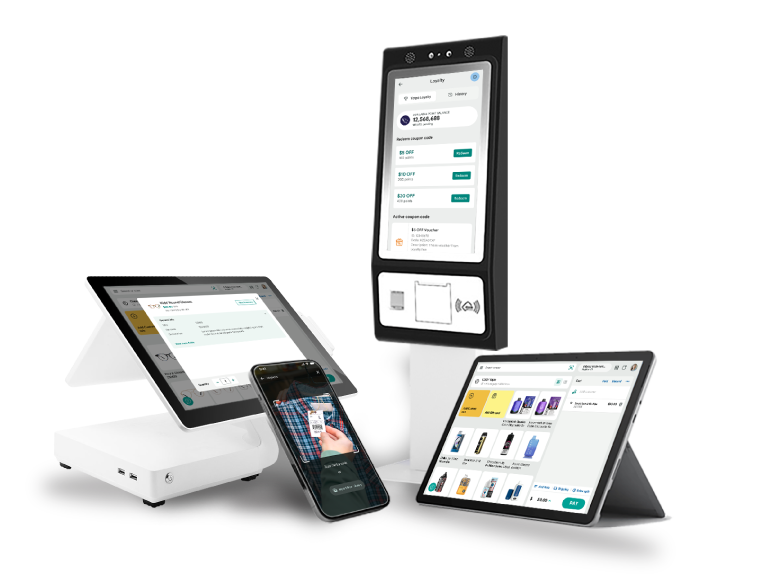
ConnectPOS is built as the retail front-end for sophisticated commerce platforms. Its strengths cater to organizations requiring unification and comprehensive control.
Pros (Advantages for Retail)
- Unified Commerce Backbone: ConnectPOS provides real-time stock and order data sync across physical and digital channels. This capability prevents stock-outs and overselling, a core requirement for true omnichannel retail.
- Deep E-commerce Connection: Its architecture performs deep integration with platforms like Magento, Shopify Plus, and BigCommerce. This allows for unified product catalog management and customer records, avoiding data silos.
- Payment Processor Flexibility: Retailers select their preferred payment gateway (e.g., Adyen, Stripe). This decouples the POS function from payment cost, allowing procurement teams to negotiate the most competitive transaction rates.
- Complex Inventory Governance: The system capably manages multi-location stock, inter-store transfers, and complex product matrixes (size/color/style). This unified inventory management is mandatory for retailers with large SKUs across many outlets.
Cons (Drawbacks for Retail)
- Higher Entry Barrier: The setup and subscription costs are higher than simple payment solutions. Smaller businesses or those just starting may find the initial investment steep.
- Integration Dependency: Its complexity means the platform depends heavily on stable integration with the chosen e-commerce or ERP system. Any failure in the middleware affects the entire operation.
- Steeper Learning Curve: The software’s depth necessitates more thorough staff training on sophisticated functions like order fulfillment, complex returns, and inventory counts.
PayPal Point of Sale (Zettle): Payment and Simplicity Focus
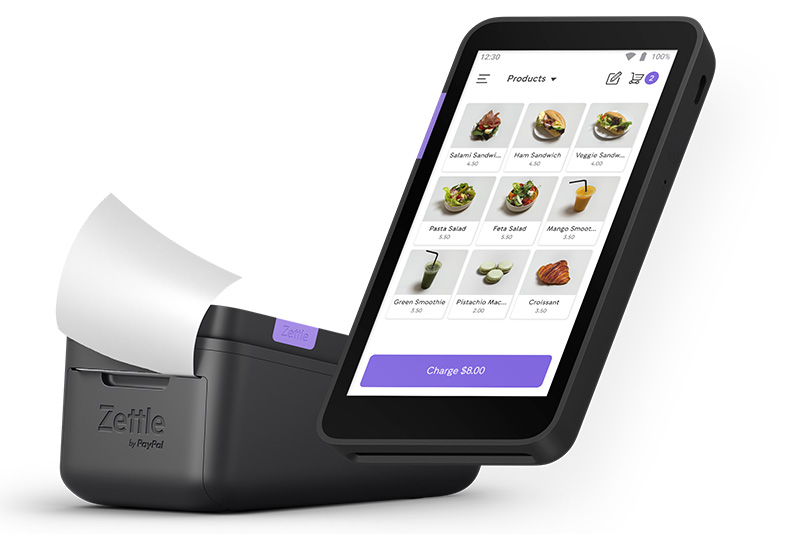
PayPal’s POS solution prioritizes ease of use and quick payment acceptance, appealing mainly to micro-merchants and casual sellers.
Pros (Advantages for Small-Scale Retail)
- Simple Onboarding and Setup: Retailers can get hardware and start taking payments quickly, often within minutes. The system requires minimal configuration.
- Transparent Transaction Pricing: The pay-as-you-go fee structure is clear and easily understood. There are typically no long-term contracts or mandatory monthly service fees for basic use.
- Low Cost of Acquisition: The hardware (card readers) is inexpensive, making it accessible for pop-ups, market stalls, and very small businesses with tight capital.
- Integrated with PayPal: Funds settle directly into the retailer’s existing PayPal business account, simplifying small-scale accounting.
Cons (Drawbacks for Retail)
- Payment Processor Lock-in: The system mandates the use of PayPal for processing. This eliminates the option to shop for better rates from specialized merchant services providers.
- Limited Retail Functionality: It provides basic sales and inventory tracking. It lacks crucial features like cross-location inventory visibility, complex promotions, and sophisticated customer data segmentation.
- Poor Scalability: The platform fails to support the needs of growing organizations that acquire more stores, manage thousands of Stock Keeping Units (SKUS), or require integration into enterprise accounting software.
- Sub-Enterprise Support: Support structures are typical of consumer/small-business products (chat, email). This level of service is inadequate for retail operations that cannot afford register downtime.
Comparison Summary – ConnectPOS vs PayPal Point of Sale
This summary table distills the core differences between ConnectPOS and PayPal Point of Sale (Zettle), guiding decision-makers toward the appropriate retail infrastructure investment based on operational scale and complexity.
| Criteria | ConnectPOS | PayPal Point of Sale (Zettle) |
| Primary Target Market | Mid-to-Large Retail; Multi-Store | Micro-Merchants; Pop-up Shops; Small Sellers |
| Core Function | Unified Commerce Front-End | Payment Acceptance Tool |
| Pricing Model | Tiered Subscription (Fixed Cost/Mo) | Transactional Fee (Pay-As-You-Go) |
| Payment Gateway Choice | Open (Supports various processors) | Locked-in to PayPal Processing |
| Inventory Management Depth | Deep (Multi-location, Transfers, POs, Matrix) | Basic (Single-location count tracking) |
| Omnichannel Capability | Native Real-time Sync (BOPIS/SFS) | Non-existent; Operates Standalone |
| Integration Capacity | High (Deep API links to ERP/E-commerce) | Low (Simple links to PayPal account) |
| Reporting Detail | Strategic Business Intelligence (Drill-down analytics) | Basic Financial Reports (Sales, Tax, Profit) |
| Hardware Requirement | Commercial-grade POS Registers/Tablets | Card Reader and Mobile Device/Tablet |
| Technical Support | 24/7 Dedicated Support Structure | Standard Small Business Support (Email/Chat) |
FAQs
Beyond price, what is the single biggest architectural difference buyers should consider?
The core difference is purpose. ConnectPOS is built to manage inventory and complex order flow as the central hub of an omnichannel POS retail ecosystem. PayPal Point of Sale is built to simplify and secure payment acceptance as an extension of the PayPal financial service platform. Choose the system that solves your most pressing operational problem: retail complexity or payment simplicity.
How do the two systems handle Customer Relationship Management (CRM) and loyalty programs?
ConnectPOS features integrated CRM, managing tiered loyalty, points, and cross-channel customer history. PayPal Point of Sale provides a simple Customer List for basic history and utilizes discount vouchers (coupons) for basic loyalty rewards.
Which system is better suited for managing a franchise or multi-brand environment?
ConnectPOS is designed for this. It provides centralized governance, unified reporting, and store-specific configurations across multiple locations/brands. PayPal POS is not suited for complex multi-store management; it lacks centralized inventory control and reporting across separate entities.
Conclusion
The selection between these two systems crystallizes a business’s operational reality. Organizations handling large product catalogs, operating across stores and online, and requiring unified data must adopt the retail management capacity of ConnectPOS. For simple vendors or pop-up operations where low upfront cost and immediate payment processing are the only concerns, PayPal Point of Sale provides a solution. Infrastructure choices determine future operational limits.
To discover how ConnectPOS can be architected specifically for your organization’s unique multi-channel requirements and to secure a consultation on unifying your commerce data, contact ConnectPOS today.
►►► Optimal solution set for businesses: Shopify POS, Magento POS, BigCommerce POS, WooCommerce POS, NetSuite POS, E-Commerce POS