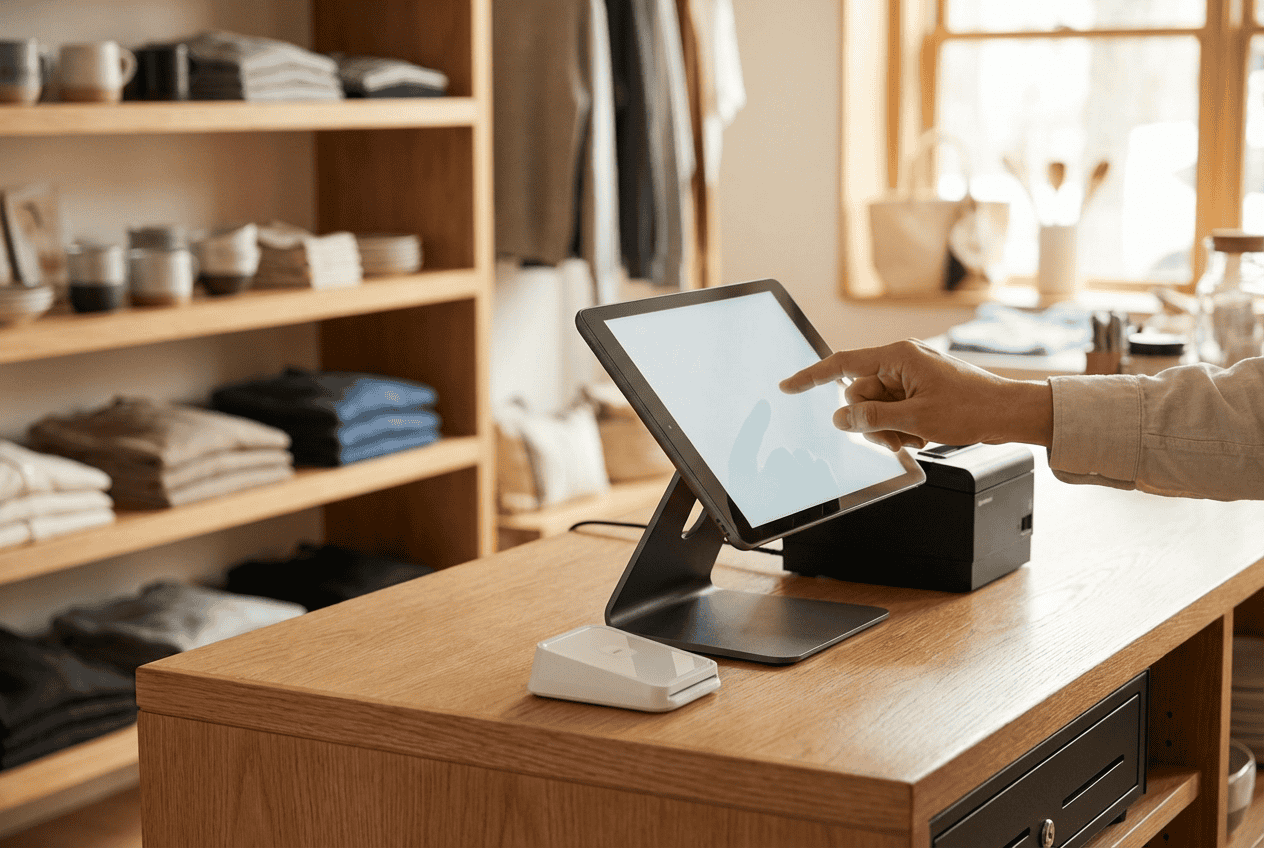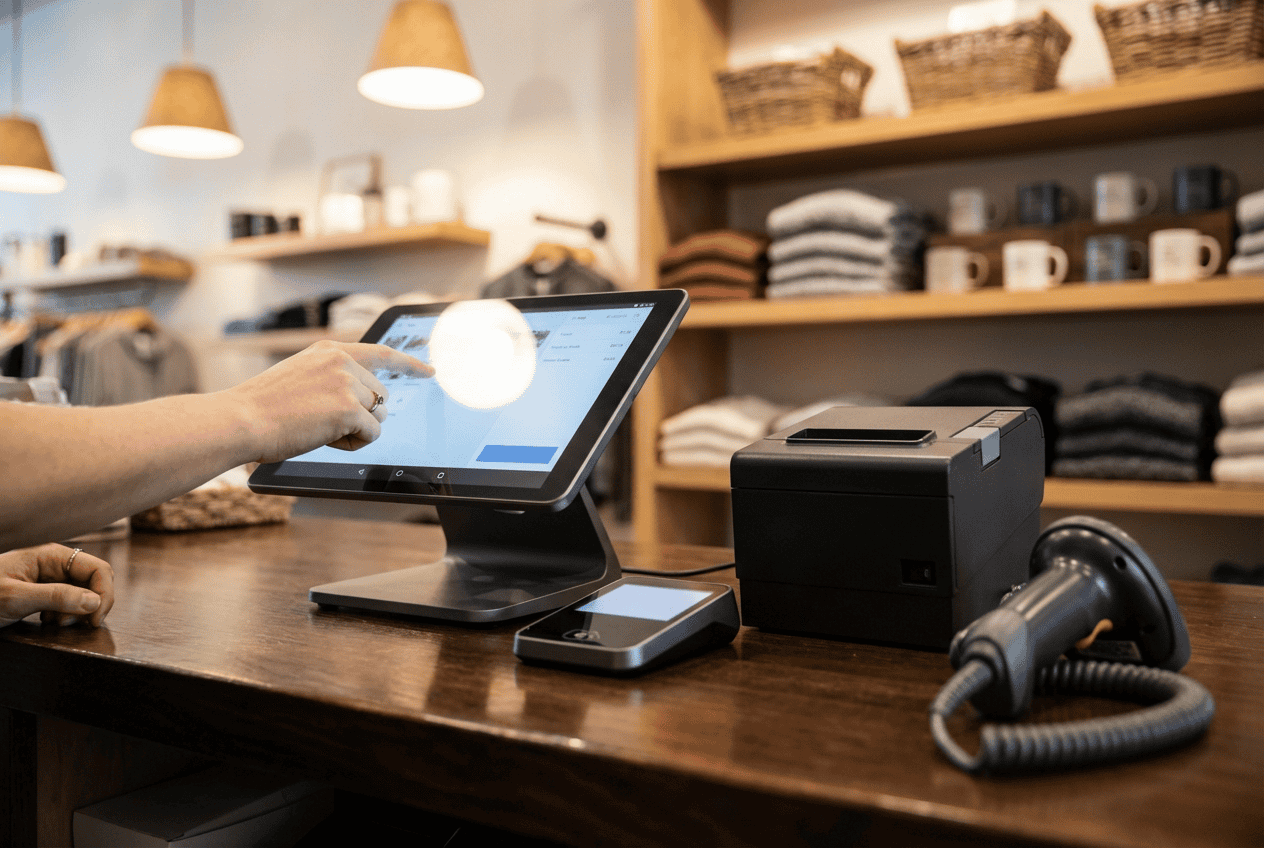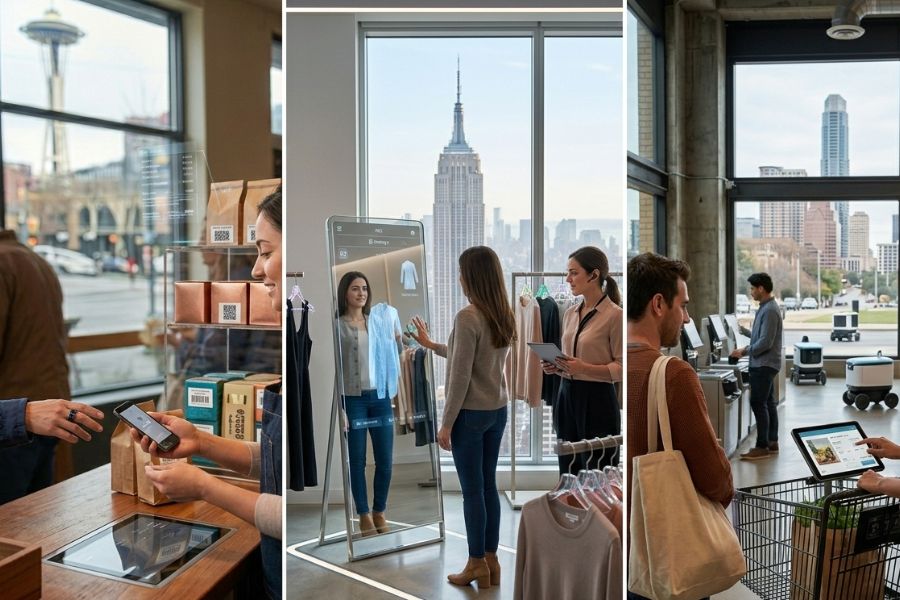
As 2026 unfolds, business POS systems in US have evolved from basic transaction tools into the central nervous system of modern retail. Retailers now face rising demands for personalized experiences, disconnected omnichannel data, and stronger security requirements. This shift is driving a move away from legacy hardware toward unified commerce platforms that connect every sales touchpoint in real time. For both small businesses and large enterprises, success is no longer about simply completing sales but about delivering seamless, data-driven customer journeys.
This article from ConnectPOS experts will help you transform your brand with agile, future-ready digital ecosystems.
Highlight:
- Modern POS systems have become “unified commerce engines,” integrating inventory, CRM, and AI-driven analytics into a single source of truth.
- By 2026, the focus has shifted toward seamless synchronization between digital and physical storefronts, guaranteeing that customer experiences remain consistent and frictionless across all sales channels.
What Defines a Modern Business POS System in 2026
Modern POS systems now function as unified commerce engines that connect sales, inventory, customer data, and analytics across every touchpoint.
By 2026, leading business POS systems in US will share several defining characteristics:
- Cloud-native infrastructure for real-time synchronization
- AI-powered automation and personalization
- Omnichannel inventory and order management
- Deep integrations with eCommerce POS platforms, CRMs, and accounting tools
- Enterprise-level security and compliance
- Flexible payment ecosystems
Retailers now expect POS solutions to improve efficiency, drive revenue growth, and deliver seamless customer journeys, both in-store and online.
Top 10 Trends of Business POS Systems in US 2026
The retail sector in 2026 is defined by a rapid convergence of physical and digital worlds, where business POS systems in US act as the essential bridge for customer-centric growth.
1. Seamless Omnichannel Commerce & Continuous Operations
In 2026, omnichannel is the baseline. US retailers have moved past “basic” sync to “Unified Commerce,” where the POS, website, and social commerce platforms share a single brain. A standout shift is the rise of revenue directly tied to these integrations.
According to recent industry data, retailers utilizing unified commerce platforms see an average revenue increase of 9.5% because they never miss a sale due to inventory silos. Whether a customer buys online and picks up in-store (BOPIS) or orders in-store for home delivery, the system handles the logistics in real-time. Continuous operations are also standard; modern systems feature “always-on” local syncing, guaranteeing that transactions process even during a temporary ISP outage, then auto-update the cloud once the connection is restored.
2. AI-Driven Personalized Experiences
AI has migrated from a back-office tool to a front-line sales assistant. In 2026, business POS systems in US use “Agentic AI” to recognize a customer upon entry (via app check-in or loyalty biometrics) and immediately present the sales associate with a “Next Best Action.”
For example, if a customer previously browsed a specific brand of eco-friendly running shoes online, the POS will alert the associate to mention that the specific model is currently in stock in their size. This hyper-personalization transforms the store from a warehouse of goods into a curated gallery, driving higher conversion rates and deeper brand affinity.
►►► Optimal solution set for businesses: Multi store POS, Next-gen POS, Inventory Management Software (MSI), Self Service, Automation, Backorders

3. Advanced Data Intelligence & Actionable Insights
Legacy systems provided reports; 2026 systems provide answers. Using machine learning, business POS systems in US now offer predictive demand planning. These systems analyze local variables, ranging from upcoming neighborhood events to weather forecasts to suggest stock adjustments. This is no longer a luxury for big box stores; SMEs are adopting these tools to keep inventory lean.
Research indicates that AI-led demand planning can improve forecast accuracy by 20% to 50%, a massive win for margin-strapped grocery and apparel retailers seeking to eliminate both stockouts and wasteful overstock.
Read more: 10 Best Mobile POS Systems for US Businesses in 2026
4. Enterprise-Grade Security & Regulatory Compliance
With the full enforcement of PCI DSS 4.0, security is at the heart of every transaction. Modern POS hardware in the US now features native end-to-end encryption (E2EE) and tokenization, ensuring that sensitive cardholder data never actually “touches” the merchant’s network. Beyond payment security, 2026 marks the rise of biometric staff authentication.
Managers use FaceID or fingerprint scans to authorize high-value returns or discounts, creating a digital audit trail that virtually eliminates internal “sweethearting” and shrinkage.
5. Versatile and Adaptive Payment Options
In 2026, the American consumer expects total payment freedom. Business POS systems in US are no longer just “card readers”; they are multi-asset terminals.
- The Rise of Digital Wallets: Digital wallets now account for over 50% of in-store payments.
- Stablecoins & Crypto: With 2025’s regulatory clarity, many US retailers now accept stablecoins (pegged to the USD) for near-instant settlement.
- Direct Bank Transfers: “Pay-by-Bank” via QR code is gaining traction as a lower-fee alternative to traditional credit cards.
6. Cloud-Based Architecture with Mobile Flexibility
The death of the “fixed till” is nearly complete. In 2026, mobile POS (mPOS) is the preferred setup for the majority of modern merchants, with nearly 65% of new POS installations among small and medium retailers being smartphone or tablet-enabled solutions.
When moving to a cloud-native architecture, retailers can manage an entire fleet of stores from a single dashboard in Chicago while the stores themselves are in Florida, California, and Texas. Updates are pushed automatically, ensuring every terminal is always running the most secure and feature-rich version of the software.
7. Voice-Enabled Retail Technology
Voice commerce has found its home in store operations. Store associates now use “Push-to-Talk” AI integrations within their POS to perform hands-free tasks. A worker can say, “Hey POS, check the backroom for a size medium in navy,” and receive an instant audio confirmation.
This technology allows associates to maintain eye contact and conversation with the customer, drastically improving the quality of service while increasing operational speed.
Read more: Small Business POS System in the US – What to Consider Before Purchasing?
8. Recurring Revenue and Subscription-Based Models
The “Subscription Economy” has hit the physical storefront. Many business POS systems in US now feature native subscription management. Whether it’s a “Coffee Club” at a local cafe or a “VIP Styling Membership” at a boutique, the POS handles the monthly billing, keeps track of member perks, and alerts the staff when a “Gold Member” walks in. This creates a predictable, recurring revenue stream that helps retailers weather economic fluctuations.
9. Experience-Led and Immersive Retail Strategies
Stores are becoming “Experience Hubs.” POS systems are now integrating with Augmented Reality (AR) tools. Imagine a furniture store where the POS tablet can project a digital 3D model of a sofa into a customer’s living room via their phone, then complete the sale right there.
These systems also support “Phygital” returns, allowing customers to return online purchases in-store for immediate credit or exchange, which data shows leads to an additional purchase 45% of the time.
10. Sustainability and Responsible Retail
Eco-transparency is a major competitive advantage in 2026. Leading business POS systems in US now calculate the “Carbon Score” of a basket and offer it on digital receipts. The shift toward paperless transactions is nearly universal, with over 65% of US consumers preferring SMS or email receipts.
Furthermore, POS systems now help manage the “Circular Economy” by facilitating trade-in programs, where customers bring back old goods for store credit, which the system then tracks for refurbishment or ethical recycling.
Read more: Explore The 5 Best POS Systems for Small Business in The US 2026
ConnectPOS: A Future-Ready POS Platform Powering Unified Commerce in the US
As a premier provider of business POS systems in US, ConnectPOS is designed for the retailer who refuses to be left behind. Our platform is built on a cloud-native foundation, confirming that your data is always accessible, secure, and synchronized in real-time. But in 2026, being “in the cloud” is just the beginning.
To stay competitive in the US market, ConnectPOS provides a suite of high-performance features that turn your checkout into a strategic advantage:
- Native Omnichannel Integration: We offer real-time synchronization with leading platforms like Shopify, BigCommerce, Magento, and WooCommerce. This means when a customer in Seattle buys the last pair of sneakers online, your physical store in Miami sees that stock update instantly.
- Scalable for Growth: Whether you are a growing boutique or a multi-store enterprise, ConnectPOS scales with you, supporting complex inventory needs across dozens of locations.
- Integration-Friendly: Our system plays well with the latest retail tools and third-party apps, allowing you to build a tech stack that is as unique as your brand.
- Robust Offline Mode: Internet outages shouldn’t stop your business. ConnectPOS features a sophisticated offline mode that allows you to process sales, accept payments, and print receipts without a connection.
- Multi-Source Inventory (MSI) Management: Manage complex inventory across multiple warehouses and store outlets from a single dashboard. Our MSI feature allows you to fulfill orders from the most efficient location, reducing shipping costs and improving delivery speeds for your US customers.
FAQs: Business POS Systems in US
- What payment methods will POS systems support in 2026?
By 2026, expect a total convergence of payment types. Beyond traditional cards, systems will support biometric “pay-by-palm,” various “Buy Now, Pay Later” (BNPL) providers, QR-based digital wallets, and even stablecoin/cryptocurrency transactions for tech-forward retailers.
- Will cloud-based POS systems completely replace on-premise systems?
Yes. The flexibility, lower upfront costs, and automatic updates of cloud-native business POS systems in US make them the superior choice
- How will POS systems improve customer experience?
They empower staff with “Clienteling” tools, accessing a customer’s online wish list, previous sizes, and style preferences, to provide a bespoke shopping experience that feels more like a concierge service than a transaction.
Conclusion
By 2026, business POS systems in US have transitioned from basic tools to core growth strategies. Driven by AI, cloud-native unified commerce, and high-level security, these systems are now essential for data-driven, experience-led retail. Choosing a scalable, omnichannel-ready solution like ConnectPOS ensures you lead these trends rather than just following them. Modernize your operations and secure long-term success today.
Ready to transform your business? Contact us for a personalized demo of our unified commerce solutions.
►►► Optimal solution set for businesses: Shopify POS, Magento POS, BigCommerce POS, WooCommerce POS, NetSuite POS, E-Commerce POS