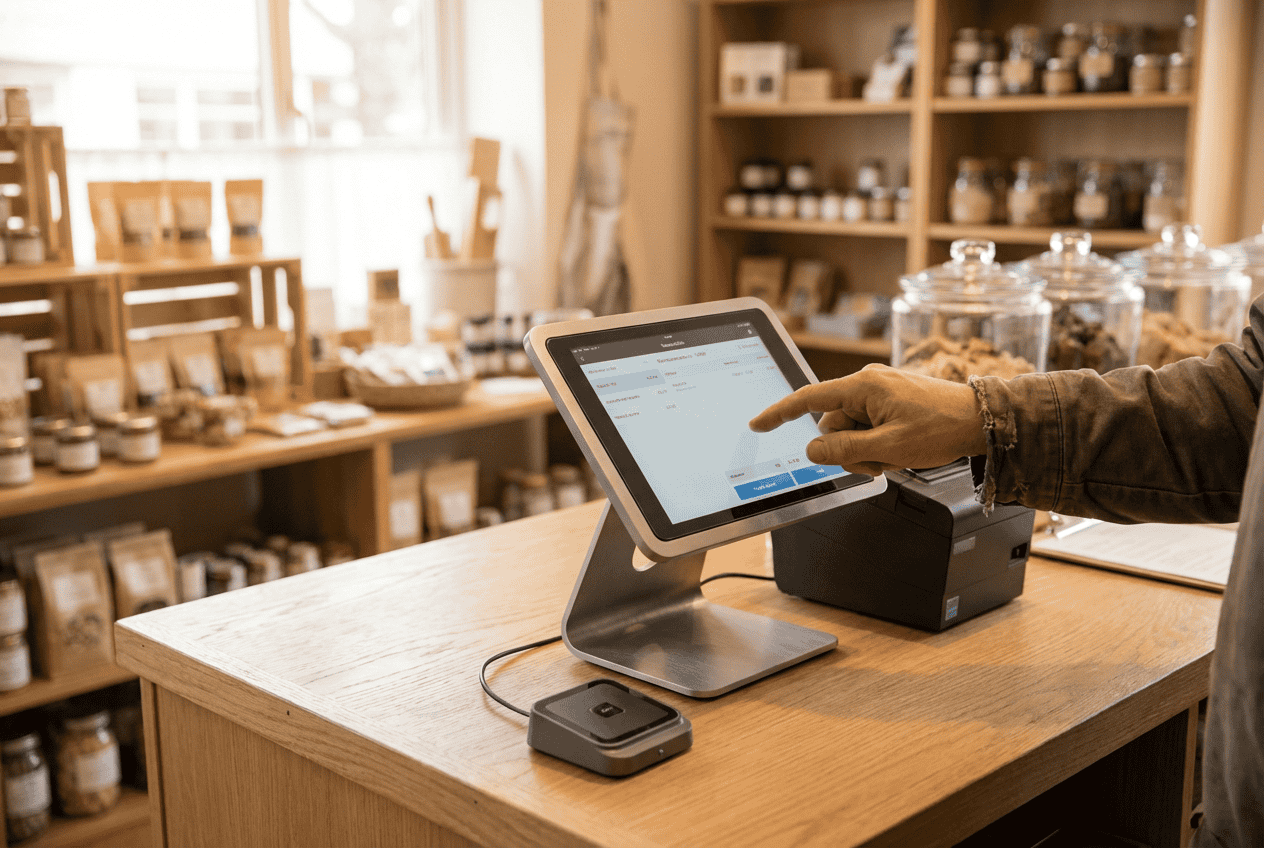
In the American retail and service landscape of 2026, the “cash register” has officially become a relic of the past. Today, a good POS system for small business in US is no longer just a place to process payments; it is the central nervous system of an entire operation.
The right system bridges the gap between your physical counter and your digital storefront, turning raw data into actionable growth strategies. In this blog from ConnectPOS, we will explore the top 3 good POS systems for small businesses in the US and their features so that your business can easily select.
Highlight:
- A good POS system should seamlessly sync in-store and online sales to provide a modern, frictionless customer experience across all retail platforms.
- Small businesses can automate inventory, reporting, and payments through their POS, significantly cutting human error and saving hours of administrative labor each week.
Understanding the Role of a POS System in Small Businesses
At its core, a POS system is the combination of hardware and software used to centralize business operations. However, the requirements for a good POS system for small business in the US are much more intimate than those of a corporate giant.
While enterprise-level systems focus on massive data aggregation and complex global supply chains, a small business POS focuses on agility, multi-tasking, and cost-efficiency. This shift toward digital modernization is already widespread; in fact, 83% of US restaurants have migrated to cloud-based POS solutions in 2025 to better handle high-volume operations and remote management
It serves as:
- The Sales Hub: Beyond just swiping cards, it processes mobile wallets (Apple Pay/Google Pay), handles split payments, and manages gift cards effortlessly. This versatility is imperative, as 42% of US small businesses now accept tap-to-pay and contactless payments to meet the growing consumer demand for speed and convenience
- The Inventory Warden: It provides a real-time heartbeat of your stock levels, automatically deducting items across all sales channels to prevent the nightmare of overselling.
- The CRM Database: It acts as a digital memory, recognizing returning customers, tracking their preferences, and applying loyalty rewards instantly without requiring a physical card.
- The Back-Office Assistant: It generates tax-ready financial reports, tracks employee clock-in/clock-out times, and calculates commissions, saving owners hours of manual administrative labor every week.
Read more: Small Business POS System in the US – What to Consider Before Purchasing?
Core Features of a Good POS System for Small Business in US
What separates a mediocre system from a truly “good” one? In the current market, these six features are non-negotiable for success
Integrated Payment Processing
Speed and security are the twin pillars of American commerce. A good POS system for small business in US features built-in payment processing that supports EMV (chip), NFC (contactless), and traditional swipe.
Integrated processing cuts human error and ensures PCI compliance, protecting you from expensive data breach liabilities.
Real-Time Inventory Management
With supply chains remaining unpredictable, knowing exactly what is on your shelf is vital. A top-tier POS offers Multi-Source Inventory (MSI).
Real-time tracking helps you avoid stockouts, improves purchasing decisions, and supports multi-location control. If a customer buys an item in-store, your website should reflect that change instantly
Omnichannel Integration
The modern US consumer shops everywhere, Instagram, your website, and your physical store.
Synchronizing sales across physical and digital channels is a hallmark of a good POS system for small business in US. It allows for modern workflows like BOPIS (Buy Online, Pick Up In-Store), which has become a standard consumer expectation.
Cloud-Based Accessibility
Legacy systems that store data on a local hard drive are a major risk. Modern systems are cloud-native.
Cloud-based POS systems offer remote access, automatic updates, and minimized hardware costs. You can check your sales figures from your phone or manage multiple locations from a single dashboard.
Offline Mode
A reliable offline mode guarantees uninterrupted business operations even when connectivity is lost. It allows you to continue scanning items and taking encrypted credit card “promises” that process the moment the connection returns.
Read more: Top 5 Offline Mode in a POS System in 2026
Integration with Third-Party Business Tools
Seamless integrations with QuickBooks or Xero for accounting, Mailchimp for email marketing, and e-commerce platforms like ConnectPOS or BigCommerce boost overall efficiency. Instead of exporting CSV files and manually importing them into other software, a good POS system for small business in US automates the data flow, reducing human error and freeing up your time for creative growth.
Defining a Good POS System for Your Small Business
Beyond the technical checklist, the true value of a POS is defined by its “fit” within the daily grind of an American small business. The core attributes that make a system genuinely valuable include:
- Affordability & Transparency: Small businesses operate on tight margins. A good system avoids “gotcha” fees, such as hidden gateway charges, statement fees, or long-term restrictive contracts.
- Ease of Use (The 15-Minute Rule): In a high-turnover labor market, you cannot afford a system that takes weeks to learn. You should be able to train a new seasonal hire to ring up a sale and process a return in 15 minutes or less.
- Scalability: You might start with one iPad at a farmers’ market, but a good system should be able to grow with you into a five-aisle retail store or a multi-state franchise without requiring you to switch platforms.
- Security and Trust: With the rise of identity theft, a POS must offer end-to-end encryption and meet the highest levels of data protection to maintain customer trust.
Top 3 Good POS Systems for Small Business in US
To find a truly good POS system for small business in US, you must look beyond flashy marketing and evaluate how the software handles the specific rigors of American retail, such as high-speed holiday sales, complex state-by-state tax calculations, and the need for 24/7 reliability.
The following three systems represent the gold standard for 2026, each catering to a different type of business growth model, from digital-first boutiques to high-volume omnichannel retailers.
1. ConnectPOS: The Omnichannel Powerhouse
ConnectPOS is widely recognized as a good POS system for small business in US, specifically for retailers who need high flexibility and a “headless” approach. It is designed to bridge the gap between complex e-commerce platforms (like Magento, Shopify, or BigCommerce) and physical brick-and-mortar stores flawlessly, ensuring that your data remains consistent across every touchpoint.
Key Features:
- Real-Time Synchronization: Keeps inventory, order, and customer data aligned across all locations and channels.
- Headless Commerce Compatibility: Supports flexible frontend changes while keeping the backend POS stable, ideal for brands with custom storefronts.
- Advanced Inventory Tools: Covers multi-warehouse tracking, stock transfers, low-stock alerts, and automated backorder handling.
- Flexible Mobile Checkout: Enables staff to process transactions from tablets or smartphones using ConnectPOS’s Consumer App—no heavy app installation or proprietary hardware required.
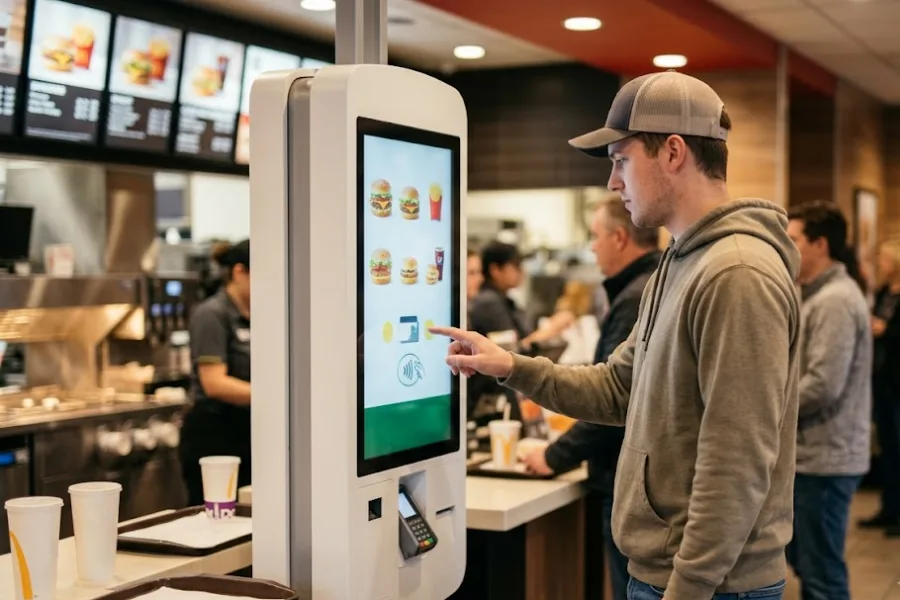
- Self-Checkout & Kiosk Mode: Lets customers scan and pay using their own devices, offering a quick and independent checkout experience.
- US-Specific Compliance: Supports automated sales tax calculations by state and connects with major US payment processors like Stripe, PayPal, and Authorize.net, built to meet PCI DSS standards.
It excels in providing a “big-box” feature set to small-to-medium businesses. Its ability to work across various hardware (PC, Mac, iPad, Android) makes it one of the most adaptable systems on the market. It’s the perfect choice for the merchant who wants the power of an enterprise system with the user-interface of a modern app.
2. Shopify POS: The Digital Native
If your business was born online, Shopify POS is the most logical extension of your brand. It uses a “single source of truth” model, meaning your online customers and in-store customers exist in the same database, allowing for a deeply personalized shopping experience.
Key Features:
- Unified Customer Profiles: Tracks customer behavior across your website and physical counter in one place.
- Smart Inventory Sorting: Automatically categorizes products and suggests stock levels based on sales velocity.
- Integrated Marketing Tools: Easily launch email campaigns or discount codes that work both on your site and at your register.
- Seamless Hardware Integration: Offers proprietary, sleek card readers and docks that are “plug-and-play.”
- Local Pickup & Delivery: Built-in tools to manage “Buy Online, Pick Up In-Store” (BOPIS) orders directly from the POS interface.
It focuses on centralized product management. If you change the price of a t-shirt in your Shopify dashboard, it updates on your website and your retail terminal simultaneously.
3. Square POS: The Small Business Standard
Square changed the game by making credit card processing accessible to everyone, from weekend hobbyists to established storefronts. Today, it has evolved into a massive ecosystem that handles everything from appointments and table management to full-scale payroll.
Key Features:
- Zero Monthly Base Fees: A “pay-as-you-go” model that is ideal for businesses with fluctuating seasonal volume.
- Offline Mode: One of the most robust offline processing features in the industry, allowing you to take payments during internet outages.
- Virtual Terminal: Enables you to take payments over the phone via your computer without needing a separate card reader.
- Specialized Vertical Software: Dedicated interfaces specifically designed for restaurants, retail, and appointment-based services.
- Instant Transfers: Access your sales funds within minutes rather than days (for a small additional fee).
Square is arguably the most accessible good POS system for small business in US due to its “no monthly fee” starter tier. It’s the go-to for startups that need to get up and running in minutes with minimal upfront hardware costs.
Read more: Detailed Square POS Review: Features, Pros & Cons, Pricing Plans
FAQs: Good Pos System For Small Business In Us
Is a cloud-based POS system better for small businesses in the US?
Yes. Cloud-based systems eliminate the need for expensive on-site servers, offer remote management, and ensure your data is backed up automatically.
How does a POS system improve inventory management?
By providing real-time tracking across all sales channels. This prevents “overselling” and helps you make data-driven purchasing decisions based on actual sales trends.
How secure are POS systems for handling customer payments?
Modern US POS systems use end-to-end encryption and “tokenization,” ensuring that sensitive customer data is never stored locally on your device.
Conclusion
Choosing a good POS system for small business in US is one of the most important investments you will make. It is not just about “ringing up sales”, it is about gaining the visibility and control you need to thrive. Whether you prioritize the ease of Square, the web integration of Shopify, or the advanced omnichannel power of ConnectPOS, the right choice will deliver long-term operational value.
Ready to upgrade your business operations? Contact us today for a personalized demo and discover how to streamline your operations for 2026 and beyond.
►►► Optimal solution set for businesses: Shopify POS, Magento POS, BigCommerce POS, WooCommerce POS, NetSuite POS, E-Commerce POS