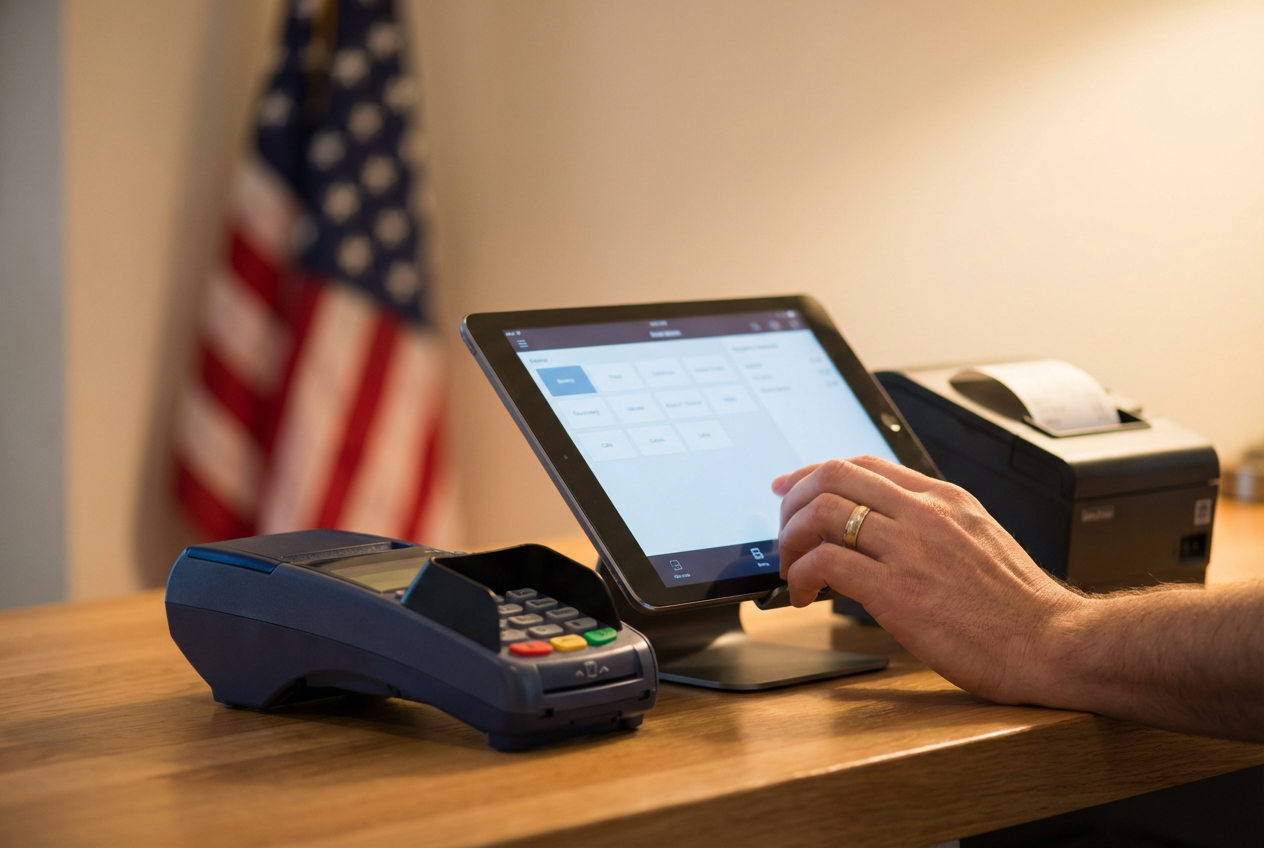
Chase POS System in US holds a distinct position in the US market because it sits inside one of the country’s largest banking institutions, blending card acceptance with direct access to business accounts. This full review examines how Chase POS performs across payments, hardware, pricing, and operational control, with a clear focus on what merchants actually gain and where trade-offs appear when banking and point-of-sale functions live under one roof.
Operating a POS system requires more than just transaction acceptance; it requires visibility over cash flow, settlement timing, and financial reporting, from the checkout counter to the balance sheet. This article, advised by ConnectPOS, frames Chase POS through the lens of growing retailers who must decide when bank-led simplicity aligns with their operational direction.
Highlights:
- Chase POS ties payment acceptance directly to Chase banking, supporting in-store, contactless, and remote transactions with fast settlement and unified reporting.
- Pricing follows a flat-rate model with no monthly fee for core in-person payments, plus one-time hardware costs and optional banking charges.
Overview of Chase POS System in US
Chase’s merchant services unit processes an estimated $2.6 trillion in US card payment volume each year, handling more than 50 billion transactions and supporting over six million businesses nationwide. This scale underpins Chase Integrated Payments or Chase POS System in US, a centralized system designed for business owners who prefer to keep payments, cash flow, and financial data within a single institution.
The platform combines merchant processing with traditional banking, allowing users to manage sales activity, deposits, and merchant accounts through one digital dashboard. Built for small to mid-sized businesses, it supports cloud-based operations across mobile apps and dedicated terminals, covering inventory tracking, staff access, product management, real-time reporting, and automated tax calculations.
Read more: Complete Guide For Point of Sale Systems in The US
Core Features and Functional Capabilities of Chase POS System in US
Chase POS in the US combines integrated payment processing, flexible hardware options, and built-in sales management tools with direct Chase banking connectivity to optimize both in-store and remote transactions. Its transparent flat-rate pricing, minimal monthly fees, and same-day deposits make it a practical choice for businesses seeking a tight link between daily sales operations and cash flow management.
Payment Processing Capabilities
Chase operates as its own payment processor, which leads to faster communication between the terminal and the bank.
- Accepted Methods: The system takes Visa, Mastercard, American Express, Discover, and JCB.
- Contactless Options: Hardware supports Apple Pay, Google Pay, and Samsung Pay.
- Transaction Types: Merchants can process chip (EMV), swipe (magstripe), and manual-entry (keyed-in) sales.
- Digital Invoicing: The platform sends secure payment links via email or text for remote billing.
Hardware and POS Terminals
Chase provides several equipment options depending on the mobility needs of the business.
- Chase POS Terminal: A handheld wireless device with a built-in thermal printer and touchscreen.
- Chase Card Reader: A pocket-sized Bluetooth device that pairs with the Chase POS app on smartphones.
- Chase Countertop Terminal: A stationary wired unit for permanent checkout locations.
- Tap to Pay on iPhone: A software feature that allows businesses to accept contactless cards using only an iPhone.
Business and Sales Management Tools
Data from every transaction flows into reporting tools that help owners understand their performance.
- Real-time Analytics: Dashboards show sales trends by the hour, day, or month.
- Refund Management: Managers process returns and voids directly through the terminal or the online portal.
- Customer Insights: The system tracks spending patterns to help identify loyal patrons.
- Digital Receipts: Customers receive proof of purchase via text or email, which saves on paper costs.
Banking and Financial Integration (Key Strength)
The deep connection to Chase banking provides advantages that standalone POS companies cannot match.
- Same-Day Deposits: Funds from sales typically arrive in the linked Chase business checking account within hours, including on weekends.
- Unified Reporting: Sales data and bank statements appear in the same portal, which simplifies monthly reconciliation.
- Consolidated Fees: Business owners pay their processing fees and bank service charges through one account.
- Fee Waivers: High-volume processing can often lead to the waiver of monthly banking service fees.
Operating a retail store requires more than just a card reader; it requires a deep link between the sales floor and the bank vault.
Read more: POS System Price in US: A Cost Breakdown
Pricing and Fees Explained of Chase POS System in US
The pricing structure relies primarily on flat-rate transaction fees rather than fixed monthly subscriptions for the base software. This approach removes the barrier of entry for new businesses that want to avoid recurring overhead. By linking the POS directly to a Chase business checking account, owners can offset certain bank fees through their processing volume.
Transaction Fees (Typical US Ranges)
Standard rates apply to most merchants using the flat-rate model, which bundles interchange costs with the processor’s markup.
- In-Person (Tap, Dip, or Swipe): 2.6% + $0.10 per transaction.
- Online Sales: 2.9% + $0.25 per transaction.
- Manually Keyed-In Transactions or Payment Links: 3.5% + $0.10 per transaction.
Monthly Fees
The cost of maintaining the software remains minimal compared to competitors who charge per-terminal fees.
- In-Person Payments: $0 per month (the basic POS app carries no monthly maintenance fee).
- E-commerce Payments: Monthly fees start at $9.95 for certain online solutions.
- Business Complete Banking Fee: $15 per month for the checking account, though this can be reduced to $0 by meeting requirements such as keeping a $2,000 minimum daily balance.
Hardware Costs
Equipment expenses are one-time purchases rather than ongoing rentals.
- Chase Card Reader: $99 (or $129 for a reader and base bundle).
- Chase POS Terminal: $499 (an all-in-one handheld device with a built-in printer).
- Chase Countertop Terminal: $399 (a stationary wired unit).
- Tap to Pay on iPhone: $0 (requires no physical equipment, only the mobile app).
Contract Terms and Early Termination Risks
Chase POS System in US primarily operates on a month-to-month basis for its standard merchant solutions.
- Cancellation: Users on standard month-to-month agreements do not face early termination or cancellation fees.
- Dispute Fees: Chargebacks result in a fee assessed by the processor, which can be contested by the merchant.
- Account Inactivity: Accounts with no activity for an extended period may be closed by the bank following proper notice.
Transparency Analysis
The bank maintains a high level of transparency regarding its public-facing rates but keeps its competitive discounts private.
- Public Disclosures: Standard flat-rate pricing for tap, dip, and swipe transactions (2.6% + $0.10) is clearly published on the official website.
- Negotiation Leeway: Large businesses with high transaction volumes can request interchange-plus pricing, which is often more cost-effective but not listed as a standard public rate.
- Incidental Costs: While flat rates are clear, specific “incidental fees” like those for PCI non-compliance or account minimums might not be as prominently advertised and should be reviewed in the full merchant agreement.
Operating a retail store requires more than just a card reader; it requires a deep link between the sales floor and the bank vault.
Strengths and Limitations of Chase POS
Chase POS stands out for its deep integration with Chase banking, fast deposits, and straightforward pricing that reduces operational complexity for small and mid-sized businesses. However, its feature set and customization options are more limited than those of specialized POS platforms, which may restrict scalability for complex or multi-location operations.
Key Advantages
The primary benefit of using this platform lies in the speed of capital access and the reliability of bank-grade security. By eliminating middlemen, the system allows for faster communication between the point of sale and the business vault. This integration supports a steady cash flow for operations that require immediate liquidity to restock inventory or pay staff.
- Same-Day Deposits: Funds from daily sales typically arrive in the linked Chase business checking account within hours at no additional cost, even on weekends.
- Unified Financial View: Owners view their merchant processing statements alongside their business loans and bank balances through a single set of login credentials.
- Data-Driven Insights: The system provides access to “Chase Customer Insights,” which uses the bank’s vast transaction network to show local spending trends and customer demographics.
Notable Limitations
Despite the financial strengths, the system lacks the extensive third-party app marketplace found in tech-first platforms. Businesses with highly specialized needs or complex retail configurations may find the software options too rigid for their specific workflows. The reliance on a single ecosystem also means that any changes to bank policies directly impact the payment processing environment.
- Hardware Restrictions: The selection of physical terminals is smaller compared to competitors, which limits options for businesses requiring specialized restaurant setups or large-scale multi-lane configurations.
- Integration Gaps: The software provides fewer connections to external accounting, marketing, or inventory platforms, requiring more manual data entry for users of outside tools.
- Account Dependency: Accessing the most significant benefits, such as instant funding, is only possible if the merchant maintains a Chase Business Complete Banking account.
Read more: 10 Best Mobile POS Systems for US Businesses in 2026
Alternatives to the Chase POS System in the US
Choosing the right alternative to Chase POS System in US involves identifying where your business growth outpaces the basic banking features of a traditional financial institution.
When to Consider POS Alternatives
Transitioning away from Chase often occurs when a business matures beyond basic transaction handling and requires deeper control over its digital ecosystem. This shift is common for owners who find themselves spending too much time on manual data entry between separate platforms.
- Lack of Specialized Integrations: If your business relies on specific software for accounting, marketing, or advanced warehouse management, the limited connectivity of Chase can create data silos.
- Industry-Specific Needs: Retailers in sectors like firearms, vape, or high-end fashion often require specialized features like ID verification or serialized inventory that generic bank systems do not provide.
- High Transaction Volume: Businesses processing significant monthly sales may seek “Interchange Plus” pricing to lower their effective rates compared to the Chase flat-fee model.
- Omnichannel Friction: When a merchant struggles to keep in-store stock levels aligned with an online storefront (Shopify, Magento, etc.), they require a system built for real-time synchronization.
ConnectPOS as an Alternative to Chase POS
ConnectPOS serves as a robust alternative for retailers who want to break free from hardware dependency and achieve a true omnichannel presence. Unlike the hardware-centric approach of many banks, this platform focuses on software flexibility and cross-channel synchronization.
- SmoothOmnichannel Sync: It integrates directly with major e-commerce platforms like Shopify, Magento, and BigCommerce, guaranteeing that online and offline sales data are always identical.
- Browser-Based Flexibility: The system runs on any device with a web browser, allowing businesses to use existing laptops, tablets, or mobile phones instead of being locked into proprietary bank terminals.
- Multi-Source Inventory (MSI): The platform handles complex logistics by managing stock across multiple warehouses with Multi-Source Inventory (MSI) solutionand physical outlets from a single dashboard.
- Offline Mode Reliability: Even when the internet fails, ConnectPOS allows for uninterrupted selling, scanning, and checkout, with data automatically syncing once the connection returns.
- AI Facial Recognition: For advanced customer engagement, the system can identify returning shoppers to provide personalized product recommendations based on their purchase history.
- PWA Consumer App: This tool allows customers to use their own devices for self-shopping and self-checkout, reducing wait times during peak hours.
- Flexible Payment Gateways: Unlike bank-locked systems, it supports various global payment providers like PayPal, Stripe, and Adyen without requiring a specific bank account.
Read more: Square POS System Cost in The US: How Much Are You Paying For?
FAQs
What is Chase POS best suited for?
Chase POS is best for small to mid-sized US businesses that want fast deposits, simple pricing, and tight integration with Chase banking without complex POS customization.
Does Chase POS require a Chase business bank account?
Yes. To use Chase POS, merchants must link the system to a Chase Business Complete Banking account.
Is ConnectPOS a suitable alternative to Chase POS System in US?
Yes. For businesses that need advanced inventory control, omnichannel selling, and multi-location scalability beyond Chase POS’s core capabilities, ConnectPOS is a strong alternative designed for growing US retailers.
Conclusion
Chase POS System in US works well for merchants who prioritize fast deposits, predictable fees, and direct ties to Chase banking, particularly in single-location or low-complexity retail settings. Limits emerge as sales operations expand, inventory logic deepens, or cross-channel control becomes a daily requirement rather than a future plan. Businesses reaching that stage often reassess whether a bank-centric POS still supports their structure.
For retailers planning growth across locations, channels, or fulfillment models, ConnectPOS provides a retail-driven POS platform built to support scale, data clarity, and long-term control, connecting with the ConnectPOS team to evaluate the right path forward.
►►► Optimal solution set for businesses: Shopify POS, Magento POS, BigCommerce POS, WooCommerce POS, NetSuite POS, E-Commerce POS