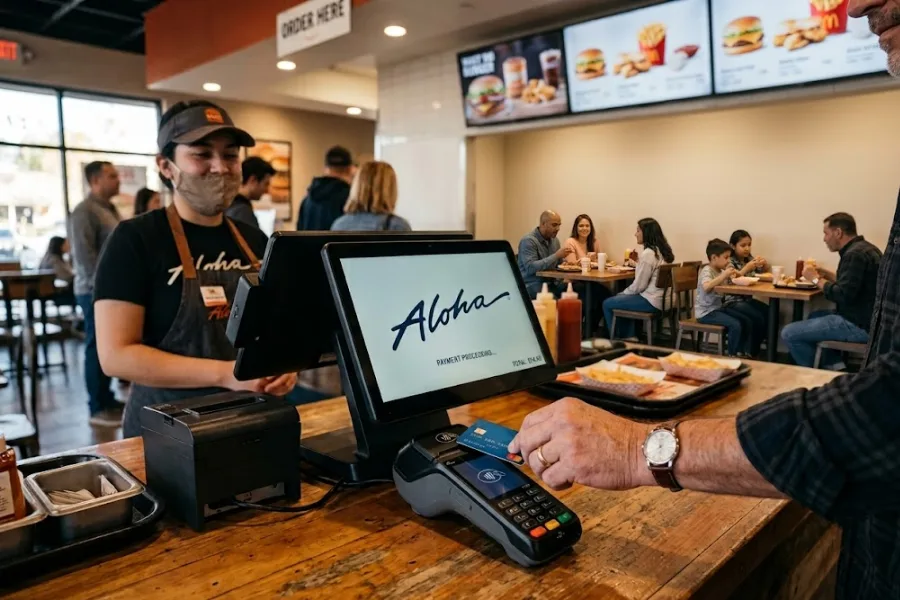
When a growing retailer chooses a Point of Sale (POS) solution, the choice is fundamentally about infrastructure: do they prioritize deep retail governance or simple transactional control? This expert evaluation contrasts ConnectPOS, a dedicated platform built for complex, multi-channel commerce management, with Shift4 POS, a system primarily centered around payment processing and a unified hardware ecosystem.
We dissect key differences in inventory control, API flexibility, and cost models to determine suitability for growing B2B operations. This article, from ConnectPOS, advises on aligning your POS choice with your long-term expansion requirements.
Highlights:
- ConnectPOS is a retail management platform focused on data unification and offering payment freedom through third-party processor support, making it scalable for multi-store growth.
- Shift4 is a proprietary payment processing ecosystem that locks merchants into its own gateway, simplifying setup but limiting flexibility as businesses scale.
Overview of ConnectPOS vs Shift4
Finding a Point of Sale system today requires assessing whether the primary need is deep retail operational management or purely simplified payment processing. ConnectPOS functions as a retail system designed to connect sales channels and manage inventory at scale. Shift4 POS, instead, centers around providing a unified payment processing backbone and hardware ecosystem. The selection should align with whether your business demands commerce control or transactional simplicity.
ConnectPOS
ConnectPOS operates as a dedicated omnichannel solution created for retailers managing both in-store and online sales through platforms like Shopify or BigCommerce. Its core strength lies in providing a single source of truth for inventory and customer data, allowing businesses to handle operations like click-and-collect or cross-store fulfillment with accuracy. The architecture prioritizes data synchronization across disparate selling points.
The system is built to provide retailers with administrative independence, allowing the user to select preferred payment gateways POS and customize POS interface to fit complex workflows. This flexibility makes ConnectPOS a strong fit for businesses that need control over their tech stack and require a scalable platform capable of managing large catalogs and growing location counts.
Shift4 POS (Various Products)
Shift4’s primary competency lies in payment processing and security, building its POS products (such as SkyTab or the older Harbortouch line) around its proprietary payment gateway. The system provides a unified hardware and payment experience, often appealing to hospitality or basic retail users looking for a single vendor solution. It makes installation simple by bundling processing and hardware together.
The Shift4 solution generally focuses on delivering reliable transaction execution and simple reporting, rather than deep retail inventory governance or complex omnichannel logic. Businesses selecting Shift4 accept a fixed payment ecosystem in exchange for predictable costs and easy setup, a model well-suited for operations where transaction speed and reliability are more important than complex stock management or third-party integration freedom.
Feature Comparison – ConnectPOS vs Shift4
Success in scaled retail demands a technology platform capable of handling complex administration, not just transaction processing. This section provides a detailed analysis of the core operational capabilities of ConnectPOS (the specialized retail commerce platform) and Shift4 (the payment-system-focused POS solution).
This comparison clarifies the distinction between a system built for multi-channel inventory and data governance and one prioritizing simplicity and security in transaction execution. We examine every technical facet, from order management to platform customization capacity.
Transaction and Payment Handling
ConnectPOS supports open payment integration, connecting retailers to multiple third-party processors, including EMV(Europay, Mastercard, and Visa) card readers, NFC (Near-Field Communication) contactless solutions, and digital wallets. The system handles split tenders, partial authorizations, layaway, store credit reconciliation, and multi-currency processing with real-time settlement. Fraud detection, tokenization, and PCI DSS-compliant encryption protect sensitive financial data.
Shift4 POS focuses on transaction processing through its proprietary gateway, providing consistent authorization and clearing for in-store and online sales. While this approach ensures PCI-compliant processing and reduces gateway reconciliation issues, it limits support for alternative payment methods, multi-merchant configurations, and dynamic routing of payment transactions for cross-border operations.
Inventory and Order Management
Regarding merchandise control, ConnectPOS provides centralized, real-time inventory management across all retail points, including physical stores, warehouses, and the online channel. It is designed to handle complex logistics such as cross-store transfers and sophisticated order fulfillment methods.
Shift4 POS includes basic inventory functions, primarily suitable for simple stock counting and product listing within a single store. This system lacks the depth required to manage complex order routing or split shipments involving remote stock points.
Omnichannel Integration
ConnectPOS is purpose-designed for omnichannel operations, integrating deeply with major e-commerce platforms (like Shopify or Magento) to unify product catalogs, pricing, and customer history. It has built-in functionalities for core retail scenarios like Buy Online, Pick Up In Store (BOPIS), and Ship From Store fulfillment.
Shift4 employs a payment-centric integration strategy, focusing on connecting transaction data to accounting systems. It does not provide the deep, unified retail logic needed to support sophisticated cross-channel selling methods.
Reporting and Analytics
ConnectPOS provides detailed, unified reporting that aggregates performance data across all online and offline channels. Reports cover sales, inventory flow, and staff performance metrics.
Shift4 POS provides reporting primarily focused on transaction volume and basic sales figures. It lacks the capacity for complex cross-channel retail analytics or dedicated tools for in-depth loyalty tracking and sales forecasting based on integrated customer data.
Customization and API Connectivity
ConnectPOS is highly customizable via extensive settings and open APIs, enabling connections with existing ERP, accounting, and specialized retail systems. Its API (Application Programming Interface) structure allows retailers to build tailored workflows and integrate specialized third-party tools needed for large operations.
Shift4’s customization is generally limited to the hardware and payment workflow provided by its ecosystem. Its API is adequate for basic payment and accounting integration but lacks the depth required for complex, custom retail solution building.
Support, Security, and Compliance
Both systems uphold PCI compliance for handling card data. ConnectPOS provides dedicated retail support focused on platform usage, data synchronization issues, and general commerce operations.
Shift4’s security is strongly supported by its proprietary payment processing infrastructure, and its support services primarily focus on payment processing stability and hardware maintenance.
Pricing
ConnectPOS uses a subscription-based pricing model, starting from US$49–99 per register per month, with an Enterprise option for larger deployments. This structure keeps costs predictable as businesses scale by adding more registers or locations without facing additional transaction-based fees tied to the POS. Because ConnectPOS supports multiple third-party payment processors, merchants can negotiate better rates as their transaction volume grows and maintain long-term control over payment costs.
Shift4 uses a transaction-driven pricing model in which revenue comes primarily from credit card processing fees rather than POS subscriptions. This approach keeps initial software costs low, but merchants must use Shift4’s proprietary gateway, causing fees to increase as transaction volume rises. Additional charges such as annual equipment fees (up to about US$250 per device), regulatory assurance fees, and other processing surcharges can significantly increase the total cost of ownership as a business expands to more devices or stores.
ConnectPOS: Scalability through Subscription Model
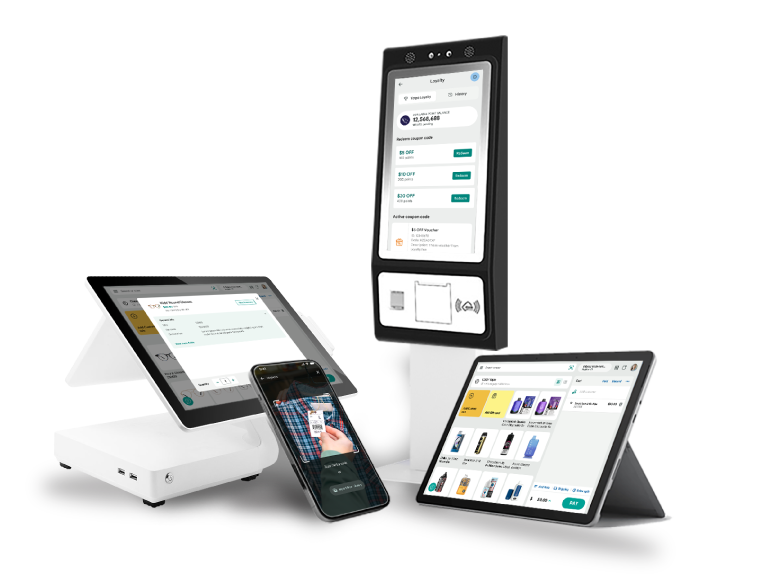
ConnectPOS operates on a subscription model where costs relate to the number of registers (devices) and the tier of features required (Standard, Professional, or Enterprise). This structure means costs scale predictably as a retailer adds locations or expands its product catalog.
The pricing framework supports long-term growth by providing increasingly robust integration and customization tools at higher tiers. Retailers are paying for the core omnichannel platform that unifies data, which is their foundation for expansion.
While the initial setup fee and monthly subscriptions may be higher than those of a basic processor, this cost secures a governance system built for multi-store and multi-channel control. The ability to select third-party payment processors also allows retailers to manage and potentially lower transaction fees by negotiating rates outside of the POS provider.
Shift4 POS: Payment-First Model and Cost Simplicity
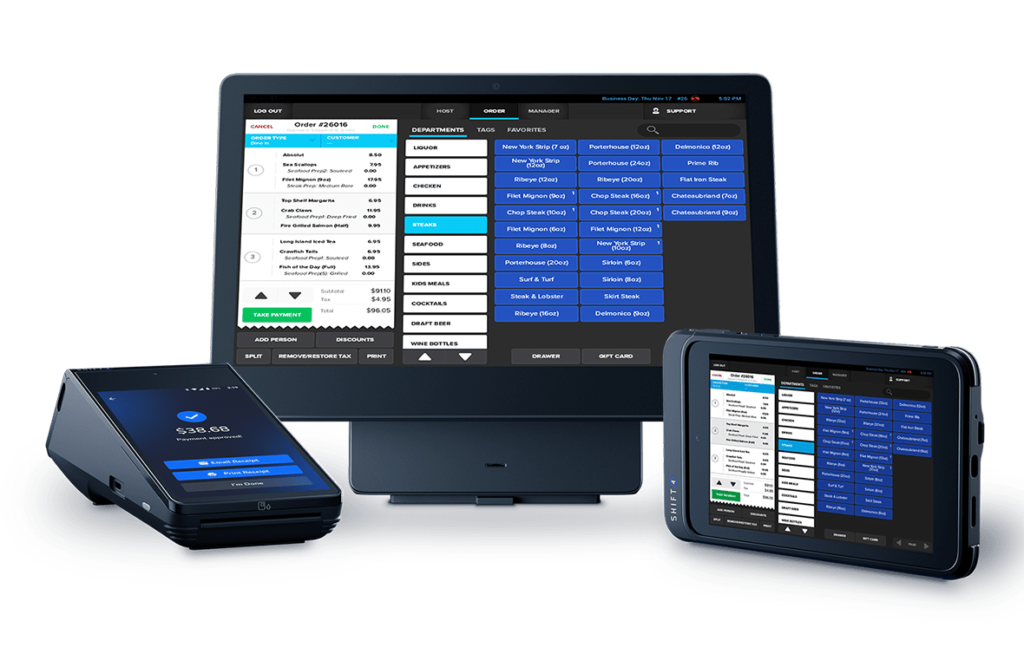
Shift4’s model is generally centered around payment processing fees and hardware sales/leases, often bundling the POS software itself for little or no monthly fee when processing payments through them. This approach makes the initial cost of ownership very low or non-existent for the software component, making it instantly attractive to smaller businesses.
The cost structure is designed for simplicity: the primary recurring fee is the transaction rate charged on sales volume. However, this simplicity introduces a scalability limitation: the software is tied to Shift4’s payment services, preventing retailers from seeking better interchange rates elsewhere as their volume grows.
While easy to adopt for a single location, the system is less flexible for large-scale operations that require open integration, deep multi-store inventory control, or freedom of processor choice.
Comparison Summary Table – ConnectPOS vs Shift4
This table condenses the differences between ConnectPOS (the omnichannel retail management platform) and Shift4 (the payment-centric ecosystem).
| Feature | ConnectPOS (Retail Management) | Shift4 POS (Payment Ecosystem) |
| Primary Purpose | Omnichannel Commerce Control (Unifying online/offline retail data and inventory). | Payment Processing & Hardware (Simplifying transaction execution). |
| Scalability Target | High-growth, Multi-location and Multi-brand retailers. | Small-to-midsize businesses focusing on transaction volume. |
| Inventory Management Software | Centralized, Real-Time control across all stores and warehouses; handles transfers. | Basic, Single-Location stock counting and product listing. |
| Payment Processor | Open Integration (Allows selection of third-party gateways to manage rates). | Proprietary Gateway is Mandatory (Locks business into Shift4 processing rates). |
| Omnichannel Logic | Built-in Support for BOPIS (Buy Online, Pick Up In Store), Ship From Store. | Minimal or Absent; focus is strictly on the in-person transaction. |
| Customization/API | Highly Flexible with open APIs for deep integration with ERP/CRM/Accounting systems. | Limited to Ecosystem; less depth for complex, custom retail workflows. |
| Cost Model | Subscription-Based Platform Fee (Cost tied to feature tiers and registers). | Transaction-Based Fee (Often low/no monthly fee, cost tied to processing volume). |
ConnectPOS is ideal for medium to large retailers that need multi-store support, handle high transaction volumes, and require flexibility in payment processing and advanced checkout options. Shift4, on the other hand, is better suited for small to medium single-store businesses with lower transaction volumes, where simplicity, ease of setup, and a transaction-based pricing model are more important than scalability or multi-location management.
FAQs ConnectPOS vs Shift4
Which system provides better control over inventory across multiple physical stores?
ConnectPOS offers superior control, providing real-time, centralized inventory governance designed specifically for multi-location and multi-warehouse operations, including transfer logic. Shift4 POS offers only basic stock visibility and is not structured for complex, multi-store logistics.
Can I choose my own credit card processor with either system?
ConnectPOS maintains an open integration model, allowing you to choose your preferred third-party payment gateway. Shift4 POS requires that you use their proprietary payment gateway, tying your software directly to their processing services.
Which system is best for integrating online (e-commerce) and physical store sales?
ConnectPOS is built for this. It excels at omnichannel unification, ensuring inventory, pricing, and customer history synchronize instantly between platforms like
Shopify POS/Magento POS and your physical store. Shift4 POS focuses primarily on securing in-person payment processing.
Conclusion
The differences between these systems come down to strategic intent. Businesses with complex needs managing large catalogs, operating across stores and online, and demanding control over their tech stack should adopt the retail management capacity of ConnectPOS. For operations where transactional simplicity and bundled hardware are the only priorities, Shift4 provides a solution tied to its payment services. Your infrastructure choice dictates your future limits.
To discover how ConnectPOS can be designed specifically to meet your organizations unique multi-channel requirements and to secure a consultation on unifying your commerce data, contact ConnectPOS today.
►►► Optimal solution set for businesses: Shopify POS, Magento POS, BigCommerce POS, WooCommerce POS, NetSuite POS, E-Commerce POS