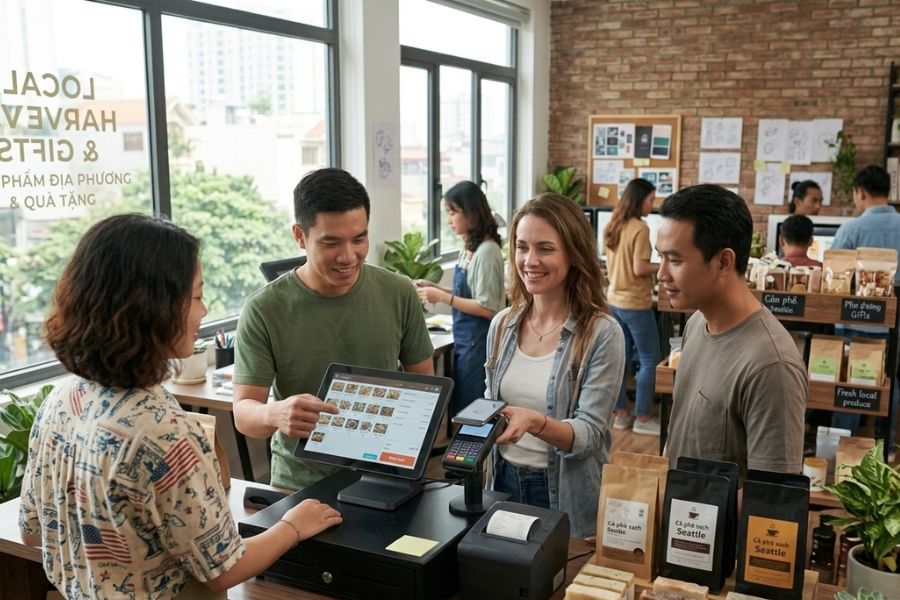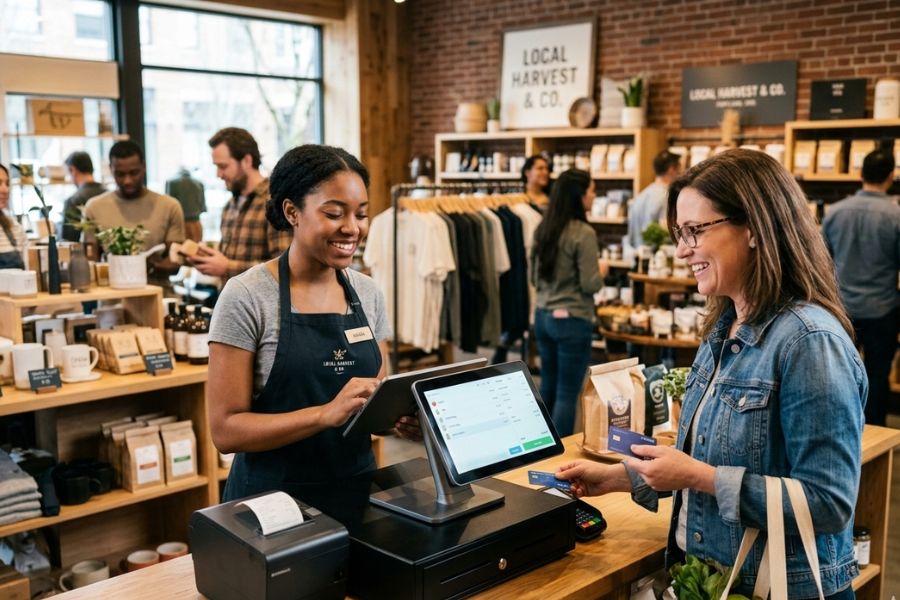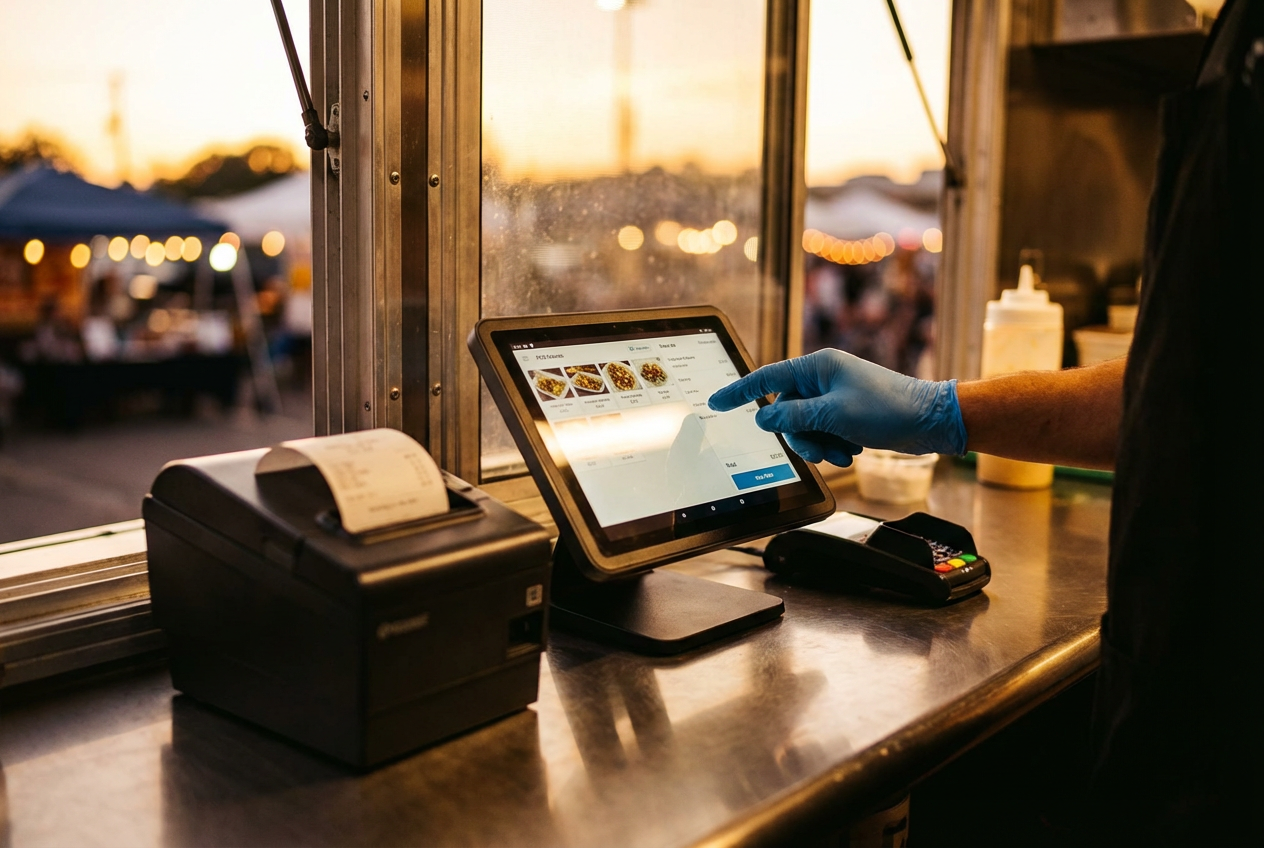
Operating a food truck sounds simple until orders pile up, payments slow down, and the line starts to drift away. Many operators across the US hit the same wall when their tools cannot keep up with real service pressure. A POS system for food truck in US changes how sales, menus, and payments work on the street. In this guide from ConnectPOS, we’ll show you what is truly important and why it shapes daily performance.
Highlights
- Food trucks need POS systems designed for mobility, offline selling, and fast checkout in tight spaces.
- The right POS improves service speed, lowers order errors, and supports inventory and staff control during peak hours.
- A food truck focused POS helps owners stay flexible as locations, menus, and demand continue to change.
What Is a POS System for Food Trucks in the US?
A POS system for food trucks is the setup that handles orders, payments, and sales data inside a mobile kitchen. It acts as the control center where tickets, prices, taxes, and tips come together in one place. In the U.S., the food truck industry is large and crowded, with IBISWorld estimating about $2.8 billion in market size in 2024 and about 78,928 food truck businesses as of 2024 (up 17% from 2023), so small checkout delays can quickly turn into lost sales.
Unlike traditional restaurant systems, a food truck POS focuses on speed and movement. Fixed terminals, wired networks, and large back-office tools do not translate well to curbside service. This type of POS stays light, portable, and easy to operate during short service windows.
Mobility is important because food trucks rely on quick decisions. Lunch rushes, event crowds, and limited parking leave no room for slow screens or manual work. Every second spent tapping through menus affects how many customers you serve. That pressure is only growing as payments go more digital. McKinsey found that 92% of U.S. consumers reported making some form of digital payment in the past year.
Without the right setup, common problems surface fast. Orders get mixed up. Internet drops stop card payments. Inventory runs out without warning. Over time, those small gaps turn into lost sales and frustrated customers.
Read more: POS System Price in US: A Cost Breakdown
Key Features of a POS System for Food Truck in the US
A food truck runs on momentum. Orders come fast, space stays tight, and conditions change by the hour. The right POS system for food truck in US focuses less on complexity and more on what keeps service moving without friction. We’ll break down the core capabilities that influence daily performance, from handling the first order to closing out the last sale.
- Mobile and portable hardware for tight spaces
A food truck POS must work on compact counters and small prep areas. Tablets and handheld devices keep movement smooth while freeing up space for food prep. This is even more important as people leave home with fewer physical items. McKinsey also found that one in five digital wallet adopters often leave home without their physical wallet. For example, a mobile POS setup like ConnectPOS runs cleanly on tablets, letting staff take orders without crowding the window.
- Offline mode for unreliable or lost internet connections
Outdoor locations and events often suffer from weak networks. Offline selling keeps payments flowing and syncs data once the signal returns. In real life, this reliability is critical because the same Federal Reserve diary found that U.S. consumers made an average of 45.6 payments per month in October 2023, meaning even short outages can interrupt a large number of purchase moments. For instance, ConnectPOS allows trucks to accept orders and payments even during network drops.
- Flexible payment options including cards, mobile wallets, and cash
Customers expect to pay their way. Card taps, mobile wallets, and cash support help prevent delays during peak hours. This setup matches how people pay at lunch spots, festivals, and roadside stops.
►►► Optimal solution set for businesses: Multi store POS, Next-gen POS, Inventory Management Software (MSI), Self Service, Automation, Backorders

- Fast order entry and quick checkout workflows
Speed matters when lines grow. A clean order screen shortens training time and reduces tapping during rush periods. For example, ConnectPOS uses simplified order flows so staff complete checkouts in seconds.
- Real-time inventory tracking for ingredients and menu items
Limited storage leaves little room for guesswork. Live inventory updates help prevent selling items that just ran out. For instance, ConnectPOS updates stock levels as each order is placed, keeping menus accurate with the help of inventory management software.
- Sales reporting and analytics for daily performance tracking
Daily routes and events vary in results. Clear reports show what sells best and when crowds peak. For example, ConnectPOS lets owners review sales by location, item, and time through report & analytics.
- Customer loyalty and basic marketing tools
Repeat customers keep trucks busy. Simple loyalty tools help turn first-time visitors into regulars. McKinsey found that members of paid loyalty programs were 60% more likely to spend more on the brand after subscribing (free loyalty programs increased that likelihood by 30%). Bond’s Loyalty Report also found 85% of consumers say they are more likely to continue buying from a brand with a solid loyalty program.
ConnectPOS supports loyalty program rewards that encourage return visits without extra effort. When operators want deeper customer profiles and follow-ups, CRM POS capabilities also become a practical add-on.
- Employee shift and time tracking features
Short shifts and rotating staff require clarity. Time tracking helps keep payroll clean and schedules fair. This also reduces disputes during busy seasons.
- Integration with online ordering, delivery, and accounting tools
Many trucks sell beyond the window. Connections with ordering platforms and accounting tools keep records aligned. This saves time at the end of long service days. For example, ConnectPOS supports order fulfillment workflows that link in-truck sales with online orders, keeping order status, payments, and records aligned in one place. This helps teams manage pickups, deliveries, and end-of-day reconciliation without switching between systems.
- Durable hardware with long battery life for outdoor use
Heat, movement, and long hours test equipment. Hardware must last through full service without constant charging. A stable setup prevents downtime during events.
Together, these features shape how a food truck operates under pressure. When the POS setup matches real service conditions, teams move faster, errors drop, and customers leave satisfied.
How These POS Features Improve Daily Food Truck Operations
Daily food truck work leaves little room for mistakes. Tight schedules, short service windows, and changing locations push teams to move fast and stay focused. A POS system for food truck in US turns core features into real, visible improvements during service, not just back-office convenience.
- Faster service and shorter customer lines: Quick order screens and smooth checkout keep lines moving during lunch rushes and busy events. Staff spend less time tapping and more time serving. For example, a simplified POS flow helps trucks clear queues faster at peak hours.
- Fewer order and payment errors during rush hours: Clear menus and guided payment steps lower the risk of missed items or wrong totals. This keeps tickets accurate even when pressure rises. Small mistakes drop, and customer trust stays intact.
- Better inventory planning with limited storage space: Live inventory data shows what sells out early and what lingers. That insight helps plan prep and purchasing more precisely. For instance, trucks can adjust daily quantities after reviewing past sales patterns.
- Smarter staffing decisions based on sales data: Sales reports reveal busy periods and slower stretches. Owners can match staff levels to demand instead of guessing. This leads to balanced shifts and steadier service quality.
- Stronger repeat business through loyalty tools: Simple rewards encourage customers to return. Even small incentives can turn a one-time visit into a habit. For example, basic loyalty tracking reminds regulars why they keep coming back.
Taken together, these gains shape how a food truck performs day after day. When the POS setup supports real service conditions, teams stay faster, calmer, and more consistent under pressure.
Read more: 10 Best Mobile POS Systems for US Businesses in 2026
What to Look for When Choosing a POS System for Food Truck in the US
A POS system for food truck in US shapes more than payments or menus. It affects how smoothly service runs when lines grow, locations change, and conditions feel unpredictable. The right setup fits your daily rhythm on the road, not just a feature checklist. We’ll highlight the real factors that help you spot a setup that works in daily service, not one that slows you down.
- Ease of setup and staff training: Food trucks rely on quick onboarding. The software should feel intuitive so new staff can start taking orders within minutes, not days. Short learning curves keep service steady even with rotating crews.
- Reliability in offline and outdoor conditions: Street service rarely comes with stable internet. A dependable setup continues running during network drops and syncs data later. Outdoor selling demands stability under heat, movement, and long shifts.
- Transparent pricing and transaction fees: Clear pricing prevents surprises at the end of the month. Look for straightforward plans that match your sales volume and growth pace, without hidden charges tied to daily operations.
- Scalability for multiple trucks or locations: Many owners start with one truck, then expand. The POS should support added trucks, menus, and staff without forcing a full system change later.
- Quality of customer support for on-the-road issues: Problems rarely wait for office hours. Access to responsive support helps resolve issues quickly when you are mid-service or operating at events.
A smart evaluation keeps focus on real-world use, not surface-level promises. When the POS setup aligns with daily pressure and future plans, decision-making becomes much easier.
Common Mistakes Food Truck Owners Make When Selecting a POS
Many food truck owners adopt a POS system for food truck in US quickly, often while juggling permits, prep, and launch pressure. Speed matters, but rushed decisions tend to hide problems that surface later during real service. These common mistakes appear again and again across food truck POS setups in the US market.
- Choosing the cheapest system without offline testing: Low price looks attractive, but weak offline support can stop sales during network drops. A quick test in real conditions reveals whether the POS keeps running when signals fade.
- Using bulky hardware that wastes counter space: Large terminals crowd prep areas and slow movement. Food trucks need compact devices that leave room for food and staff flow.
- Ignoring employee management features: Shift tracking and role controls matter more than expected. Without them, payroll errors and access issues appear during busy periods.
- Overlooking future growth and scalability needs: Many trucks expand to events or add a second vehicle. A setup that cannot grow forces a switch later, which disrupts operations.
- Skipping demos or free trials before committing: Screenshots do not show real speed or usability. Hands-on demos help confirm whether the software fits your pace and menu style.
Avoiding these pitfalls saves time and stress. When the POS setup matches how food trucks actually work, daily service feels smoother and more predictable.
ConnectPOS – A POS Built for Food Truck Operations Across the US
Food trucks move fast. Locations change. Lines build up quickly. We built ConnectPOS to match that pace, giving food truck owners across the US a POS that works wherever service happens.
- Mobile-first setup: Runs smoothly on tablets and handheld devices. Fits tight counters and compact trucks.
- Offline selling mode: Keeps taking orders when the internet drops. Syncs data once the connection returns.
- Fast checkout flow: Short order paths reduce wait times. Staff ring up sales in seconds.
- Flexible payment support: Accepts cards, tap-to-pay, mobile wallets, and cash. Matches how US customers prefer to pay.
- Real-time inventory tracking: Updates stock as orders go through. Helps avoid selling items that just ran out.
- Easy menu updates: Edit prices or items on the fly. Works well for daily specials and event menus. If your truck needs unique workflows, a custom POS approach can fit those requirements without slowing the line.
- Staff access control: Set clear roles for each shift. Keeps sales actions organized and secure.
- Cloud reporting anywhere: Check sales, peak hours, and item performance from any device. Useful when managing remotely.
ConnectPOS helps food trucks stay quick, organized, and ready for busy service anywhere in the US. From street corners to large events, the system supports daily operations without adding friction.
Read more: Best Food Truck POS System That Keeps The Line Moving
FAQs: POS Systems for Food Trucks in the US
1. What is the best POS system for food trucks in the US?
The best option depends on how and where you operate. A strong food truck POS system focuses on fast checkout, offline selling, mobile hardware, and simple reporting. In the US market, systems built for mobility tend to work better than traditional restaurant setups.
2. Can a food truck POS work without the internet?
Yes. Many modern POS solutions for US food trucks support offline mode. This allows you to keep taking orders and payments during network drops. Once the connection returns, the software syncs sales, inventory, and payment data automatically.
3. How much does a POS system for food truck in the US cost?
Pricing varies based on features, hardware, and scale. Some setups charge monthly software fees, while others add transaction costs. For most trucks, costs stay manageable when the POS matches daily volume and does not include unused extras.
4. Can I run a food truck POS from a tablet or phone?
Absolutely. Most POS software for food trucks runs smoothly on tablets and handheld devices. This setup suits tight spaces and supports mobile order taking during busy service periods, events, and curbside stops.
5. Is a POS system worth it for a small food truck?
Even small trucks benefit from a POS setup. Faster checkout, clear sales tracking, and simple inventory control save time each day. Over time, these gains support better decisions and steadier growth without adding operational strain.
Final Thoughts
A food truck thrives on speed, clarity, and consistency. The right POS system for food truck in US supports all three without slowing you down. From mobile ordering to offline payments and clean reporting, the right setup turns daily pressure into steady performance. If you want a solution designed for real service conditions, we recommend exploring ConnectPOS. Contact us to see how it fits your truck today and scales as you grow. Contact us to get started.
►►► Optimal solution set for businesses: Shopify POS, Magento POS, BigCommerce POS, WooCommerce POS, NetSuite POS, E-Commerce POS