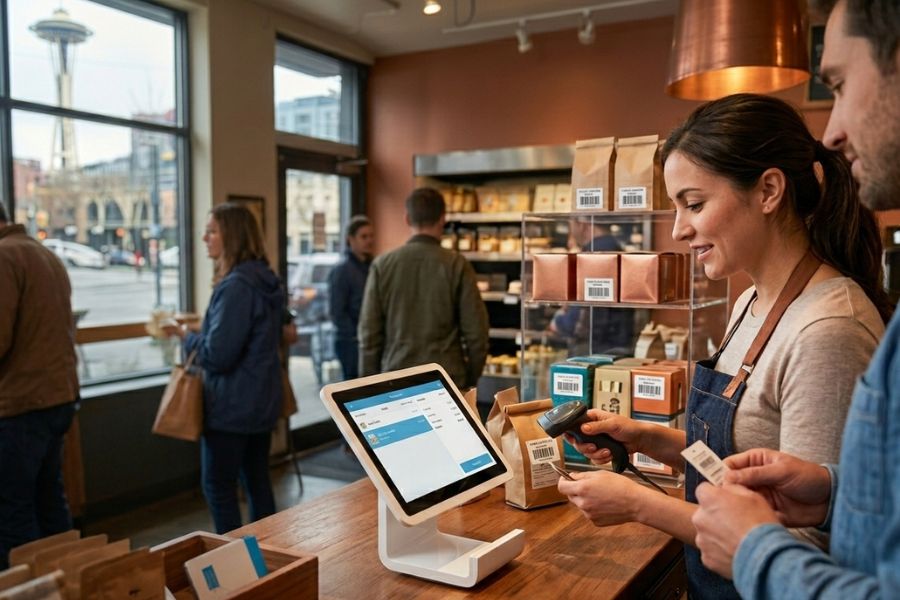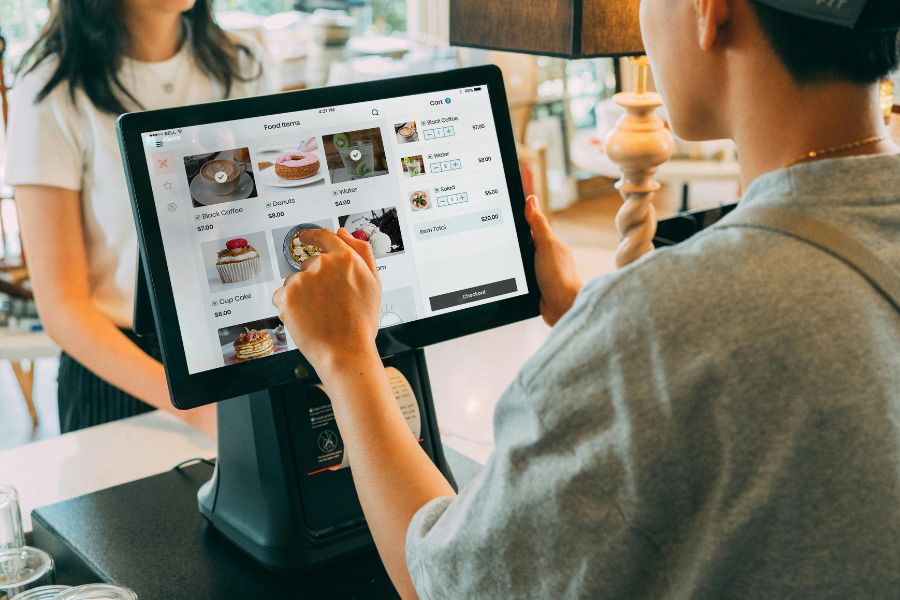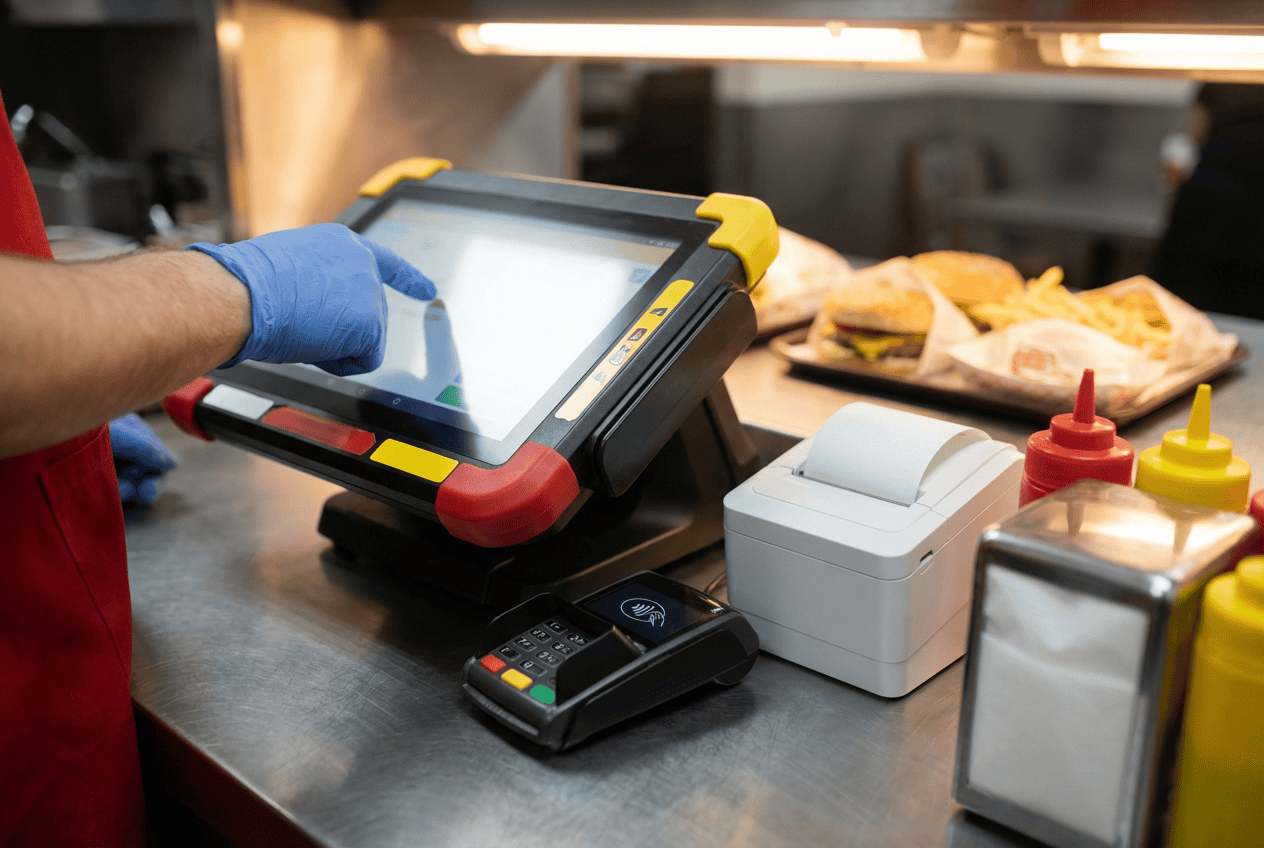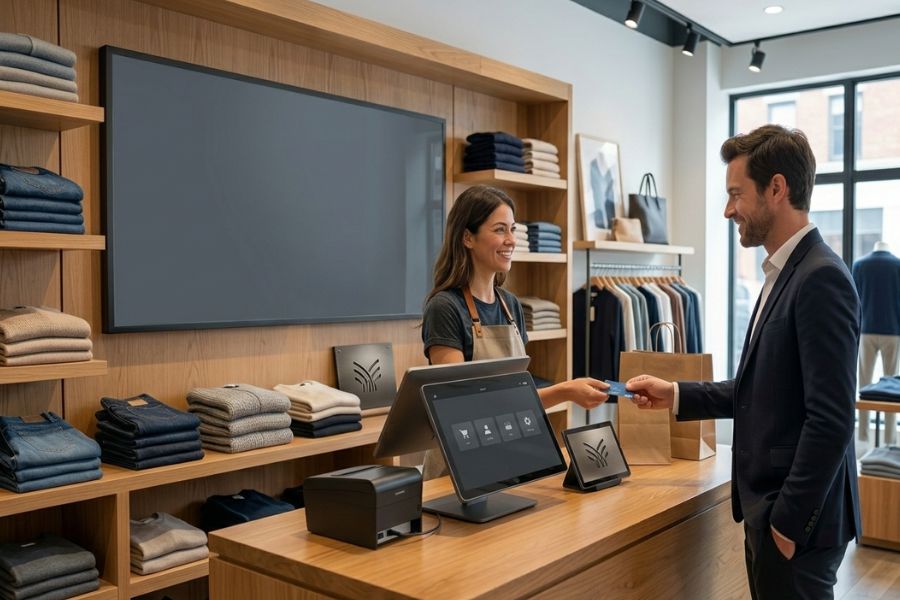
For small businesses planning to grow in 2026, the right POS plays a central role in daily operations, customer experience, and long-term scalability. From handling multiple payment types and sales tax rules to syncing inventory across online and in-store channels, modern POS systems must do far more than traditional cash registers ever could. As customer expectations rise and retail technology continues to evolve, US businesses need POS software that is flexible, reliable, and built for change. This article breaks down the key features that define a good POS system in the US market.
Keep reading!
Highlights
- A good POS system for US small businesses in 2026 combines speed, compliance, and cloud-based reliability to support daily operations and evolving customer expectations.
- Real-time inventory, customer insights, automation, and data-driven reporting are advanced features that help small businesses operate more efficiently.
- Omnichannel readiness, scalability, and flexible integrations are essential for long-term success, allowing businesses to expand across locations, channels, and technologies.
What Defines a Good POS System for US Small Businesses?
A good POS system in the US for small businesses is one that aligns with the realities of operating in a competitive, fast-moving market. In the US retail and service landscape, “good” means more than basic checkout. It means supporting different payment methods, handling sales tax accurately across states, and keeping daily operations simple for small teams.
Many small businesses struggle with tight budgets, limited systems, and the need to stay compliant with standards such as PCI DSS and EMV. Others outgrow entry-level POS tools that cannot handle multiple locations, higher transaction volumes, or online sales integration. These challenges often lead to costly migrations or operational disruptions later on.
That is why future-ready POS systems matter. A well-designed POS should scale with the business, adapt to new sales channels, and support process changes. For US small businesses aiming for long-term growth, choosing a POS system is a strategic decision, not just a technical one.
Core POS Features Every US Small Business Needs in 2026
A good POS system in the US should remove friction from daily operations, not add to it. As small businesses in the US prepare for growth in 2026, core POS features must balance speed, compliance, and flexibility.
Key features to look for include:
- Fast and reliable checkout experience
A good POS should process transactions quickly, even during peak hours. Responsive software, stable hardware support, and offline capability help prevent long lines and lost sales when connectivity issues occur.
- Support for multiple payment methods
US customers expect choice. POS systems should support credit and debit cards, contactless payments, mobile wallets, and Buy Now, Pay Later options, all within a single checkout flow.
- Built-in sales tax calculation and compliance readiness
Managing US sales tax can be complex. A modern POS should automatically calculate taxes based on location and product type, while also supporting PCI DSS and EMV compliance.
►►► Optimal solution set for businesses: Multi store POS, Next-gen POS, Inventory Management Software (MSI), Self Service, Automation, Backorders

- Cloud-based access and automatic updates
Cloud POS platforms allow business owners to access data anytime and keep software up to date. Automatic updates reduce maintenance effort and help businesses adopt new features without disruption.
Read more: POS System Software in the US: Advanced Features for Long-term Growth
Advanced POS Features That Drive Small Business Growth
Once the basics are covered, advanced POS features become key growth drivers for US small businesses. These tools go beyond checkout to improve visibility, customer relationships, and operational efficiency.
Key advanced features that you need to consider:
- Real-time inventory tracking across locations
Advanced POS systems provide live inventory updates across stores, warehouses, and online channels. This visibility helps prevent stockouts, reduce overstocking, and support fulfillment options such as in-store pickup or ship-from-store.
- Customer profiles, loyalty programs, and personalized promotions
A good POS system in the US should capture customer purchase history and preferences. Built-in loyalty programs and targeted promotions allow small businesses to increase repeat purchases and deliver more relevant offers without relying on separate systems.
- Sales reports, analytics, and demand forecasting
Detailed sales reports help owners understand what is selling, when, and where. Advanced analytics support trend analysis and demand forecasting, making it easier to plan inventory, staffing, and promotions with confidence.
- Automation tools to reduce manual work
Automation features streamline tasks such as inventory updates, pricing rules, and customer segmentation. By reducing manual processes, businesses can save time, minimize errors, and focus more on growth and customer experience.
Omnichannel Capabilities as a Must-Have in 2026
In 2026, small businesses can no longer treat online and in-store sales as separate operations. Customers expect a seamless experience across channels, and POS systems play a central role in enabling it.
A good POS system in the US should offer essential omnichannel features, including:
- Unified online and in-store sales management
A modern POS should manage all sales channels from a single system. Orders, payments, and customer data should flow together, reducing manual reconciliation and giving business owners a complete view of performance.
- Buy Online, Pick Up In Store (BOPIS) and local fulfillment
BOPIS and local pickup options allow small businesses to compete with larger retailers. POS systems should support order routing, pickup notifications, and in-store fulfillment without disrupting daily operations.
- Real-time inventory sync between POS and eCommerce platforms
Accurate inventory across channels is critical. Real-time sync prevents overselling, improves stock accuracy, and ensures customers see reliable product availability online and in-store.
- Consistent customer experience across all touchpoints
Omnichannel POS systems help maintain consistent pricing, promotions, and loyalty programs. Customers receive the same experience whether they shop online, in-store, or through mobile channels, building trust and long-term loyalty.
Scalability and Flexibility for Growing US Businesses
Growth often brings new complexity, and a POS system should make that transition easier. For US businesses planning to expand in 2026, scalability and flexibility are critical factors when choosing a long-term POS solution.
A scalable POS should manage multiple locations from a single backend. Centralized inventory, pricing, and reporting help businesses maintain control as they expand into new stores or distribution points.
API-first and modular POS platforms allow businesses to customize workflows, add features, or connect third-party tools without disrupting core operations. This flexibility supports unique business models and future technology needs.
POS systems should integrate smoothly with existing business software. Reliable integrations reduce manual data entry, improve accuracy, and keep financial, customer, and operational data aligned.
Modern POS solutions support a wide range of devices, including tablets, traditional terminals, kiosks, and self-service setups. This hardware flexibility allows businesses to adapt their checkout experience as customer expectations and store layouts evolve.
Read more: What A Good POS System for Small Business in The US Looks Like
Why ConnectPOS Fits the Definition of a Good POS System in the US
A good POS system should not only meet today’s operational needs but also support long-term growth as business models evolve. ConnectPOS is built as a full retail commerce ecosystem to handle the complexity of US retail while remaining flexible. The modern architecture and feature depth align closely with what growing businesses need in 2026.
Key capabilities of ConnectPOS for US businesses include:
- Real-time omnichannel inventory and multi-source inventory (MSI)
ConnectPOS delivers real-time inventory visibility across stores, warehouses, and online channels. Multi-source inventory helps businesses fulfill orders from the most efficient location while maintaining accurate stock levels.
- Offline-first design with seamless sync
The system continues to operate during internet outages, ensuring uninterrupted checkout. Once connectivity is restored, data syncs automatically without manual intervention.
- Wide eCommerce and system integrations
Native integrations with eCommerce POS platforms such as Shopify, Magento, BigCommerce, WooCommerce, NetSuite, and Commercetools enable retailers to unify POS and eCommerce operations without rebuilding workflows.
- Support for self-service, loyalty, and backorders
ConnectPOS enables self-service kiosks, built-in loyalty programs, and backorder handling, helping businesses improve customer experience and capture sales even when items are out of stock.
- Automation and API-first architecture
Workflow automation, open APIs, and a microservice-based design make it easier to customize processes, integrate third-party tools, and scale without system limitations.
Together, these features position ConnectPOS as a strong fit for US businesses seeking a reliable, future-ready POS platform.
FAQs
How much should a small business POS system cost in the US?
Most small business POS systems in the US charge a monthly software fee, typically ranging from low entry-level pricing to higher tiers based on features, number of locations, and users. Additional costs may include hardware, payment processing fees, and optional add-ons. The key is to evaluate total cost over time, not just the starting price.
Can a POS system grow with my business over time?
Yes, a well-designed POS system should scale as your business grows. This includes adding new locations, supporting higher transaction volumes, and integrating with additional tools without requiring a full system replacement.
Do small businesses really need omnichannel POS features?
For many businesses, yes. Customers increasingly expect consistent experiences across online and in-store channels. Omnichannel POS features help manage inventory, orders, and customer data in one place, reducing errors and improving service.
What POS features matter most for 2026 and beyond?
Future-focused POS systems should offer real-time inventory management, multiple payment options, automation, analytics, offline capabilities, and flexible integrations to adapt to evolving retail models.
How do I switch POS systems without disrupting my business?
A smooth transition starts with proper planning. Choose a POS provider that offers data migration support, staff training, and phased rollout options to minimize downtime and operational impact.
In Conclusion
A good POS system in the US is no longer just a checkout tool. For small businesses planning to grow in 2026, they must support omnichannel selling, real-time inventory, compliance, and the flexibility to scale without disruption. Choosing the right POS lays the foundation for better operations, stronger customer relationships, and long-term success. ConnectPOS is built to meet these needs, combining modern architecture with advanced retail features designed for growth. If you are evaluating POS options for your business, contact us to explore how a future-ready POS system can support your expansion and simplify your retail operations.
►►► Optimal solution set for businesses: Shopify POS, Magento POS, BigCommerce POS, WooCommerce POS, NetSuite POS, E-Commerce POS