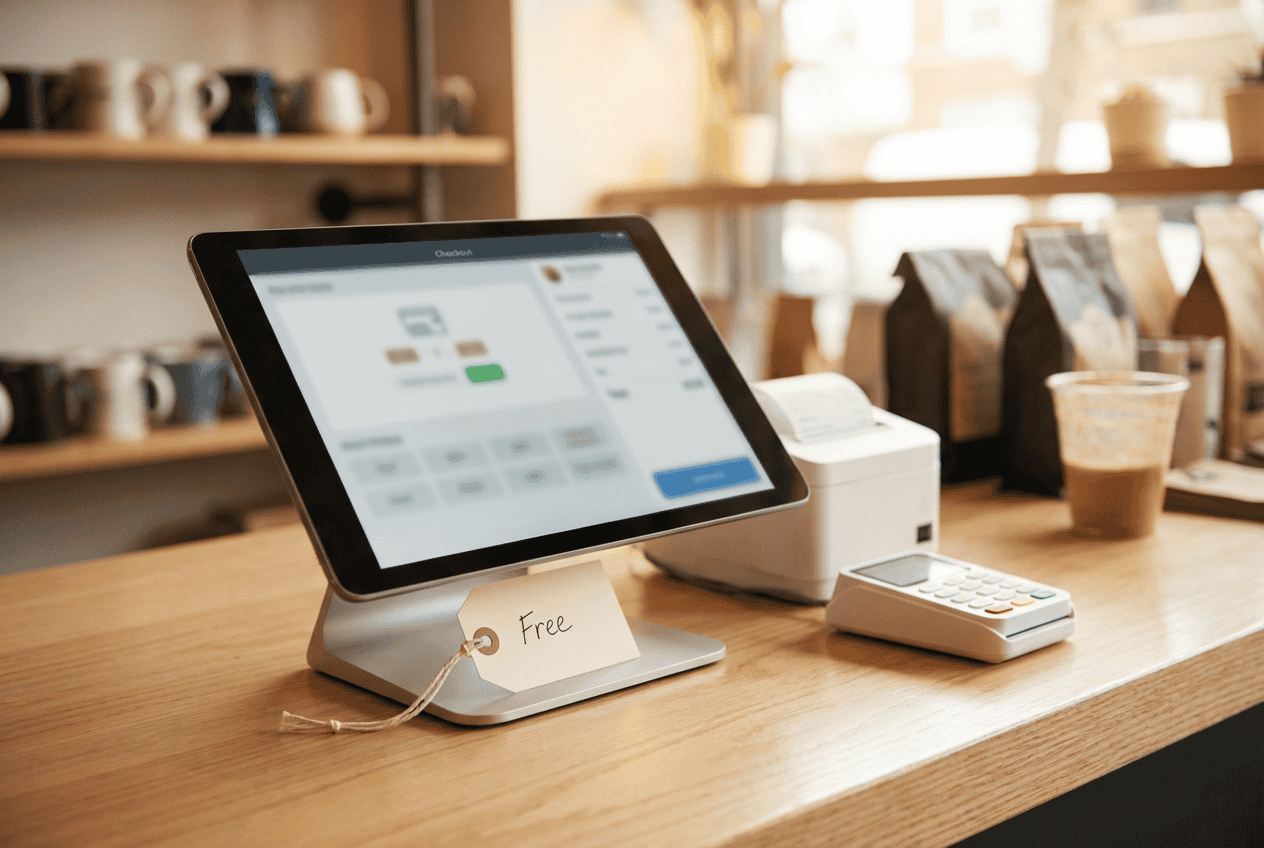
A POS system is the operational backbone of modern retail, handling sales, inventory, customer data, reporting, and integrations. For cost-conscious merchants, the idea of a free POS system in the US sounds appealing, especially for new businesses with tight budgets.
But is there a free POS system in US that truly delivers long-term value? Or do “free” solutions come with trade-offs that can slow growth and increase hidden expenses later? This guide from ConnectPOS will answer those questions with a balanced, business-first approach.
Highlight:
- Free POS is ideal for startups, pop-up stores, and low-volume retailers that need basic sales functions with zero upfront software costs.
- Paid POS systems should be considered when a business requires scalability, advanced data control, and omnichannel growth to reduce hidden costs and enable sustainable retail expansion.
2 Common POS System Types
Before evaluating free solutions, it’s important to understand the two main POS models available in the US market.
Cloud-Based POS Systems
Cloud POS platforms operate online and store data securely on remote servers. They are widely used by small and mid-sized businesses due to flexibility and scalability.
- Subscription or freemium pricing
- Automatic updates
- Multi-location support
- Easy integrations with eCommerce and accounting tools
On-Premise POS Systems
On-premise systems run locally on your hardware and servers. These are less common today but still used by niche businesses.
- Higher upfront costs
- Limited remote access
- Manual updates
- Greater control over data
Most free POS systems in US fall under the cloud-based category, often using a freemium pricing model.
Read more: Curious About Better Sales? Explore Jewelry Store POS System in US
Why Free POS Systems Are Popular in the US
Free POS platforms have gained traction across the US, especially among retailers, cafés, pop-up shops, and startups.
- Low Barrier to Entry: The biggest advantage is obvious: no upfront software cost. Businesses can start selling immediately without financial strain.
- Ease of Use: Free POS tools typically focus on simplicity. The interfaces are designed for non-technical users, making onboarding fast and intuitive.
- Fast Deployment: Most free POS systems can be set up in minutes using existing tablets or smartphones, no complex installations required.
- No Commitment: Many free POS providers allow businesses to test the system without contracts, making it easier to switch later if needed.
Core Features You Can Expect from Free POS Software
While free POS platforms vary by provider, most of them share a basic, entry-level feature set designed to help small businesses get started quickly. These features are typically sufficient for startups, pop-up stores, and low-volume retailers; however, they come with clear limitations as operations expand.
- Basic Sales Management: Supports core transaction functions such as sales processing, common payment acceptance, tax calculation, and receipt issuance, but lacks advanced features like split payments, complex discounts, or omnichannel selling.
- Limited Inventory Control: Allows basic product setup and stock tracking, while advanced capabilities like real-time sync, variants, low-stock alerts, and automation are typically restricted to paid plans.
- Customer Data Collection: Enables the capture of basic customer details, such as names, emails, and purchase history, for simple follow-ups, while advanced CRM features, like segmentation, loyalty programs, and personalized marketing, are typically excluded.
- Standard Reports: Provides access to essential reports such as daily sales and transaction summaries, but advanced analytics, custom reporting, trend insights, and forecasting are usually limited to paid plans.
Read more: How Zara’s Smart Apparel POS System Drives Success in the Fast Fashion Industry 2026
Hidden Costs of Free POS Systems
While free POS systems may appear cost-effective at first glance, they often come with indirect expenses that are not immediately obvious. These hidden costs can impact profitability and limit flexibility as your business grows, making it essential to evaluate the true long-term cost before committing.
- Payment Processing Fees: Free POS providers often generate revenue through transaction fees, which can add up quickly as sales volume increases and reduce overall profit margins.
- Paid Add-Ons: Many essential features such as advanced inventory management, detailed reporting, multi-location support, or customer loyalty tools are available only as paid upgrades.
- Hardware Restrictions: Some free POS systems require the use of proprietary or approved hardware, limiting flexibility and potentially increasing long-term equipment costs.
Some providers lock users into proprietary hardware, limiting flexibility and increasing long-term costs.
Should You Get One? (Consider Your Business Needs)
Choosing a free POS system in US should be a strategic decision based on your current operations and long-term business goals. While free solutions can be helpful in certain scenarios, they are not designed to fit every business model.
A free POS system may be a practical choice if:
- You are a startup or micro-business with limited capital and need to begin selling quickly without upfront software costs.
- You have a low transaction volume, making basic sales features sufficient for day-to-day operations.
- You need a temporary or short-term solution, such as for pop-up stores, seasonal businesses, or market stalls.
- You prioritize speed and simplicity over scalability, valuing quick setup and ease of use rather than advanced functionality.
However, a free POS system may not be the right fit if:
- You plan to scale quickly, as feature limitations and upgrade costs can hinder growth.
- You operate multiple locations or channels, which typically require centralized inventory and reporting.
- You need advanced inventory management or third-party integrations, such as accounting, eCommerce, or CRM tools.
- You want full ownership and control over customer data, which is often restricted in free platforms.
Ultimately, the decision comes down to alignment between your business objectives and the POS system’s capabilities. A POS solution should support not only where your business is today, but also where you expect it to be in the near future.
How to Evaluate a Free POS System Before Choosing
Before committing to a free POS system, it’s important to assess each option with a strategic, long-term perspective. What appears free at the start may introduce limitations or costs that affect efficiency and growth over time.
- Assess total cost of ownership: Look beyond the free plan by accounting for transaction fees, paid feature upgrades, hardware requirements, and potential support costs to avoid unexpected expenses.
- Check integration capabilities: Make sure the POS integrates smoothly with accounting software, eCommerce platforms, payment gateways, and CRM tools to maintain efficient, connected operations.
- Review the upgrade path: Select a POS system that supports seamless upgrades with no data loss and minimal operational disruption as your business grows.
ConnectPOS: An Alternative to a Fully Free POS System in US
For many growing retailers, a free POS system in US works only as a short-term solution. As transaction volume increases and operations become more complex, the limitations of free tools, restricted features, limited integrations, and hidden costs, often slow business growth. This is where ConnectPOS becomes a strong alternative.
While ConnectPOS is not a free POS system in US, it is designed to bridge the gap between basic free solutions and expensive enterprise platforms. It offers enterprise-grade functionality with a more flexible and cost-effective approach, making it especially suitable for small and mid-sized US retailers planning to scale.
- Real-Time Inventory Synchronization: ConnectPOS synchronizes inventory in real time across online and offline channels, reducing stock discrepancies, preventing overselling, and maintaining accurate inventory visibility across all locations.
- Advanced Reporting and Analytics: Unlike most free POS systems that provide only basic sales data, ConnectPOS offers detailed reports and actionable insights. Retailers can monitor performance, identify trends, and make informed, data-driven decisions.
- Omnichannel POS Readiness: Designed for omnichannel retail, ConnectPOS supports seamless selling across physical stores, eCommerce platforms, and multiple touchpoints, capabilities that free POS systems often lack.
- Flexible Integrations: ConnectPOS integrates seamlessly with leading eCommerce POS platforms, accounting software, payment gateways, and third-party applications. This flexibility allows retailers to build a connected technology ecosystem without data silos or operational friction.
- Designed for Growth-Focused US Retailers: ConnectPOS is purpose-built for US retailers seeking scalability, reliability, and compliance, without the complexity or high costs typically associated with enterprise POS systems.
Read more: POS System PayPal in the US: A Comprehensive Review
FAQs: Free POS System in US
- Is there a decent POS system that’s open source?
Yes, open-source POS systems exist, but they often require technical expertise, manual maintenance, and hosting costs. They are rarely ideal for non-technical small businesses.
- What is the best low fee POS system?
The best low-fee POS depends on transaction volume and feature needs. Systems with transparent pricing and flexible upgrades often provide better value than “free” platforms.
- How much is POS in the USA?
POS pricing in the US typically ranges from free entry-level plans to $50–$150 per month for advanced systems, excluding processing fees.
Conclusion
So, is a free POS system in US worth using? The answer depends on your business stage and growth goals. Free POS solutions can be useful for getting started, but their limitations often become apparent as operations scale.
For US retailers focused on scalability, performance, and long-term efficiency, investing in a flexible and growth-ready POS solution like ConnectPOS is a smarter choice. Rather than prioritizing the lowest cost, the right POS empowers better operations, enhanced customer experiences, and sustainable growth.
Contact us today to explore how a scalable POS solution can support your retail growth, now and in the future.
►►► Optimal solution set for businesses: Shopify POS, Magento POS, BigCommerce POS, WooCommerce POS, NetSuite POS, E-Commerce POS