Stock errors hurt fast. A size shows as available online, yet the store can’t fulfill it. That’s where trust breaks. Adidas POS plays a quiet but decisive role in fixing that gap, tying inventory to real buying moments across channels. In this blog, we’ll look into how Adidas synchronizes stock to keep checkout steady and conversion rates moving in the right direction.
Highlights
- Adidas’ omnichannel performance is built on accurate, real-time inventory that stays consistent across stores and digital channels.
- Inventory synchronization through the Adidas POS reduces purchase hesitation, supports flexible fulfillment, and keeps checkout reliable.
- Connected store systems turn physical locations into active sales and fulfillment hubs, helping protect conversions even when stock shifts quickly.
What POS Does Adidas Use?
Adidas runs its global retail operations on a large-scale enterprise POS stack, with LS Retail as the core point-of-sale platform across many of its physical stores worldwide. LS Retail allows Adidas to handle in-store transactions, inventory tracking, and store operations inside a single system, which helps standardize workflows across regions. According to LS Retail, Adidas uses this POS platform across more than 1,300 stores globally, supporting thousands of checkout terminals with centralized control and reporting.
Globally, Adidas operates a significant physical retail network as part of its omnichannel strategy. In 2024, the company reported approximately 1,933 own retail stores worldwide, including 838 concept stores and 1,095 factory outlets, up slightly from 1,863 stores in 2023.
Beyond standard checkout, Adidas has also invested in modernizing parts of its POS environment with solutions like GK OmniPOS to support mobile checkout, faster transactions, and tighter integration between store and digital channels. This layered POS approach supports Adidas’ omnichannel retail strategy, where store sales, online orders, and inventory data stay aligned in real time
Adidas Omnichannel Data Behind POS-Driven Conversions
Shopping behavior has shifted from single moments to connected journeys. Customers browse online, check store availability, and decide fast. The data around Adidas’ connected retail approach shows why inventory accuracy now sits close to conversion, and we’ll look at how those signals shape buying outcomes.
- Customer behavior moved across channels: Adidas’ own reporting shows direct-to-consumer sales, which include both physical stores and online channels, accounted for about 40% of total net sales in 2024, highlighting how consumers move between digital and in-store touchpoints before purchasing. This shift pushed Adidas’ point-of-sale platform to act as a shared source of truth, not a store-only tool.
- Stock data powers convenience services: Unified inventory visibility underpins services such as click and collect and ship-from-store, helping Adidas support seamless order fulfillment across channels. In markets where omnichannel features like click and collect were introduced early, demand outpaced expectations significantly. This shows how integrated stock data can drive adoption. In one region early trials showed online orders reach levels far above initial forecasts, underlining strong consumer uptake of such services.
- RFID raises inventory confidence: Adidas’s in-store system uses RFID tracking in many locations. Items stay visible from backroom to shelf, which limits guesswork during checkout and staff searches.
- Accuracy links directly to conversions: High stock accuracy lowers failed orders and missed sizes. This setup removes stock uncertainty and keeps checkout reliable, especially during peak demand.
- Visibility shapes buying decisions: Shoppers respond better when availability feels honest. Seeing nearby stock or pickup options helps them commit instead of delaying or leaving.
- POS sync connects loyalty program and fulfillment: Adidas’ connected store technology feeds live availability into member apps and order flows. Recommendations stay grounded in what’s actually on hand, not wish lists.
These signals explain why the checkout and inventory system carries weight beyond payment. When the real-time stock system stays aligned across channels, confidence rises, and conversions follow.
Read more: McDonald POS System: The Speed Secrets Behind 2026 Fastest Drive-Thrus
How Adidas POS Synchronizes Stock to Drive Higher Conversion Rates
Modern retail runs on speed and clarity. Shoppers move fast, and they expect stock information to keep up. That pressure explains why Adidas’ connected store technology treats inventory management as a live signal, and we’ll look at how this setup keeps buying decisions on track.
Unified Inventory Visibility Across All Sales Channels
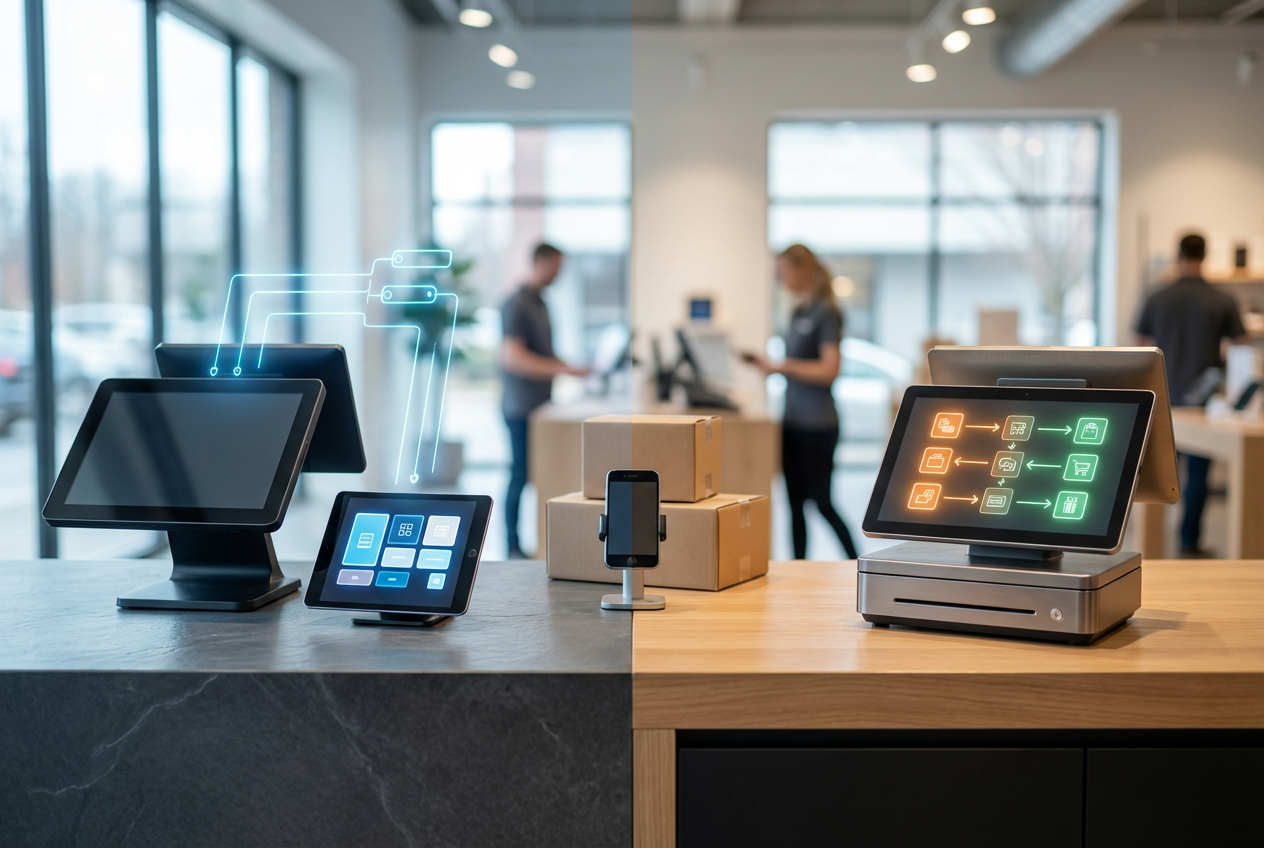
At the center sits a centralized stock database tied to Adidas POS. This inventory synchronization layer keeps every channel aligned, from store shelves to digital carts.
Stock updates move in real time across stores, the website, and the mobile POS app. When one unit sells, availability shifts everywhere. That consistency removes doubt before checkout.
Accurate availability builds trust. Shoppers feel safer committing when sizes and colors reflect reality, not delayed updates.
Store teams see the same data customers see. Staff can confirm availability, reserve items, or guide shoppers to nearby stock without back-and-forth checks.
Real-Time Stock Accuracy Powered by Advanced POS Technology
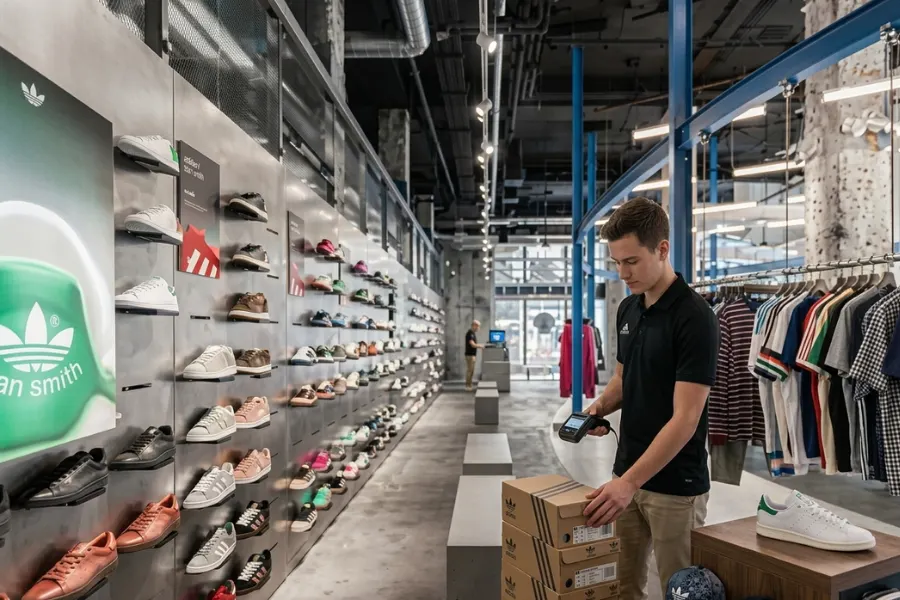
Adidas’s in-store system relies on RFID and automated tracking to follow items closely. Products stay visible as they move between backroom and sales floor.
This approach cuts gaps between physical stock and system records. Fewer mismatches mean fewer awkward moments at checkout.
Near-perfect stock accuracy supports higher conversion rates. Orders don’t fail late in the process, and pickup promises stay realistic.
Canceled orders and “out of stock” surprises drop. The real-time stock system keeps expectations steady, which helps shoppers complete purchases with confidence.
Read more: Top 5 RFID Inventory Management Systems in 2026
Click and Collect and Ship from Store Enabled by Adidas POS
Flexible fulfillment changes how shoppers finish a purchase. People want speed, choice, and fewer surprises after checkout. That’s where Adidas’ retail POS setup connects inventory to fulfillment decisions.
Synchronized stock lets stores act as pickup points or shipping nodes. The store-to-online inventory engine checks availability before orders route, not after.
This approach turns physical locations into active order fulfillment hubs. Orders don’t wait for central warehouses when a nearby store has the item ready.
Pickup and delivery times shrink. Faster options keep momentum high and help more orders reach completion instead of stalling.
Across regions, hybrid fulfillment keeps demand balanced. When one location runs low, another steps in without breaking the buying flow.
Empowering Store Staff to Save Sales in Real Time
Sales don’t end when a shelf runs empty. Adidas’s in-store system gives staff live access to inventory across nearby locations.
Associates can locate the right size or color within seconds. That quick answer keeps conversations moving instead of ending in disappointment.
Connected store technology supports assisted selling on the spot. Staff guide shoppers to pickup options, ship-from-store choices, or nearby stock.
Lost sales drop when alternatives appear instantly. This setup removes stock dead ends and keeps customers engaged until the purchase closes.
POS-Driven Personalization and Smarter Product Recommendations
Personalization only works when it respects reality. Recommendations fall apart if items vanish at checkout. That’s why Adidas’ point-of-sale platform ties product suggestions to the same inventory signals that power availability.
Live stock data flows from the Adidas POS into personalization tools. The system checks what’s on hand before any product appears in a suggestion row.
Only in-stock items show up across channels. Shoppers don’t chase options that disappear later, which keeps attention focused on buying, not rechecking.
Customer history links with live availability. Past sizes, preferred styles, and local stock work together, so suggestions feel relevant rather than random.
This approach cuts friction at the last step. Checkout feels calmer when recommendations match reality, and confidence stays intact right until payment.
Read more: Starbucks POS System Works in 2026
Why Adidas POS Inventory Synchronization Directly Improves Conversion Rates
Conversion issues rarely start at checkout. They begin earlier, when shoppers doubt availability or timing. Adidas’ connected store technology shows how inventory clarity shapes decisions, and this section explains why that link matters.
- Reduced uncertainty during purchase decisions: Live availability removes guesswork. Shoppers commit faster when sizes and colors reflect reality.
- Faster fulfillment aligned with shopper habits: Pickup and local shipping options meet expectations for speed. Orders move forward instead of stalling.
- Fewer failed checkouts from stock mismatches: Accurate inventory data keeps late-stage surprises away. Payment flows stay intact.
- Stronger trust in brand reliability: Consistent signals across channels build confidence. Trust grows when promises hold.
- Higher likelihood of repeat purchases: Familiar, predictable experiences invite return visits. Consistency shapes long-term loyalty.
When the inventory synchronization layer stays tight, the checkout and inventory system supports calm, confident buying. That stability explains why conversions rise without pushing harder on promotions.
Lessons Retailers Can Learn from the Adidas POS Model
Adidas’ retail POS setup offers lessons that reach beyond one brand. These ideas apply wherever inventory and customer journeys intersect.
- Inventory accuracy drives revenue: Stock clarity affects sales outcomes, not just operations. Missed units mean missed orders.
- POS works best as a central system: The in-store platform connects sales, inventory, and fulfillment. Silos slow decisions.
- eCommerce and fulfillment need shared data: Store-to-online inventory engines keep promises realistic. Orders route smarter.
- Scale depends on system design: Multi-store growth stays manageable when data flows cleanly. Expansion feels controlled, not chaotic.
- Omnichannel readiness suits mid-size teams too: Connected workflows aren’t limited to global brands. Smaller retailers gain the same clarity.
These lessons point to one theme. When the store technology stack treats inventory as a live signal, buying journeys stay smooth, and growth follows without friction.
Read more: Inside the Nike POS: Powering the Ultimate Omnichannel Customer Experience
How ConnectPOS Enables Adidas-Style Omnichannel Execution
Retailers chasing Adidas-level omnichannel results need more than separate tools stitched together. They need one POS that keeps stock accurate everywhere, supports flexible fulfillment, and stays reliable under pressure. ConnectPOS is built for that exact job.
- Real-time inventory sync: Stock updates flow instantly between stores and online channels. Customers see what is truly available before they buy.
- Unified product catalog: Products, variants, and pricing stay consistent across all locations. This prevents mismatch issues between store and ecommerce data.
- Click and collect support: Orders placed online can be picked up in store with confidence. Accurate POS stock makes this workflow dependable.
- Ship from store workflows: Physical stores act as fulfillment points. Inventory updates in real time as orders ship.
- Offline selling mode: Sales continue during network drops. Data syncs back automatically once the connection returns.
- Multi-location inventory visibility: Staff can check stock across nearby stores. This helps save sales when one location runs out.
- Order and fulfillment management: In-store and online orders sit in one system. Teams track status without switching tools.
- Customer profiles and purchase history: POS captures customer data across channels. This supports consistent service and smarter recommendations.
- Flexible payment handling: Split payments, refunds, and mixed carts work smoothly. This reduces friction at checkout.
- Role-based staff access: Store teams see only what they need. Managers keep control over sensitive operations.
- Scalable architecture: The platform grows from single stores to large retail networks. Performance stays stable as volume increases.
These capabilities help retailers run one connected operation instead of juggling channels in silos. With accurate stock and reliable POS execution, ConnectPOS supports the same omnichannel foundations that drive higher conversion rates for brands like Adidas.
FAQs: Adidas POS
What is the Adidas POS system designed to support in omnichannel retail?
The Adidas POS system supports unified selling across stores and digital channels. Its main role is to keep inventory, orders, and customer data aligned so shoppers see accurate availability wherever they browse or buy.
How does Adidas POS inventory synchronization increase conversion rates?
Real-time stock synchronization removes doubt during checkout. When shoppers trust that listed items are actually available, they’re more likely to complete purchases instead of abandoning carts.
Does Adidas POS support click and collect and ship from store models?
Yes. Adidas’ retail POS setup connects store inventory with online orders, allowing flexible pickup and local fulfillment from physical locations.
Why is real-time inventory accuracy critical for Adidas-style omnichannel execution?
Accurate inventory prevents failed pickups and canceled orders. This consistency builds confidence, supports repeat buying, and keeps the shopping experience reliable.
What risks arise when Adidas POS inventory data is inaccurate?
Stock mismatches lead to lost sales, delayed fulfillment, and customer frustration. Over time, these issues weaken trust and lower conversion rates across channels.
Final Thoughts
Adidas’ success shows that omnichannel growth depends on one thing above all else, reliable inventory across every touchpoint, supported by the Adidas POS and its connected store infrastructure. When stock stays accurate, checkout feels calm, fulfillment stays flexible, and shoppers trust what they see. That consistency sits behind higher conversion rates, not flashy add-ons. For retailers aiming to follow this model, the focus should stay on connected systems that keep stores and online channels in sync. If you’re ready to build that foundation, contact us to see how ConnectPOS can support your omnichannel strategy.
►►► Optimal solution set for businesses: Shopify POS, Magento POS, BigCommerce POS, WooCommerce POS, NetSuite POS, E-Commerce POS