POS System PayPal In US landscape reflects a shift in how American merchants view in-store payments. A POS system is no longer treated as a basic checkout layer; it is tied to cash flow visibility, customer payment habits, and the link between physical sales and online demand. PayPal POS builds on brand trust and payment familiarity, appealing to small and mid-sized businesses seeking fast deployment and access to PayPal’s user base.
Payment acceptance alone, though, rarely supports sustained retail growth. U.S. merchants increasingly expect stronger inventory oversight, clearer cross-channel data, and operational consistency as sales scale. This article from ConnectPOS examines PayPal POS through a retail operations lens, highlighting where it fits well and where growing businesses may exceed its functional scope.
Highlights
- PayPal POS holds a payment-first position in the U.S. market, shaped by brand familiarity and adoption among small and mid-sized merchants seeking fast entry and recognizable checkout options.
- The system focuses on in-person payments, basic inventory tracking, and sales reporting, with direct ties to PayPal and Venmo linking offline transactions to digital payment behavior.
- PayPal POS fits early-stage retail operations with limited complexity, while scaling businesses may face limits around inventory depth, cross-channel consistency, and store-level control.
PayPal’s Position In The US POS Landscape
PayPal holds a niche but expanding position in the US POS landscape, primarily through mobile and contactless integrations rather than dominating hardware-based systems. It trails leaders like Square, which commands significant market share among small businesses. Recent strategies focus on Apple Wallet integration to boost in-person adoption.
The US POS payment market reached about $133.9 billion globally in 2025, with North America claiming roughly 33% share, driven by contactless and mobile solutions. Point-of-sale terminals alone are valued at $29.11 billion in the US for 2025, growing due to EMV-compliant systems and digital infrastructure investments.
Over half of US consumers used PayPal for POS transactions between mid-2023 and mid-2024, reinforcing the growing role of the POS system PayPal in US, with 67% of payment service users adopting it by Q3 2025. PayPal integrates its debit card with Apple Pay, providing 5% cashback to penetrate physical retail and compete with digital wallets.
It excels in flexible integrations with e-commerce platforms and POS systems, suiting microtransactions and cross-border payments
Core Capabilities Of POS System PayPal In US
The POS system PayPal in US (formerly Zettle) operates as an integrated payment and business management hub for U.S. merchants, linking physical storefront activity with the wider PayPal digital ecosystem.
The platform combines hardware and software to process in-person transactions while tracking business data. It provides a flat-rate pricing model without monthly subscription fees for the basic service. Merchants access their funds quickly, often within minutes of a completed sale, through their linked PayPal Business accounts.
Core Capabilities
- Payment Flexibility Accepts all major credit cards, debit cards, and digital wallets. Customers can also pay via PayPal or Venmo QR codes directly at the counter.
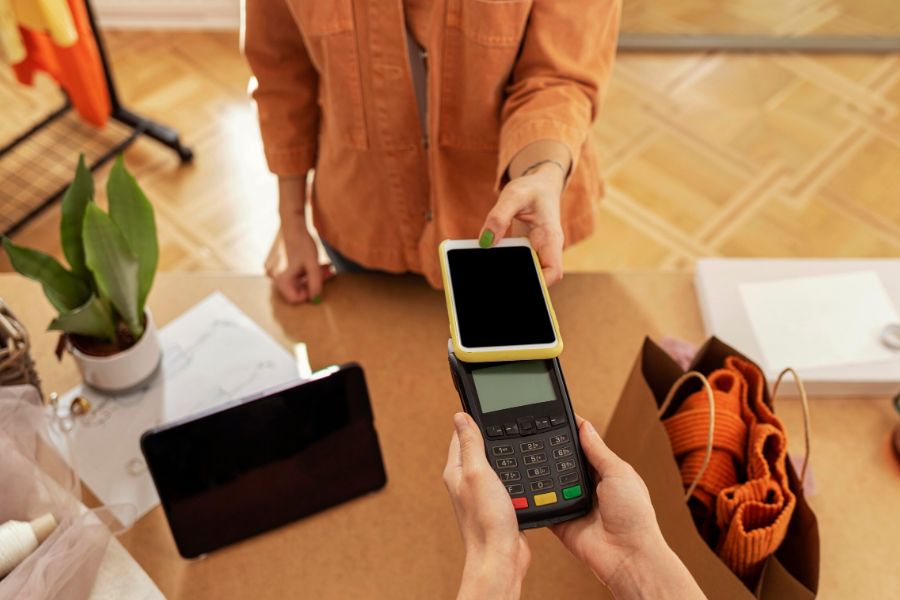
- Mobile “Tap to Pay” Enables contactless payments using only a compatible smartphone. This removes the requirement for separate hardware for mobile or occasional sellers.
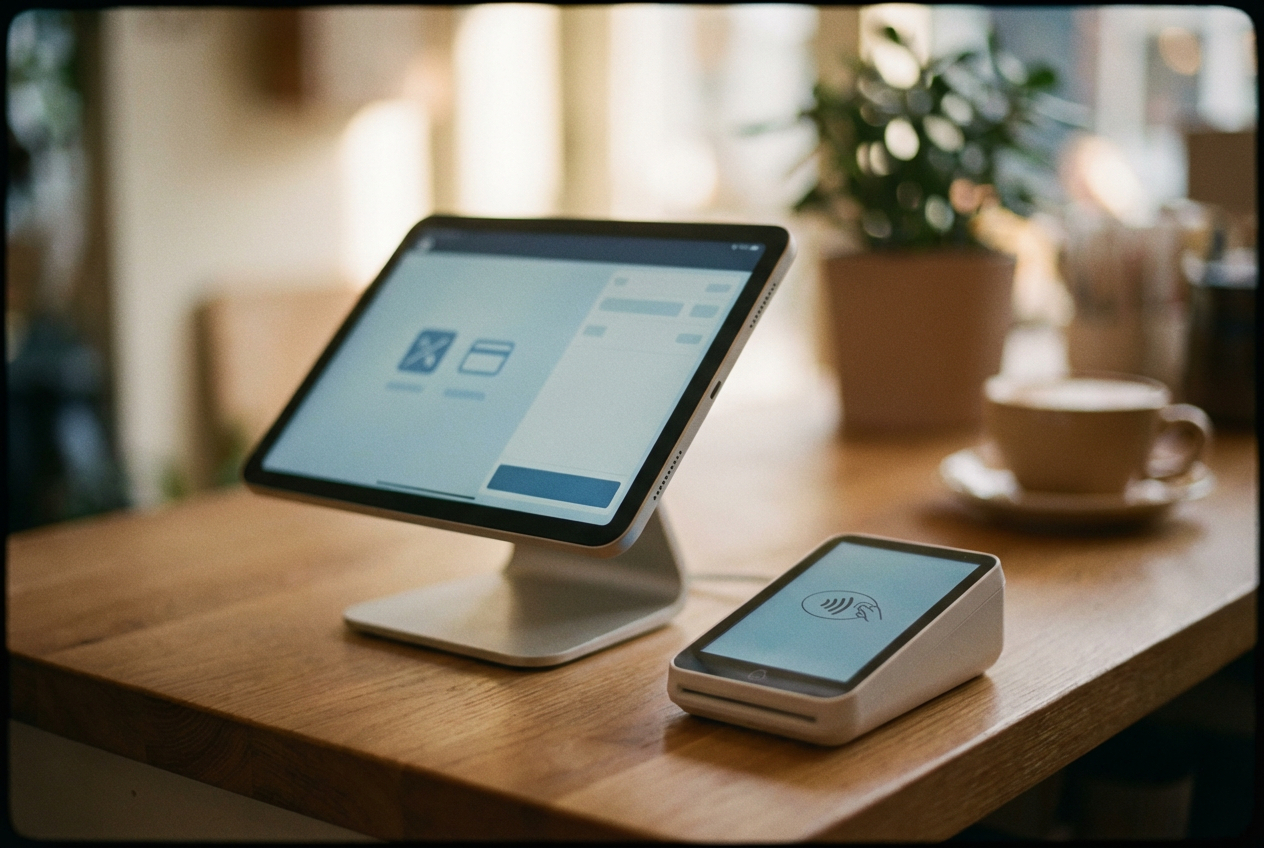
- Hardware Variety Supports diverse setups, including Bluetooth card readers, all-in-one handheld terminals with built-in scanners, and full store kits featuring cash drawers.
- Inventory Tracking Allows users to build a product library with images, prices, and categories. The system sends alerts when stock levels drop below a certain threshold.
- Unified Reporting Generates summaries of sales, taxes, and employee performance. These reports combine data from both in-store sales and integrated online storefronts.
- Omnichannel POS Integration Links with platforms like Shopify, WooCommerce, and BigCommerce. This keeps product counts accurate across physical and digital locations.
- Digital Invoicing Permits the creation and sending of invoices from the POS app. Clients pay these remotely via secure links.
- Fast Access to Funds Sales proceeds typically reach the PayPal Business account in minutes. Merchants can use these funds immediately with a linked business debit card.
- Transparent Pricing Uses a pay-as-you-go model with no long-term contracts. Merchants only pay fixed transaction fees without hidden costs.
Read more: POS Review: ConnectPOS vs Paypal Point of Sale
Pro and Cons Of PayPal POS In The US
Evaluating the POS system PayPal in US involves examining its role as a bridge between digital payments and physical retail. While it serves as an accessible entry point for new sellers, it lacks certain advanced capabilities found in dedicated retail systems.
Strengths of PayPal POS System
POS system paypal in US market stands out for its fast setup, no monthly fees, and smooth integration with the PayPal–Venmo ecosystem, making it easy for small businesses to start accepting payments quickly.
- Low Barrier to Entry Merchants sign up and start selling quickly without credit checks or long approval processes. The pay-as-you-go model requires no monthly subscription fees, making it cost-effective for seasonal or low-volume businesses.
- Ecosystem Synergy The system connects deeply with the PayPal and Venmo networks. Business owners can access sales funds almost immediately via the PayPal Business Debit Card, assisting with daily cash flow.
- Payment Variety Beyond standard cards, the system natively supports Venmo and PayPal QR codes. This caters to a large demographic of mobile-first shoppers who prefer digital wallets over physical plastic.
- Unified Commerce Sales data from physical locations and online stores (like Shopify or WooCommerce) sync to a single dashboard. This centralization simplifies bookkeeping and inventory management across different sales channels.
Limitations and Trade-offs
However, its reliance on internet connectivity, limited advanced features, and flat-rate pricing can become drawbacks as businesses scale or require more operational control.
- Account Stability Risks As a third-party processor, PayPal sometimes freezes funds or holds accounts during sudden sales spikes. This lacks the stability of a dedicated merchant account provided by competitors like Clover or Helcim.
- Absence of Offline Mode The software requires a constant internet connection to process transactions. If the Wi-Fi or cellular signal fails at a market or during an outage, the merchant cannot accept card payments.
- Basic Feature Set The platform lacks specialized tools for specific industries. For example, it does not support restaurant floor plans, table management, or complex loyalty programs common in systems like Toast or Square.
- Customer Support Challenges Users often report difficulty reaching human representatives for urgent issues. Automated resolution systems can lead to delays when resolving hardware failures or disputed transactions.
- Fixed Scaling Costs The flat-rate transaction fee remains the same regardless of volume. High-volume retailers may find this more expensive than the interchange-plus pricing models provided by other providers.
ConnectPOS Is An Ideal PayPal POS Alternative In The US
ConnectPOS is an omnichannel solution designed to address the technical gaps often encountered with the POS system PayPal in the US. While PayPal targets micro-merchants with simplified tools, ConnectPOS supports deeper customization, a reliable offline mode, and greater freedom in payment provider selection. This system helps retailers maintain data consistency between physical counters and major eCommerce platforms.
Why ConnectPOS Is An Ideal Alternative
- Offline Mode Capability: Allows sales to continue during internet outages. The system stores transaction data locally and syncs it automatically once the connection returns, preventing the forced downtime often experienced with PayPal.
- Payment Provider Choice: Enables merchants to link with various payment gateways instead of remaining locked into the PayPal ecosystem. This flexibility allows growing businesses to find lower transaction rates as their volume increases.
- Advanced Inventory Management: Supports multi-warehouse tracking, stock transfers between locations, and barcode label generation. It provides a real-time view of stock levels across both physical aisles and digital storefronts.
- Omnichannel Fulfillment: Facilitates modern retail workflows like “Buy Online, Pick Up In-Store” (BOPIS) and “Click and Collect.” Customers receive a unified experience whether they shop via a smartphone or at a brick-and-mortar register.
- E-commerce POS Platform Synergy: Integrates directly with eCommerce platform Shopify, Magento, and BigCommerce. Unlike basic setups, it handles complex product variants and tax rules across different states or regions automatically.
- Customer Loyalty Tools: Features reward point systems and gift card management. These tools help track shopper history and encourage repeat visits, a step up from the basic transaction focus of PayPal.
- Detailed Analytics: Provides granular reports on profit margins, staff productivity, and peak sales hours. Business owners use these insights to manage schedules and stock orders more effectively.
Read more: Take A Look At This Top 10 POS For Popup Shops
FAQs
What payment methods does the PayPal POS system accept in the US?
Merchants can accept:
- Credit & debit cards (chip & tap)
- Contactless payments (Apple Pay, Google Pay, etc)
- PayPal & Venmo QR code payments
- Manual card entry
These options help increase payment flexibility and reduce checkout friction
Is PayPal POS suitable for the US market?
Yes. PayPal POS fits the U.S. market well thanks to no monthly fees, fast onboarding, and wide acceptance of cards, digital wallets, PayPal, and Venmo, which are commonly used by U.S. consumers.
How does PayPal POS compare with ConnectPOS in the US retail?
POS system paypal in US is ideal for simple, payment-first setups, while ConnectPOS is better suited for U.S. retailers needing advanced omnichannel inventory, multi-store management, and deep eCommerce integrations for scalable growth.
Conclusion
The POS system PayPal in US holds a clear place in the market as a payment-centric solution built around simplicity and familiarity. It aligns well with merchants seeking quick deployment, recognizable payment methods, and low upfront commitment. For businesses running a single location or managing limited catalog depth, the system can handle day-to-day transactions without friction.
Growth places new demands on a POS environment. As retailers expand channels, locations, and fulfillment models, operational control and data clarity take priority. ConnectPOS supports U.S. merchants at this stage with a retail-focused POS designed for deeper inventory oversight, omnichannel alignment, and scalable store management. Connect with the ConnectPOS team to assess how a purpose-built system can support expansion beyond payment processing.