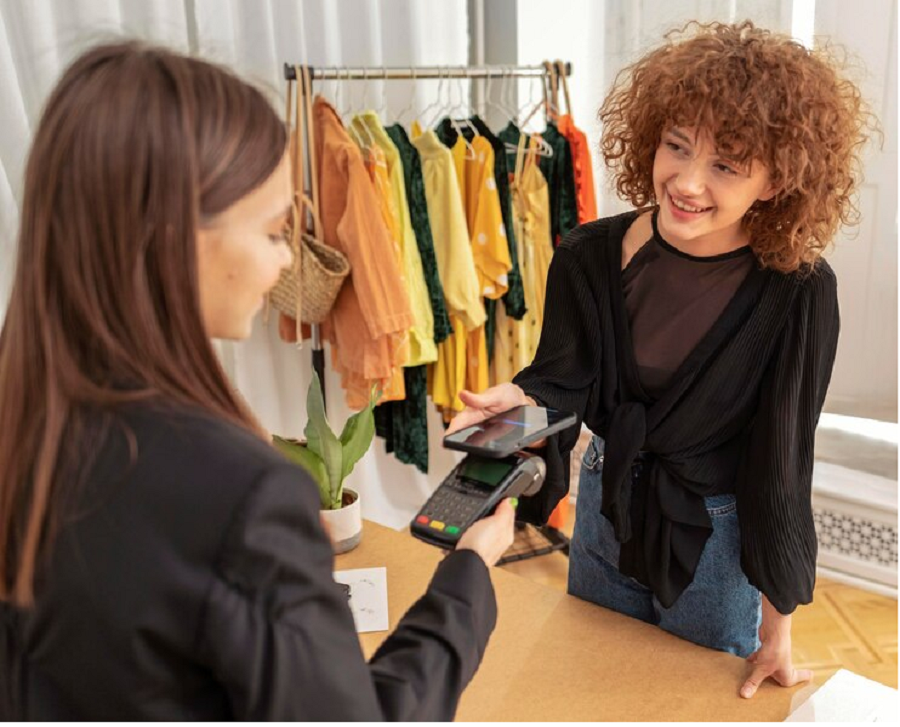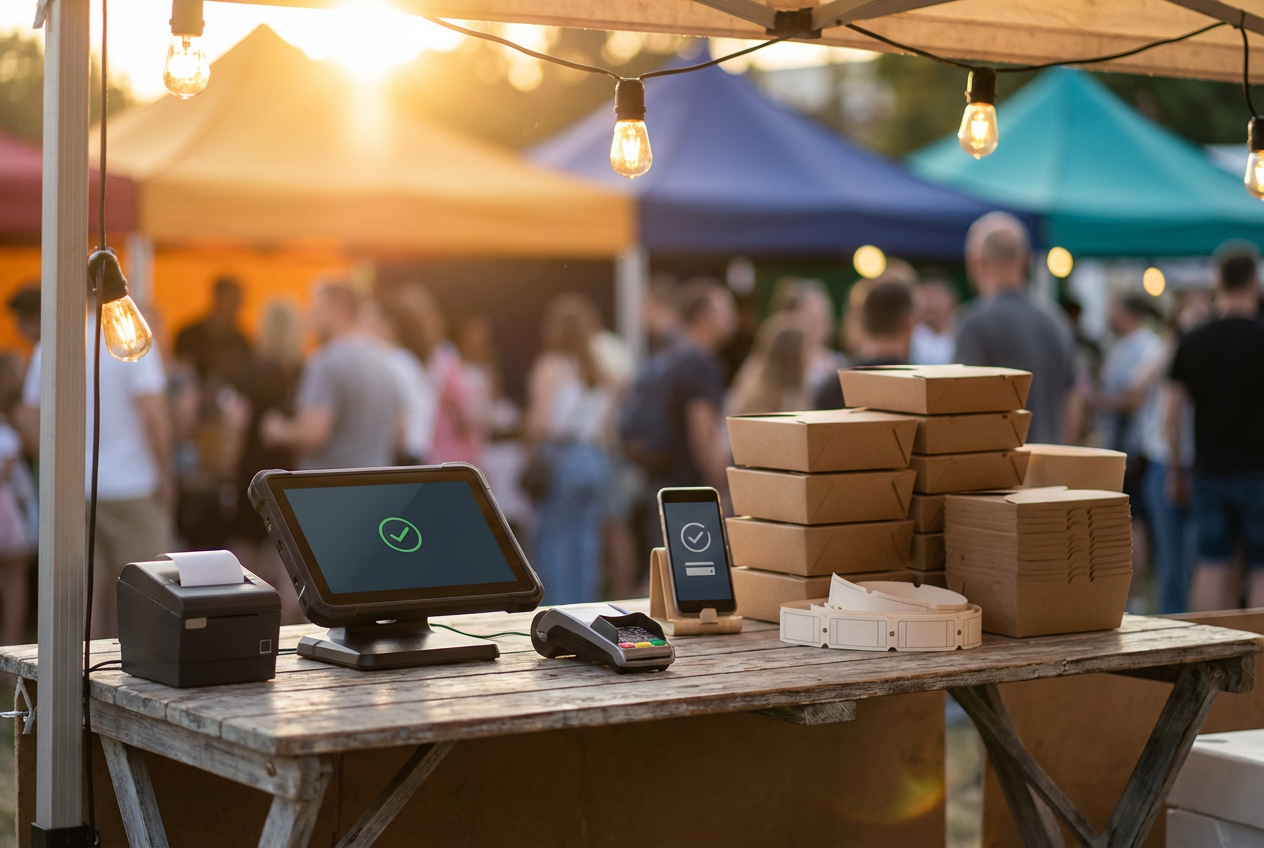
Event organizers handle intense foot traffic, unpredictable demand patterns, and tight sales windows, so the system behind ticketing, merchandise sales, and entry control must be built for real operational pressure. It requires clarity on how the event sales POS handles ticket rules, seating maps, payment flow, vendor coordination, and real-time visibility across the venue. This article from ConnectPOS advises event leaders on the key considerations that separate a surface-level solution from one that truly supports complex event execution.
Highlights
- Event sales require handling high transaction volumes, ticketing, merchandise, and multiple payment types in dynamic environments, demanding a POS that can process all efficiently.
- Selecting an event sales POS involves assessing inventory tracking, real-time reporting, staff permissions, and integration with digital ticketing and e-commerce systems.
- The right solution supports mobile check-in, seat management, and on-site order fulfillment while maintaining accurate data across all channels and locations.
Key Challenges of Event-Based Selling
Selling at pop-up shops, trade shows, or outdoor markets poses challenges far exceeding those of permanent storefronts. The success of temporary retail demands exceptional technological preparedness and operational rigidity. Companies attempting these ventures must understand that event selling requires planning for systemic breakdown, not just daily execution. The infrastructure employed must secure sales continuity despite unpredictable external factors.
Below are the primary operational tensions faced by businesses when setting up temporary retail locations:
- Foot Traffic Volatility: Crowd density shifts rapidly; a sales system must sustain unexpected, high-volume transaction spikes without delay. A rapid checkout flow is necessary to prevent long queues from deterring prospective buyers.
- Connectivity Instability: Internet access at remote or crowded venues commonly fails. Store platforms must complete sales, authorize payments, and record data accurately while fully disconnected from the network.
- Space Constraint Realities: Standard Point of Sale hardware consumes too much retail area. Operations rely on small-format devices that keep the physical sales footprint minimal, making room for more product display.
- Payment Method Diversity: Consumers arrive expecting payment with cash, card, and digital wallets. Acceptance necessitates a complete array of payment terminal connections and processing capabilities.
- Transient Inventory Tracking: Stock transferred from a fixed warehouse to a temporary venue creates potential inventory gaps. Stock counts must immediately update and synchronize across the central store and the remote location.
- Workforce Adaptability: Temporary team members need instant readiness. The application interface must feel simple, allowing personnel to reach full operational capability with only small guidance.
Read more: POS Systems for Pop Up Shops
How to Choose an Event Sales POS Solution – Features Consideration?
Finding an event sales POS for temporary retail events demands a different set of evaluation criteria than choosing one for a static brick-and-mortar location. The dynamic, unpredictable nature of pop-up selling means reliability under duress must take precedence over standard functionality. The system chosen is a piece of operational insurance that safeguards every transaction made outside the controlled environment of a physical store.
Mobility and Portability
According to Global Growth Insights, the global mPOS market is projected at $452.87 million in 2024 and is expected to grow at a CAGR of approximately 11.6% from 2025 to 2034. This highlights the growing adoption of mobile POS systems, particularly suited for flexible retail models such as pop-up shops and temporary events.
The system’s physical design determines its fitness for an event. Ideal hardware should present a small footprint, relying on tablets or smartphones rather than bulky stationary terminals. The POS must withstand movement, packing, and rapid deployment without requiring dedicated power sources beyond internal battery life.
True portability extends beyond hardware size; it governs staff capability. When systems can move with the salesperson, they allow for queue breaking and sales finalization away from a fixed checkout point. This ability directly impacts customer throughput, transforming constrained counter space into a mobile sales zone.
Offline Capabilities
Event venues frequently provide inadequate or intermittent network access. A viable event sales POS solution requires an “offline-first” architecture, permitting full transaction processing when internet connection drops entirely. The system must locally store every sale, inventory adjustment, and payment attempt.
When network stability returns, the system’s ability to synchronize local data to the central cloud becomes important. This automatic reconciliation prevents data loss and maintains account accuracy for inventory and sales reporting. Without this fail-safe, the retailer risks inaccurate stock levels and unreported revenue.
Checkout Speed and Ease of Use
According to TNS, POS downtime can cost an average of $9,000 per minute if the system loses connection or crashes.
Transaction speed dictates maximum sales volume during brief peak periods. The interface must permit swift product lookup, discount application, and payment finalization with minimal input steps. Any delay in the purchase cycle immediately translates to lost opportunity and queue growth.
Simplicity of operation also affects staff readiness. Since many event personnel are temporary or casual, the POS application interface must be highly intuitive. Minimal training time is required for a system with clear prompts and logical workflows, permitting rapid staff onboarding.
Read more: The Ultimate Guide: Choosing the Best POS for Events in US
Inventory Control
Stock management for events involves movement between established stores, warehouses, and the temporary pop-up site. The event sales POS must possess multi-location tracking capabilities, maintaining a precise record of where stock resides at any given time. This requires instant updates as items are removed for transfer or sold.
A failure in inventory communication leads to overselling, committing to a sale for an item physically unavailable. The proper synchronization of event sales back to the central data platform is key for maintaining stock accuracy and informing restocking decisions across the entire organization.
Payment Flexibility
Customers expect to pay with cash, EMV/chip cards, magnetic stripe cards, or contactless digital wallets. For temporary events, POS systems must support all methods, securely store offline transactions, and submit them once connectivity returns. ECB data shows card-present fraud totaled €177 million in 2021, highlighting the need for secure, EMV-compliant processing.
High-value event sales often use split-tender payments. A reliable POS handles multiple payment types smoothly, guarantees fast checkout, and reconciles offline transactions automatically, reducing risk and keeping customers satisfied in dynamic pop-up environments.
Scalability for Events of All Sizes
The selected event sales POS needs elasticity to accommodate business expansion, whether that involves adding a single extra register or fielding ten separate stations for a major festival. The underlying cloud architecture must scale processing power without causing lag or data conflicts as more users log on.
Scalability also pertains to the type of event the business attends. A system suitable for a weekend farmers’ market must also provide the functional depth, such as custom reporting, permission management, and complex promotions, required for a large, multi-day consumer show.
Read more: Event POS System | Event Management System Software
Why Event Sales POS ConnectPOS Is a Strong Fit for Event Sales
ConnectPOS provides an event POS solution engineered specifically for high-pressure event environments, combining ultra-fast ticketing, mobile-first operations, and real-time control across ticketing, entry, merchandise, and vendor management. It guarantees smooth attendee flow, stronger revenue capture, and smooth coordination across every touchpoint, whether you’re running a festival, trade show, sports event, or theme-park-style venue.
Key Strengths
- High-speed ticketing & check-in: QR/ID scanning, mobile ticket validation, and instant tier recognition minimize bottlenecks and dramatically improve gate throughput.
- Flexible commerce options for attendees: Supports cashless payments, digital tickets, promo codes, BNPL, and click-and-collect, allowing organizers to boost conversion and upsells at every stage.
- End-to-end event operations in one system: Manage seating maps, entry rules, vendor booths, and merchandise catalogs with unified data synced to HQ in real time.
- Intelligent, real-time insights: Live dashboards track ticket tiers, booth performance, F&B orders, and inventory levels so teams can respond to demand instantly.
- Inventory control built for peak-volume events: Automated stock alerts, real-time syncing, and fast item lookup help prevent stockouts during rush periods.
- Role-based staff permissions: Configure granular access such as ticketing, scanning, settlement, inventory to maintain security and reduce operational errors.
- Deep integration ecosystem: Connect effortlessly with major eCommerce POS platforms, ERP, CRM, and multiple payment gateways for a fully connected event workflow.
- 24/7 event-specialized support: Round-the-clock assistance secures mission-critical uptime throughout event setup, peak traffic, and close-out operations.
Conclusion
To make the right choice, it’s crucial to understand how well a POS system supports your workflow, transaction volume, and overall customer experience. A well-chosen event sales POS system is not just a utility; it’s the solid foundation that instills absolute confidence in event teams during peak hours. It plays a pivotal role in smoothing coordination between departments and maintaining flawless accuracy across all inventory, from tickets and seating assignments to merchandise.
If you are looking for a solution designed to completely unify ticketing, retail, and in-event operations under one singular ecosystem, explore ConnectPOS. Contact our team today for a tailored demonstration that highlights exactly how we can perfectly fit your unique event needs.
FAQs Event sales pos
What core capabilities should I look for in an event sales POS?
An effective event POS must handle ticketing, merchandise, and food/beverage transactions under one system. It should validate tickets, manage seat maps, and process sales offline or online without data lag. Real-time reporting and inventory visibility are critical to maintain control during high-traffic periods.
How do I know if a POS can scale for high-volume events?
Check whether the system supports peak transaction volumes, such as rapid scan speeds, queuing capacity, and offline resilience. Ask for real-world metrics: how many ticket scans or sales per minute the solution supports, and whether sync to HQ lags under load.
What types of payments and ticket options must a modern event POS support?
You should aim for a POS that handles digital ticketing (mobile QR, PDF), physical tickets, promo codes, and fragmented checkouts (split tenders). Payment flexibility also matters — credit and debit cards, contactless payments, Buy Now Pay Later, and in-app payments should be supported.