A POS system is at the center of how retail businesses in the US run their daily operations. More than just a payment processing tool, a modern retail POS system connects sales, inventory, customer data, and online channels in one place. As consumer expectations shift toward faster checkout, flexible fulfillment, and seamless online-to-store experiences, POS technology has also evolved.
What is POS system in retail in USA? Understanding what a POS system is and how it works in the US retail market helps retailers choose solutions that fit their store size, industry, and growth plans. This article breaks down the basics, key components, and role of POS systems in today’s retail landscape.
Highlights
- A POS system for retail in the USA is a combination of software and hardware that processes transactions, manages data, and connects in-store and digital operations into a single centralized platform.
- Key features include sales processing, inventory tracking, multi-payment support, customer management, tax calculation, reporting, and compliance with US standards, such as sales tax and secure payment requirements.
- Modern retail POS systems unify online and offline channels, provide real-time inventory visibility across locations, and enable services like BOPIS and curbside pickup to meet evolving US consumer expectations.
What Is POS System in Retail in USA?
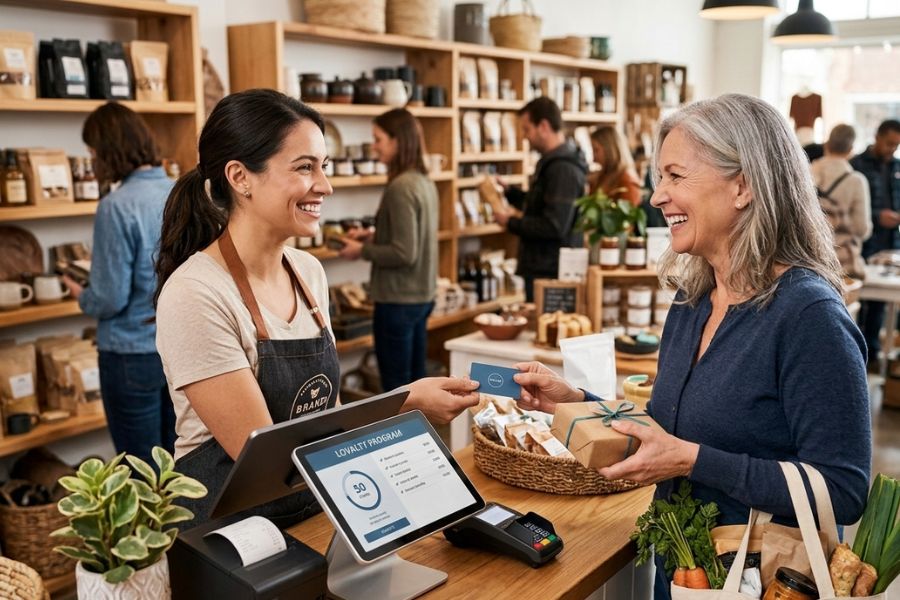
A POS (Point of Sale) system in retail is a combination of software and hardware that enables a store to process sales transactions and manage related operations. At its core, a retail POS system processes payments, records sales data, and issues receipts. Modern POS software goes further by connecting inventory, customer information, staff activities, and reporting into a single system.
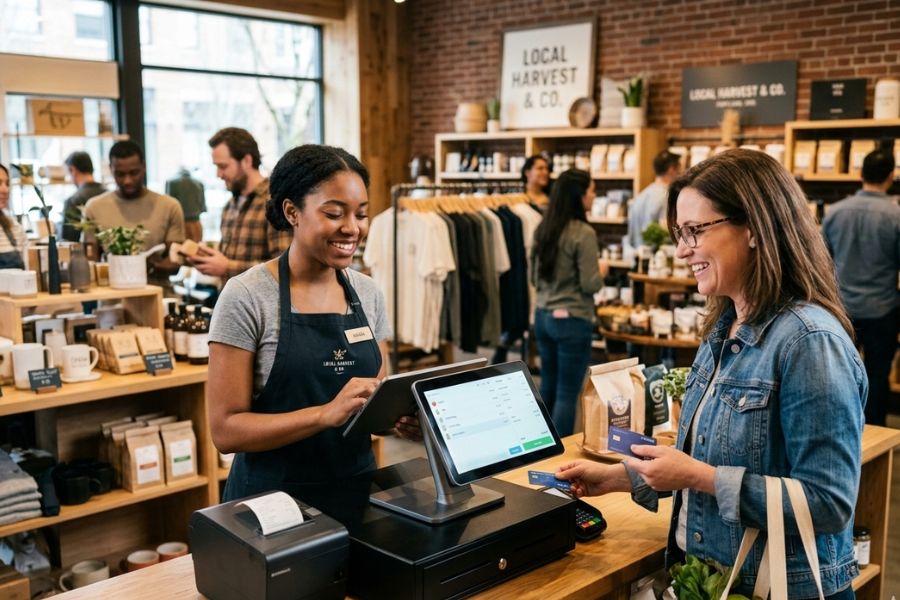
In US retail stores, POS systems are used at checkout counters, mobile devices, and self-service stations. They support multiple payment methods, track stock levels in real time, apply promotions, and sync data across stores and online channels. Many retailers also rely on POS systems to manage returns, exchanges, and customer profiles.
Traditional cash registers were limited to basic transaction recording and cash handling. Modern POS systems are cloud-based, software-driven platforms that provide real-time insights, remote access, and integration with e-commerce, accounting, and inventory tools. This shift allows retailers to operate more efficiently and scale with confidence.
Read more: The Best POS Systems for Retail Stores in US for Omnichannel Selling
How Retail POS Systems Work in the USA
Retail POS systems in the USA combine software, hardware, and payment services to manage the entire checkout process and related store operations. Together, these components ensure sales are accurate, secure, and compliant with local regulations.
Core components: software, hardware, payment processing
POS software acts as the control center. It manages product catalogs, pricing, promotions, inventory levels, and customer data.
The software runs on POS hardware, including terminals, tablets, barcode scanners, receipt printers, and cash drawers.
Payment processing connects the POS to banks and card networks, allowing stores to accept credit cards, debit cards, mobile wallets, and contactless payments. In many US stores, these components are cloud-based, enabling real-time data synchronization across locations and online channels.
►►► Optimal solution set for businesses: Multi store POS, Next-gen POS, Inventory Management Software (MSI), Self Service, Automation, Backorders

Read more: Wholesale POS Software Pricing: What Are The Influencing Factors?
Sales transactions, receipts, and tax calculations
When a cashier scans items or adds them to the cart, the POS system automatically calculates the total. Discounts, loyalty rewards, and promotions are applied based on predefined rules. The system then calculates sales tax according to the store’s location and tax settings.
Once payment is approved, the POS records the transaction, updates inventory, and generates a digital or printed receipt. This automation reduces manual errors and speeds up checkout, even during peak hours.
Compliance with US retail requirements (sales tax, PCI DSS, EMV)
US retail POS systems must meet strict compliance standards.
- Sales tax rules vary by state and city, so POS software needs flexible tax configuration.
- PCI DSS compliance ensures that cardholder data is handled securely.
- EMV support allows secure chip-based card payments, which are now standard across the US.
By meeting these requirements, modern POS systems help retailers stay compliant while providing a safe and reliable checkout experience.
Read more: Top 5 POS Systems for Retail Store in The US (List of 2026)
Key Features of a Modern Retail POS System
Modern retail POS systems are designed to support more than checkout. They help retailers manage daily operations, improve customer experience, and make informed business decisions. Below are the key features US retailers expect from a modern POS system.
- Order management: Manage in-store, online, and click-and-collect orders in a single system. Advanced POS platforms provide centralized order tracking, fulfillment coordination, returns handling, and backorder management.
- Multi-store POS: For retailers operating multiple locations, strong POS systems offer centralized control over pricing, promotions, inventory transfers, and performance reporting across all stores.
- Inventory management and stock tracking: Track stock levels in real time across stores and warehouses. POS systems automatically update inventory after each sale, reduce stockouts, and support reordering and transfers.
- Flexible payment methods: Accept credit and debit cards, mobile wallets like Apple Pay and Google Pay, and Buy Now, Pay Later (BNPL) options. This flexibility meets customer payment preferences and speeds up checkout.
- Customer management and loyalty programs: Build customer profiles, track purchase history, and run loyalty programs or personalized promotions directly from the POS.
- Reporting and analytics for sales performance: Access sales reports, product performance, and staff activity to understand trends and improve decision-making.
- Offline mode and real-time data sync: Continue selling during internet outages, then sync data automatically once the connection is restored, keeping records accurate across all channels.
Why Omnichannel Retailers in the USA Need a POS System
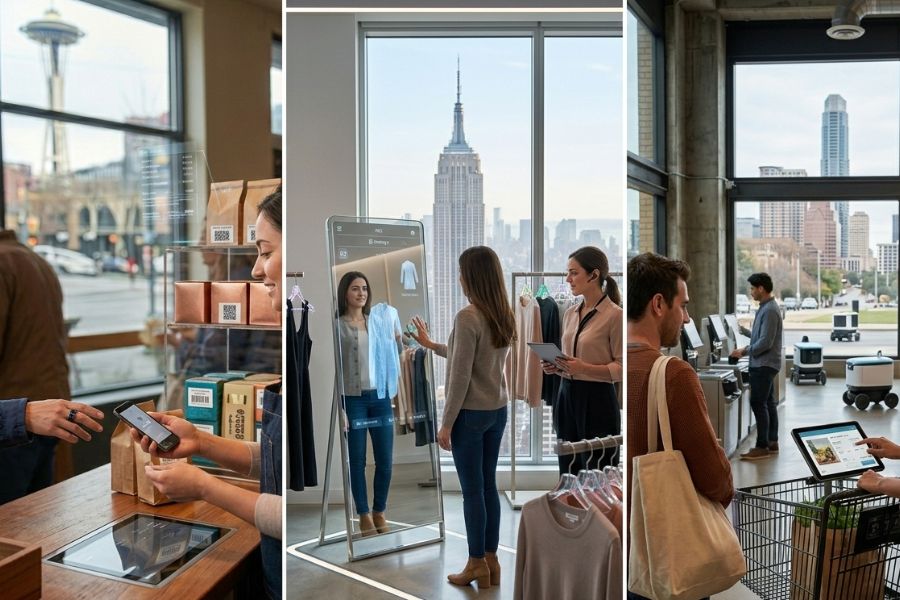
73% of retail consumers are omnichannel shoppers, meaning they interact with brands across online and in-store channels when making purchases. Meanwhile, omnichannel retail in the USA depends on consistency across every touchpoint. A POS system plays a key role in connecting physical stores, online shops, and fulfillment locations into one coordinated operation.
Unified online and offline selling experiences
A POS system keeps pricing, promotions, and product data consistent across in-store and online channels. This creates a seamless shopping experience, no matter where the purchase happens.
Real-time inventory across stores and warehouses
Omnichannel POS systems provide a single view of inventory. Retailers can see available stock across locations, reduce overselling, and fulfill orders more accurately.
Buy Online, Pick Up In Store (BOPIS) and curbside pickup
POS systems support flexible fulfillment options by syncing online orders with store inventory and staff workflows, enabling fast, reliable pickup.
Improved customer experience and operational efficiency
Faster checkout, accurate stock information, and personalized service improve customer satisfaction, while automation reduces manual work and operational costs.
Integrated loyalty programs
A connected POS enables retailers to run loyalty programs across all channels. Customers can earn and redeem rewards online or in-store, while retailers gain better insight into shopping behavior.
Read more: Retail POS Trends And Statistics For 2026
ConnectPOS – A Modern Retail POS System for the US Market
ConnectPOS is built for US retailers that need more than a standard checkout system. It is a modern, cloud-based POS ecosystem designed to support omnichannel operations, complex inventory flows, and long-term growth across stores and digital channels.
- Next-generation cloud POS ecosystem – ConnectPOS centralizes sales, inventory, customers, and operations in one platform, giving retailers a unified view of their business in real time.
- API-first, microservices, and headless architecture – The platform is designed for scalability and flexibility. Retailers can customize workflows, add integrations, and expand features without disrupting existing operations.
- Real-time omnichannel inventory with multi-source inventory (MSI) – Track inventory across stores, warehouses, and fulfillment points. MSI enables accurate stock visibility and smarter order routing.
- Seamless eCommerce POS platform – ConnectPOS integrates with Shopify, Magento, BigCommerce, WooCommerce, NetSuite, commercetools, and standalone setups, ensuring smooth data flow across systems.
- Offline mode with real-time sync – Stores can continue selling during network disruptions and automatically sync data once reconnected.
- Extended retail capabilities – Support self-service kiosks, consumer apps, loyalty programs, and backorders to meet modern shopping expectations.
- Built for all retail sizes – ConnectPOS works for single-store retailers and large US enterprises managing high transaction volumes and complex operations.
FAQs: What is POS System in Retail in USA?
What does a POS system cost in the USA?
POS system costs in the US vary based on features, store size, and deployment. Entry-level POS software can start from low monthly fees, while advanced omnichannel systems are priced higher. Retailers should also consider hardware, payment processing fees, integrations, and ongoing support when evaluating total cost.
Can a POS system work offline in retail stores?
Yes. Many modern retail POS systems support offline mode. This allows stores to continue processing sales during internet outages. Once the connection is restored, transactions and inventory data automatically sync to keep records accurate.
Is a POS system required for small retail businesses?
A POS system is not legally required, but it is highly recommended. Even small retailers benefit from faster checkout, basic inventory tracking, and sales reporting, which help reduce errors and improve daily operations.
Can a POS system integrate with eCommerce platforms?
Yes. Modern POS systems are designed to integrate with eCommerce platforms such as Shopify, Magento, BigCommerce, and WooCommerce. These integrations enable unified inventory, orders, and customer data across online and in-store channels.
How do retailers choose the right POS system in the US?
Retailers should evaluate their business size, industry needs, growth plans, and omnichannel requirements. Key factors include ease of use, scalability, integration options, compliance with US regulations, and reliable support. A future-ready POS system should grow alongside the business.
Read more: The Future of Business POS Systems in US: Retail Trends in 2026
In Conclusion
“What is POS system in retail in USA?” A POS system is a foundation of modern retail in the USA, supporting sales, inventory management, customer engagement, and omnichannel operations. As retail becomes more connected and customer expectations continue to rise, choosing the right POS system can directly impact efficiency, scalability, and long-term growth. ConnectPOS is built to meet these demands with a flexible, cloud-based architecture designed for US retailers of all sizes. If you are looking to upgrade your POS or build a future-ready retail ecosystem, contact us to see how our solution can support your business today and as you scale.
►►► Optimal solution set for businesses: Shopify POS, Magento POS, BigCommerce POS, WooCommerce POS, NetSuite POS, E-Commerce POS