Crowds move fast at live games, and service often struggles to keep up. A strong sporting event POS system helps you keep lines short and fans happy, even when pressure peaks. Many venues still fight slow checkouts and messy setups that break the flow. In this guide of ConnectPOS, we will show you how smart tools change that rhythm and create an experience your audience remembers.
Highlights
- A strong sporting event POS system keeps crowds moving with fast checkouts, flexible payment options, and reliable offline performance.
- Make sure all hardware, payments, staff, and vendor plans are tested and in place, because a sporting event POS only performs well when everything around it runs on schedule.
What is a Sporting Event POS System?
In big venues, studies show that around 7 or 8 out of 10 fans buy food or drink at a game, and they often spend about 30 to 40 dollars each on concessions. These spends stack up quickly when tens of thousands of people are inside one venue. A sporting event POS system supports stadiums, arenas, and large tournaments where speed shapes the visitor journey. These events draw heavy foot traffic, and every second matters when fans rush for food, drinks, or merchandise.
Traditional retail POS tools fall behind during these moments. Research on retail lines finds that about 4 in 10 shoppers have walked out of a store because the line was too long, so slow systems quickly turn into lost sales in a stadium too. They struggle with sudden spikes, long queues, and network interruptions that often happen when thousands of people use the same space.
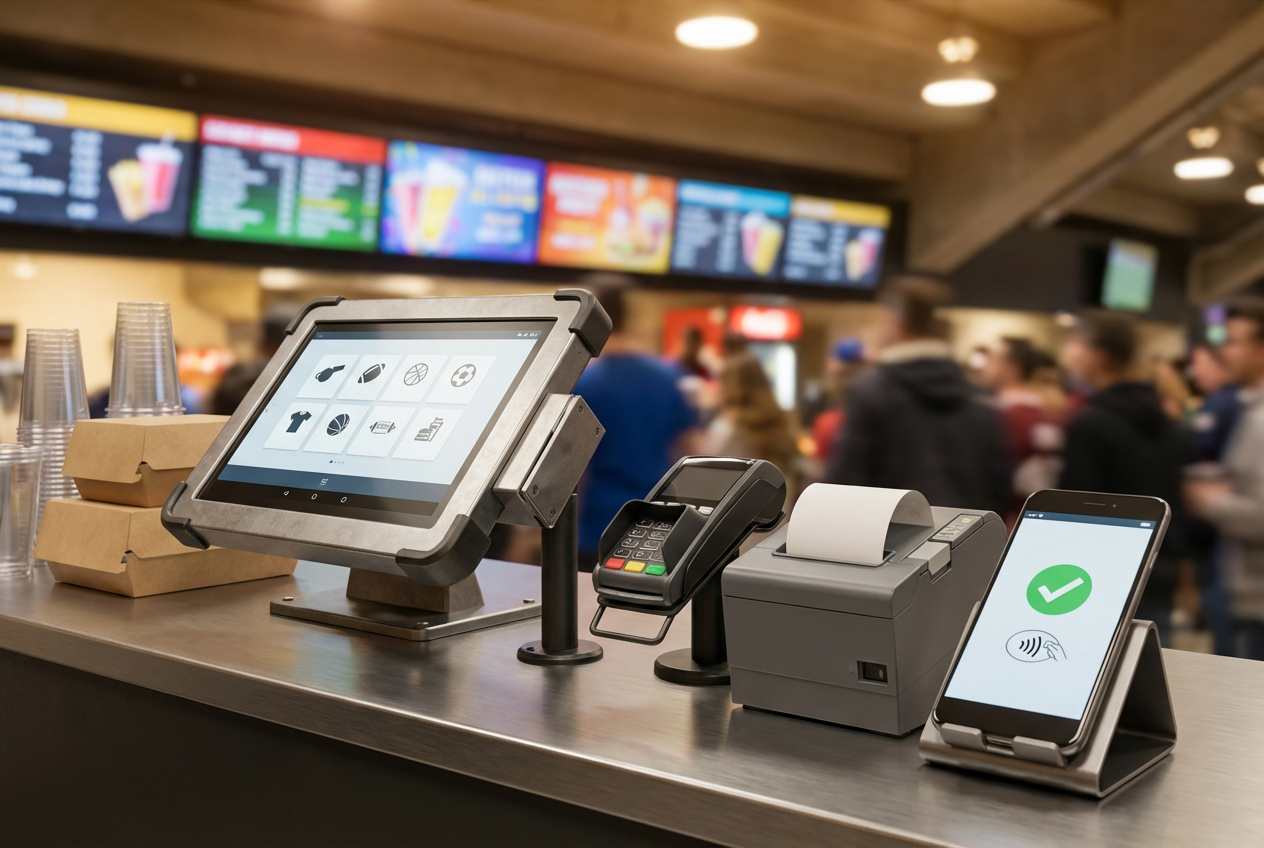
A modern event POS focuses on fast checkouts and flexible payment choices. Worldpay reports that digital wallets made up about 30% of all point of sale consumer spend in 2023, and wallet use continues to rise each year, so fans expect quick tap and go options at every stand. It uses mobile devices, kiosks, and smooth digital payments to keep service running even when demand jumps.
This approach goes beyond basic transactions. It becomes part of the fan experience, creating a steady flow that lets people enjoy the event without feeling stuck in long lines or confusing payment steps.
Read more: How A Ticketing POS System Can Help You Deliver Exceptional Events In 2026
Key Challenges at Live Sports Events That POS Must Solve
Live sports events often expose weak links in a venue’s service flow. Crowds move in waves, and teams must adjust quickly as demand shifts from one corner of the stadium to another. A strong system keeps work steady even when pressure rises without warning.
- High-volume rush periods and long queues at concessions: Crowds surge right before kickoff or during halftime. These moments push teams to move fast, and slow checkouts turn excitement into frustration. A system built for speed helps staff keep lines short so fans return to their seats without missing the action.
- Unstable network environments, need for offline performance: Stadiums often struggle with connectivity because thousands of devices compete for the same signal. A POS that keeps selling during outages prevents long pauses and protects revenue. Teams avoid the stress of losing orders when the network drops.
- Fragmented payment points: parking, ticketing, F&B, merchandise: Fans spend across many touchpoints, and scattered systems create delays. When payments stay unified, teams see every transaction in one place. This makes buying smooth and keeps the event moving without confusion.
- Staff turnover and need for fast training: Seasonal staff often join right before major events. Simple screens and clear steps help new team members settle in quickly. This keeps service quality high even when fresh staff handle busy hours.
- The need for real-time visibility for operations: Managers must see what is selling, where lines grow, and when stock dips. Quick updates help them shift staff, open new lanes, or restock items the moment demand rises.
These challenges appear at every major event. A strong system solves them early so teams stay focused on serving fans at their best.
Checklist of the Best Sporting Event POS System
A strong sporting event POS keeps your service steady even when crowds shift fast. Each part plays a clear role in helping teams move quickly, cut waiting time, and guide fans through a smoother experience. We’ll show you the key things that are the most important when the crowd gets busy.
High-volume processing
►►► Optimal solution set for businesses: Multi store POS, Next-gen POS, Inventory Management Software (MSI), Self Service, Automation, Backorders

A good system must move fast during peak demand. Crowds often buy food or merchandise at the same moment, and slow hardware hurts the flow. Quick screens and responsive software help staff process orders without delays. Many teams at large venues say this alone cuts long lines during halftime.
Offline or stored-forward mode
Network issues are common when thousands of guests connect at once. A smart setup keeps sales running even when the signal drops. Orders stay safe, and the system uploads them once the network returns. This prevents lost sales and keeps service steady during high-pressure moments.
Mobile POS, kiosks, and in-seat ordering
Flexible touchpoints help teams spread service across the stadium. Mobile devices make it easy to serve fans in busy aisles, while kiosks take pressure off concession lines. In-seat ordering adds comfort for fans who do not want to leave their row. Stadiums that use this setup often report shorter lines and happier visitors.
Unified payments
Fans expect quick and simple payments. Tap-to-pay, mobile wallets, QR codes, and seat-side checkout create a smooth buying flow without confusion. This approach also builds trust because fans know the process will work at every location.
Cross-channel integration
Events involve many areas, including parking, ticketing, retail shops, and food service. A unified system connects these points so managers see every sale in one place. This helps teams keep track of movement across the venue and adjust faster.
Real-time dashboards
Live data helps managers react early when lines grow or stock drops. Quick insights keep the event running without bottlenecks. Staff can open new lanes or restock fast-selling items before fans notice delays.
Loyalty and personalization
Fans appreciate small touches that feel tailored. When your system includes a built-in loyalty program, it becomes easier to spot buying habits and offer small perks or suggestions that feel natural. These extras help turn first-time visitors into returning fans.
Scalability for different event types
Sports events vary in size, from small races to large stadium finals. A flexible system adapts to these formats and keeps service smooth even as crowds grow. This gives venues confidence to handle bigger events without changing their setup.
Read more: Event Sales POS – How to Select A Suitable Solution?
How Sporting Event POS Can Surprise and Delight Fans
A great sporting event POS system shapes the energy of the day by helping fans enjoy more of the event and less of the waiting. People remember smooth moments, and those moments often come from small but smart touches built into the system.
- Using mobile ordering and Self-Service kiosks to cut wait time: Fans do not like missing key plays because they are stuck in line. Mobile ordering lets them pick what they want from their seats, while kiosks handle steady foot traffic without slowing down staff. These tools spread demand across the venue and keep fans closer to the action.
- Personalized perks driven by purchase data and loyalty activity: A POS that reads buying patterns can guide teams to send friendly rewards. A fan who often buys snacks might get a small drink upgrade, or a frequent visitor might receive a discount on merchandise. These gestures feel warm and make the day more special.
- Smooth payments across every touchpoint, including parking: A single system that supports tap-to-pay, wallets, and QR codes removes delays. Fans pay at parking gates, food stands, or shops without switching methods or waiting for slow terminals. This makes the entire experience feel more connected.
- Unified guest journey from gate to merchandise booth: When check-ins, concessions, and retail run on one flow, fans move naturally from place to place. They do not need to repeat the same steps or enter the same details. This keeps their focus on the event instead of the process.
- Smart upsell and cross-sell moments that feel helpful, not pushy: Simple prompts like suggesting a refill bundle or a matching accessory add value without pressure. Fans often welcome these ideas because they make sense in the moment.
These touches turn normal interactions into memorable ones. A connected CX Solution inside your POS helps you keep those touches consistent across every stand. When fans feel cared for at every corner, the event becomes more than a game. It becomes an experience worth coming back to.
Behind the Scenes: Operational Gains for Event Organizers
A strong sporting event POS gives organizers the tools they need to manage busy moments without stress. These behind-the-scenes gains help your team keep operations steady while fans enjoy the main event.
- Real-time report & analytics for, inventory, and peak-time response: Live data helps managers see where pressure builds. They can shift staff to crowded areas or prepare extra items when demand rises. This quick response prevents long delays at critical moments.
- Faster order fulfillment and kitchen coordination: When the kitchen sees orders as they come in, teams prepare food without guesswork. Alerts for low stock help staff replenish items before they run out. This keeps menus accurate and service smooth.
- Inventory prediction based on historical event data: A POS with built-in inventory management software and stored data can reveal buying habits from past events. This helps organizers plan smarter for the next game, avoiding shortages of fan favorites. Better planning saves time and protects revenue.
- Smooth coordination between F&B, retail POS, VIP lounges, and ticketing: A connected system keeps every part of the venue aligned. Staff at different stations see the same updates, so fans move easily from gate entry to food stalls and then to VIP areas. This creates a clear path through the event.
- Security and compliance for high-volume digital payments: Large crowds bring heavy payment traffic, and safe transactions matter. Strong encryption and strict standards guard fan information and protect the venue from risk.
These operational gains give organizers confidence on event day. When work flows behind the curtain, fans feel the difference out front.
ConnectPOS for Sports Venues: Built for Crowds, Chaos, and Fast Service
A venue needs strong tools to handle crowds that move fast and expect smooth service. This is where ConnectPOS steps in. The system supports busy stadiums and event spaces by keeping every part of the day connected and easy to manage. Teams gain a clear path for both staff and fans, even when pressure peaks.
- Unified system covering ticketing, concessions, retail, and VIP hospitality: ConnectPOS brings every touchpoint into one flow. Staff across different areas see the same information, which keeps the visitor journey smooth from entry to checkout.
- Mobile POS, kiosks, and in-seat ordering options: Venues can spread service across aisles, hallways, or fixed counters. Mobile devices help staff cut long lines, kiosks handle steady traffic, and in-seat ordering adds comfort for fans who do not want to leave their row.
- Real-time stock sync across all outlets and warehouses: Every update moves instantly across the system. When an item runs low at one stand, staff know where to restock without guessing. This keeps popular products available during peak moments.
- Multiple payment options with reliable offline mode: ConnectPOS supports tap-to-pay, QR payments, wallets, and more. The offline mode keeps transactions safe during network dips and uploads them once the connection returns.
- Custom staff permissions and event-day workflows: Managers can assign roles that match the needs of concession workers, VIP staff, or retail teams. This gives each group the tools they need without clutter.
- 24/7 support geared toward high-pressure venues: Events rarely follow a quiet schedule. ConnectPOS provides around-the-clock support so teams get help when crowds are heaviest.
- Case study: KidZania used ConnectPOS to connect ticketing, in-park purchases, and retail. This helped staff keep the experience consistent for thousands of visitors each day.
- Why ConnectPOS adapts well to stadiums and temporary events: The system scales quickly and fits both large arenas and pop-up sports events. This gives organizers confidence to grow without changing tools.
ConnectPOS creates a steady foundation for venues that want to serve fans quickly, clearly, and without interruptions.
Practical Pre-Event Checklist for Deploying a Sporting Event POS
A well-planned setup helps teams avoid surprises on event day. A sporting event POS system performs best when everything around it is ready to support fast service. A clear checklist keeps your staff focused and reduces last-minute stress before crowds arrive.
- Hardware readiness – handhelds, kiosks, backup devices: Devices should be charged, tested, and placed where traffic flows. Backup units help teams switch quickly if a device slows down or stops working.
- Payment gateway setup across all zones: Each area needs a stable payment path so fans can pay without delays. This keeps parking, retail, and food stalls aligned under one steady process.
- Staff training plan for rush hours: New or seasonal staff need simple steps they can follow under pressure. Short practice rounds help them feel confident when queues start to grow.
- Test run: peak traffic simulation, offline mode testing: Simulating heavy traffic helps teams see weak points early. Offline tests confirm that selling continues even if the network drops.
- Loyalty or promo campaigns configured pre-event: Preloading discounts or special offers prevents confusion later. Staff can apply them quickly without searching through menus.
- Vendor coordination for merchandise and F&B: Clear communication with vendors keeps stock ready and deliveries on time. This prevents stalls from running empty mid-event.
- Post-event analysis workflow: A simple process for reviewing sales and traffic patterns helps teams plan better for the next event.
A solid checklist builds confidence for organizers and staff. When everything runs smoothly behind the scenes, fans feel it in every interaction.
FAQs: Sporting Event POS System
1. How fast can a sporting event POS system process transactions?
Most setups process orders within a few seconds, which helps teams keep lines short during peak hours.
2. Can it run offline during network outages?
Yes. A strong system stores transactions safely and uploads them once the connection returns.
3. What types of contactless payments are supported?
Tap-to-pay, mobile wallets, and QR payments are commonly supported across all zones.
4. How does a POS help reduce long queues at concessions?
Fast screens, mobile devices, and kiosks help staff move orders quicker so fans spend less time waiting.
5. Can a POS integrate ticketing, parking, and merchandise sales into one system?
Yes. A unified setup connects these points to create a clear flow for fans and staff.
Final Thoughts
A strong sporting event POS system shapes the flow of every major event. Fans move with ease when payments, stock updates, and service points stay connected. This steady flow turns busy moments into smooth experiences and helps teams focus on creating a day worth remembering. ConnectPOS supports venues that want reliable speed, unified payments, and real-time visibility. The system adapts to stadiums, arenas, festivals, and pop-up events.
Let ConnectPOS guide your next event toward better service and stronger results. If you want to explore what this looks like for your venue, feel free to contact us today.
►►► Optimal solution set for businesses: Shopify POS, Magento POS, BigCommerce POS, WooCommerce POS, NetSuite POS, E-Commerce POS