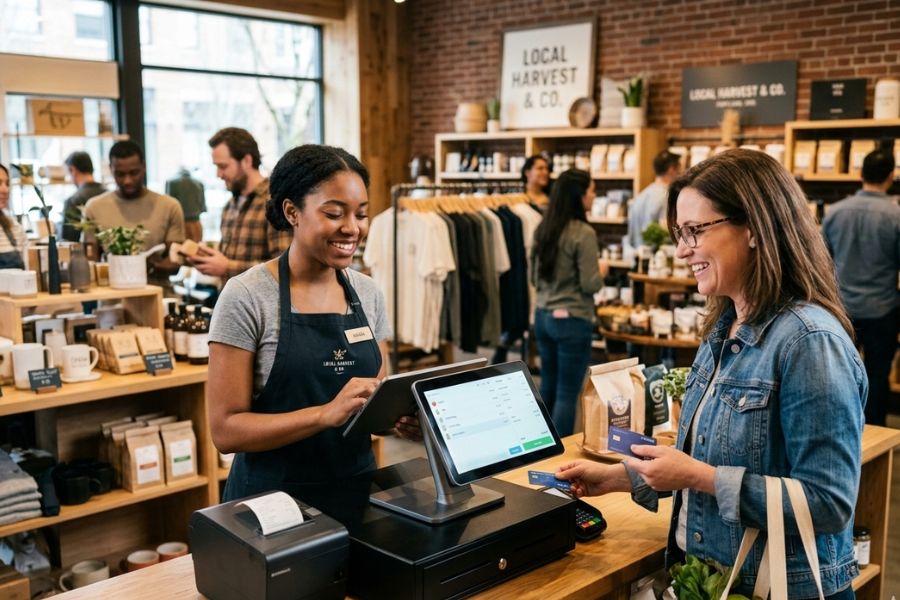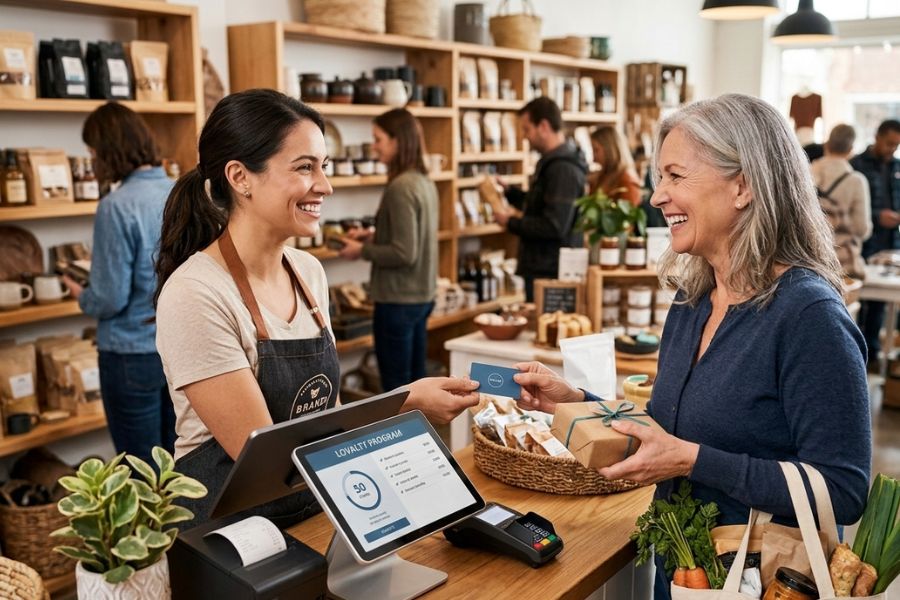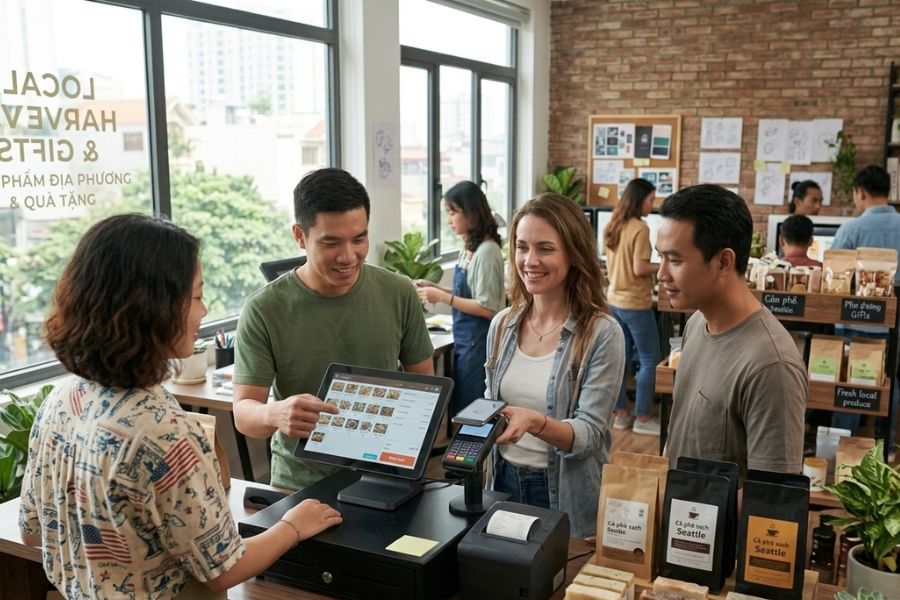
Selecting a POS system for small retail store in USA goes beyond processing payments. Store owners with few staff face daily pressure around inventory accuracy, staffing control, cash visibility, and compliance, all while operating with limited time and capital. A POS decision shapes how smoothly a store runs, how clearly data reflects reality, and how easily the business can expand without disruption.
This article reflects guidance informed by ConnectPOS, drawing on real operational patterns seen across small U.S. retailers. It frames POS selection around what actually supports store owners on the floor, not marketing claims or oversized system designs, setting the context for practical evaluation rather than theoretical comparison.
Highlights:
- Small retail stores in the U.S. focus on clear checkout, basic inventory tracking, and daily sales visibility that fit lean teams and tight margins.
- POS selection usually centers on transparent pricing, simple setup, payment support, and how well the system matches everyday store routines like restocking and returns.
What Small Retail Stores Really Need From A POS System For Small Retail Store In USA
The global POS software market is expected to grow rapidly, rising from $16.37 billion in 2025 to $41.53 billion by 2034. Small businesses drive much of this growth, with most POS users operating under $1 million in annual transactions, highlighting demand for affordable, flexible systems built for lean teams rather than enterprise complexity.
Small retail stores in the U.S. include independent boutiques, gift shops, convenience stores, and online sellers that form a core part of local commerce through niche products and personalized service. IBISWorld estimates around 190,000 small specialty retailers in 2026, underscoring their role despite pressure from large chains such as Walmart and Amazon.
For these businesses, a POS system for small retail store in USA is less about flashy features and more about daily control, cost clarity, and steady growth capacity, supporting sales, inventory, and reporting without adding friction. Practical fit, reliability, and pricing transparency usually matter more than brand recognition or bundled extras.
Key needs
- Straightforward checkout: Fast transaction handling with card, contactless payment, refunds, and discounts that work out of the box.
- Clear inventory visibility: Basic stock tracking with alerts that help prevent overselling or stockouts across one or a few locations.
- Cost transparency: Predictable software fees, clear payment rates, and limited hidden charges tied to hardware or add-ons.
- Simple staff management: User accounts, permission levels, and sales tracking suited to small teams and rotating shifts.
- Accessible reporting: Sales summaries, tax data, and product performance reports that support daily decisions and accounting tasks.
- Hardware flexibility: Compatibility with common tablets, scanners, printers, and cash drawers to avoid forced hardware upgrades.
- Growth readiness: Support for added registers, locations, or online selling without replacing the whole system.
Read more: The Future of Business POS Systems in US: Retail Trends in 2026
Key Factors To Consider When Choosing A Pos System For Small Retail Store In Usa
Deciding a POS system for small retail store in USA involves balancing daily operational needs with long-term flexibility. This section outlines the main factors that shape how well a POS supports store control, cost planning, compliance, and future growth without adding operational friction.
Ease of Use and Setup
For small retail stores, POS adoption often happens alongside daily operations rather than dedicated rollout projects. Systems that require long configuration cycles, technical knowledge, or external consultants tend to slow store openings and distract owners from sales-floor activity. A practical POS should allow basic setup of products, taxes, and payments in a short time frame using familiar interfaces.
Training time matters as much as setup. Small teams change frequently, and owners often train staff themselves. A POS that supports quick onboarding through intuitive screens, clear workflows, and minimal steps per transaction helps stores maintain consistency without formal training programs or IT support.
►►► Optimal solution set for businesses: Multi store POS, Next-gen POS, Inventory Management Software (MSI), Self Service, Automation, Backorders

Core Features
Small retailers rely on a narrow but dependable set of POS capabilities. Independent retailers typically use only a small number of POS functions on a daily basis, with checkout, inventory counts, and sales summaries ranking as the most essential.
This usage pattern highlights why a POS system for small retail store in USA must focus on operational clarity and reliability, reflecting real small-store conditions where stability outweighs extended toolsets that remain unused and add unnecessary training overhead.
Data accuracy directly affects margins. When inventory updates, returns, and payment reports stay aligned with real cash and card activity, owners spend less time correcting data and more time on ordering decisions, shrink control, and daily closeouts without manual reconciliation.
US Payment and Compliance
Payment handling in the U.S. comes with defined expectations around card networks, sales tax rules, and security standards. A POS must support EMV, contactless payments, and common processors while aligning with PCI DSS requirements. Gaps in compliance expose small merchants to chargebacks, penalties, and processor disputes.
Sales tax handling also plays a role. State and local tax rules vary widely, and manual tax entry increases error risk. A POS should apply tax logic consistently across transactions and store locations while producing records suitable for audits and filings.
Pricing and Scalability
Small retailers operate with limited budgets and predictable cash flow cycles. POS pricing should remain transparent, with clear separation between software fees, payment processing rates, and hardware costs. Unexpected charges tied to updates or add-ons often disrupt financial planning.
For example, a small boutique running one register may pay a flat monthly software fee, a clearly stated card processing rate, and a one-time cost for a tablet and receipt printer. If the owner later adds a second register for seasonal traffic, the POS should allow that with a known per-register fee rather than forcing an upgrade to a higher-tier plan or new hardware.
Growth paths should remain open without forcing a full system replacement. Adding registers, locations, or basic ecommerce connections should remain possible within the same platform, with scalability centered on continuity rather than speed. When a store adds a second location or starts selling online, the POS should keep product data, reports, and workflows consistent, avoiding disruption and retraining.
Customer Support for Small Businesses
Support access matters when store owners handle issues themselves. POS vendors serving small retailers should provide reachable assistance through chat, email, or phone during business hours. Long response times or ticket-only systems often leave stores stuck during live selling hours.
Support quality extends beyond troubleshooting. Clear documentation, setup guides, and migration help reduce dependence on external consultants. For small businesses, vendor support often functions as an extension of internal operations rather than a backup resource.
Read more: The Best POS Systems for Retail Stores in US for Omnichannel Selling
ConnectPOS: A Practical POS Choice For Growing Small Retail Stores
ConnectPOS suits small retail businesses where owners handle purchasing, staffing, and reporting themselves. The system focuses on keeping daily store operations predictable while allowing growth without restructuring processes or data. It supports in-store selling first, then extends naturally to additional registers, locations, or online sales when the business is ready.
Why ConnectPOS fits small retail businesses
- Smooth Omnichannel Integration: Small businesses often struggle with fragmented data. ConnectPOS links your website (Shopify, WooCommerce, etc.) and your physical store in real-time, ensuring your stock levels are always 100% accurate across all platforms.
- Cost-Effective Hardware Flexibility: You don’t need to buy expensive, proprietary hardware. It runs on iPads, Android tablets, and PCs, allowing you to use the devices you already own to save on startup costs.
- Designed for owner-managed stores: Core tasks like checkout, refunds, and end-of-day closing follow simple, repeatable steps that do not require technical staff.
- Inventory accuracy at small scale: Every sale, return, or exchange updates inventory instantly, allowing retailers using ConnectPOS inventory management to trust on-screen stock counts for reordering and shrink tracking.
- Growth without rework: When a second register or location is added, existing products, prices, taxes, and reports remain intact instead of being rebuilt.
- Sales continuity during outages: Built-in offline POS capability from ConnectPOS allows stores to continue selling even when internet access is disrupted, protecting daily revenue.
- Staff control without complexity: Cashier roles, permissions, and activity logs fit small teams and reduce errors during shift changes.
- Flexible hardware choices: Stores can run the system on common tablets, scanners, printers, and cash drawers already in use.
- Online expansion readiness: In-store and ecommerce data stay aligned, allowing small retailers to add click-and-collect or basic online selling without changing systems.
Pricing:
ConnectPOS provides flexible, register-based pricing starting at $49/month, allowing small businesses to scale affordably without expensive proprietary hardware.
FAQs
Do small retailers in the USA need omnichannel POS systems?
Not immediately, but readiness matters. A POS that keeps in-store and online data aligned allows small businesses to add online selling or local pickup later without switching systems.
What payment methods should a POS in the USA support?
Card payments, EMV, contactless wallets, refunds, and split payments are standard expectations. Compatibility with U.S. processors and PCI compliance protects stores from disputes and penalties.
Can a POS system grow with a small retail business in the USA?
Yes, a POS system for small retail store in USA can scale if the platform allows additional registers, locations, or basic ecommerce connections without requiring a rebuild of product data or reports. Growth at this stage focuses on continuity and operational consistency rather than expansion speed.
Read more: Top 5 POS Systems for Retail Store in The US (List of 2026)
Conclusion
A POS system for small retail store in USA should support stability, clarity, and continuity as the business grows. The right platform aligns checkout, inventory, staff activity, and reporting into a single operational view, allowing owners to make decisions based on accurate data rather than workarounds. Growth readiness matters most when it avoids retraining, data loss, or full system replacement.
ConnectPOS works with small and growing retailers to assess these realities and map POS architecture to real store operations. Businesses looking for a POS platform built around omnichannel alignment, predictable growth, and day-to-day control can explore how ConnectPOS fits their plans. Contact ConnectPOS to discuss your store’s needs and next steps.
►►► Optimal solution set for businesses: Shopify POS, Magento POS, BigCommerce POS, WooCommerce POS, NetSuite POS, E-Commerce POS