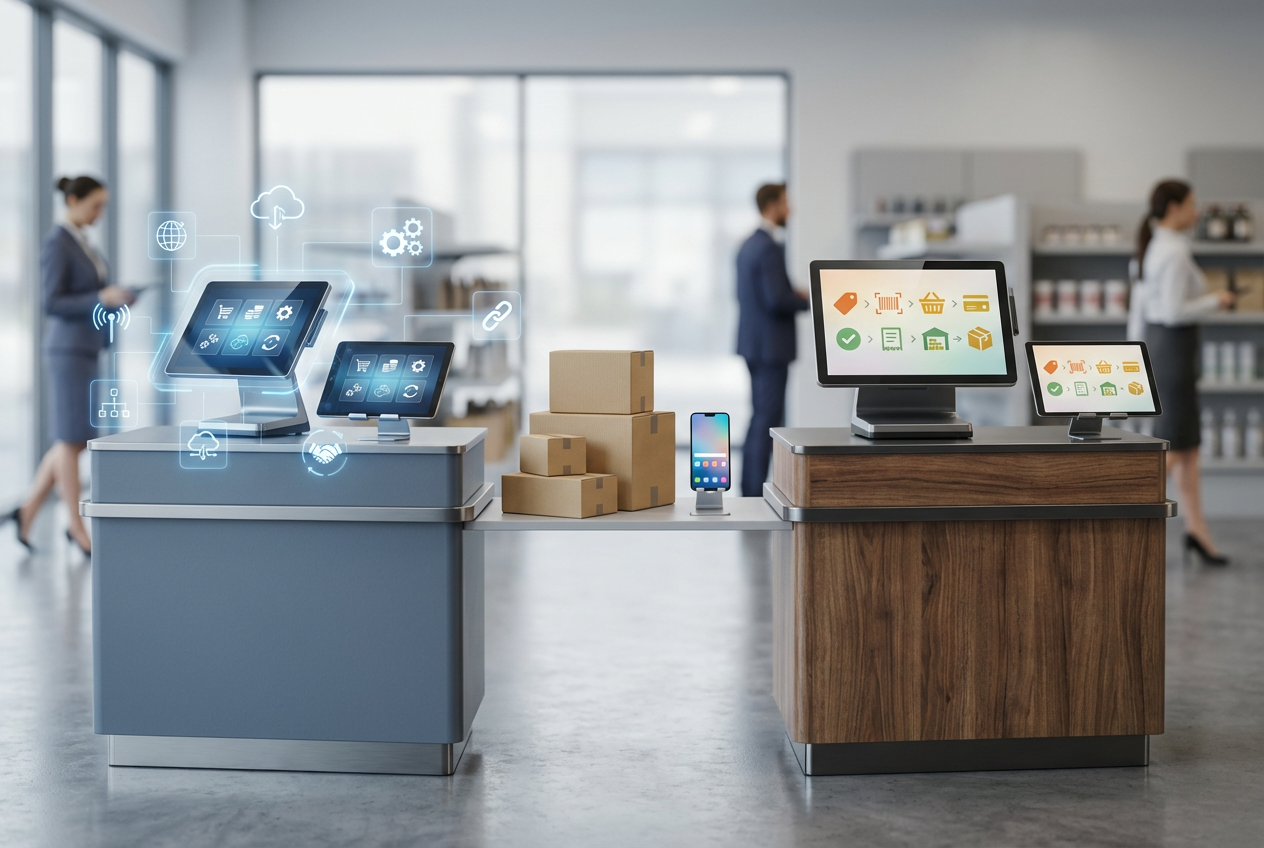
Retailers face the challenge of selecting a POS system that can handle daily transactions, inventory management, and customer data while keeping pace with growth and sales across channels. ConnectPOS vs Lightspeed POS represent two prominent approaches to these challenges, each built around different operational priorities.
This article from ConnectPOS advises evaluating each system based on how it manages inventory visibility, supports multi-location operations, and integrates online and offline sales. Understanding these differences helps businesses determine which POS aligns with their current workflow and long-term growth strategy.
Highlights:
- ConnectPOS keeps inventory and sales data synchronized across stores and online channels, supporting accurate tracking and multi-location oversight.
- Lightspeed POS focuses on in-store management, enabling efficient product, customer, and transaction tracking for physical retail operations.
Background and Product Positioning
These two companies have positioned their products differently, focusing on specific market segments and business needs. Understanding the background of their emergence and their respective market positioning is the essential first step in evaluating ConnectPOS vs Lightspeed which solution best fits your operational model.
ConnectPOS
ConnectPOS emerged as a modern, cloud-based POS solution specifically designed to serve the rapidly expanding omnichannel retail market. Recognizing the limitations of legacy on-premise systems, its development focused on creating a platform that could smoothly bridge physical store operations with leading e-commerce platforms. This core mission dictates its market presence as a specialized tool for retailers aiming for unified online and offline sales.
The product positions itself as the preferred POS system for e-commerce-focused businesses, particularly those utilizing Magento, Shopify, or BigCommerce. Its primary differentiator is its robust, native integration capabilities that provide real-time data synchronization across inventory, customer profiles, and orders. ConnectPOS targets medium to large retailers who prioritize complex multi-channel operations and scalability in a cloud environment.
Lightspeed POS
Lightspeed POS was initially founded as an innovative POS system for Apple devices, targeting the high-end retail and hospitality sectors (restaurants). Over time, through strategic acquisitions and continuous development, it evolved into a comprehensive commerce platform supporting both complex physical operations and integrated e-commerce. Its long history and successful expansion position it as a globally recognized leader in the POS industry.
Lightspeed’s product positioning is centered on being a full-service, enterprise-grade commerce platform for complex businesses that demand deep industry functionality. It segments its market into Retail and Restaurant, providing specialized tools for each. It targets established small to mid-sized enterprises (SMEs) that require sophisticated reporting, advanced purchasing tools, and a polished user experience, often serving businesses with high average transaction values or complex inventory needs.
Evaluation of User Experience & Reliability -ConnectPOS vs Lightspeed POS
When evaluating modern POS systems like ConnectPOS vs Lightspeed POS, technical performance and user experience are critical factors. Both platforms aim to provide efficient workflows, but they differ in their approach to deployment, user support, and platform flexibility. This evaluation directly compares the two systems based on their ease of use, quality of support, and overall compatibility.
Ease of Use and Deployment Speed
Lightspeed POS is often recognized for its slick and intuitive user interface, particularly on Apple devices, reflecting its long history in both the retail and restaurant sectors. Lightspeed’s UI is frequently praised for its clarity, with well-organized functions that make it easy for new staff to quickly familiarize themselves with the system. However, due to its depth of complex, specialized features, the initial setup (deployment) for larger businesses can be more time-consuming.
Conversely, ConnectPOS, designed with e-commerce integration in mind, focuses on creating a fast and efficient workflow at the checkout counter. For businesses already using a compatible e-commerce POS platform, ConnectPOS’s deployment speed is typically faster because it prioritizes synchronizing existing data. While its interface might be simpler, it is highly focused on omnichannel sales functions, which helps reduce staff training time.
Quality of Customer Support
Lightspeed POS delivers customer support built around a segmented model, with specialized teams for Retail and Restaurant clients. This guarantees that businesses receive industry-specific, in-depth assistance. 24/7 support via phone, email, and live chat is often available; however, the quality of response can vary depending on the service tier the customer subscribes to.
ConnectPOS also provides specialized support, but their primary focus is on resolving issues related to omnichannel integration and synchronization. Operating in a niche market of e-commerce integration, the ConnectPOS support team is typically experienced in troubleshooting complex data flow problems between the POS system and online platforms. Reviews often indicate satisfaction with their technical team’s ability to effectively resolve e-commerce integration-related issues.
Platform Flexibility and Compatibility
Lightspeed POS is a highly flexible platform with broad hardware compatibility, operating across both iOS (iPad) and PC/Web-based devices. Its flexibility stems from the depth of its specialized tools and modules, which allow businesses with complex workflows to tailor the system to their exact requirements. The ecosystem also includes a large app marketplace, enabling extended functionality through third-party integrations.
ConnectPOS, on the other hand, demonstrates its flexibility through its robust compatibility with major e-commerce platforms. As a primarily web-based, cloud solution, it operates well across most browsers and devices, including PCs, Macs, and tablets. This feature helps retailers easily switch and utilize their existing hardware. However, in terms of highly specialized, deep-dive tools, ConnectPOS may be less modular than Lightspeed, as its focus is on perfecting the sales and omnichannel management workflow.
In-Depth Analysis of ConnectPOS vs Lightspeed – Core Features
Following the assessment of market positioning and user experience, this analysis delves into how ConnectPOS vs Lightspeed POS execute core retail functionalities. A detailed comparison of their inventory management, sales processing, CRM POS tools, and e-commerce integration reveals where each system places its technical emphasis. This analysis specifically clarifies the difference between ConnectPOS’s omnichannel approach and Lightspeed’s industry-specific depth in supporting day-to-day retail operations.
Inventory Management
Lightspeed POS excels in managing complex stock specific to its targeted industries (retail and restaurant). It handles variations like size, color, and matrix inventory with extensive detail. The system includes robust purchasing tools that help managers create purchase orders, track vendor performance, and manage stock transfers between locations, serving the needs of established companies with large inventories.
ConnectPOS handles stock tracking well across multiple locations. Its primary strength lies in its ability to synchronize item counts instantly and accurately between the physical store and linked e-commerce platforms. This core capability prevents overselling online when physical stock is low, proving valuable for retailers with significant online sales volume.
Sales Processing and Checkout
Lightspeed POS provides a polished checkout experience with specialized functions such as layaways, work orders, and repairs, particularly useful in specialty retail sectors like bicycle shops or electronics stores. The system supports advanced pricing rules and promotions. Its interface is designed to support rapid customer service interactions using intuitive touchscreen features.
ConnectPOS prioritizes speed and omnichannel data access during checkout. The system allows staff to easily retrieve online customer history or gift card balances directly at the physical register. It supports various payment processing options and is highly adaptable to different hardware setups, facilitating quick, efficient processing of both online fulfillment and in-store purchases.
Customer Management and Loyalty
Lightspeed POS provides sophisticated customer relationship management (CRM) tools that track detailed purchase histories and preferences. It allows retailers to categorize customers for marketing purposes and run targeted loyalty programs directly through the platform. This helps businesses build long-term relationships based on comprehensive data.
ConnectPOS integrates customer profiles primarily through the linked e-commerce platform. This means that customer data and loyalty points earned online and offline are unified, providing a single, consistent view of the customer across all touchpoints. The system’s strength lies in ensuring customer recognition and consistent rewards regardless of the sales channel used.
Reporting and Analytics
Lightspeed POS furnishes extensive, in-depth reporting tailored to industry needs, covering areas like sales performance, employee performance, and gross margin analysis. These reports give managers powerful insight into profitability and operational efficiency, supporting detailed financial planning and strategic decision-making based on historical data.
ConnectPOS focuses its reporting on omnichannel performance. Its analytics help managers compare sales volume, inventory movement, and revenue generated across different online channels versus physical stores. This capability is useful for businesses needing to evaluate the performance and profitability of their unified digital and physical sales strategy.
Customer Relationship Management (CRM)
Lightspeed POS provides sophisticated customer relationship management (CRM) tools that track detailed purchase histories and preferences. It allows retailers to categorize customers for marketing purposes and run targeted loyalty programs directly through the platform. This helps businesses build long-term relationships based on comprehensive data.
ConnectPOS integrates customer profiles primarily through the linked e-commerce platform. This means that customer data and loyalty points earned online and offline are unified, providing a single, consistent view of the customer across all touchpoints. The system’s strength lies in ensuring customer recognition and consistent rewards regardless of the sales channel used.
Staff Management
Lightspeed POS includes robust staff management tools that track employee sales performance, shifts, and commissions. The system handles complex permissions and access controls, which helps managers maintain security and accountability across various roles within the store. Its detailed reporting allows for accurate assessment of individual employee contributions.
ConnectPOS provides standard staff tracking and access controls required for POS operations. It records sales activity by user, facilitating basic performance review. While its core focus is not as deeply specialized in human resources as Lightspeed, it adequately meets the needs of retailers requiring straightforward time clock functionality and user role management.
E-commerce Integration
Lightspeed POS supports e-commerce through its own integrated platform, allowing businesses to manage their online store directly through the POS system. This integration works well for retailers whose primary sales channel remains the physical store, providing a solid foundation for digital expansion.
ConnectPOS excels at external e-commerce integration, specializing in connecting with established third-party platforms like Magento, Shopify, and BigCommerce. Its architecture is specifically built to manage the complexity of syncing real-time inventory and customer data across these popular online giants, making it the superior choice for retailers whose digital sales volume is already high.
Read More: 10 Best Ecommerce POS Systems For Enterprises In 2026
ConnectPOS vs Lightspeed POS – Cost Structure and Pricing Model
For any business seeking a new POS system, analyzing cost extends beyond the simple monthly subscription fee. This section directly compares the cost structures and pricing models of ConnectPOS vs Lightspeed.
The analysis will clarify how each company charges for initial setup and ongoing maintenance, and how each pricing model delivers value to different business types: whether that value stems from omnichannel integration (ConnectPOS) or from deep, industry-specific functionalities (Lightspeed).
Pricing Model and Subscription Tiers
While both platforms utilize subscription-based models, Lightspeed’s pricing is primarily determined by feature tiers and hardware counts, whereas ConnectPOS scales based on the specific e-commerce platform and omnichannel complexity required. Here are the specific monthly figures for their current subscription levels:
Lightspeed POS (Retail POS)
- Lean: $69/month. Includes 1 register, basic inventory management, and 24/7 support.
- Standard: $119/month. Unlocks e-commerce integration, professional reporting, and accounting tools.
- Advanced: $199/month. Includes customer loyalty programs and advanced data analytics.
- Extra Registers: Cost approximately $59/month for each additional device.
ConnectPOS
- Standard: $39 – $49/month. Includes 1 register with basic product management, real-time sync, and e-commerce integration.
- Advanced: $69 – $79/month. Adds inventory/shipping control, gift cards, and loyalty program support.
- Premium: $89 – $99/month. Includes multi-source inventory (MSI), stock-taking, and “Click & Collect” features.
- Enterprises: Custom Quote. Designed for managing 100+ stores, dedicated consultants, and custom API guidance.
Note: ConnectPOS offers lower rates ($39, $69, $89) when billed annually, while the higher rates ($49, $79, $99) apply to monthly billing.
Key Difference: ConnectPOS is more affordable for E-commerce users (starting at $39), whereas Lightspeed requires the $119 tier to sync with an online store.
Initial and Ongoing Costs
Lightspeed’s POS initial costs can vary significantly. While the monthly fees are clear, the total upfront cost may include setup fees, implementation services, and the cost of proprietary hardware bundles. Lightspeed often requires businesses to use their in-house payment processing, which is factored into the total ongoing transaction cost for the retailer.
ConnectPOS generally has lower initial costs related to hardware, as it supports a broader range of third-party equipment and operates well on standard tablets and PCs. The initial software setup might involve costs tied to integrating with specific e-commerce platforms. Ongoing costs include the monthly subscription and any necessary costs associated with the retailer’s chosen third-party payment gateway.
Value and Scalability Investment
Lightspeed’s POS pricing delivers value to specialty retailers and restaurants needing deep, industry-specific functionalities and advanced tools. The cost structure facilitates scaling up the number of registers or physical locations. The investment rewards businesses that require high functionality across complex core physical operations.
ConnectPOS provides superior value for retailers whose business is centered on unified commerce. Its architecture inherently supports easy addition of new online sales channels without heavy technical friction. Its pricing structure makes sense for companies where the main benefit comes from preventing data discrepancies between online and offline operations while scaling their digital footprint.
Quick Comparison Table – ConnectPOS vs Lightspeed
This comparison table summarizes the key technical and strategic differences between ConnectPOS vs Lightspeed POS across core functional areas. It highlights how ConnectPOS prioritizes omnichannel integration and data unity, while Lightspeed focuses on providing deep, industry-specific functionality for specialized retail and hospitality businesses.
| Feature Category | ConnectPOS | Lightspeed POS |
| Product Positioning | Omnichannel Cloud Solution, focused on e-commerce integration (Magento, Shopify). | Enterprise-Grade Commerce Platform, focused on Specialty Retail and Hospitality. |
| Platform Architecture | Cloud-based. | Cloud-based (originally focused on iOS). |
| Deployment Speed | Fast deployment for businesses with existing e-commerce platforms. | Initial setup can be more time-consuming due to the complexity of specialized features. |
| Inventory Management | Strong on Real-time Synchronization between physical store and online (prevents overselling). | Strong on Purchasing Tools and complex, attribute-based inventory management (matrix inventory). |
| Sales Processing (Checkout) | Prioritizes Speed and access to omnichannel data (online purchase history). | Intuitive interface and supports specialized functions (Layaways, Work Orders). |
| Customer Management (CRM) | Unified customer profiles (online & offline) via e-commerce integration. | Sophisticated CRM tools, allowing segmentation and loyalty program management directly. |
| Customer Support | Highly specialized in resolving Integration/Synchronization issues. | Segmented support by industry (Retail/Restaurant) with deep vertical knowledge. |
| Pricing Model | Subscription fee based on Integration Level (e-commerce) or sales volume scale. | Subscription fee based on Number of Registers/Locations and functional tier level. |
| Best Suited For | Retailers prioritizing Digital Growth and needing unified sales data. | Retailers/Restaurants requiring Deep Functionality and complex operational reports. |
FAQs
How do ConnectPOS vs Lightspeed differ in handling multi-store operations?
ConnectPOS allows real-time synchronization across multiple locations and online channels, keeping inventory and sales data consistent. Lightspeed serves multi-store management, but synchronization may involve delays depending on the plan and internet connection.
Which system is better for managing complex inventory with variants?
ConnectPOS supports detailed variant management with variant matrix visualization and SKU-level granularity for attributes like size, color, or style, making it suitable for businesses with high SKU complexity. Lightspeed handles variants as well but provides fewer customization options for attribute-driven filtering at the POS terminal.
How does each POS handle offline transactions?
ConnectPOS can process sales offline and automatically sync them once the connection is restored, ensuring no downtime. Lightspeed also owns offline mode, but the setup may require additional configuration and is limited to certain subscription plans.
What payment and checkout options are supported by both systems?
Both ConnectPOS and Lightspeed POS accept multiple payment methods including cash, card, and mobile wallets. ConnectPOS integrates with a wide range of local and international payment gateways, which can be advantageous for businesses operating in different regions.
Conclusion
ConnectPOS vs Lightspeed POS both provide reliable solutions for retail management, yet they serve different operational needs. ConnectPOS focuses on synchronized data across all sales points and optimized inventory oversight, making it suitable for retailers expanding their presence online and offline. Lightspeed supports a strong in-store experience with product and customer management, but may require additional modules or configurations to match the flexibility of ConnectPOS.
For businesses seeking a POS system that combines accurate data tracking, inventory control, and omnichannel management while supporting growth across locations, ConnectPOS is a solution worth considering. Reach out to ConnectPOS to explore how it can align with your business strategy and operational goals.
►►► Optimal solution set for businesses: Shopify POS, Magento POS, BigCommerce POS, WooCommerce POS, NetSuite POS, E-Commerce POS