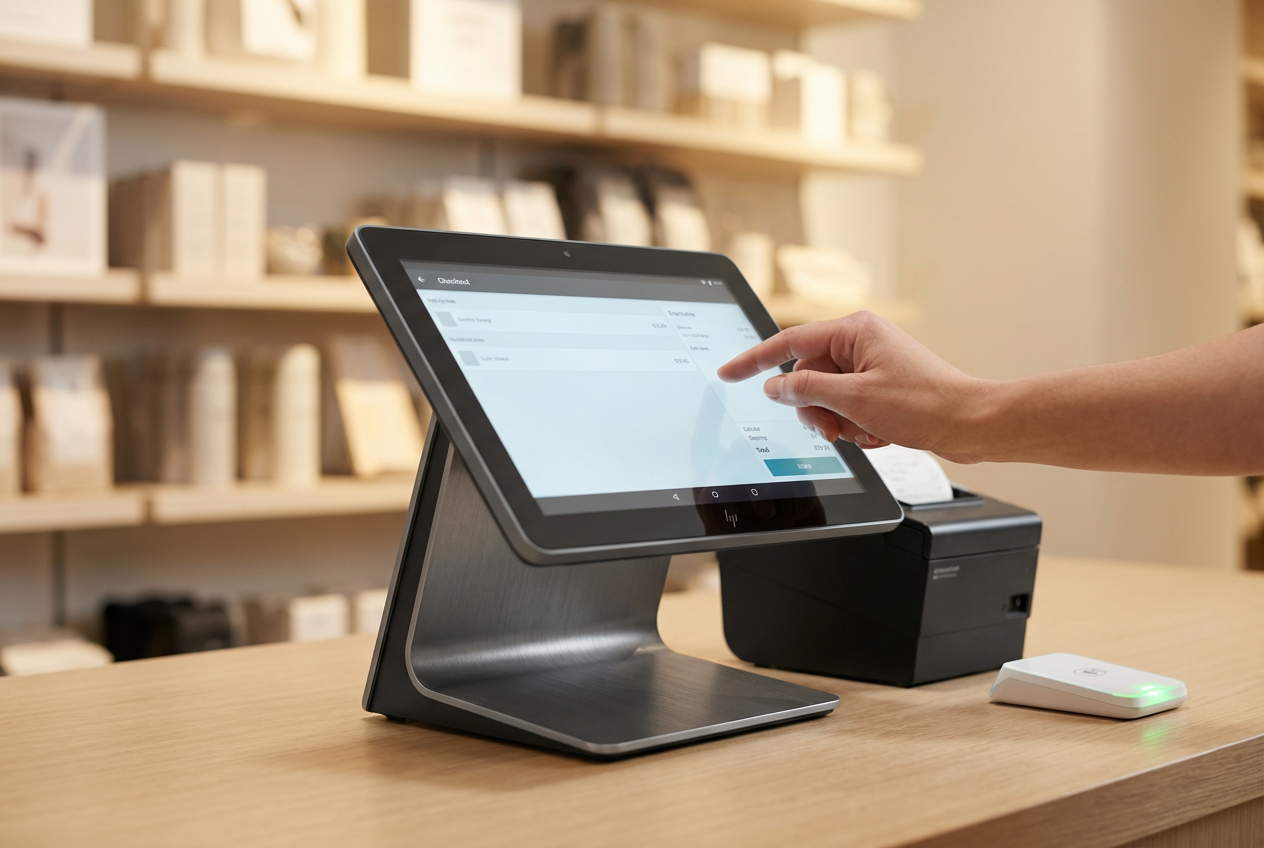
HP POS system in the US appears widely not because of branding, but because the hardware aligns with operational realities at scale. Retailers managing dense traffic, long trading hours, and complex peripheral setups favor terminals built for physical strain, stable performance, and long product availability. HP’s Engage range reflects these priorities through retail-grade construction and predictable lifecycles that fit established Windows-based store environments.
Hardware value, though, depends on how well it supports daily retail logic beyond checkout. Inventory flow, payment handling, staff control, and security policies define real performance in store. This article, informed by ConnectPOS advisory insight, reviews HP POS choices in the U.S. through that operational perspective rather than isolated specifications.
Highlights:
- The Engage lineup covers fixed counters, mobile selling, kiosks, and under-counter deployments, allowing retailers to match device form to store layout, traffic volume, and service style.
- HP POS systems stand out for durability, support coverage, and hardware security, while higher purchase costs, heavier installations, and dependency on approved accessories shape adoption decisions.
Why do US retailers prefer HP POS?
US retailers pick HP POS system in US for their modular designs that adapt to different store sizes and peripherals like scanners and printers. Models such as the HP Engage One Prime and Flex run inventory, payments, and security in one unit, which fits retail workflows.
- Hardware Choices: HP systems come in all-in-one, convertible, and compact options that match counter space and mobility needs. The Engage Go model detaches for floor checks or curbside sales, while the MP9 saves space with strong processors. Retailers deploy these setups as kiosks or counters without extra wiring.
- Security Standards: Hardware-level protections like BIOS locks and secure drawers guard against theft in busy stores. These features pair with Windows security to protect data during transactions. US shops value this defense amid rising fraud risks.
- Payment Support: HP terminals process cards, mobile taps, cash, and checks through integrated gateways. Contactless options handle NFC trends, where taps make up 34% of US card use. Compatibility with services like Square keeps sales moving.
Top Models of HP POS System in US for Retailers
HP’s Engage portfolio has established itself as the gold standard for retail hardware in the U.S., making it one of the most trusted HP POS systems in US deployments for modern retailers. Known for combining retail-hardened durability with high-end aesthetic design, these systems stand apart from consumer-grade tablets or PCs.
With extended product lifecycles and long-term support, HP POS hardware guarantees your retail technology investment won’t become obsolete within just a few years.
Below is an overview of the top HP POS models currently dominating the U.S. retail market.
HP Engage One Pro: The Powerhouse
The Engage One Pro is HP’s flagship all-in-one (AiO) system. It is designed for high-volume retailers who need maximum speed and a premium look to match their brand.
Best For: Luxury retail, busy grocery lanes, and high-end hospitality.
Key Features:
- Performance: Configurable with up to 10th or 12th Gen Intel® Core™ i9 processors, making it capable of running heavy ERP and inventory software simultaneously.
- Sleek Design: Features a hidden cable management system and an ultra-slim anti-glare touchscreen (available in 15.6″, 19.5″, and 23.8″ sizes).
- Durability: IP44-rated for dust and liquid resistance and built to withstand frequent sanitization with germicidal wipes.
- Versatility: Can be mounted on a stand, a wall, or even used as a self-service kiosk.
Read more: Starbucks POS System: A Complete Overview in 2026
HP Engage Go: The Mobile Solution
The Engage Go is a versatile hybrid system. It functions as a traditional fixed POS at the counter but can be undocked instantly to become a mobile tablet for “line-busting” or assisted selling on the floor.
Best For: Inventory management, outdoor pop-ups, and table-side service.
Key Features:
- Hybrid Form Factor: A 10-inch or 12.3-inch tablet that docks into a sturdy base for charging and peripheral connectivity.
- Security: Includes an integrated fingerprint reader and optional “Smart Dock” that locks the tablet to the counter until an authorized user releases it.
- Retail Hardened: MIL-STD 810G tested to survive drops, making it much more resilient than a standard consumer iPad.
- Connectivity: Optional 4G/LTE guarantees your staff can process transactions even if the store Wi-Fi goes down.
HP Engage One Essential: Value & Efficiency
The Engage One Essential is designed for small to mid-sized businesses that want the “Engage” aesthetic and reliability without the enterprise price tag of the Pro model.
Best For: Small boutiques, cafes, and specialty shops.
Key Features:
- Optimized Performance: Utilizes efficient Intel® Celeron® or Pentium® processors that handle standard POS software with ease.
- Fanless Design: The system is fully sealed to prevent dust from entering, which also makes it completely silent during operation.
- Affordability: Provides a lower entry price while still providing the 3-year onsite warranty that HP is known for in the U.S.
- Simplicity: A 14-inch FHD touchscreen that is easy to set up out of the box with minimal cabling.
HP Engage Flex: The Modular Workhorse
The Engage Flex (including the Pro and Pro-C versions) is a “black box” PC designed to be tucked under a counter or inside a kiosk. It is the most expandable system in the lineup.
Best For: Large-scale retailers with complex setups (multiple printers, scanners, and scales).
Key Features:
- Extreme Connectivity: Features a massive array of ports (USB, Serial, PoweredUSB) to connect every peripheral imaginable without needing extra hubs.
- Longevity: Provides a 5-year lifecycle and 5 years of support, allowing large retailers to standardize their fleet across hundreds of locations.
- Modular: Since the PC is separate from the monitor, you can upgrade the “brain” of the system in the future without replacing your expensive touch displays.
- Compact Strength: The “Pro-C” model is 30% smaller than previous generations, saving valuable under-counter space.
Strengths and Limitations of HP POS System in US
The strengths and limitations of HP POS systems reflect a trade-off between long-term hardware stability and higher entry barriers. While the build quality, support model, and product lifespan suit demanding U.S. retail environments, cost, setup complexity, and component dependency influence overall adoption decisions.
Strengths
HP builds these units specifically for the physical demands of high-traffic retail environments, making the HP POS System in US a reliable choice for modern storefronts. The hardware features a professional, premium design that aligns smoothly with contemporary store aesthetics and brand-forward retail concepts.
- Physical Durability: The frames use anodized aluminum and reinforced glass. These materials withstand bumps, cleaning chemicals, and 24/7 operation without breaking.
- Onsite Support: Most US purchases include a 3-year limited warranty. HP sends technicians directly to the store for repairs, which keeps the checkout lanes moving.
- Cable Management: Stands and bases hide all power and data cords inside the neck of the unit. This creates a clean counter and prevents accidental unplugging by staff or customers.
- Hardware Security: Systems include BIOS protection and physical locking ports. These features block unauthorized software and stop people from stealing internal components or peripherals.
- Long Product Life: HP keeps specific models available for 5 years. A growing business can buy the exact same hardware for a second or third location without retraining staff on new buttons or screen layouts.
Limitations
The premium positioning of the HP POS System in the US introduces certain challenges related to upfront costs and technical implementation. Hardware pricing, peripheral compatibility, and deployment complexity can all influence the total investment required when launching a new retail location.
- Price Point: The upfront cost sits above many competitors. Small retailers often find the entry price for “Pro” models higher than a basic tablet-based setup.
- Peripheral Lock-in: Connecting non-HP printers or scanners sometimes causes driver conflicts. Many store owners find they must buy HP-branded accessories to guarantee everything works on day one.
- Weight and Portability: Stationary models are heavy and difficult to reposition. Once bolted to a counter, moving the system requires tools and significant time.
- Software Setup: These systems arrive as “blank slates.” A business must separately license and configure POS software, which adds a layer of technical difficulty before the first sale.
- Component Availability: Using unique power connectors and specialized ports means you cannot buy a replacement cable at a standard office supply store. You must wait for shipping from an authorized distributor if a proprietary part breaks.
Maximizing Performance with Alternative of HP POS – ConnectPOS
ConnectPOS functions as a cloud-based bridge between physical stores and digital sales channels. While HP focuses on building “retail-hardened” physical units, ConnectPOS focuses on the “brain” of the operation. It removes the need for proprietary hardware, allowing store owners to use existing devices like iPads or Windows laptops. This shift helps U.S. retailers avoid the high upfront costs and long-term hardware dependencies associated with traditional enterprise systems.
The system provides a suite of tools designed to unify a business’s inventory and customer data across multiple locations.
- Real-Time Data Synchronization: All sales, inventory levels, and customer profiles update instantly across every physical store and online platform. This prevents overselling and guarantees that a customer’s loyalty points are available immediately after a purchase.
- Hardware Flexibility: The software runs on iOS, Android, and Windows. Retailers can mix and match devices, using stationary PCs at the main counter and mobile tablets for assisted selling on the floor.
- Multi-Warehouse Management: Store managers can track inventory across multiple backrooms and regional warehouses from a single dashboard using ConnectPOS inventory management.The system also supports cross-store transfers and “Buy Online, Pick Up In-Store” (BOPIS) workflows.
- Offline Mode POS: The checkout process continues to function even if the store loses its internet connection. The system saves transaction data locally and syncs it to the cloud once the connection returns.
- Customizable Checkout: Staff can create custom orders for items not currently in stock or apply specific discount rules directly at the point of sale. The interface allows for a “three-step checkout” to keep lines moving during peak hours.
- Third-Party Integrations: The platform connects with popular e-commerce POS platforms like Shopify, BigCommerce, and Magento. It also links with accounting tools and payment gateways, allowing businesses to keep their existing financial workflows.
Read more: McDonald’s POS System in The US: What They Use to Optimize Operations
FAQs
What makes HP POS systems a common choice for U.S. retailers?
Retailers favor HP POS hardware because it aligns with U.S. store demands for rugged terminals, extended product availability, and broad peripheral support that matches existing checkout workflows.
What limitations should U.S. retailers consider before choosing HP POS systems?
Higher upfront pricing, dependency on compatible peripherals, heavier fixed installations, and the need for separate POS software setup can increase total deployment effort, especially for smaller stores or fast rollouts.
How does ConnectPOS relate to the HP POS system in US?
ConnectPOS runs on HP POS hardware and provides the operational layer that manages inventory, checkout logic, and omnichannel sales, helping retailers move beyond hardware constraints and operate consistently across locations.
Conclusion
HP POS system in US remains a strong choice in this retail market due to their durability, service coverage, and long hardware lifecycles suited for standardized store operations. Higher costs, fixed installations, and separate software requirements mean these systems demand thoughtful planning beyond the hardware purchase itself.
ConnectPOS complements HP POS hardware by providing a centralized operational layer for inventory, checkout rules, and omnichannel sales. Retailers seeking clearer control and scalable execution on HP terminals can speak with the ConnectPOS team to assess the right next step for their U.S. operations.
►►► Optimal solution set for businesses: Shopify POS, Magento POS, BigCommerce POS, WooCommerce POS, NetSuite POS, E-Commerce POS