Ecommerce automation reshapes how retailers operate, turning repetitive and complex processes into structured, data-driven workflows. It spans order management, inventory tracking, customer engagement, and marketing execution, creating transparency and operational consistency. This article from ConnectPOS advises on understanding automation’s role, identifying key areas of impact, and selecting solutions that align with long-term business strategy.
Highlights:
- Core Areas Where Ecommerce Automation Creates Impact: Automation drives efficiency in order fulfillment, inventory control, customer engagement, marketing workflows, and real-time reporting.
- Retailers need to weigh upfront costs, system compatibility, data quality, and team readiness before rolling out automation tools.
What Is Ecommerce Automation? Why It Matters for Retail Businesses
Ecommerce automation refers to the use of connected systems that handle repetitive and time-sensitive retail tasks. These systems manage order routing, payment confirmation, stock updates, and customer notifications through data-driven rules. Instead of manually transferring information between platforms, automation connects sales channels, warehouses, and fulfillment centers into a single operational flow that runs continuously in the background.
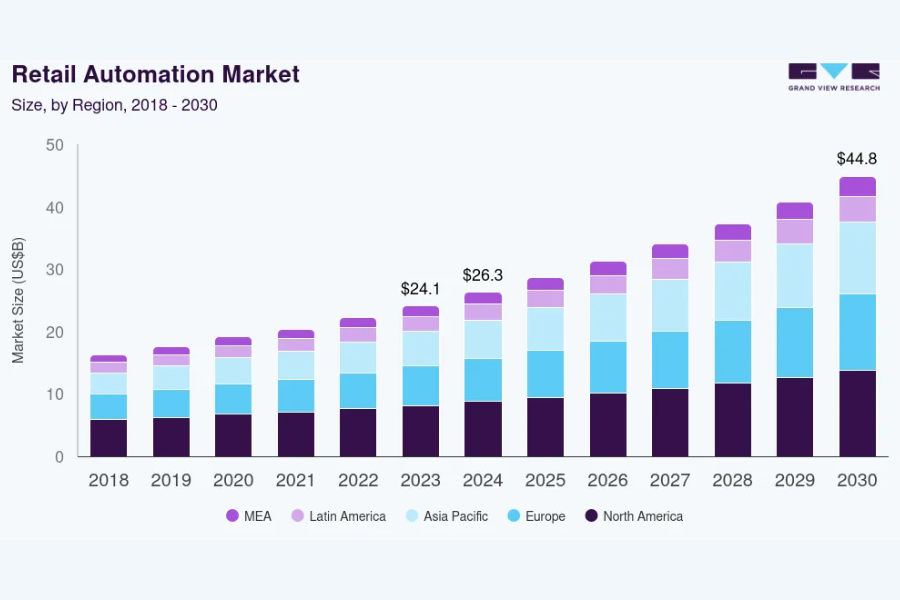
Studies by Grand View Research show that the global retail automation market was valued at USD 24,117.1 million in 2023 and is expected to reach USD 44,837.1 million by 2030, growing at a CAGR of 9.3% from 2024 to 2030. This expansion reflects how automation strengthens visibility and control across retail networks. Orders, stock levels, and deliveries become fully traceable in real time, allowing teams to make quick adjustments when demand shifts.
Automation is becoming the foundation of scalable retail operations. It shortens processing cycles, minimizes human error, and supports consistent service quality even during high-volume periods. As retail competition intensifies, businesses that automate fulfillment and data management gain the flexibility to grow without proportionally increasing labor or storage costs, a decisive advantage in the modern digital marketplace.
Core Areas Where Ecommerce Automation Creates Impact
Ecommerce automation transforms traditional retail operations by introducing systems that handle repetitive, data-intensive tasks. Automation aligns processes across sales, inventory, fulfillment, and customer engagement, creating visibility and predictability. Businesses gain a clearer picture of operations, enabling faster responses to market changes and improving overall performance.
Order and Fulfillment Management
Automation directs orders through predefined workflows and SOPs (Standard Operating Procedures), reducing delays and errors that typically occur in manual processing. Tasks such as order confirmation, picking, packing, and shipping follow programmed rulesets, which decreases dependency on human intervention and maintains consistency across fulfillment channels.
Fulfillment systems monitor order progress in real time, allowing teams to focus on exception handling rather than routine operations. Automated routing adjusts priorities based on stock availability, warehouse workload, and delivery requirements, ensuring that orders move efficiently from initiation to shipment.
Inventory and Supply Chain Control
Ecommerce automation inventory systems capture stock movements at every stage, providing real-time visibility into warehouse levels, store shelves, and incoming shipments. Inventory alerts notify teams when items fall below predefined thresholds, enabling proactive planning.
Integration with suppliers and logistics partners allows systems to coordinate replenishment, minimizing gaps and bottlenecks across the supply chain.
Brands like Zara use automation to synchronize inventory between stores and online channels, allowing products to be allocated dynamically based on demand patterns, reducing overstock and keeping popular items available across multiple locations.
Read more: How Zara’s Smart Apparel POS System Drives Success in the Fast Fashion Industry
Customer Relationship Management (CRM)
Automation gathers customer interactions from websites, social media platforms, and physical stores, combining them into a single, unified profile. Every click, purchase, and message contributes to a broader understanding of how individuals engage with the brand. This connected data system allows businesses to recognize patterns in behavior and anticipate what customers may want next. Communication strategies then shift from general promotions to personalized conversations based on actual habits and interests.
Triggered notifications, reminders, and post-purchase follow-ups are sent automatically at the right moment, maintaining engagement without the need for constant staff involvement.
Sephora applies this approach through its CRM POS system, where automation drives tailored product recommendations and loyalty reminders. The outcome is a cycle of repeat purchases supported by timely, relevant outreach that strengthens emotional connection and long-term brand loyalty.
Marketing and Sales Optimization
Ecommerce automation systems track customer actions across touchpoints, capturing clicks, purchases, browsing behavior, and engagement with previous campaigns. This continuous flow of information allows the system to identify patterns, segment audiences, and prioritize high-potential prospects. Campaign rules can trigger offers, product recommendations, or bundles tailored to current interests, timing the interactions to when they are most likely to influence buying decisions.
Sales workflows connect with inventory and CRM records to align promotions with stock availability and customer preferences. Pricing adjustments respond to demand fluctuations, while eligibility rules determine which customers receive special offers or loyalty rewards. Automation also monitors conversion rates and response trends, feeding insights back into future campaigns to refine targeting and messaging.
The result is a more cohesive approach where marketing actions and sales execution work together in real time to increase efficiency and drive revenue growth.
Reporting and Analytics
Automated reporting tools aggregate data from sales, inventory, fulfillment, and customer touchpoints, offering a consolidated view of performance. Dashboards display trends, bottlenecks, and operational anomalies that would be difficult to detect manually. Predictive models evaluate historical data to anticipate demand fluctuations and operational pressures.
Brands like Nike use automated analytics to track product movement and campaign effectiveness across global markets, allowing teams to adjust stock allocation and marketing focus in near real time.
These core areas demonstrate how ecommerce automation reshapes operations, decision-making, and customer engagement, giving businesses tools to act faster and more strategically than traditional manual methods allow.
Challenges And Considerations Before Implementing Automation
Ecommerce automation promises operational consistency and faster processes, but introducing it into retail or ecommerce environments carries complexities. Companies must evaluate financial, technical, and organizational factors to determine feasibility and potential return on investment. Understanding these challenges allows decision-makers to design implementations that support long-term performance rather than create hidden inefficiencies.
- Initial Costs: Implementing automated systems requires upfront investment in software, hardware, and integration services. Budgeting should account for installation, licensing, and potential infrastructure upgrades, recognizing that returns often materialize over several operational cycles.
- Over-automation Risks: Excessive reliance on automation can reduce flexibility and create bottlenecks when systems encounter exceptions. Tasks that need human judgment, problem-solving, or adaptive decision-making may suffer if automation is applied without thoughtful boundaries.
- Legacy System Challenges: Existing technology stacks can limit the scope of automation. Older platforms may not support modern APIs or real-time data flows, necessitating workarounds or partial replacements that increase complexity and project timelines.
- Employee Training Needs: Staff require knowledge of how automated workflows function and how to interact with systems during exceptions or anomalies. Training programs should focus on process comprehension, monitoring responsibilities, and basic troubleshooting.
- Data Accuracy Importance: Automated operations depend on high-quality, consistent data. Inaccurate or incomplete information can propagate errors quickly across order processing, inventory management, and customer communications, undermining system effectiveness.
- Customization Limits: Predefined workflows in automation software can restrict highly specialized business practices. Companies must assess which processes can be standardized and which require manual oversight to maintain operational integrity and brand-specific requirements.
How to Choose the Right Ecommerce Automation Solution?
Selecting an ecommerce automation solution demands careful assessment of operational needs and strategic objectives. Businesses must understand which processes consume the most time, create bottlenecks, or introduce errors in order fulfillment, inventory management, and customer engagement. The right solution aligns technology capabilities with business goals while supporting long-term growth and flexibility.
Identify Your Retail Goals and Operational Priorities
Retailers should start by mapping out objectives such as faster order processing, accurate inventory tracking, or enhanced customer engagement. A fashion retailer managing seasonal product lines may prioritize automation that supports rapid stock replenishment and coordinated multi-channel inventory visibility.
In grocery POS ecommerce, speed and perishable product management define priorities, guiding selection toward automation that can trigger alerts for low-stock items and coordinate last-mile delivery efficiently.
Luxury brands often focus on personalized experiences, requiring systems that track individual customer preferences, monitor exclusive inventory, and coordinate with high-touch fulfillment services.
Evaluate Feature Sets and Integration Capabilities
The automation platform must connect with existing systems like ERP, CRM, payment gateways POS, and shipping providers without creating silos. Platforms that allow real-time data synchronization between storefronts and warehouses prevent overselling and support accurate reporting.
Assessing reporting, analytics, and workflow customization options ensures the solution can adapt to complex order types and evolving business rules, avoiding future technical debt as operations grow.
Ensure Scalability for Future Expansion
Ecommerce automation solutions should handle increased order volumes and new sales channels without a decline in performance. A retailer expanding into international markets needs features that accommodate multiple currencies, tax rules, and shipping logistics across regions.
A mid-sized electronics brand scaling to a subscription model requires automated recurring order management and notifications for product upgrades or warranty renewals.
Boutique retailers adding physical stores must integrate point-of-sale systems with central inventory control to maintain visibility across channels while managing unique stock for each location.
Check Vendor Credibility, Support, and Compliance
Evaluating the vendor’s track record with similar retailers provides insight into implementation success and operational stability. A reliable provider demonstrates case studies and references, indicating experience in navigating complex retail workflows.
Support structures, training, and responsiveness are critical, particularly during peak seasons or unexpected system errors. Vendors complying with data privacy regulations like GDPR or PCI DSS ensure that sensitive customer and payment data remains protected.
Consider the Total Cost of Ownership, Not Just Subscription Fees
Retailers need to look beyond the upfront subscription fee and examine the total cost of ownership. Implementation, staff training, and integration with existing systems often require both time and specialized support. Unexpected costs can appear in areas such as third-party connectors, software customizations, or hardware compatibility. These factors can quietly raise the overall investment in ecommerce automation software if not anticipated during the planning phase.
A broader financial view also involves long-term sustainability. System upgrades, scaling for higher transaction volumes, and downtime during updates all carry financial weight. Evaluating these elements helps determine whether the solution truly strengthens operational capacity rather than serving as a short-term fix.
Businesses that account for both direct and indirect expenses tend to secure platforms that remain reliable as operations expand.
ConnectPOS: Unifying Ecommerce And Automation For Retail Growth
ConnectPOS’s ecommerce automation solution integrates ecommerce operations with automated workflows to create a cohesive environment for retailers. It brings together sales channels, inventory management, order processing, and customer engagement under a single operational framework. Retailers gain visibility into operations and actionable insights that support growth, while teams focus on strategy and oversight rather than repetitive tasks.
Features
- Centralized Order Management: Aggregates online and offline orders into one dashboard, providing visibility across fulfillment channels and simplifying tracking of order status.
- Real-Time Inventory Synchronization: Keeps stock information updated across warehouses and storefronts, allowing teams to allocate products based on actual availability.
- Automated Order Routing: Directs orders to the optimal fulfillment center according to stock levels, warehouse workload, and delivery priorities.
- Integration with ERP and CRM POS Systems: Connects customer, sales, and logistics data to create an interconnected ecosystem that supports informed operational decisions.
- Smart Notification and Tracking System: Provides alerts and updates for staff and customers, making fulfillment stages transparent and manageable.
- Performance Insights and Reporting: Analyzes order speed, stock movement, and operational efficiency, guiding continuous improvements in workflow.
- Dynamic Pricing and Promotion Management: Supports rules-based pricing adjustments and campaign execution for product bundles, discounts, and targeted offers.
- Customer Segmentation and Campaign Automation: Groups customers based on behavior and purchase patterns, enabling personalized messaging and retention initiatives.
- Multi-Channel Support: Handles sales across web, mobile, and physical stores, maintaining data consistency and customer experience.
- Scalability for Growing Operations: ConnectPOS can adapt to expanding product catalogs, new sales channels, and increasing order volumes without operational disruption.
FAQs: Ecommerce Automation
How does automation improve order fulfillment?
Automation directs orders through predefined workflows, from confirmation to shipping, reducing manual errors and delays. Systems track each item in real time, routing orders based on inventory levels, warehouse capacity, and delivery priorities.
Can automation handle inventory management across multiple locations?
Yes. Automated inventory systems synchronize stock data across warehouses and storefronts, updating quantities instantly and alerting teams when replenishment is needed. This reduces overselling and supports coordinated multi-location operations.
Read more: Unified Inventory Management Software for smart business growth
How does ecommerce automation enhance customer experience?
Automation ensures faster delivery and accurate orders while providing real-time updates on order status. Personalized recommendations, loyalty programs, and triggered communications strengthen customer engagement and repeat purchasing.
Conclusion
Ecommerce automation is no longer a convenience but a strategic approach that shapes how retailers manage orders, stock, and customer interactions. Businesses that adopt systems aligned with operational priorities gain consistency, flexibility, and the ability to respond quickly to market demands.
ConnectPOS provides tools that integrate ecommerce workflows with automated operations, supporting sustained growth and operational intelligence. Retailers seeking to transform their processes can explore ConnectPOS solutions to implement actionable automation tailored to their business. Contact us now!
►►► Optimal solution set for businesses: Shopify POS, Magento POS, BigCommerce POS, WooCommerce POS, NetSuite POS, E-Commerce POS