Retail teams don’t lack data. They lack time and signals they can act on before problems hit the store floor. Many systems still push teams into hindsight. You check dashboards after the rush. You export reports after the stockout. You analyze promotions after the margin is already gone. That pattern leads to reactive restocking, peak-hour chaos, blanket discounting, and messy reconciliation.
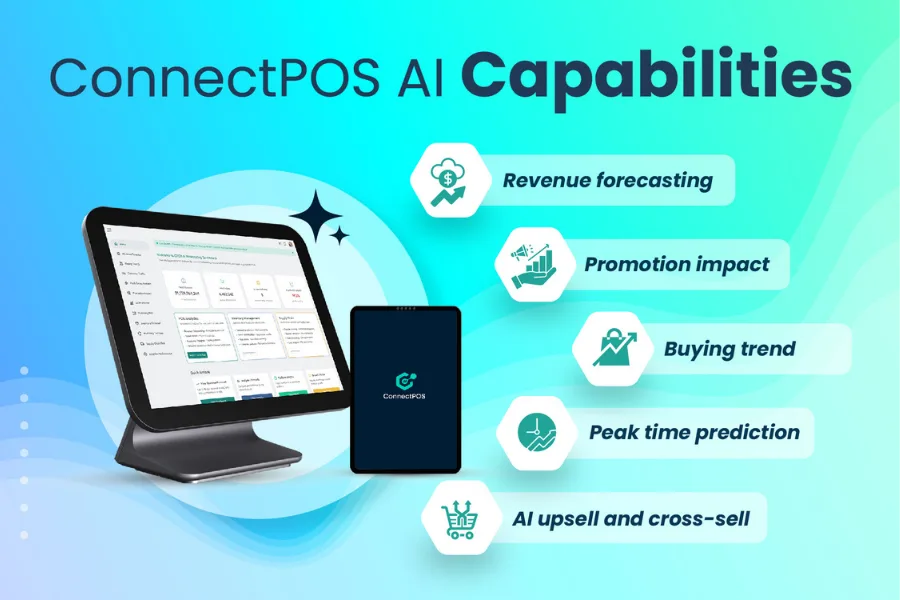
ConnectPOS AI capabilities focus on the operational questions that keep repeating in retail:
- What will revenue look like next week?
- When will stores get busiest?
- Which products will run hot, and which will stall?
- Which promotions are creating real uplift?
- Where are stockout or overstock risks forming?
To answer those questions, ConnectPOS AI runs forecasting across both ConnectPOS and MSI. That matters because sales signals and inventory signals should reinforce each other. A forecast is only useful when it connects back to action – ordering, allocation, staffing, and campaign moves.
Forecasting in ConnectPOS (POS)
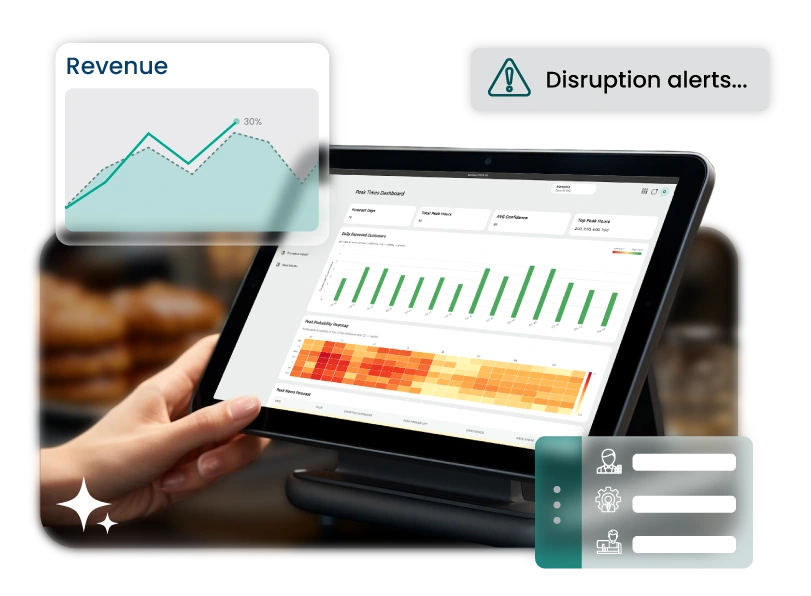
ConnectPOS AI includes forecasting designed for store and trading decisions:
Revenue forecast (daily/weekly/monthly)
See where performance is heading, then course-correct earlier. This is especially relevant when you manage multiple outlets and need a forward view by store or channel.
Buying trends by category/SKU, store/region, customer group, and channel
Spot what’s shifting in demand, not after it’s already visible in end-of-month reports. You can also identify pockets of growth (for example, one region moving faster in a category than others).
Customer traffic prediction by store and day part
Plan coverage around likely rush windows. This forecast supports scheduling, floor readiness, and task planning (restock, replenishment, VM changes) at the right time.
Peak time prediction for busy hours and days
If traffic prediction explains “how much,” peak time prediction points to “when exactly.” Stores can prepare for lines, pickup volume, and high-touch service periods.
Sales volume prediction per product/category (with promotion and inventory factors)
This is where planning gets specific: which SKUs are likely to move, in which stores, and in what time window. Teams can prioritize replenishment and store transfers before shelves go empty.
Promotion impact analysis (baseline vs promo performance and uplift)
Track uplift while a campaign still runs. If results aren’t trending as expected, you can adjust placement, messaging, or featured items instead of waiting until the campaign ends.
Depending on the forecast type, models can draw on inputs such as historical sales, store/channel performance, promotion data, and customer group behavior. Some forecasting scenarios can also incorporate external inputs like weather and event/holiday calendars when configured through defined APIs.
Forecasting in MSI (inventory)
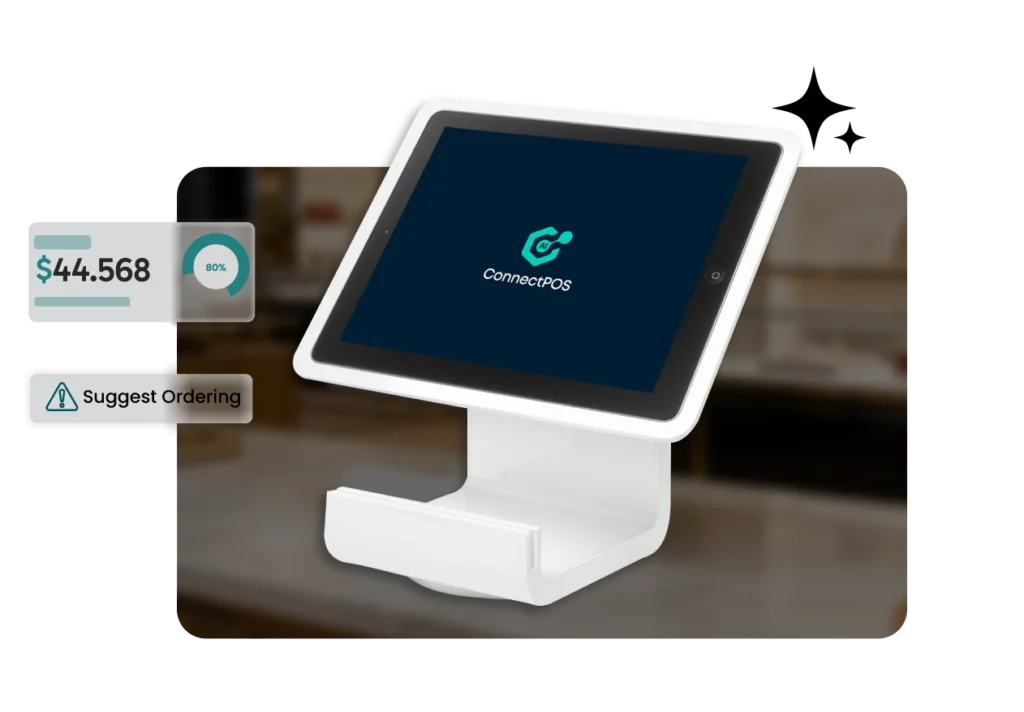
ConnectPOS AI also covers inventory-side forecasting, which ties directly to replenishment and risk planning:
Demand forecasting and restocking recommendations
Forecast demand at the item or category level, then translate it into restocking plans. This reduces last-minute ordering and supports smoother replenishment cycles.
Stock risk alerts (stockout and overstock)
Get early warnings before a hot seller disappears or slow movers start tying up cash. Managers can act with transfers, replenishment, or markdown planning, based on the direction of risk.
Inventory turnover and predicted cycle time
Understand how quickly inventory is likely to move, so purchasing and merchandising teams can pace orders and adjust assortment depth.
Supply chain disruption risk (when data is available through external APIs and supplier inputs)
Surface risk signals tied to supplier performance and external events. This supports contingency planning, safety stock decisions, and lead-time adjustments.
Supplier performance signals (on-time delivery, quality, cost efficiency)
Track supplier patterns over time and bring data into vendor conversations, especially when delays or quality issues start impacting availability.
ConnectPOS AI is Built for Retail Teams
We designed ConnectPOS AI to support the entire retail team – associates on the floor, managers running the outlet, and owners planning growth. Each role sees different signals and takes different actions, yet the goal stays the same: faster decisions, fewer surprises, and smoother execution across stores and channels.
Frontline staff (cashiers and sales associates)
Frontline teams don’t run forecasts all day. Still, AI-driven signals shape the environment they sell in – stock availability, promotion clarity, and peak-time readiness.
How this shows up in the store
- Fewer “we’re out” moments during the sale
When managers act earlier on demand and stock risk signals, staff spend less time apologizing and more time closing sales. - Cleaner promo execution during rush hours
If promotion impact signals show what’s working, teams can focus on promos that actually drive uplift rather than pushing everything at once. - Peak-time preparedness
When peak times are predicted more accurately, stores can prep the floor, assign coverage, and shorten the “we got slammed” chaos.
Store/outlet managers
This is where ConnectPOS AI makes the most immediate impact. Managers constantly balance inventory, staffing, and trade performance.
How managers apply the forecasts
- Reordering based on demand forecasting, not gut feel
Demand forecasts highlight which SKUs or categories are likely to spike. Managers can place orders earlier or rebalance stock across outlets. - Stock risk alerts that drive early intervention
Overstock risk can prompt markdown planning or cross-store allocation changes. Stockout risk can trigger replenishment or substitution strategies before the shelf goes empty. - Scheduling driven by predicted traffic and peak times
Peak time prediction by day part guides schedules and task planning: restock before the rush, shift breaks away from peak windows, and increase floor coverage at the right time. - Promotion impact analysis for in-flight campaign decisions
Managers can monitor uplift by store/channel/time window, then adjust product focus or extend a promo where it’s working.
Business owners and growing chains
Owners care about repeatable decision-making across stores. ConnectPOS AI supports planning with consistent signals, especially for multi-location operations.
How owners apply the forecasts
- Revenue planning and pacing across stores/channels
Revenue forecasts give leadership a forward view. That supports budgeting, target-setting, and performance pacing while the period is still in motion. - Demand planning tied to profitability
Stockout risk usually means lost revenue. Overstock often means markdowns and cash tied up. Demand forecasting plus stock risk signals supports better purchasing decisions. - Promotion strategy based on measured uplift
Promotion impact forecasting supports a cleaner playbook: repeat what drives uplift, refine what’s uncertain, and stop what burns margin without moving volume. - Operations that scale with fewer surprises
As store count grows, reactive decision-making becomes expensive. Forecasting creates a shared language for store leaders – what’s expected, what’s at risk, and what to do next.
ConnectPOS Product Experience Updates
While ConnectPOS AI puts forecasting front and center, the day-to-day experience still needs to stay clean. For that reason, we refreshed a few core areas so teams can move quickly between selling, customer context, inventory visibility, and post-purchase actions.
Streamlined UX and faster navigation
Key screens are easier to reach – sales, customers, inventory, and shift views so that staff can stay focused during rush hours.
Customer management inside the Sell screen
Associates can create customer profiles and view key details (contact info, addresses, order activity, loyalty/reward points) without leaving the selling flow.
Product discovery connected to MSI
Products synced through MSI appear in POS for search and scan, with inventory visibility available when staff need to confirm availability.
Straightforward checkout and post-purchase actions
Checkout stays consistent (customer, items, discounts, shipping, tax, payment), with fulfillment and refunds handled cleanly right after payment.
See ConnectPOS AI in action
If you want to see how ConnectPOS AI fits your operation – your store count, inventory setup, promotion cadence, and reporting rhythm, we’ll walk you through the workflows and forecasts that matter most for your team. Book a demo now!
►►► Optimal solution set for businesses: Shopify POS, Magento POS, BigCommerce POS, WooCommerce POS, NetSuite POS, E-Commerce POS