A new business point of sale can look impressive on demo day. Touchscreens respond fast. Reports appear detailed. Yet once it’s live, daily operations feel clumsy. That disconnect usually has nothing to do with technology. It comes from installing a retail POS solution before understanding how your team actually works. In this guide of ConnectPOS, we’ll show you how to align your sales system with real workflows so it supports growth instead of slowing you down.
Highlights
- A business point of sale should be configured around real daily workflows, not selected based on feature lists alone.
- Mapping sales flow, inventory handling, staff roles, and integrations prevents costly reconfiguration later.
- Testing, training, and system integration determine whether your POS supports growth or creates operational friction.
Why Your Business Point of Sale Setup Should Start with Workflow
Most businesses choose software the way they shop for hardware. They compare pricing tiers, scan feature lists, and ask about integrations. What often gets skipped is a simple question: how does work really move through your store each day? McKinsey notes that 70% of transformations fail, and the reasons are often basic things like low engagement and weak capability building, not a missing feature.
That gap creates friction. A point of sale system may process payments smoothly, yet still disrupt how your staff handle returns, manage stock, or approve discounts. NielsenIQ estimates that empty shelves cost U.S. retailers $82 billion in missed sales in 2021, and a 2021 NielsenIQ survey found that when shoppers hit empty shelves, 10% buy the item elsewhere and 16% shift to an online source. This can lead to retailers losing 46% of possible sales.
- Installation does not equal alignment: A POS system for businesses can be fully installed and still clash with daily routines. If checkout steps differ from how staff are trained, transactions take longer, and mistakes increase.
- Choosing tools before mapping processes leads to rework: Many teams pick a commercial POS platform first and redesign operations later. That approach forces constant adjustments, extra training, and unexpected configuration costs.
- A misaligned business point of sale slows core functions: When workflows are unclear, checkout lines grow, stock counts drift, and reporting feels unreliable. The software works, but the process around it doesn’t.
- Workflow-first setup supports scalability: Clear procedures make expansion easier. Whether you open a second store or add online sales, your store transaction system adapts faster when the foundation is structured. Reuters reported that about 140 stores used Amazon’s “Just Walk Out” system at the time, and Amazon planned to more than double that number. This shows how quickly a store process has to hold up when you scale it.
- Planning early prevents costly reconfiguration: Adjusting tax rules, product categories, and approval chains after launch wastes time. Early planning keeps your checkout management software consistent from day one.
Start with operations. Then select the platform. When workflow leads the decision, your POS becomes a support system rather than a daily obstacle.
How to Set Up a Business Point of Sale System That Matches Your Workflow?
A business point of sale should follow how your store operates, not dictate it. Setup becomes far easier when you define processes first and configure the software second.
The goal is simple. Build a sales management system that mirrors how transactions, inventory, and staff decisions already move through your business.
Step 1: Map Out Your Daily Workflow Before Choosing a Business Point of Sale
Before comparing vendors, pause. Watch how work actually happens on the floor. Small details often reveal where a POS system for businesses will succeed or fail.
- Identify how sales happen across channels: Some stores rely heavily on in-store purchases. Others combine walk-ins with online orders and mobile payments. A retail POS solution must reflect whether you operate in a single-channel or a hybrid model.
- Break down the checkout sequence: Track each step from product scan to payment confirmation. Does staff apply discounts manually? Do managers approve refunds? These actions shape how your in-store payment system should be configured.
- Review inventory movement beyond the shelf: Returns, exchanges, stock transfers, and promotions affect real-time counts. Strong inventory tracking depends on knowing how items flow through your store transaction system.
- Define staff roles and approval layers: Cashiers, supervisors, and administrators interact differently with checkout management software. Clear role boundaries prevent confusion and protect data accuracy.
- Document bottlenecks and recurring friction: Long queues, mismatched stock reports, and pricing errors usually signal workflow gaps. A cloud-based business POS should address those pain points directly.
Mapping these processes creates clarity. When you understand how work moves today, selecting the right platform becomes a strategic decision rather than a guess.
Step 2: Choose a Business Point of Sale That Fits Your Business Model
Not every commercial POS platform suits every industry. A café, a fashion retailer, and a repair service all handle transactions differently. Your selection must reflect that reality.
- Match the system to your industry structure: Retail stores prioritize barcode scanning and stock control. Hospitality environments require table management and order routing. Service-based businesses need appointment tracking. The point of sale system should reflect how revenue is generated.
- Decide between cloud-based and on-premise models: A cloud-based business POS allows remote access and centralized reporting. On-premise systems may suit businesses that prefer local control. Your infrastructure and growth plans will guide this decision.
- Prioritize features that support real operations: Inventory tracking, multi-location reporting, loyalty programs, and customer data syncing matter when they align with daily needs. Extra tools may look attractive, yet unused functions add complexity.
- Plan for scalability early: A multi-location POS system should handle expansion without heavy restructuring. If you expect growth, the software must scale alongside new branches or channels.
- Check integration compatibility: Accounting tools, e-commerce platforms, CRM systems, and ERP software should connect smoothly. Strong integration keeps financial data and sales records aligned.
Selecting the right platform requires clarity, not excitement. When your POS software for retailers reflects your business model, operations remain stable as you grow.
Step 3: Select Hardware That Supports Your Store Layout and Workflow
Software shapes logic. Hardware shapes movement. The devices you install influence how quickly staff complete transactions and how comfortably customers move through your space.
A strong POS system for businesses sets up pairs the right tools with the right layout. Otherwise, even the best platform feels awkward in practice.
- Choose terminals that match transaction volume: Large counters may require fixed POS terminals. Smaller boutiques might prefer tablets. Mobile checkout devices suit stores that assist customers on the floor. The hardware must reflect how sales occur.
- Equip essential peripherals thoughtfully: Barcode scanners speed up product lookup. Receipt printers keep documentation consistent. Cash drawers still matter for cash-heavy environments. Each tool supports accurate store transaction records.
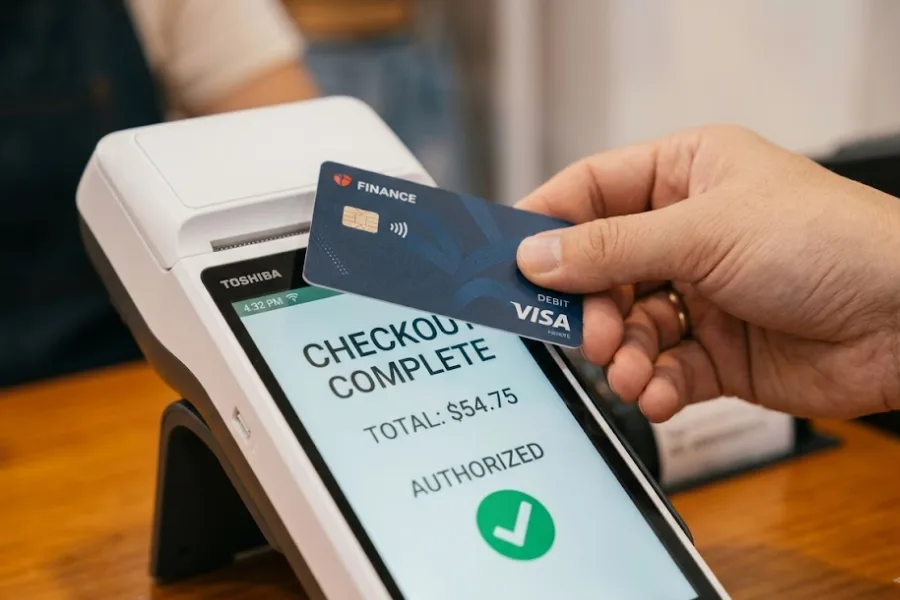
- Support modern payment preferences: A reliable payment processing platform should accept cards, contactless payments, and digital wallets. If customers hesitate at checkout, sales slow down.
- Consider self-checkout for high traffic: Busy environments benefit from kiosks that handle simple transactions. This approach reduces queue pressure and frees staff for service. If that fits your store, self-service options can ease peak-hour congestion.
- Plan placement carefully: Hardware positioning influences flow. Terminals placed near narrow exits create congestion. A well-placed in-store payment system improves both speed and comfort.
Hardware decisions may seem practical, yet they shape daily experience. When layout and equipment align, your retail POS solution feels natural instead of forced.
Step 4: Configure Your Business Point of Sale to Match Operations
Installation completes the setup. Configuration defines performance. This stage determines whether your sales management system supports accuracy or creates confusion.
Careful setup avoids long-term friction.
- Enter accurate business and tax details: Company information, tax rules, and payment settings form the foundation. Incorrect configurations distort reporting and create accounting issues later.
- Import your product catalog correctly: CSV uploads or system integrations must reflect real stock data. Clean product information strengthens inventory tracking and prevents duplicate listings.
- Structure categories for fast navigation: Logical grouping shortens checkout time. Staff locates products quickly when the point of sale system mirrors shelf organization.
- Set discount logic and promotion rules clearly: Automatic price adjustments remove manual steps. Structured pricing policies maintain consistency across stores.
- Customize receipts and branding elements: Branded receipts reinforce identity. Clear formatting also improves record-keeping. If you need deeper flexibility, custom POS options can help align screens and flows with your store’s habits.
Configuration turns a commercial POS platform into an operational tool. When settings reflect real processes, the software works quietly in the background and supports steady growth.
Step 5: Set User Roles and Permissions for Security and Accountability
Access control shapes discipline. When everyone can edit prices or approve refunds, confusion spreads fast. A structured permission model protects data and clarifies responsibility.
A efficient retail POS solution assigns authority based on role, not guesswork.
- Define role-based access clearly: Cashiers process transactions. Supervisors approve refunds. Administrators manage system settings. Clear boundaries prevent accidental changes inside the checkout management software.
- Control sensitive actions: Refund approvals, price overrides, and manual discounts require oversight. Limiting these permissions protects margins and maintains reporting accuracy.
- Track performance through system data: Sales volume, transaction speed, and refund frequency reveal employee patterns. A sales management system records this data and supports informed supervision.
- Minimize internal errors and shrinkage: Restricted permissions discourage misuse. When every action is logged, accountability increases.
- Clarify workflow in multi-staff environments: Larger teams require structure. A commercial POS platform that supports layered access avoids overlapping responsibilities.
Structured permissions protect operations quietly. When roles align with system access, your retail POS solution supports order rather than confusion.
Step 6: Integrate Your Business Point of Sale with Other Systems
A standalone system creates isolated data. Integration creates continuity. Modern retail depends on connected platforms that share accurate information.
Your business POS should communicate directly with accounting tools, ecommerce platforms, and customer databases.
- Synchronize inventory across channels: Stock sold online must reflect immediately in-store. Real-time inventory tracking prevents overselling and protects customer trust.
- Connect financial systems for accurate reporting: Sales records should flow directly into accounting software. This alignment shortens reconciliation time and supports cleaner financial statements.
- Integrate CRM and loyalty programs: Customer data syncing supports targeted campaigns and reward tracking. An omnichannel sales software platform keeps purchase history consistent.
- Maintain real-time updates across locations: A multi-location POS system centralizes performance data. Managers gain visibility into daily revenue and stock movement.
- Eliminate duplicate manual entry: Manual transfers between platforms create errors. Integrated checkout management software keeps records aligned automatically.
Connected systems strengthen operational clarity. When platforms exchange data smoothly, your store transaction system becomes a coordinated engine rather than a disconnected tool.
Step 7: Test Transactions and Workflows Before Going Live
A configured system still needs proof. Testing reveals whether your setup reflects real operations or only looks correct on screen. Skipping this stage often leads to costly corrections later.
Before launch, treat your point of sale system like a live environment.
- Simulate different payment scenarios: Run transactions using cards, contactless payments, and digital wallets. Confirm the payment processing platform responds accurately under varied conditions.
- Verify inventory deduction in real time: Each completed sale should adjust stock immediately. Strong inventory tracking prevents discrepancies between physical shelves and system records.
- Review refund and exchange flows: Process sample returns and exchanges. Check approval permissions and confirm that financial records adjust properly within the sales management system.
- Confirm reporting accuracy: Generate daily sales summaries. Compare transaction logs against expected totals to validate consistency. Clear report & analytics views help teams spot gaps early.
- Spot configuration gaps early: Testing often reveals small errors in tax rules or discount logic. Adjusting them now avoids disruption later.
Thorough testing protects launch day. When the system performs as expected under pressure, your retail POS solution enters production with confidence.
Step 8: Train Your Team to Use the Business Point of Sale Efficiently
Technology alone doesn’t guarantee performance. Staff interaction determines speed and accuracy. Even the most refined point of sale system fails if users hesitate at checkout.
Training must reflect daily routines, not theoretical manuals.
- Prioritize core transaction tasks: Teach staff how to process sales quickly and correctly. Clear instructions build confidence during peak hours.
- Practice promotions and returns: Simulated scenarios prepare employees for real customer requests. A well-prepared team handles exchanges without confusion.
- Conduct hands-on checkout simulations: Live practice reduces hesitation. Repetition builds familiarity with the store transaction system.
- Establish hardware handling standards: Proper use of scanners, terminals, and receipt printers protects equipment and prevents delays.
- Schedule refresher sessions when updates occur: Software changes require quick alignment. Short training sessions maintain consistency across teams.
Training transforms a commercial POS platform into a reliable operational tool. When staff move confidently through transactions, the system supports steady daily performance rather than slowing it down.
Common Mistakes When Setting Up a Business Point of Sale
Excitement often drives fast decisions. A demo looks impressive, pricing seems fair, and implementation begins immediately. Weeks later, friction appears in places no one expected.
Most problems trace back to setting up shortcuts rather than software limitations.
- Selecting software before mapping workflow: Installing a commercial POS platform without reviewing daily operations creates misalignment. Checkout steps may conflict with staff habits, and reporting structures may not reflect how revenue is tracked. The system works, but it doesn’t match reality.
- Overlooking integration planning: A retail POS solution that doesn’t connect smoothly with accounting or ecommerce tools forces manual data transfers. Duplicate entries increase errors and slow reconciliation.
- Treating training as an afterthought: Even a powerful point of sale system fails when employees hesitate at checkout. Limited preparation leads to longer queues and inconsistent transaction handling.
- Skipping transaction testing before launch: Some businesses assume configuration is enough. Without mock payments and refund simulations, small tax or pricing errors remain hidden until customers notice them.
- Choosing a platform that limits growth: A store transaction system that cannot support additional locations or online expansion becomes restrictive. Upgrading later requires time and extra expense.
Setup decisions shape long-term performance. Avoiding these mistakes keeps your commercial POS platform aligned with operations and ready for growth.
ConnectPOS: Building a Workflow-Driven Business Point of Sale with Intelligent Automation
A modern business point of sale should do more than process transactions. It should automate repetitive tasks, connect systems, and keep every workflow aligned across stores and online channels. ConnectPOS is a market-leading omnichannel solution that supports retailers in automating operations, improving accuracy, and scaling efficiently. With built-in ecommerce automation capabilities, it turns your POS into a central engine that supports smarter, faster decision-making.
- Unified Automation Across Channels: Manage products, customers, content, and orders through automated workflows. Keep in-store and online data synchronized in real time without manual updates.
- No-Code Intelligent Workflows: Build automated triggers and actions without technical complexity. Simplify operations while reducing human error in pricing, inventory, and order handling.
- Optimized Inventory and Store Updates: Automatically update stock levels, product visibility, and pricing changes. Maintain accurate inventory across multiple locations and ecommerce platforms.
- Efficient Order Control: Track orders with automated notifications and proactive risk management. Improve order accuracy and strengthen customer trust with smoother order fulfillment.
- Hyper-Personalized Customer Experiences: Segment customers based on behavior and purchasing history. Deliver targeted promotions and campaigns that increase engagement and repeat purchases with a stronger CX solution.
- Dynamic Discount Scheduling: Schedule promotions in advance and trigger offers based on specific conditions. Encourage faster purchase decisions without manual adjustments.
- Strategic Group Pricing: Apply tailored pricing rules to product groups. Support B2B, wholesale, or loyalty-driven pricing strategies within your POS workflow.
- Connected Systems via Robust APIs: Integrate seamlessly with CRMs, ERPs, loyalty programs, email marketing tools, and third-party platforms. Ensure consistent data flow across your technology stack.
- Personalized Email and Re-Engagement Campaigns: Automate follow-ups for inactive customers and send targeted messages based on real-time actions. Strengthen long-term customer relationships.
- Scalable Omnichannel Architecture: Manage multiple stores, warehouses, and online channels from one centralized system. Expand operations without disrupting existing workflows.
ConnectPOS combines omnichannel POS functionality with intelligent automation to turn your point of sale system into a workflow-driven platform. Instead of forcing your operations to fit software limitations, the system aligns with your workflow, helping you operate faster, reduce errors, and scale with confidence.
FAQs: Set Up a Business Point of Sale
1. How long does it take to set up a business point of sale?
The setup time depends on your business size and complexity. A small store with basic products and simple checkout needs may complete setup within a few days. Larger businesses with multiple locations, integrations, and detailed inventory structures may require several weeks for configuration, testing, and staff training.
2. What hardware is required for a business POS?
Most businesses need a POS terminal or tablet, a receipt printer, a barcode scanner, and a card reader. Some also use a cash drawer or customer-facing display. The exact hardware depends on your workflow, store layout, and transaction volume.
3. Can I integrate my business point of sale with accounting or e-commerce platforms?
Yes. Many modern POS systems support integration with accounting software, e-commerce platforms, CRM tools, and inventory management systems. Integration reduces manual data entry, keeps records synchronized, and improves reporting accuracy.
4. How do I train my staff to use a new point of sale system?
Start with hands-on training focused on daily tasks such as processing sales, handling returns, and checking stock levels. Provide role-based access so employees only see relevant functions. Short practice sessions before going live help build confidence and reduce errors.
5. What should I test before launching a POS software?
Run test transactions for different payment methods, verify tax calculations, check inventory deductions, and review reports for accuracy. Confirm that user permissions are properly assigned and that integrated systems are syncing data correctly. Careful testing helps prevent operational disruptions after launch.
Final Thoughts
A successful business point of sale setup shapes how your store operates every single day. When workflow leads the decision, the system supports faster transactions, clearer reporting, and stronger control over inventory and staff performance. Small setup choices influence long-term growth. ConnectPOS helps retailers build structured, automation-driven sales environments that reflect real business needs. If you’re ready to align your POS with how your store truly operates, contact us and start building a smarter foundation today.