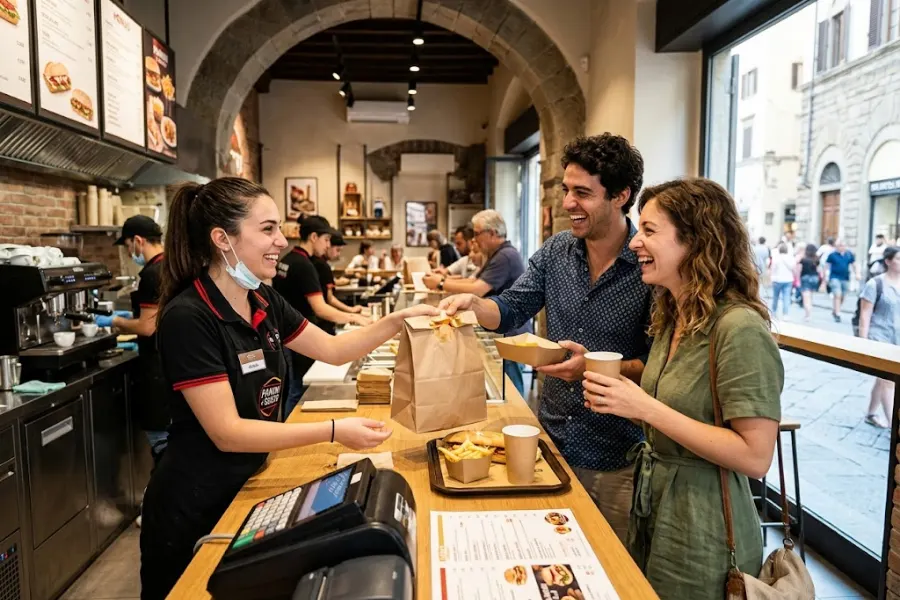
Fast food operators today work in an environment where service speed and order precision directly shape customer perception. Small delays at the counter, incorrect order details, or payment friction can shift a routine visit into a negative experience, especially during peak hours when demand spikes across dine-in, takeaway, and delivery channels. The way restaurants manage these pressure points has become a defining factor in customer satisfaction. This article from ConnectPOS provides information on how a POS system for fast food restaurant plays a direct role in shaping customer happiness inside fast food operations. It looks at how ordering flow, kitchen coordination, payment handling, and customer engagement are influenced when technology sits at the center of restaurant activity rather than manual processes.
Highlights
- POS systems for fast food restaurants combine order handling, payment processing, and kitchen coordination into one flow, shaping how staff manage high order volume and how customers experience waiting time and accuracy.
- Customer satisfaction rises when POS systems support faster ordering, fewer order mistakes, and clearer communication between front counter and kitchen, changing service outcomes from slow, inconsistent handling to more stable, predictable experiences.
Overview Of POS System For Fast Food Restaurants
A POS system for fast food restaurants acts as the main control point for daily operations, connecting ordering, payment, kitchen workflow, and reporting into one system. It helps restaurants manage high order volume with better speed, clearer communication, and more consistent service across dine-in, takeaway, drive-thru, and delivery channels. The system reduces operational gaps that often appear during peak hours and keeps service flow more stable.
Key Functions of a Fast Food POS System
- Order Processing: Handles dine-in, takeaway, drive-thru, and delivery orders in one integrated system, helping staff manage multiple sales channels without switching tools or losing order consistency
- Checkout Speed: Shortens transaction time through structured menu layouts, preset combo meals, and fast item selection, which helps reduce queue length during rush hours
- Kitchen Communication: Sends orders instantly to kitchen display screens, giving kitchen staff clear preparation instructions and reducing delays caused by manual ticket handling
- Order Accuracy: Shows detailed modifiers, add-ons, and customer requests in a structured format, helping reduce mistakes between front counter input and kitchen preparation
- Inventory Control: Tracks ingredient and product levels in real time, helping restaurants avoid selling unavailable items and improving stock planning across shifts
- Payment Options: Supports multiple payment methods including cards, QR codes, mobile wallets, and contactless payments, giving customers flexibility at checkout
- Sales Insights: Provides real-time reporting on revenue, best-selling items, and peak traffic periods, helping managers understand performance and adjust operations
- Customer Management: Stores customer purchase history and runs loyalty programs, letting restaurants create repeat promotions and strengthen customer retention through personalized offers and reward-based engagement
How A POS System For Fast Food Restaurants Increases Customer Satisfaction
Customer expectations in the fast food industry continue to increase. Guests expect quick service, accurate orders, convenient payment options, and a smooth experience across dine-in, takeaway, and delivery. A modern POS for fast food restaurant helps restaurants create a more organized operation that improves service quality at every stage of the customer journey.
Restaurants using outdated systems often struggle during busy periods. Long queues, order mistakes, and inconsistent communication can quickly affect customer perception. A well-structured POS environment gives restaurant operators stronger control over transactions, kitchen coordination, inventory management, and customer engagement.
Eliminating Long Wait Times with Faster Checkout
Speed has a direct impact on customer satisfaction in fast‑food restaurants. Studies show that 47% of customers are willing to leave a queue if the wait exceeds 8 minutes, and for fast‑food/QSRs, the average acceptable wait time is only about 3–5 minutes. During peak hours, customers often spend around 5–6 minutes total (queueing plus service), which can already feel “slow” for many diners.
POS software for fast food helps staff process transactions faster through organized menu layouts, quick combo selections, and simplified customization options. Cashiers can complete orders with fewer manual steps, which helps restaurants maintain smoother front-counter operations during peak traffic.
Faster checkout also improves overall customer perception. Guests often associate quick transactions with professionalism, operational discipline, and service reliability. Restaurants that consistently maintain short waiting times usually create stronger customer retention over time.
Guaranteeing Order Accuracy Every Time
Order accuracy remains one of the biggest factors influencing customer trust. Incorrect meals, missing add-ons, or preparation mistakes can negatively affect the dining experience, especially for takeaway and delivery customers.
POS systems improve communication between the front counter and kitchen staff through digital order management. Orders appear clearly with modifiers, meal customizations, and special instructions displayed in real time. This lowers confusion that commonly happens with handwritten tickets or verbal communication.
Restaurants handling large delivery volumes benefit from a more structured workflow. Accurate service also improves online reviews, customer confidence, and repeat purchase behavior.
Empowering Diners with Self-Service Kiosks
Self-service kiosks continue becoming more common in fast food restaurants. Many customers prefer independent ordering because it allows them to browse menu options and customize meals at their own pace.
Kiosks help lower front-counter congestion during busy periods while allowing restaurants to handle higher order volumes more effectively. Customers can review promotions, meal upgrades, add-ons, and combo options without feeling rushed during cashier interactions.
This ordering environment often increases average order value while creating a more convenient experience for guests who prefer digital interaction.
Rewarding Customers Through Integrated Loyalty Programs
Loyalty programs are a powerful tool for long‑term restaurant growth. Industry data shows that 77% of consumers say they are more likely to return to a restaurant that offers a loyalty program. In addition, loyalty members now represent about 39% of total restaurant visits, and at leading QSRs they can account for half or more of all visits
Restaurants can track purchase history, visit frequency, and customer preferences through the POS platform. This information will help businesses to create targeted rewards such as points programs, birthday promotions, exclusive discounts, or personalized meal offers.
Customers appreciate brands that recognize returning visitors and provide meaningful rewards. Loyalty programs also encourage repeat purchases while strengthening customer engagement over time.
Kitchen Display System (KDS) Integration
Kitchen coordination becomes more challenging as restaurants manage dine-in, takeaway, drive-thru, and delivery orders simultaneously.
A POS software for fast food connected to a Kitchen Display System (KDS) sends orders directly to digital kitchen screens in real time. Kitchen staff can organize preparation queues more clearly and manage incoming orders with better visibility.
This structure helps lower communication errors between front-of-house and kitchen teams while improving preparation consistency during busy operating hours.
Real-Time Menu and Inventory Management
Inventory visibility directly affects customer experience. Customers become frustrated when menu items appear available but later turn out to be out of stock.
Connected POS software for fast food updates menu availability and inventory levels in real time across cashier stations, kiosks, and online ordering platforms. Restaurants can immediately remove unavailable items and prevent ordering confusion. Managers also gain clearer visibility into product demand, ingredient consumption, and purchasing patterns, helping daily operations remain more stable and organized.
Flexible Payment Processing Capabilities
Payment convenience has become a major part of customer satisfaction. Modern customers expect restaurants to accept different payment methods without delays or technical issues.
POS systems process credit cards, contactless payments, QR code transactions, digital wallets, and online payment platforms through one centralized system. Customers can complete purchases using their preferred method with minimal friction. Flexible payment processing also helps restaurants maintain faster checkout flow during busy periods while improving overall transaction visibility and financial reporting.
ConnectPOS: The Ultimate POS System for Fast Food Restaurants
ConnectPOS is a cloud-based quick service POS built to support fast food restaurants that operate under high order volume and fast service pressure. It connects ordering, payment processing, kitchen coordination, inventory control, and customer data into one system. The platform is designed to help restaurants maintain stable operations across dine-in, takeaway, drive-thru, self-service kiosks, and online delivery channels without breaking workflow consistency.
With operational data, ConnectPOS gives restaurant managers clearer visibility into daily performance. Staff can process orders faster, reduce communication gaps between front counter and kitchen teams, and maintain more consistent service quality during peak hours. The system also supports multi-location management, helping restaurant chains standardize operations across branches.
Key Capabilities of ConnectPOS for Fast Food Restaurants
- Unified Order Management: Handles dine-in, takeaway, drive-thru, and delivery orders in one system, helping restaurants manage multiple sales channels without switching tools or losing order consistency during busy periods
- Fast Checkout Processing: Improves order entry speed through structured menu layouts, combo meal presets, and quick item customization, which helps reduce queue buildup during peak service hours
- Kitchen Integration (KDS): Sends orders directly to kitchen display screens in real time, helping kitchen staff organize preparation tasks, prioritize orders, and reduce delays caused by manual tickets
- Real-Time Inventory Control: Updates ingredient and product stock levels instantly, helping restaurants avoid overselling items and maintain accurate menu availability across all ordering channels
- Flexible Payment Processing: Works with different payment methods such as cards, QR payments, mobile wallets, and contactless transactions, letting customers complete purchases with fewer barriers at checkout
- Self-Service Kiosk: Integrates with kiosk systems that allow customers to place and customize orders independently, helping reduce counter congestion and improve service flow during rush hours
- Sales and Operational Reporting: Provides real-time dashboards for revenue tracking, product performance analysis, and peak-hour insights, giving clearer direction for business decisions and staffing planning
- Multi-Channel Integration: Connects in-store POS with online ordering platforms and third-party delivery apps, creating a unified system for managing all incoming orders efficiently
- Customer and Loyalty Management: Stores customer purchase history and runs loyalty programs, building repeat visits through targeted promotions and reward systems
- Multi-Location Management: Enables centralized control of menus, pricing, and operations across multiple branches, ensuring consistent customer experience across all restaurant locations
FAQs About POS System For Fast Food Restaurants
1. What role does a POS for fast food restaurant play in customer satisfaction in fast food restaurants?
A POS system connects ordering, payment, and kitchen operations in one workflow. This reduces service delays, lowers order mistakes, and creates a more consistent dining experience, which directly shapes how customers feel about the restaurant.
2. How does a POS system help reduce customer waiting time?
It speeds up order entry with structured menus, preset combos, and quick item selection. Orders are sent directly to the kitchen without manual steps, helping shorten queues and improve service flow during peak hours.
3. Why does order accuracy matter for customer happiness?
Customers expect to receive exactly what they ordered. A POS software for fast food clearly shows modifiers, add-ons, and special requests, reducing miscommunication between staff and kitchen teams and lowering the chance of incorrect orders.
4. Can self-service kiosks improve the customer experience?
Yes. Self-service kiosks allow customers to place orders independently without waiting at the counter. This improves convenience, reduces congestion, and gives more control over customization and menu choices.
5. How does a POS system help faster payment processing?
It accepts multiple payment methods such as cards, QR payments, mobile wallets, and contactless options. This reduces checkout friction and helps customers complete purchases quickly.
Conclusion
Customer satisfaction in fast food restaurants is shaped through a chain of operational moments that include order entry, kitchen execution, payment completion, and post-purchase engagement. A POS for fast food restaurant sits across these points, connecting them into one flow where information moves with clarity between staff, kitchen teams, and customers. When this structure is missing, service inconsistency tends to appear during high-demand periods, affecting both speed and order accuracy.
The value of POS adoption lies in improving operational coordination, staff communication, and service stability under pressure. Restaurants using fragmented tools often find it hard to maintain consistent service quality during peak traffic, while a connected system gives clearer control over daily operations and customer touchpoints. ConnectPOS provides POS solutions for fast food businesses that want better control over order flow, payment handling, and customer experience. Contact us!
►►► Optimal solution set for businesses: Shopify POS, Magento POS, BigCommerce POS, WooCommerce POS, NetSuite POS, E-Commerce POS