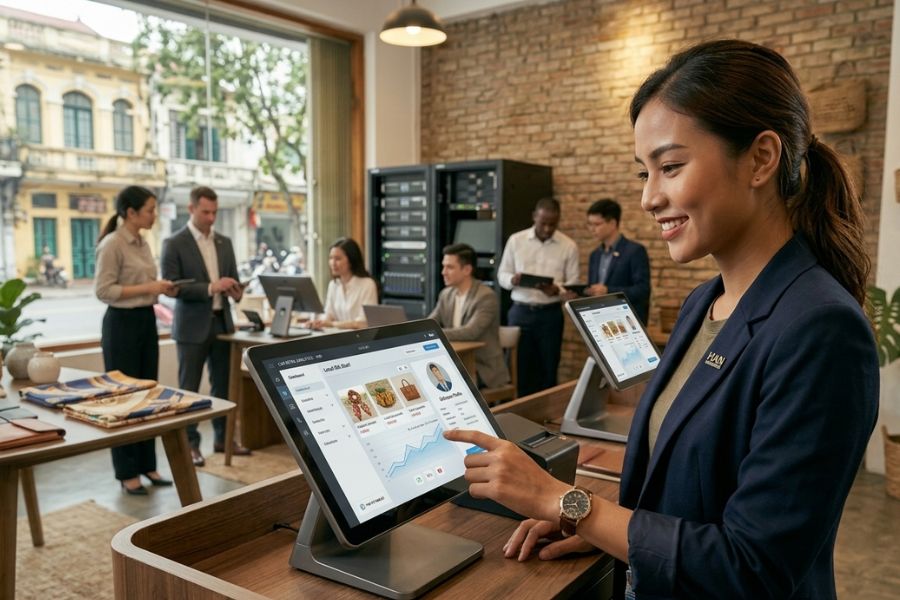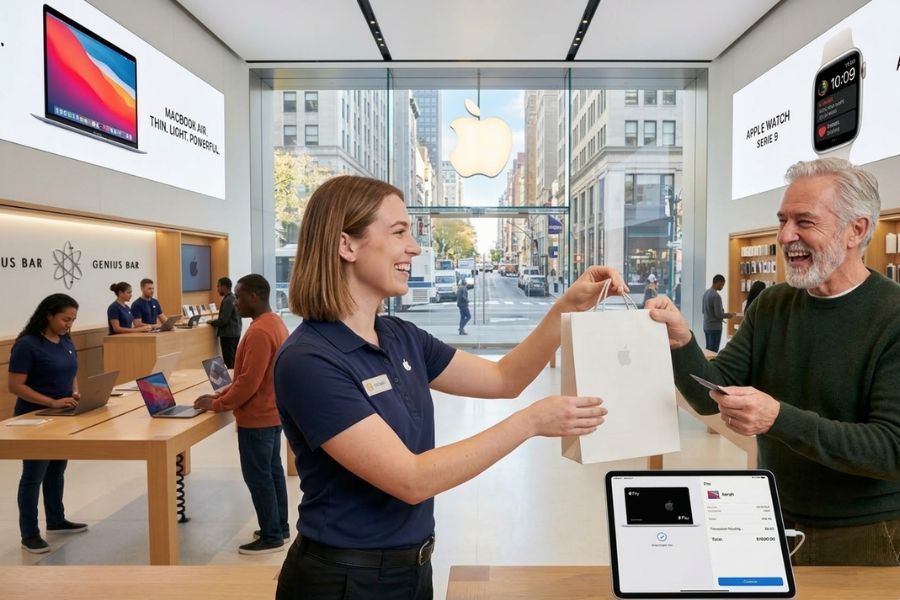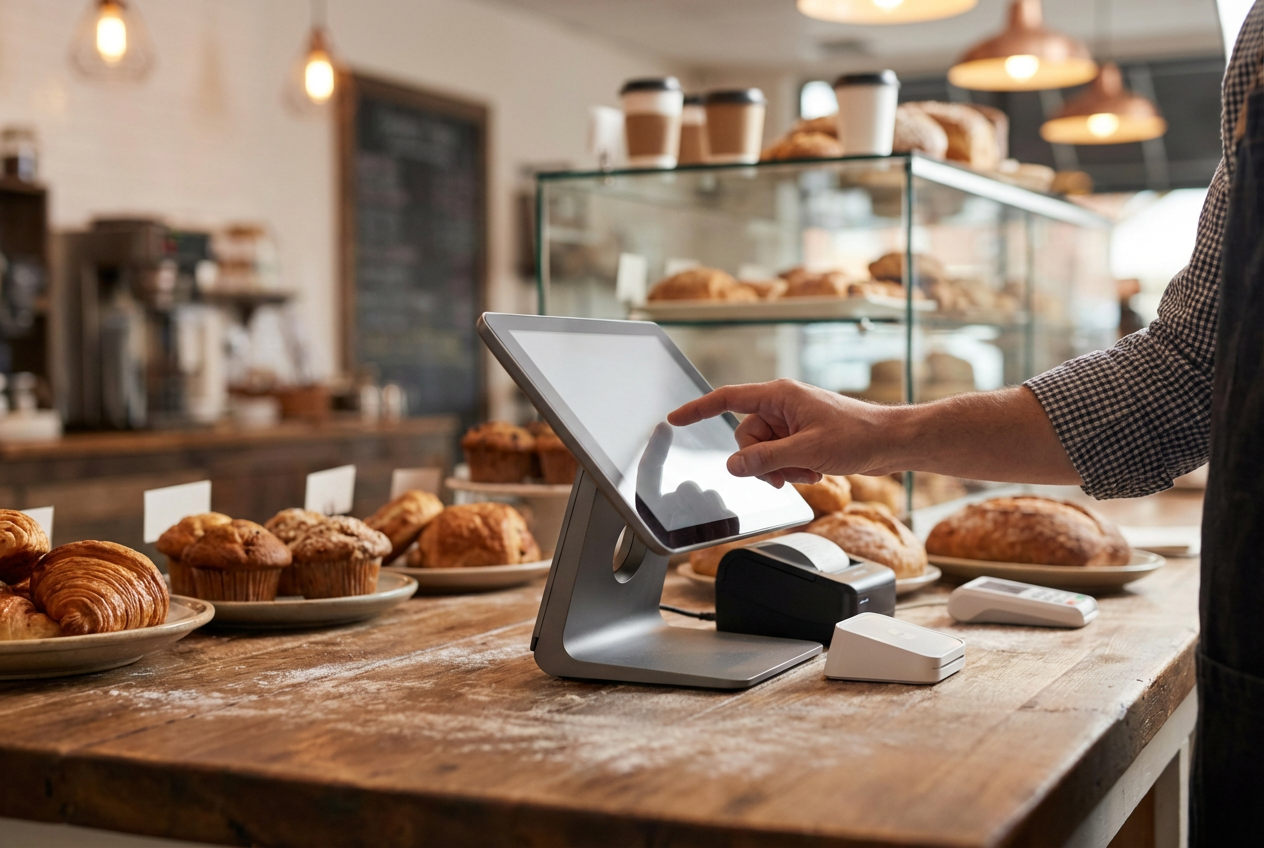
The U.S. bakery market operates under conditions that leave little room for operational drift. Thin margins, short product lifecycles, ingredient price volatility, and mixed order types place bakeries under constant pressure to align sales, production, and labor in real time. A bakery POS system in the US will need tight coordination across counter service, kitchen output, inventory movement, and staff accountability, from early-morning rushes to long-horizon custom orders.
This article from ConnectPOS advises bakery operators and decision-makers on the key POS capabilities needed to support these realities at scale.
Highlights:
- American bakeries manage daily bake cycles, raw-material usage, and long-term custom orders, conditions that general retail POS systems fail to address.
- A suitable system connects fast counter checkout with back-of-house data, tracking ingredients at unit level, guiding daily prep quantities, recording waste, and linking labor hours to sales patterns.
Bakeries in the US Require a Specialized POS System
With approximately 119,099 bakery businesses operating in the United States as of late 2025, the bakery sector represents one of the most fragmented and operationally demanding segments in food retail. This landscape includes independent retail bakeries, specialty cake shops, and large numbers of hybrid bakery cafés, which alone account for around 9,192 establishments in the US.
American bakeries operate in a high-pressure environment defined by thin margins and highly perishable goods. They handle a unique mix of high-speed retail transactions and complex, long-term custom orders. General retail software lacks the depth to manage these specific demands, often leading to inventory errors or missed sales.
Profitability in the US market depends on precise cost control. Owners must track raw ingredients like flour and butter at the gram level to manage production costs. A specialized bakery POS system in US connects front-of-house sales to the back-of-house kitchen, ensuring the team bakes the correct amount of bread each morning. This prevents profit loss from wasted dough or ingredient stockouts.
The American bakery model also requires flexibility. A single shop might process a rapid coffee sale at the counter while simultaneously managing a deposit for a wedding cake pickup weeks away. Specialized software handles these diverse workflows, tracking pickup schedules and kitchen notes that a standard cash register would miss.
Core Features of a Bakery POS System In US
A modern bakery POS system in the US supports the fast-paced, low-margin reality of U.S. bakeries by unifying checkout speed, ingredient-level inventory control, production planning, and staff management in a single platform. It enables bakeries to handle high-volume daily sales and long-term custom orders efficiently while reducing waste, controlling costs, and scaling operations as the business grows.
Fast Checkout and Flexible Product Handling
The morning rush in an American bakery is intense. Customers want their coffee and pastry quickly. A baker needs an interface that minimizes taps.
- Quick-Key Layouts: Visual grids with photos of items help staff find products.
- Weighted Items: Integration with scales allows for selling items like granola or cookies by the pound.
- Guest-Facing Screens: These displays show the order in real-time, which helps order accuracy and provides transparency for the guest.
- Payment Flexibility: Modern systems support contactless payments, mobile wallets, and chip cards to keep the line moving.
Inventory, Production, and Waste Control
Managing ingredients represents the most difficult operational task for an American bakery. A specialized bakery POS system in US tracks raw materials like yeast, sugar, and butter to maintain thin profit margins. This system connects sales data to the kitchen to prevent both overproduction and ingredient shortages.
- Raw Ingredient Tracking: The software deducts specific amounts of flour or chocolate from the digital pantry as items sell.
- Recipe Costing: Managers see the exact cost of a single loaf of bread based on current ingredient prices.
- Automated Reordering: The system alerts owners when stock levels for bulk items reach a predefined minimum.
- Waste Logging: Staff record unsold or damaged goods at the end of each shift to identify patterns in food loss.
- Production Planning: Historical sales data helps the head baker determine the correct quantity of dough to prep for the following day.
Reporting and Demand Forecasting
Data helps a bakery grow. Owners need to know which items sell best on Tuesday mornings versus Saturday afternoons.
A quality system generates reports on:
- Top Sellers: Which products drive the most revenue
- Labor Cost vs. Sales: When to Schedule More Staff.
- Gift Card and Loyalty Analytics: Reports show how many rewards guests redeem and how gift card sales fluctuate by week or month.
Forecasting tools look at historical data to predict future needs. If the system knows that July 4th usually sees a spike in pie sales, it alerts the manager to order extra fruit in advance.
Read more: POS System on iPad in the US: How to Optimize for Your Business?
Staff Management and Operational Control
Labor costs stand as a primary expense for bakeries in the US. A bakery POS system serves as a central hub for monitoring employee performance and protecting the business from internal errors. These tools help owners maintain a professional environment across different shifts and locations.
- Integrated Time Clock: Employees clock in and out directly through the terminal to secure accurate payroll.
- Role-Based Permissions: Managers restrict certain actions, such as voids or refunds, to authorized personnel only.
- Performance Analytics: Reports show which staff members process the most transactions during the morning rush.
- Labor-to-Sales Ratios: The system compares hourly wage costs against sales volume to identify overstaffed periods.
- Theft Prevention: Cash drawer tracking and mandatory login codes create a clear audit trail for every transaction.
Scalability and Integration Capabilities
Many bakeries start as a single shop and expand to a second location or a food truck. The software must grow with the business.
Cloud-based systems allow owners to check sales from home. They also connect with other tools:
- Kitchen Display Systems (KDS): Digital screens replace paper tickets, allowing the back-of-house to see orders at a glance.
- Online Ordering: An integrated site lets guests order ahead for pickup, with the web orders syncing directly to the kitchen.
- Loyalty Programs: Digital rewards replace old paper punch cards, letting regulars rack up points for future purchases.
Read more: McDonald’s POS System in The US: What They Use to Optimize Operations
How ConnectPOS Aligns with Bakery POS System Needs in the US
ConnectPOS aligns well with US bakery POS needs through its strong inventory synchronization, multi-store support, and omnichannel capabilities tailored for high-volume retail like bakeries. Its real-time data syncing prevents stockouts of perishable items, while flexible payment handling supports US processors and tax compliance.
- Inventory and Order Management: Real-time synchronization across online and in-store channels keeps ingredient and product stock accurate during peak hours. Tools such as on-hold orders, shipping edits, and multi-store transfers support pre-orders, BOPIS, and backorders common in U.S. bakery operations.
- Omnichannel Sales Support: ConnectPOS synchronizes inventory across in-store, online pickup, and delivery channels, allowing bakeries to manage hybrid sales models without stock conflicts or availability gaps.
- Speed During Rush Hours: Customizable item layouts support fast transactions during morning rushes. Offline capability maintains checkout continuity during connectivity disruptions, with automatic data syncing once the connection restores.
- Customer Loyalty and Marketing: Built-in CRM POS tools track purchase history and support loyalty programs, targeted promotions, and reminders for events such as custom cake orders or seasonal campaigns.
- Flexible Payment Processing: The system supports cash, cards, and mobile wallets including Apple Pay and Google Pay, connecting with various payment processors to meet U.S. consumer payment preferences.
- Multi-Location Oversight: Centralized dashboards provide visibility into sales, inventory, and staff performance across locations, supporting consistent execution as bakeries expand.
- Reporting and Analytics: Sales and customer data analysis support production planning, pricing decisions, and menu adjustments by revealing demand patterns across days, time slots, and locations.
FAQs
What makes a bakery POS system different from a standard retail POS?
A bakery POS system in US is designed to manage perishable inventory, recipe-based production, and custom orders, while a standard retail POS focuses mainly on item-level sales. Bakery systems connect front-of-house sales with back-of-house production to reduce waste and control ingredient costs.
Why is fast checkout important for bakeries in the US?
American bakeries experience heavy traffic during morning rush hours. Fast checkout features like quick-key buttons, guest-facing displays, and contactless payments help reduce lines, improve customer satisfaction, and increase transaction volume.
What integrations should a bakery POS system support?
Key integrations include kitchen display systems (KDS), online ordering, loyalty programs, and payment processors. These integrations streamline operations and improve both in-store and digital customer experiences.
Conclusion
A bakery POS system in US market must support speed at the counter, discipline in ingredient tracking, clarity in production planning, and control over labor and cash handling. Long-term performance depends on how well the software connects daily execution with broader business direction, maintaining consistency as operations expand from a single location to a growing network.
ConnectPOS designs POS systems around real bakery production workflows, cost visibility, and expansion readiness. Work with the ConnectPOS team to assess how a bakery-focused POS platform can support sustainable operational performance across your business.
►►► Optimal solution set for businesses: Shopify POS, Magento POS, BigCommerce POS, WooCommerce POS, NetSuite POS, E-Commerce POS