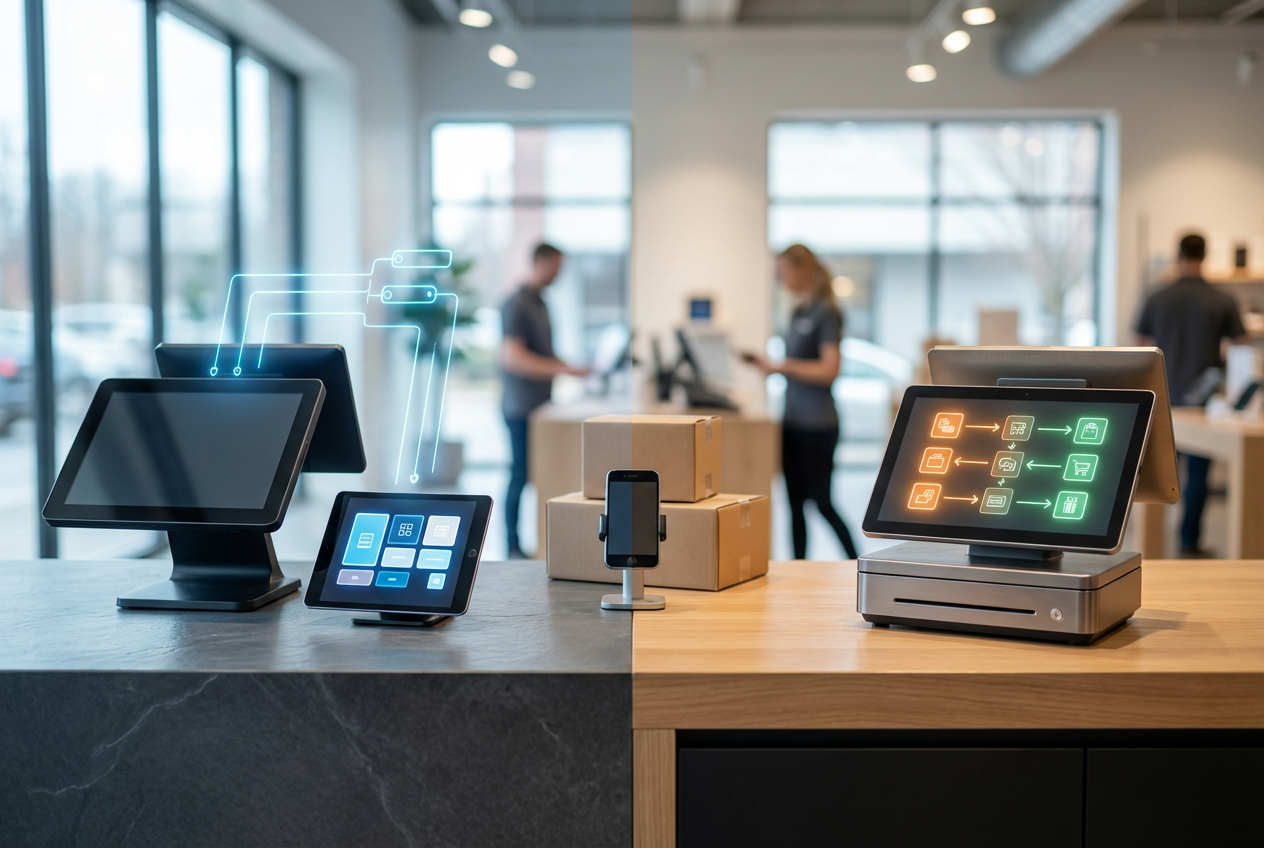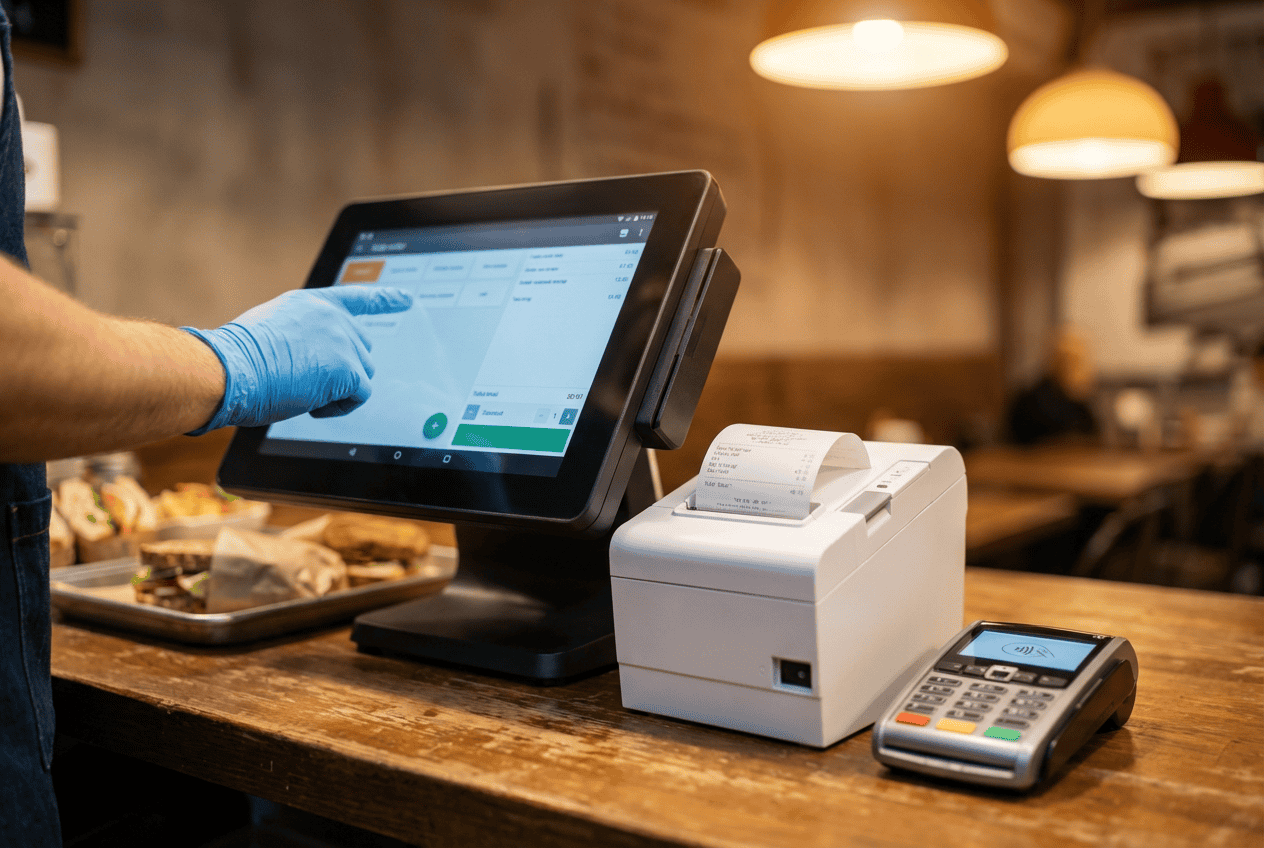
Choosing the optimal POS is imperative to business growth, with ConnectPOS and Toast POS leading the market. The core difference lies in their focus: ConnectPOS is the flexible, scalable omnichannel powerhouse built for multi-channel and enterprise retail, offering superior integration with platforms like Shopify and Magento, and handling complex, real-time inventory. In contrast, Toast POS is the specialized solution optimized for the hospitality industry, excelling in restaurant-specific workflows, menu management, and proprietary hardware.
This review determines that ConnectPOS is better for adaptable retail scale, while Toast POS dominates its dedicated food service niche.
Highlight:
- Toast POS is the integrated solution for dedicated food-service establishments (restaurants, bars, cafés), providing deep features for kitchen and table management. However, its specialization requires reliance on a proprietary hardware and payment ecosystem.
- ConnectPOS is the definitive choice for omnichannel retail businesses that manage complex products and multiple sales channels, delivering the flexibility and architectural foundation necessary for scalable, long-term growth.
Overview of ConnectPOS vs Toast POS
Understanding the core identity of each POS system is the first step toward making an informed choice. It’s a comparison of specialization versus versatility.
ConnectPOS
ConnectPOS is explicitly engineered as a high-performance, cloud-based retail POS solution. Its entire architecture is designed to manage the complexities of omnichannel commerce, making it the ideal choice for modern retailers who sell across physical stores, pop-up shops, and multiple e-commerce platforms.
ConnectPOS shines by offering seamless, real-time synchronization of inventory, customer data, and orders across all channels. This capability is non-negotiable for apparel, electronics, home goods, and multi-brand retailers who rely on accurate stock levels and personalized customer experiences, whether a transaction occurs in-store or online.
Toast POS
Toast POS, conversely, is a system purpose-built and perfected for the restaurant and hospitality industry. From quick-service cafes and bars to fine dining and multi-location franchises, Toast POS provides a unified platform to manage every aspect of food service operations.
The strength of Toast POS lies in its deep, specialized feature set tailored specifically to the unique needs of a busy kitchen and front-of-house. This includes significant functions like detailed menu management with modifiers, digital kitchen display systems (KDS), table management, and integrated online ordering for delivery and takeout.
For any business solely focused on selling food and beverages, Toast POS offers tools that few general retail POS systems can match.
Feature Comparison – ConnectPOS vs Toast POS
While both systems are categorized as POS solutions, their operational feature sets diverge significantly based on their intended industries. Let’s delve into a side-by-side comparison of the components that drive daily operations and long-term strategy.
Ease of Use
ConnectPOS offers a clean, customizable, and fast retail interface, supporting quick product lookups, barcode scanning, assisted selling, flexible returns, and multi-device compatibility for efficient in-store operations.
Toast POS is designed for restaurant speed and accuracy, excelling in order entry, modifier management, table service, and handheld ordering, but its F&B-centric workflows make it unsuitable for general retail environments.
Verdict: ConnectPOS offers superior flexibility and platform-agnostic usability for retail. Toast POS offers superior specialized usability if and only if your business is a restaurant.
Inventory Management
ConnectPOS delivers advanced retail inventory control, supporting large SKU catalogs, variant matrices, multi-warehouse operations, real-time omnichannel syncing, BOPIS, ship-from-store, RFID tracking, and automated replenishment ideal for multi-location retail chains.
Toast POS focuses on ingredient-level inventory for restaurants, with recipe management, supplier ordering, and COGS tracking. While it can handle basic retail items, it lacks the variant depth, retail workflows, and e-commerce synchronization required by dedicated retailers.
Verdict: For any business selling distinct, finished products and managing multiple channels (the definition of modern retail), ConnectPOS provides far superior, dedicated, and flexible inventory tools.
Sales and Transactions
ConnectPOS prioritizes fast, flexible retail checkout, supporting multiple payment methods, split tenders, layaways, loyalty redemptions, assisted selling, and self-checkout options, ideal for decreasing queues and handling complex retail transactions across channels.
Toast POS optimizes restaurant order accuracy and table-side workflows, excelling in detailed order modifiers, tip management, and integrated online ordering, making it highly effective for hospitality but not aligned with retail checkout needs.
Verdict: ConnectPOS offers broader transaction flexibility and payment processing choice, vital for retail. Toast POS provides superior tools for detailed order modifications and tip management specific to service staff.
Customer Relationship Management (CRM)
ConnectPOS offers unified, omnichannel customer profiles, enabling retailers to track behavior across online, in-store, and mobile channels, support cross-channel loyalty and gift cards, and create highly targeted customer segments for personalized marketing and smarter inventory planning.
Toast POS provides CRM POS tools tailored to restaurant loyalty and guest engagement, including built-in email marketing, birthday offers, and guest feedback features, but its customer data focuses on dining habits rather than product preferences, making it less suitable for general retail operations.
Verdict: ConnectPOS provides a more comprehensive, unified customer view that links online and offline behavior, which is essential for multi-channel retail growth.
Reporting and Analytics
ConnectPOS delivers real-time, retail-focused reporting, including sales by location, variant-level performance, inventory valuation, staff efficiency, and margin analysis, with instant omnichannel updates and options for custom reports or BI integration.
Toast POS provides analytics built for restaurant operations, offering insights into labor costs, ingredient usage, menu item profitability, table turnover, and server performance, ideal for optimizing food and labor efficiency rather than retail workflows.
Verdict: Both offer powerful reporting, but ConnectPOS provides the necessary data granularity for retail product management, multi-store logistics, and omnichannel sales analysis.
Read more: Toast POS System Cost: How You Will Be Charged?
Integration Capabilities
ConnectPOS operates as an open, highly flexible ecosystem, offering strong integrations with major e-commerce POS platforms (Magento, Shopify, BigCommerce), smooth ERP and accounting connections (NetSuite, QuickBooks, Xero), and an API-first design that supports custom enterprise extensions across the retail tech stack.
Toast POS functions within a more closed, hospitality-focused ecosystem, relying on its own add-ons for payroll, delivery, and loyalty, offering limited third-party integrations aimed at restaurants, and lacking robust e-commerce connectivity, making it unsuitable for retailers who need true omnichannel operations.
Verdict: For hybrid, multi-channel, or enterprise retailers requiring integration with existing e-commerce, ERP, or diverse third-party retail applications, ConnectPOS’s open architecture and focused e-commerce integrations are unquestionably superior.
Offline Functionality
ConnectPOS confirms reliable retail operations with a robust offline mode, allowing sales, discounts, customer access, and receipt printing to continue uninterrupted, with all data syncing automatically to the cloud once the connection is restored.
Toast POS supports offline restaurant operations, enabling order entry and payment processing even without internet, but management functions like reporting and updates remain unavailable until connectivity is restored.
Verdict: Both systems are reliable offline, but ConnectPOS’s ability to handle complex retail transactions and sync seamlessly across vast omnichannel inventory upon reconnection gives it an edge for high-volume retail environments.
Security Features
Both ConnectPOS and Toast POS adhere to strict industry standards, including PCI compliance, to guarantee customer payment data is handled securely. Both utilize end-to-end encryption for payment processing.
- ConnectPOS: Focuses on secure, tokenized payments and multi-layer security for centralized customer and inventory data, critical for protecting a vast, multi-channel retail database. It provides granular user access controls, allowing management to dictate exactly which staff members can perform functions like refunds or stock adjustments.
- Toast POS: Its security is tailored for the speed of service, using tokenization and encrypted card processing through its integrated payment solution. Toast POS hardware is specifically designed with security in mind, utilizing closed-system hardware to minimize the risk of external software interference.
Verdict: Both systems offer excellent security, with ConnectPOS providing more granular control for diverse staff roles in a complex retail hierarchy.
Pricing and Scalability
Pricing models reveal a key difference between the two systems, particularly concerning contracts, hardware, and fees. The choice here often determines the total cost of ownership (TCO).
ConnectPOS typically uses a clear, subscription-based pricing model that scales with the number of registers and desired features, offering flexibility without hidden processing mandates.
- Hardware: ConnectPOS is hardware-agnostic, running smoothly on standard tablets (iOS/Android), desktops, and compatible third-party POS hardware. This allows retailers to leverage existing equipment, reducing upfront capital expenditure.
- Scalability: ConnectPOS is built to scale infinitely, from a single pop-up shop to a global enterprise with hundreds of stores and multiple warehouses. Its open API and robust multi-location/multi-warehouse features allow it to adapt to growth seamlessly, making it a sustainable choice for ambitious retailers.
- Pricing
| Plan Tier | Estimated Monthly Price | Key Target Audience |
| Standard | $39 – $49 | Small boutiques or pop-ups needing basic sync. |
| Advanced | $69 – $79 | Growing retailers needing gift cards and advanced checkout. |
| Premium | $89 – $99 | Multi-store retailers needing stock transfers and click-and-collect. |
| Enterprise | Custom Quote | Large-scale global brands with 100+ stores and API needs. |
Toast POS offers unique pricing structures often tied to long-term contracts (typically two years) and proprietary payment processing.
- Hardware: Users of Toast POS are generally locked into purchasing proprietary Toast hardware (like the Toast Go handheld or Flex terminals), which are durable but add high upfront cost, though some options allow this to be absorbed into a higher processing rate.
- Scalability: Toast POS scales extremely well within the hospitality sector, making it a solid choice for restaurant groups. However, its core design and contract limitations make it rigid and unsuitable for businesses looking to expand outside of food service or integrate non-Toast hardware.
- Pricing:
| Plan Tier | Estimated Monthly Price | Key Target Audience |
| Starter Kit | $0 | Cloud POS, order/table management. (Limited to 1-2 terminals). |
| Point of Sale | $69 | Core POS software with custom hardware options. |
| Essentials | $165 – $219 | POS + Online Ordering & Delivery integration. |
| Growth | $272 – $578 | Everything above + Loyalty, Gift Cards, and Marketing. |
Comparison Summary Table – ConnectPOS vs Toast POS
| Feature | ConnectPOS (Omnichannel Retail Specialist) | Toast POS (Hospitality Specialist) | Winner (Retail) |
| Primary Industry | General Retail, Multi-Store, E-commerce | Restaurants, Cafes, Bars, Hospitality | ConnectPOS |
| E-commerce Integration | Real-time, deep sync (Shopify, Magento, BigCommerce) | Basic/Limited (Focus on native online ordering) | ConnectPOS |
| Inventory Focus | SKU, Variants, Multi-Warehouse, BOPIS | Ingredient Tracking, COGS, Recipe Management | ConnectPOS |
| Hardware Flexibility | Hardware-Agnostic (PC, iOS, Android, Third-party) | Proprietary, Toast-branded Hardware Only | ConnectPOS |
| Contract Structure | Flexible monthly/annual subscriptions | Often requires 2-year contract; early termination fee | ConnectPOS |
| Sales Workflow | Assisted Selling, Layaway, Multi-currency, Self-Checkout | Table Management, Modifiers, KDS, Tip Pooling | – |
| Offline Reliability | Full retail transaction processing and sync | Essential order entry and payment processing | – |
| Scalability | Superior for multi-channel, multi-platform retail growth | Superior for multi-location hospitality growth | ConnectPOS |
Read more: Detailed Square POS Review: Features, Pros & Cons, Pricing Plans
FAQs: Toast POS
- Which POS system is better for small vs large businesses?
For large, enterprise, or high-growth retailers that operate online and offline, ConnectPOS is significantly better due to its integration capabilities with complex e-commerce platforms and its ability to manage multi-source inventory across numerous locations. For a small, single-location restaurant, cafe, or bar, Toast POS offers specialized tools that provide immediate value in kitchen management and server workflow.
- Can ConnectPOS and Toast POS work offline?
Yes, both ConnectPOS and Toast POS feature robust offline modes. They store transaction data locally on the device (tablet or terminal) when the internet connection is lost. When connectivity is restored, the systems automatically sync all stored sales data to the cloud, ensuring reporting accuracy and business continuity without losing sales.
- How much does each POS cost, including hardware?
The costs vary widely. Toast POS often markets a $0/month Starter Kit, but this requires you to choose a higher payment processing rate (e.g., 3.09% + $0.15 per transaction) and commit to a contract. Hardware for Toast POS is proprietary and can cost hundreds to over a thousand dollars per terminal if paid upfront. ConnectPOS uses a subscription model that charges based on your scale, but allows you to use your existing, non-proprietary hardware, often resulting in a lower initial investment and greater long-term flexibility regarding processing fees.
Wrap Up
The final choice between ConnectPOS and Toast POS depends entirely on the business’s core identity. If you are running a food-service establishment a dedicated restaurant, bar, or café, Toast POS offers a compelling, integrated solution with deep features tailored for kitchen and table management. It is a powerful system, but its specialization locks you into a proprietary hardware and payment ecosystem designed purely for hospitality.
However, if your business is defined by omnichannel retail, managing complex products, multiple sales channels, and aiming for flexible, scalable growth, ConnectPOS is the definitive choice. You can contact us directly through their official website to request a personalized demo.
►►► Optimal solution set for businesses: Shopify POS, Magento POS, BigCommerce POS, WooCommerce POS, NetSuite POS, E-Commerce POS