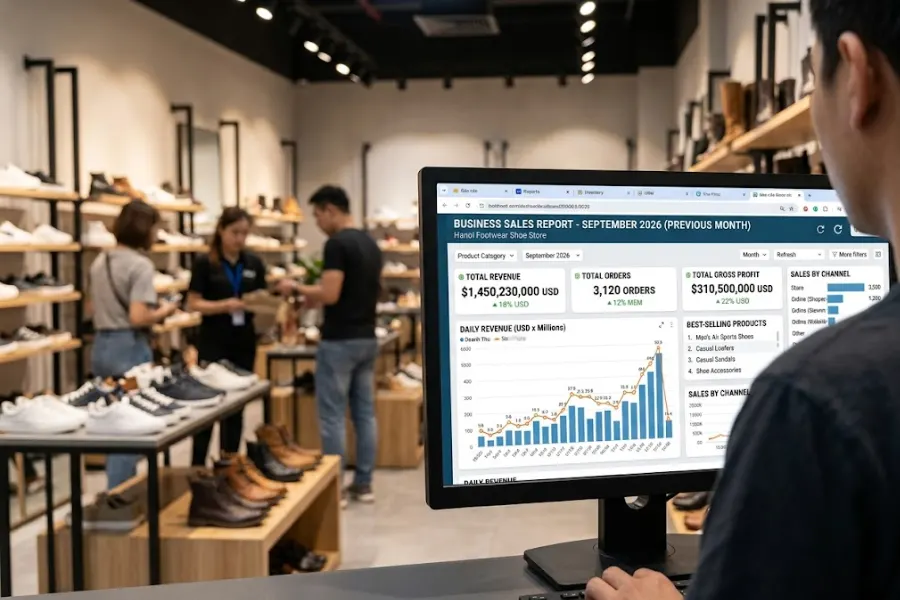
Retail businesses generate valuable information through sales transactions, inventory updates, customer purchases, and employee activities. Much of this information comes directly from the point of sale system, making POS data a key source of insight into daily operations and business performance. When analyzed effectively, it helps retailers understand trends, identify opportunities, and make more informed decisions. Understanding which types of POS data deserve attention can make a meaningful difference in retail performance. This article from ConnectPOS explores “what is POS data” and the key data categories retailers should be tracking.
Highlights
- POS data captures real-time information from daily transactions, stock updates, and customer behaviors, serving as a vital resource for informed retail decision-making.
- To optimize performance, businesses should focus on four essential categories: sales transactions, inventory movements, customer loyalty insights, and employee shift tracking.
- Analyzing POS data bridges the gap between daily operations and commercial success by uncovering trends, optimizing pricing strategies, and improving supply chain and workforce efficiency.
The Strategic Benefits of Analyzing Your Point of Sale Data
Point of sale data reflects how customers interact with products, pricing, and store environments at the exact moment of purchase. Retail leaders examine transaction records, product movement patterns, and customer purchasing frequency; store managers review daily sales performance, regional teams compare location results, inventory planners track stock flow across channels. These data points create a clearer picture of what drives revenue and what limits performance across different parts of the business.
Analysis of POS data connects operational activity with commercial outcomes. Customer behavior patterns reveal demand shifts across time periods, product profitability highlights which categories generate stronger financial returns, and workforce productivity shows how staffing levels relate to sales outcomes. Strong reporting frameworks turn fragmented transaction data into structured insight that guides merchandising decisions, pricing strategy, and inventory planning across the retail network.
Essential Kinds of POS Data You Should Be Tracking
When exploring “what is POS data”, it is important to recognize that point of sale information extends far beyond recording completed transactions. Every sale, inventory adjustment, customer interaction, and employee activity generates data that can reveal patterns across retail operations. Retailers that consistently monitor key POS data categories gain a deeper understanding of performance drivers, customer preferences, and operational challenges, creating a stronger foundation for informed business decisions.
Sales and Transaction Metrics
Sales and transaction metrics provide direct visibility into revenue generation across stores, channels, products, and time periods. Common indicators include total sales, average transaction value, units per transaction, sales by category, refund rates, and payment method distribution. These figures help businesses identify which products perform well and which areas require closer attention.
Research from McKinsey suggests that retailers that embed consumer insights into merchandising and category management can achieve sales growth of 3% to 5% alongside net margin improvements of 1 to 4 percentage points, highlighting the value of closely monitoring transaction data and sales performance.
Long-term analysis of transaction data uncovers trends that may not be visible through daily reporting alone. Seasonal demand patterns, pricing effectiveness, promotional performance, and regional sales differences become easier to evaluate when retailers examine sales data over extended periods. This information helps management teams make more informed decisions regarding merchandising, pricing, and growth planning.
Inventory and Stock Movements
Inventory data tracks the movement of products throughout the retail operation. Retailers monitor stock levels, replenishment cycles, inventory transfers, stock adjustments, and sell-through rates to maintain visibility across locations. Accurate inventory records help prevent stock discrepancies and improve planning accuracy.
Analysis of stock movement data can reveal products that consistently experience shortages, excess inventory, or uneven demand across locations. Inventory managers can use these insights to refine purchasing decisions, allocate stock more effectively, and maintain better alignment between inventory availability and customer demand.
Customer Behavior and Loyalty Insights
Customer-related POS data provides valuable information about purchasing habits, shopping frequency, product preferences, and spending patterns. Loyalty program activity, repeat purchase rates, and customer lifetime value metrics help retailers develop a clearer understanding of their customer base.
Behavioral insights can also uncover opportunities for targeted marketing and personalized customer engagement. Retailers may identify high-value customer segments, understand which products are frequently purchased together, and evaluate how promotions influence buying decisions.
McKinsey research also found that personalization initiatives can generate revenue increases of 5% to 15%, while companies that excel at personalization derive 40% more revenue from these activities than slower-growing competitors. These findings contribute to more relevant customer experiences and stronger retention strategies.
Employee Performance and Shift Tracking
Employee performance data helps retailers assess operational productivity across stores and teams. Common metrics include sales generated per employee, transaction volume, average transaction value, upselling performance, attendance records, and shift productivity. These measurements provide a factual basis for performance evaluation.
Shift tracking data can reveal staffing patterns that influence customer service quality and sales outcomes. Retail managers can compare labor allocation with transaction activity, identify peak trading periods, and make adjustments that align workforce scheduling with business demand. Better visibility into employee performance also contributes to more effective training and workforce management initiatives.
Transform Your POS Data into Actionable Insights with ConnectPOS
Retail businesses generate large volumes of operational data every day, yet raw data rarely provides clear direction on its own. ConnectPOS combines centralized reporting capabilities with AI, helping retailers convert transaction records, inventory activity, customer interactions, and operational data into meaningful business intelligence. Instead of spending time manually reviewing reports, teams can identify trends, evaluate performance, and uncover opportunities for improvement more efficiently.
- AI-Powered Business Intelligence: ConnectPOS AI analyzes retail data and highlights patterns, trends, and performance insights that help decision-makers understand business activity more clearly.
- Real-Time Data Visibility: ConnectPOS synchronizes information across stores, eCommerce channels, and inventory locations, providing access to current data throughout the retail network.
- Comprehensive Reporting and Analytics: Retailers can examine sales performance, inventory movement, customer purchasing behavior, and operational metrics through detailed reporting tools.
- Centralized Multi-Store Performance Monitoring: Businesses operating across several locations can compare store results, evaluate regional performance, and identify growth opportunities from a single platform.
- Inventory Intelligence: Detailed inventory tracking provides visibility into stock levels, product movement, replenishment activity, and demand trends across locations and channels.
- Customer Behavior Analysis: Purchase history, loyalty activity, and shopping patterns help retailers gain a deeper understanding of customer preferences and retention trends.
- Connected Data Across Business Systems: Integration with ERP platforms, CRM solutions, eCommerce systems, and other business applications creates a unified view of retail operations.
- Built for Long-Term Growth: ConnectPOS handles growing transaction volumes, expanding product catalogs, and larger store networks while maintaining consistent access to business data and analytics.
FAQs About POS Data
1. What is POS data?
POS (Point of Sale) data refers to the information generated during retail transactions and daily store operations. It typically includes sales records, product details, inventory updates, payment information, customer purchases, and employee activity collected through a POS system.
2. Why is POS data important for retailers?
POS data helps retailers understand sales performance, customer behavior, inventory movement, and operational efficiency. These insights help businesses make more informed decisions regarding pricing, merchandising, inventory planning, staffing, and growth strategies.
3. What types of data are collected by a POS system?
A POS system can collect a wide range of information, including transaction values, products sold, inventory levels, payment methods, customer purchase history, loyalty program activity, employee performance metrics, and store-level sales data.
4. How can POS data improve inventory management?
Inventory-related POS data provides visibility into stock levels, product demand, replenishment cycles, and stock movement across locations. Retailers can use this information to identify fast-selling products, avoid stock shortages, and make more accurate purchasing decisions.
5. How does POS data help businesses understand customer behavior?
POS data reveals purchasing patterns, shopping frequency, preferred products, average spending, and loyalty program engagement. These insights help retailers develop targeted marketing campaigns, improve customer retention, and create more personalized shopping experiences.
Conclusion
Understanding what is POS data and what kinds of data should be tracked gives retailers a stronger foundation for evaluating performance and identifying growth opportunities. POS data serves as a foundation for understanding sales activity, inventory movement, customer behavior, and workforce productivity. Each data category contributes valuable insights that help businesses make informed decisions based on real operational performance.
As retail operations become increasingly data-driven, organizations that actively monitor and interpret POS data are better positioned to respond to changing customer expectations and business demands. ConnectPOS helps retailers centralize data across stores and channels while transforming everyday transactions into meaningful business insights through comprehensive reporting tools and CPOS AI. Contact ConnectPOS to learn how a modern POS platform can help your business gain greater visibility and make more informed retail decisions.
►►► Optimal solution set for businesses: Shopify POS, Magento POS, BigCommerce POS, WooCommerce POS, NetSuite POS, E-Commerce POS