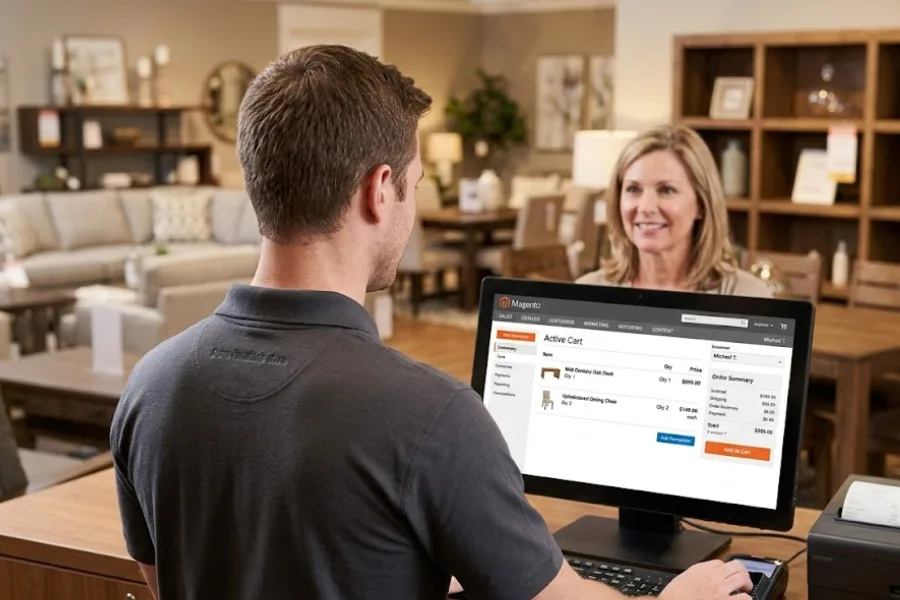
Retail businesses face a significant choice when upgrading their checkout technology. Store owners must decide between fully remote systems and mixed architectures. This article from ConnectPOS advises retailers on comparing a hybrid POS with a pure cloud system.
We examine the financial implications, technical requirements, and daily operational differences. Choosing the right setup directly impacts your profit margins and customer satisfaction. A reliable point of sale prevents lost sales during peak trading hours. Managers need clear data to make informed technology investments. We break down the exact differences in hardware costs, software maintenance, and offline capabilities. You will learn exactly how each system handles internet failures and data synchronization.
Highlight
- A hybrid POS architecture combines local servers with remote data synchronization to protect retail operations during internet outages.
- Cloud solutions require lower initial hardware investments while hybrid systems demand higher upfront capital for local infrastructure.
- Retailers must weigh the financial impact of network downtime against the ongoing IT maintenance requirements of mixed environments.
Understanding the Hybrid POS System
A hybrid point of sale merges traditional local servers with modern web-based data storage. The software runs on a physical computer located inside your retail store. This local machine processes transactions and stores data temporarily.
The system periodically sends this collected information to remote web servers. This synchronization happens automatically whenever the store maintains an active internet connection. Management can then access consolidated sales reports from any location via a web browser.
Retailers choose this architecture to maintain complete control over their local checkout process. The cash register never stops working if the internet provider experiences an outage. The local server handles all immediate data processing securely on-site.
This setup creates a strong layer of data redundancy for the business. Your sales records exist simultaneously on the store server and the remote database. This duplication protects your historical transaction data from localized hardware failures.
Hybrid POS vs Cloud POS: Impact on Cost, Support, and Daily Ops
Comparing these two architectures – Hybrid POS vs Cloud POS requires a deep look at your business resources. Each approach presents distinct financial commitments and technical demands. Retailers must evaluate their physical store environment and internet reliability. The right choice depends heavily on your transaction volume and IT budget. We analyze the specific impacts across three main categories below.
Upfront Investment and Long-Term Costs
Cloud POS
Cloud POS systems typically require less upfront investment because retailers can often use existing tablets or computers instead of dedicated server hardware. The main expense is usually a recurring monthly or annual software subscription.
Cloud POS can also be easier to scale. Adding another register generally requires compatible hardware and, depending on the provider, an additional subscription or license. This makes expansion more predictable for businesses opening new locations or adding checkout points.
However, subscription fees accumulate over time. While the initial investment is lower, retailers need to factor recurring software costs into their long-term budget.
Hybrid POS
A Hybrid POS requires a larger upfront investment. Retailers need local servers, networking equipment, and professional installation before the system can be fully operational.
The long-term cost structure is different from cloud POS. Businesses may have lower recurring software costs, but they must budget for server maintenance, hardware replacement, networking upgrades, and IT support.
Scaling can also require additional infrastructure. Expanding a local server network may involve upgrading server capacity, purchasing new network equipment, or adding licenses.
These cost differences are becoming increasingly important as the POS market continues to expand. According to Technavio, the global Point of Sale software market is expected to reach $6.1 billion by 2028. For retailers, this makes comparing the long-term costs of cloud and hybrid POS especially important.
System Maintenance and Technical Support
Cloud POS
Cloud POS shifts most technical maintenance to the provider. Vendors typically manage server infrastructure, security patches, software updates, and backups remotely. Retailers can access the latest version of the software without maintaining the underlying infrastructure themselves.
Technical support is also primarily handled by the vendor. This reduces the need for dedicated in-house IT resources, making cloud POS particularly attractive to smaller businesses with limited technical expertise.
The trade-off is less control over the underlying infrastructure. If the provider experiences a major server outage, retailers must rely on the vendor to diagnose and resolve the problem.
Hybrid POS
Hybrid POS gives retailers greater control over their local infrastructure but also creates more maintenance responsibilities. Businesses need to maintain physical servers, local networks, and software running on their own systems.
Hardware failures or network problems may require an in-house IT team or external technical provider. Retailers therefore need to consider not only the cost of the POS itself but also the ongoing resources required to maintain the local environment.
Reliability in Daily Operations and Offline Mode
Cloud POS
Cloud POS relies more heavily on internet connectivity for access to remote services and real-time data. If the connection fails, some systems may have limited offline functionality, which can affect payment processing, inventory access, or other checkout operations.
This dependency makes internet reliability an important consideration when evaluating a cloud-based system. System downtime can also result in significant financial losses. Research from ITIC indicates that 91% of organizations report that a single hour of downtime costs $300,000 or more.
Hybrid POS
Hybrid POS can provide greater operational continuity during internet disruptions because essential POS data and functionality can remain available on the local server. Cashiers can continue processing transactions, accessing product information, and communicating with local peripherals even when the external connection is unavailable.
Once connectivity is restored, offline transaction data can be synchronized with the central system. This makes hybrid POS particularly useful for high-volume retailers or businesses operating in locations with unreliable internet connections.
Local processing can also reduce latency for certain operations. For example, commands sent to receipt printers and other peripherals over the local network do not need to travel to a remote server first.
When reliability and flexibility matter more than simplicity
For retailers where connectivity is unpredictable or operations span multiple locations and channels, the POS architecture itself becomes a strategic decision.
ConnectPOS is a hybrid POS solution built to help retailers maintain uninterrupted operations across physical stores and online channels. Unlike traditional cloud-dependent POS systems, ConnectPOS combines cloud-based management with local transaction processing, enabling staff to continue serving customers even when the internet connection is slow or temporarily unavailable.
Once connectivity is restored, transaction and inventory data can be synchronized automatically, helping retailers maintain accurate records without disrupting the checkout experience.
- Hybrid POS architecture: Combines cloud-based management with local processing to provide greater reliability during network disruptions.
- Reliable offline mode: Enables stores to continue processing sales, accepting payments, and serving customers even when the internet connection is unavailable.
- Automatic data synchronization: Automatically syncs transactions, inventory updates, and other relevant data with the cloud once the connection is restored.
- Real-time inventory visibility: Helps retailers maintain accurate inventory information across physical stores and ecommerce channels.
- Multi-store management: Multi POS systems from ConnectPOS help businesses to manage multiple locations from a centralized platform while maintaining visibility into individual store operations.
- Omnichannel retail capabilities: Connects brick-and-mortar stores with online sales channels to create a consistent shopping and inventory experience.
- Scalable architecture: Designed to help retailers scale as they expand their store network, product catalog, and sales channels.
- Flexible integrations: Integrates with eCommerce platforms, payment solutions, customer management tools, and other business systems.
- Improved checkout continuity: Reduces the risk of lost sales and customer frustration caused by internet outages or unstable network connections.
- Centralized management: Gives managers greater control over sales, inventory, and operational data while allowing individual stores to keep selling independently when necessary.
Pricing (monthly per register):
- Standard: $49
- Advanced: $79
- Premium: $99
- Enterprise: Custom quote
Annual billing available at Standard $39 · Advanced $69 · Premium $89 per register.
Visit our Pricing page for more information.
FAQs: Hybrid POS
1. Which is more cost-effective: Hybrid POS or Cloud POS?
Cloud POS typically has lower upfront costs because businesses can avoid investing in local servers and related infrastructure. Hybrid POS requires a larger initial investment but may offer different long-term cost benefits depending on software fees, hardware maintenance, and business size.
2. Which POS requires more technical support?
Hybrid POS generally requires more hands-on technical support because businesses are responsible for maintaining local servers, networks, and hardware. Cloud POS shifts most infrastructure maintenance and software updates to the provider, reducing the need for in-house IT resources.
3. Which is more reliable during an internet outage?
Hybrid POS generally provides greater operational continuity because essential data and POS functions can remain available locally. Cloud POS may have limited functionality during connectivity issues, depending on its offline capabilities.
4. Is Hybrid POS better for businesses with multiple locations?
It depends on the business’s infrastructure and operational requirements. Hybrid POS can provide strong local reliability at each location, while Cloud POS is often easier to deploy and manage across multiple stores without maintaining separate local servers.
Conclusion
Choosing between a hybrid POS and a cloud POS ultimately depends on your business priorities, budget, and operating environment. Hybrid systems can offer greater control and reliability when connectivity is a concern, while cloud POS solutions typically provide simpler deployment, easier maintenance, and lower upfront costs.
Beyond the initial price, consider the long-term cost of ownership, the level of support your team requires, and how each system will fit into your daily operations. The right choice is the one that balances cost, reliability, and ease of management without creating unnecessary complexity for your business.
If you’re managing a growing team across multiple locations, operating in areas where connectivity isn’t guaranteed, or scaling to a point where a basic cloud setup no longer holds up under daily pressure – we’re happy to walk through your situation. Chat with us about your operating environment, store count, and which POS architecture makes the most sense for where your business is headed.
Chat with our team►►► Optimal solution set for businesses: Shopify POS, Magento POS, BigCommerce POS, WooCommerce POS, NetSuite POS, E-Commerce POS