Quick service restaurants face constant pressure to deliver fast service while maintaining operational efficiency and consistent brand experiences across multiple locations. In this environment, a fast food POS system plays a critical role by integrating order processing, payment management, and operational data into a unified workflow. When properly customized, POS technology helps restaurants align daily operations with customer expectations and long-term growth strategies.
In this article, ConnectPOS explores how a fast food POS system keeps operations running smoothly, delivers personalized customer experiences, and enables scalable restaurant management.
Highlights
- A fast food POS system removes operational bottlenecks by unifying mobile, kiosk, and drive-thru orders with instant KDS routing, confirming peak-hour efficiency and significantly faster customer service.
- Advanced POS systems convert sales and inventory data into actionable insights to curb food waste, optimize costs, and drive customer retention.
What Is A Fast Food POS System?
A fast food POS system is a specialized digital platform designed to manage the unique, high-volume workflows of quick-service dining. Unlike standard retail systems, a POS system for fast food is built to handle complex modifiers, split-second payment processing, and seamless communication between the front counter and the kitchen.
Core functions include the following:
- Order Management: Capturing orders from various channels (in-store, mobile, kiosk) and routing them instantly to prep stations.
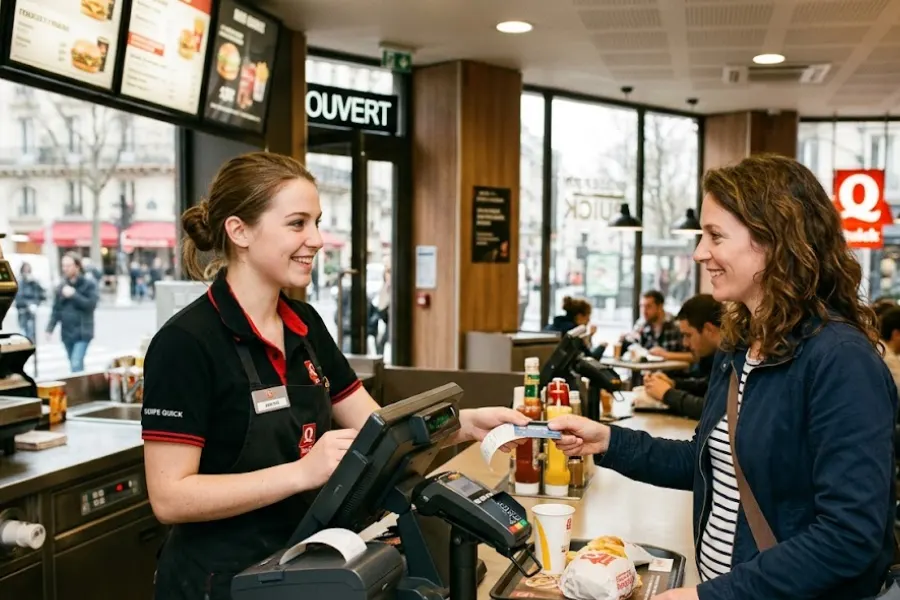
- Payment Processing: Supporting contactless, mobile wallet, and traditional card payments to minimize bottlenecks.
- Kitchen Communication: Utilizing a Kitchen Display System (KDS) to replace messy paper tickets.
- Inventory Tracking: Automatically deducting ingredients as items are sold to keep stock levels precise.
- Reporting: Providing managers with real-time insights into sales, labor costs, and peak-hour performance.
The shift from a traditional, static register to a cloud-based POS system allows managers to access data and update menus from anywhere, providing the scalability needed for multi-location expansion.
How The Best Fast Food POS System Keeps Operations Running Smoothly
Efficiency is not a luxury in the fast food industry; it is a requirement for survival. Research shows that implementing a modern POS solution can lead to significant operational improvements. For instance, data indicates that using an advanced POS system improves order accuracy by 25%, drastically decreasing the waste and frustration associated with incorrect orders.
Optimizing the Ordering Process
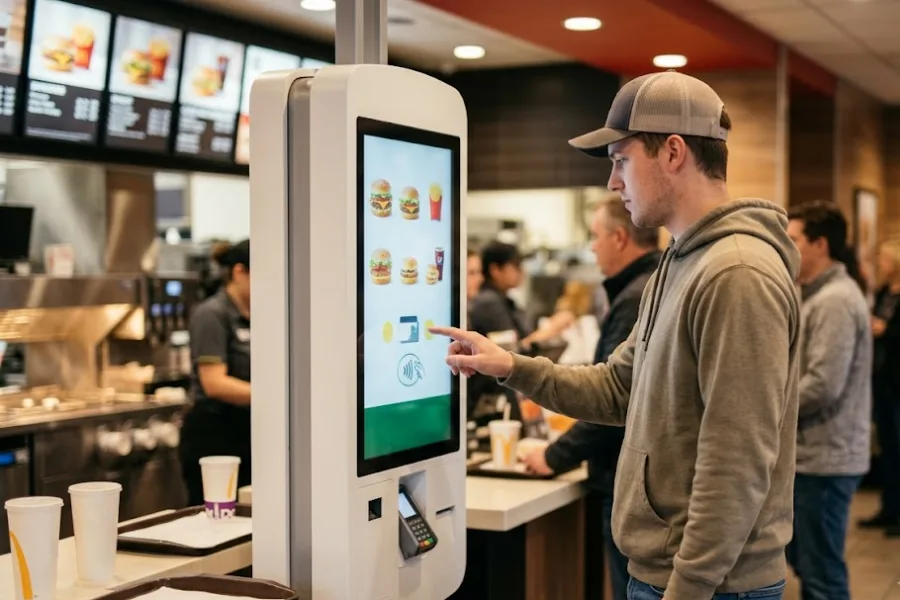
The modern POS system serves as a digital gateway that minimizes friction at every stage of the transaction. Restaurants can banish long queues by consolidating their ordering channels such as kiosks, mobile apps, and online platforms into one seamless, synchronized ecosystem.
When a customer places an order, whether through an app or an in-store kiosk, the system instantly processes the request and transmits it directly to the kitchen display system (KDS). This eliminates the margin for human error inherent in manual ticket entry and guarantees that even the most complex meal customizations are communicated clearly and instantly to prep staff.
This seamless automation allows for a faster, more reliable flow of traffic even during the busiest lunch and dinner rushes.
Enhancing Speed of Service (SOS)
Speed of service is a key performance metric in the fast food industry. Modern POS systems improve transaction times through:
- Contactless payments
- QR code ordering
- Integrated drive-thru management
- Automated order routing
- Quick menu navigation
These features allow restaurants to serve more customers efficiently without compromising service quality.
Back-of-House (BOH) & Inventory Control
Profitability is often won or lost in the kitchen, and a sophisticated POS system provides the transparency needed to control costs effectively. Through real-time inventory tracking, the system monitors ingredient usage with surgical precision, automatically deducting items as they are sold.
Beyond simple tracking, advanced systems offer a comprehensive management suite that includes:
- Proactive Alerts: Automated notifications for low-stock items to prevent “out-of-stock” scenarios.
- Smart Procurement: Data-driven purchase recommendations based on historical sales patterns.
- Waste Mitigation: Detailed monitoring of spoilage and discarded items to identify areas where portion control or inventory management can be tightened. This granular level of oversight turns inventory from a guessing game into a controlled, profit-driving asset.
Data-Driven Management & Labor
Restaurant managers can use POS analytics to make smarter business decisions. Detailed reporting features provide insights into:
- Peak sales hours
- Best-selling menu items
- Employee productivity
- Customer purchasing behavior
- Revenue trends
By analyzing this data, businesses can optimize staff scheduling, improve labor efficiency, and maximize sales opportunities.
Improved Customer Experience
Ultimately, a POS system is a tool for building relationships. When providing a platform for integrated loyalty programs and targeted promotional offers, your POS system confirms that every customer feels recognized and valued. Whether through consistent cross-channel ordering, faster checkout speeds, or personalized rewards based on purchasing behavior, these systems help cultivate long-term customer loyalty.
When a restaurant consistently delivers a seamless, accurate, and personalized experience, it moves beyond being just a place to eat and becomes a preferred destination, securing both repeat business and positive word-of-mouth.
Key Considerations for Choosing the Best Fast Food POS System
A reliable fast food POS should be chosen based on its ability to support uninterrupted operations while delivering durable, long-term hardware performance.
- Reliability & “Offline Mode”: Fast food operations cannot afford downtime. A robust offline POS mode guarantees your business can continue processing transactions and capturing sales data during unexpected internet outages, automatically syncing all information once the connection is restored.
- Integration Capabilities: Your POS must serve as a seamless hub that connects to delivery apps, accounting software, and CRM platforms. This connectivity is essential for data integrity; in fact, industry analysis indicates that using integrated POS software reduces administrative task time by up to 30% by eliminating manual data reconciliation.
- Hardware Durability: The kitchen and front-counter environment is demanding. You require spill-resistant hardware, high-definition kitchen display screens, and heavy-duty receipt printers designed to withstand heat, grease, and high-volume usage. Investing in industry-grade equipment is vital for longevity, as it can significantly reduce long-term maintenance costs and operational disruptions.
ConnectPOS – Best Fast Food POS System for High-Volume Operations
For fast food restaurants and QSR chains that refuse to compromise on speed and operational efficiency, ConnectPOS stands out as a premier solution. Specifically engineered to meet the rigors of high-volume environments, this platform offers a comprehensive suite of tools that seamlessly bridge the gap between front-of-house service and complex back-of-house management.
Why choose ConnectPOS for your restaurant?
- Cloud-Based Flexibility: With a cloud-based architecture, you can access real-time sales data and operational reports from any location, ensuring you always maintain a pulse on your business performance.
- Offline Mode: ConnectPOS ensures your drive-thru and counter operations keep moving regardless of internet stability, preventing revenue loss during connectivity issues.
- Omnichannel Integration: By effortlessly syncing in-store sales with online and mobile orders, ConnectPOS prevents common kitchen bottlenecks and ensures a consistent customer experience across all ordering channels.
- Inventory & Multi-Store Management: Whether managing a single location or a growing franchise, ConnectPOS provides the robust tools needed to maintain consistent menus, pricing, and stock levels across every store in your chain.
- Advanced Loyalty Programs: Easily implement and manage customer loyalty rewards, allowing you to track repeat purchases and offer personalized promotions that drive customer retention.
- Employee Performance Tracking: Monitor staff productivity through detailed reporting, enabling managers to identify top performers and optimize scheduling based on actual sales demand.
- Real-Time Kitchen Display System (KDS) Integration: Streamline kitchen operations with digital ticket routing, which reduces order preparation errors and minimizes the wait time for customers at the counter or drive-thru.
- Customizable Workflows: Adapt the POS interface to match your specific restaurant’s operational needs, ensuring that your staff can navigate menus and modifiers quickly during the busiest peak hours.
FAQs: Fast Food POS System
- How much does a fast food POS system cost?
The cost of a fast food POS system varies depending on the provider, hardware requirements, number of terminals, and included features. Small restaurants may spend a few hundred dollars monthly on software subscriptions, while larger multi-location businesses often invest more in advanced functionality such as inventory management, analytics, and omnichannel integrations
- Can a fast food POS system work offline?
Yes. Many modern fast food POS systems include offline mode functionality that allows restaurants to continue processing orders and payments even during internet outages. Once the connection is restored, the system automatically synchronizes transaction data with the cloud.
- Why are cloud-based POS systems popular in fast food businesses?
Cloud-based POS systems are popular because they offer flexibility, scalability, and real-time access to business data from anywhere. Fast food operators can monitor sales, inventory, and employee performance remotely while integrating online ordering, loyalty programs, and delivery platforms into a single system.
Wrap Up
In sum, a robust fast food POS system is the engine that drives efficiency, speed, and profitability in today’s competitive quick-service landscape. When centralizing order management, automating inventory tracking, and providing actionable real-time analytics, these digital platforms transform how restaurants function from the front counter to the kitchen.
Investing in a high-performance solution is essential for scaling operations and ensuring a seamless customer experience. If you are ready to elevate your restaurant’s performance and streamline your high-volume workflows with ConnectPOS, contact us today.
►►► Optimal solution set for businesses: Shopify POS, Magento POS, BigCommerce POS, WooCommerce POS, NetSuite POS, E-Commerce POS