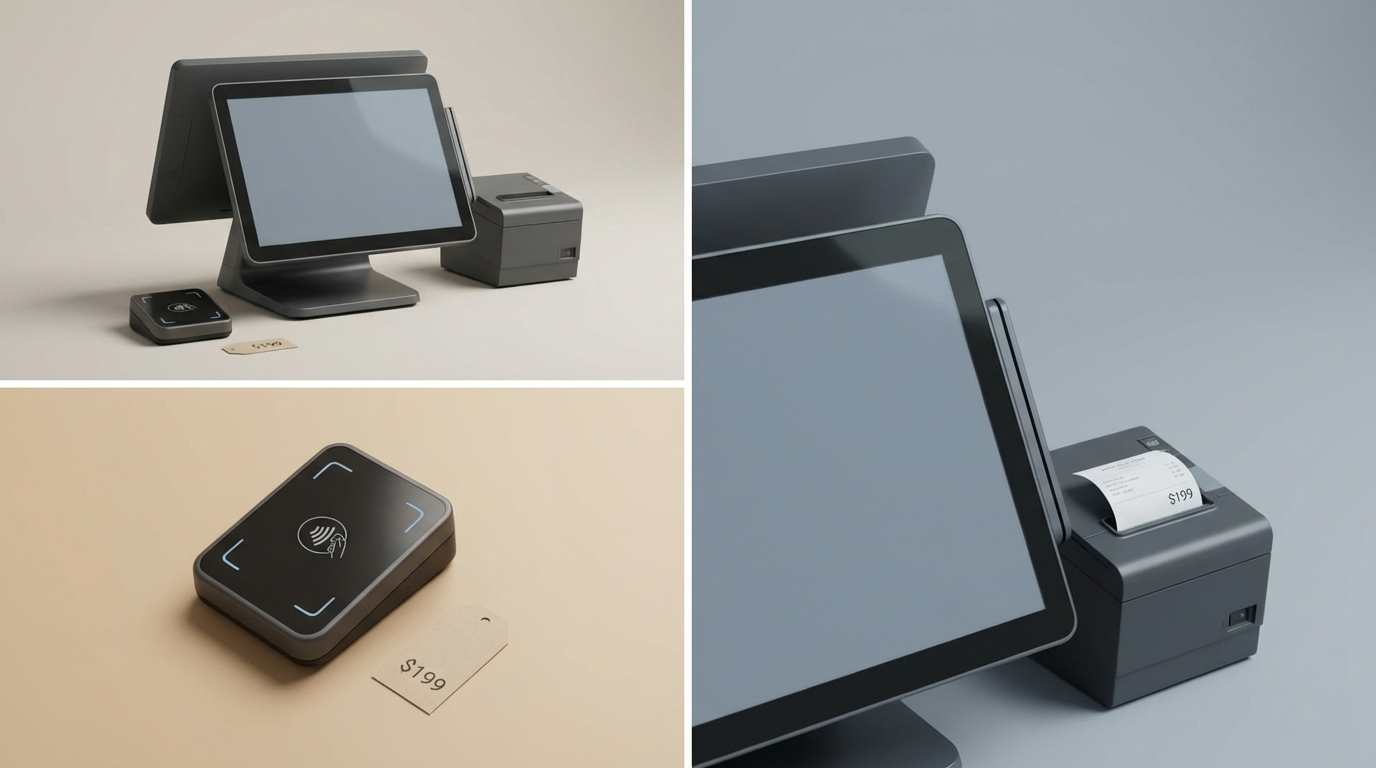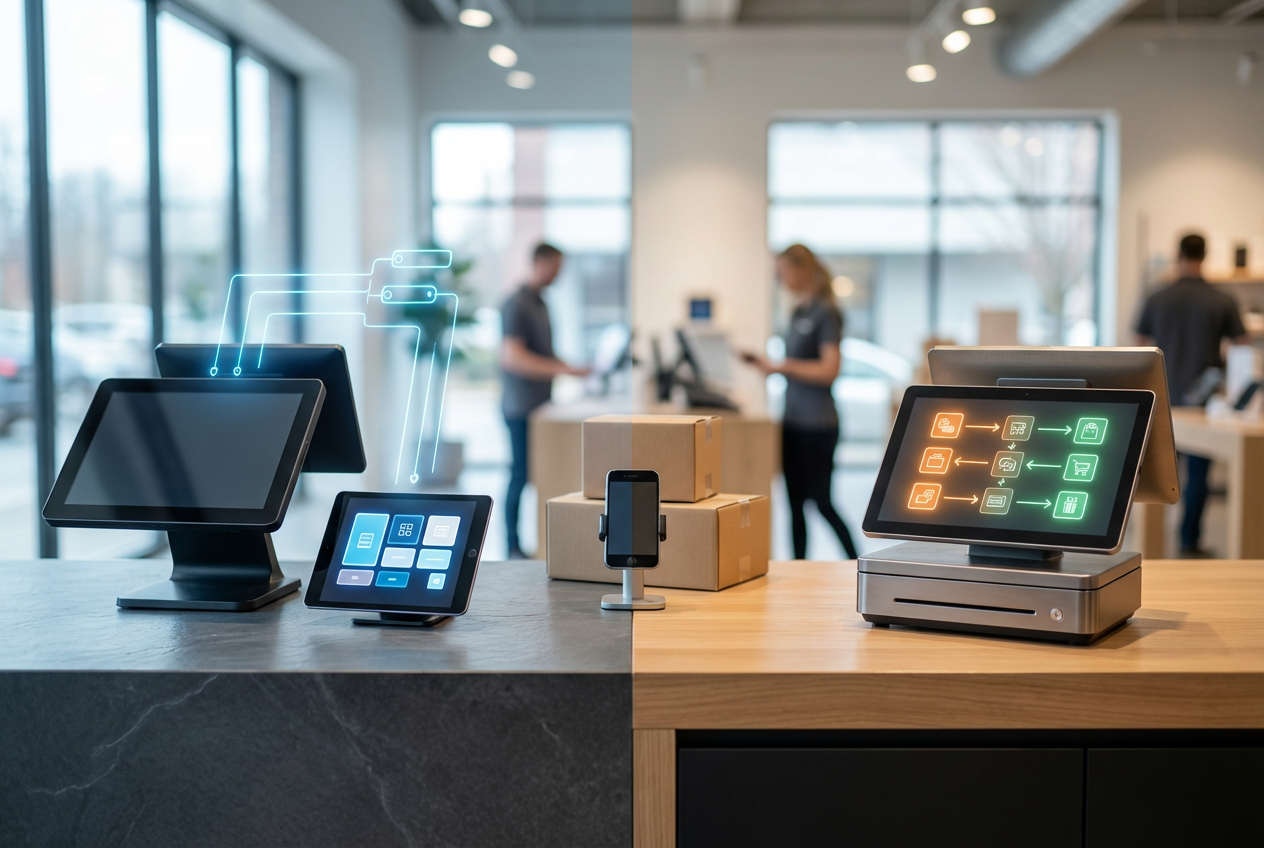
Winpos POS pricing is not simply about finding the lowest software subscription. The real question is whether the platform’s capabilities match the type of business, number of locations, and daily workflows a retailer needs to manage.
Winpos serves businesses across retail, hospitality, leisure, arenas, and ferry and cruise operations. Its modular system covers checkout, inventory, customer loyalty, chain management, and connected sales channels. Yet the cost and value of these capabilities depend on the configuration each business requires. This article examines Winpos pricing, the capabilities available within its platform, the businesses it is designed to serve, and the operational factors retailers should assess before deciding whether it fits their setup.
Highlights
- Winpos POS pricing is quotation-based, with costs depending on the selected configuration, business requirements, and deployment scope.
- Winpos supports several industries and operational models, including single-store retail, multi-location chains, hospitality, and leisure businesses.
- Retailers should evaluate inventory, ecommerce, integrations, hardware, and expansion requirements alongside the software quotation to determine whether Winpos represents good value.
How Much Does Winpos POS Pricing?
Winpos does not publish a standard starting subscription price or a fixed tiered pricing table on its official website. Instead, businesses are directed to its sales team for a quotation based on their operational requirements.
Third-party software directories also list Winpos POS Pricing as available upon request rather than presenting verified monthly subscription plans. This means retailers cannot reliably compare Winpos against another POS solely through advertised starting prices.
Winpos follows a modular approach, with solutions covering different industries and business functions. The final quotation may therefore depend on the capabilities, deployment model, integrations, and checkout configurations required.
Winpos POS Pricing and Available Capabilities
Although official plan-by-plan prices are not publicly listed, Winpos identifies several capabilities that businesses can consider when requesting a quotation.
| Capability | What Winpos Supports | Pricing Consideration |
| POS and Checkout | Standard, mobile, and self-service POS configurations | Confirm terminal licensing and hardware costs |
| Inventory Management | Product and stock management across retail operations | Ask which inventory functions are part of the quotation |
| Customer Management | Customer information, loyalty programs, promotions, and campaigns | Confirm loyalty module and integration charges |
| Reporting | Sales monitoring, dashboards, and centralized reporting | Check reporting access and customization costs |
| Employee Management | Operational controls associated with POS and store management | Confirm staff permissions and licensing conditions |
| Payments | Connections with payment terminal solutions | Request supported processors and transaction fees |
| Ecommerce | Online and offline sales connections, including webshop integrations | Confirm compatibility with the existing ecommerce platform |
| Integrations | Connections with ERP, financial management, booking, and other systems | Ask about connector, implementation, and maintenance charges |
The availability and commercial terms of these functions should be confirmed directly with Winpos. A capability appearing on the company’s website does not necessarily mean it is part of every deployment.
What Can Affect the Final Winpos POS Pricing?
The cost of operating Winpos may extend beyond the initial software quotation. Retailers should request a breakdown covering:
- Registers and Locations: Licensing charges for additional checkout terminals, stores, or operating locations.
- Hardware: POS terminals, tablets, payment readers, receipt printers, barcode scanners, and other peripherals.
- Payment Processing: Transaction rates, payment provider requirements, and terminal arrangements.
- Inventory and Loyalty Modules: Charges associated with the specific management functions required.
- Ecommerce and Integrations: Connections with online stores, ERP systems, accounting software, and external applications.
- Implementation and Migration: System configuration, product data migration, staff training, and onboarding.
- Cloud and Support Services: Hosting arrangements, maintenance, software updates, and support agreements.
Winpos promotes flexible configurations that can accommodate changing operational demands, including seasonal requirements. Retailers should still confirm how changes in terminal count or deployment scope affect their contracts.
Before committing, request written clarification of the billing period, contract duration, cancellation terms, hardware ownership, and any trial or demonstration arrangements. A publicly documented free trial or universal contract structure could not be confirmed.
The practical cost of Winpos is the total amount required to operate the selected configuration, including software, hardware, processing, integrations, and ongoing support. Without an itemized quotation, comparisons with providers that publish fixed monthly plans remain incomplete.
Who Is Winpos POS Actually Built For?
Winpos positions itself as a modular POS platform serving several business sectors rather than a system restricted to conventional retail checkout. Its strongest fit depends on the industry-specific functions and operational complexity a business needs.
Business Type
Winpos identifies five primary industries within its product portfolio:
- Retail: Physical stores and retail chains requiring checkout, stock management, loyalty programs, reporting, and online sales connections.
- Hospitality: Restaurants and cafés that need menu management, payment processing, and restaurant-specific service workflows.
- Leisure: Tourism and leisure businesses handling customer transactions and related operational activities.
- Arenas: Venues that require POS operations across concession points and other customer-facing locations.
- Ferry and Cruise: Passenger transport and onboard retail environments with specialized transaction requirements.
For conventional retailers, the relevant product is Winpos Retail, which focuses on inventory, customer loyalty, online and offline sales, and chain management.
Businesses in other industries should assess whether the required workflows are covered by an existing Winpos solution or would require a specialized configuration.
Business Size
Winpos is not positioned exclusively for small independent businesses. Its published capabilities extend to large store networks, making business size an important factor in evaluating the quotation.
- Small Independent Businesses: Winpos may fit businesses seeking reliable checkout, inventory tracking, and customer management. The decision depends on whether its implementation and licensing costs are reasonable for a limited number of registers.
- Growing Retailers: Businesses adding checkout points, employees, or sales channels can evaluate Winpos’s modular structure and integration options.
- Multi-Location Operations: Winpos Chain Management supports centralized monitoring of stores, sales, pricing, and stock information.
- Larger Retail Organizations: Winpos describes support for chains with more than 1,000 locations, including cross-border operations and centralized business reporting.
The strongest value proposition is therefore not necessarily tied to a particular store count. It depends on how much of the platform’s management infrastructure the business needs.
A small retailer with straightforward checkout requirements should compare Winpos’s quotation against simpler POS alternatives. A larger chain may place greater value on centralized management, reporting, and integration capabilities.
Operational Complexity
The complexity of daily operations can matter more than the number of stores. Winpos covers standard POS transactions alongside inventory management, customer loyalty, centralized reporting, and connections with external business systems. Its retail solutions also address online and offline sales, while other modules support self-service and preorder workflows.
For multi-location retailers, centralized inventory and reporting are particularly relevant. According to Pricer’s 2025 retail research, 36% of more than 100 surveyed senior UK retailers identified inventory availability as a leading in-store challenge, while 34% were focusing on inventory accuracy. These findings illustrate why inventory capabilities should carry weight when assessing POS value.
Retailers should nevertheless distinguish between a capability being available and that capability matching their specific workflow. For example, general inventory management does not automatically establish compatibility with a particular warehouse structure, ERP system, or custom stock allocation process.
Overall, Winpos appears particularly relevant to businesses seeking a configurable POS platform with industry-specific modules, centralized operations, and support for connected business systems. The final value depends on implementation scope, supported integrations, and the quoted cost.
Is Winpos the Right Fit for Your Current Setup?
Evaluating Winpos POS pricing requires looking beyond the available capabilities to determine how well the platform supports existing retail workflows. The assessment should compare current operational needs with the proposed Winpos configuration, including any additional modules, integrations, or manual processes that may affect the overall cost.
Winpos May Be a Good Fit If
Winpos deserves consideration when its existing capabilities match the retailer’s operational requirements without extensive customization.
- Core Workflows Are Covered: Checkout, inventory, customer management, and reporting can be handled within the proposed configuration.
- Pricing Matches the Store Structure: The quotation accounts for the required terminals, employees, locations, and management functions at an acceptable cost.
- Hardware and Payments Are Compatible: Existing devices or planned hardware purchases can work with the proposed deployment and payment arrangements.
- Inventory Requirements Are Supported: Product tracking, stock adjustments, and location-level inventory workflows can be handled as required.
- Necessary Integrations Are Available: The platform can connect with the retailer’s ecommerce, accounting, or other business systems through supported methods.
- Expansion Is Financially Manageable: Adding locations, terminals, or modules does not create disproportionate licensing or implementation expenses.
Retailers should request a demonstration built around their own transactions, products, and operating scenarios. This gives a more reliable indication of fit than a general product presentation.
Look More Closely If Your Setup Requires
Winpos has published capabilities in several of the areas below. The key considerations for Winpos POS pricing are the depth of support, compatibility with existing systems, and potential implementation costs, rather than whether the platform supports these requirements at all.
- More Locations: Confirm how centralized controls, reporting, permissions, and inventory allocation work across the proposed store network.
- Complex Inventory: Test warehouse management, stock transfers, product variants, replenishment rules, and inventory adjustments across locations.
- More Sales Channels: Verify compatibility with the existing ecommerce platform and establish how products, orders, customers, and stock information are synchronized.
- Omnichannel Workflows: Demonstrate online purchases fulfilled in stores, click-and-collect, cancellations, and cross-channel returns.
- Broader Integrations: Check connections with ERP, CRM, accounting, loyalty, shipping, and other applications, including data ownership and synchronization frequency.
- Custom Workflows: Determine whether specialized business rules can be configured through existing modules, supported interfaces, or custom development.
Integration requirements deserve particular attention. The 2025 State of Supply Chain Integrity for Retailers report by Impinj found that 85% of surveyed retail supply chain leaders believed they had the right tools for visibility, but only 36% achieved consistently accurate, real-time inventory visibility.
The findings do not measure Winpos performance. They demonstrate why retailers should test data accuracy and system coordination rather than rely on broad claims about inventory visibility.
The goal is to establish whether Winpos can handle the required workflows at a reasonable total cost. If a configuration depends on several custom connections or substantial manual reconciliation, retailers should compare that expense with other available POS arrangements.
Where Winpos May Require Closer Evaluation
While Winpos supports a range of retail operations, the suitability of its proposed configuration depends on the required functionality and total implementation cost. If additional customization or ongoing expenses make the setup less practical, comparing alternative POS platforms may help identify a better long-term fit.
ConnectPOS is one option worth considering for connected retail operations. Its POS integration capabilities support data synchronization between physical stores, ecommerce platforms, and other business applications.
Relevant areas of comparison include:
- Ecommerce Integration: Managing online and in-store sales separately can create inconsistent product, order, and inventory records. ConnectPOS integrates with Shopify, Magento, WooCommerce, and BigCommerce to synchronize data across channels and limit manual updates.
- Multi-Store Management: Coordinating sales and daily activities across several locations can become difficult without centralized visibility. ConnectPOS brings store information together, helping teams monitor performance and maintain consistent operations.
- Inventory Management: Stock discrepancies and delayed updates can lead to overselling or inaccurate replenishment decisions. ConnectPOS supports stock transfers, stocktaking, and multi-source inventory tracking to maintain accurate records across stores and warehouses.
- Omnichannel Workflows: Disconnected online and offline systems can complicate store pickup and order fulfillment. ConnectPOS supports click-and-collect and cross-channel order management, allowing staff to track orders and stock availability throughout the fulfillment process.
- Business System Integrations: Separate ERP, CRM, accounting, and payment applications can create duplicate data entry and reconciliation work. ConnectPOS supports integrations and API-based connections to facilitate data exchange between existing systems.
- ConnectPOS AI: Manual analysis of retail data can make it harder to identify operational patterns and act on them quickly. ConnectPOS AI may help address selected analysis and decision-support tasks, subject to the specific AI capabilities available and their integration requirements.
- Pricing: POS expenses can become difficult to forecast as more registers and capabilities are needed. ConnectPOS publishes per-register pricing, starting at $49/month for Standard, $79 for Advanced, and $99 for Premium, with annual billing rates of $39, $69, and $89, respectively. Enterprise pricing is available upon request, while hardware and implementation may involve additional costs.
ConnectPOS should not automatically be considered a cheaper replacement for Winpos, particularly because Winpos POS pricing requires a custom quotation. Retailers should compare both platforms against the same store configuration, inventory processes, integrations, and operating requirements.
FAQs: Winpos POS Pricing
How Much Does Winpos POS Cost?
Winpos POS pricing is available upon request. The company does not publish a verified standard monthly starting price or a fixed list of subscription tiers on its official website. Retailers should request an itemized quotation covering software, terminals, hardware, integrations, implementation, and ongoing support.
What Types of Businesses Is Winpos Designed For?
Winpos serves retail, hospitality, leisure, arena, and ferry and cruise businesses. Its retail solutions address checkout, inventory management, customer loyalty, reporting, online and offline sales, and chain management.
When Should a Retailer Consider an Alternative to Winpos?
Retailers may consider another POS when required ecommerce integrations, inventory processes, omnichannel workflows, or specialized business applications cannot be accommodated at a reasonable cost. Before switching, they should determine whether configuration changes or additional Winpos modules could address the issue.
Conclusion
Winpos POS pricing should be evaluated alongside the industries, business structures, and workflows the platform is designed to support. Its modular approach, chain management, inventory capabilities, and industry-specific solutions may represent a suitable investment for businesses that need those functions.
Retailers with more complex ecommerce, inventory, or integration requirements should confirm how the proposed Winpos configuration handles their daily operations and what additional expenses may arise. The most suitable choice is the one that supports the required workflows without unnecessary implementation costs or ongoing workarounds. Ready to find a POS solution that fits your business?
The decision ultimately depends on which system can support the retailer’s workflows with fewer operational gaps and a manageable long-term cost. For a clearer picture of potential expenses, check the ConnectPOS pricing plans and identify which features match your operational priorities.
See ConnectPOS Pricing►►► Optimal solution set for businesses: Shopify POS, Magento POS, BigCommerce POS, WooCommerce POS, NetSuite POS, E-Commerce POS