Rain POS pricing starts at $99 per month with annual billing, but the subscription alone does not tell the full story. Hardware, payment processing, integrations, and the number of locations can all affect the actual cost of running a retail POS system. Rain POS combines checkout, inventory management, and ecommerce within one platform. This makes it relevant to specialty retailers seeking to manage physical stores and online sales without maintaining entirely separate systems.
Still, the value of that investment depends on daily workflows, product complexity, store count, and future expansion plans. This guide examines Rain POS pricing, what each plan covers, potential additional expenses, and the circumstances in which another POS arrangement may deserve consideration.
Highlights
- Rain POS pricing starts at $99/month with annual billing for the Startup plan, while Core and Plus require custom quotations based on the selected capabilities and operational requirements.
- Beyond the advertised subscription, the total investment may involve hardware, payment processing, additional registers or locations, third-party integrations, and implementation expenses that affect long-term affordability.
- Rain POS may suit specialty retailers seeking connected checkout, inventory, and ecommerce tools, but its long-term value depends on workflow compatibility and total ownership costs.
How Much Does Rain POS Cost and What Do You Get?
Rain POS pricing starts at $99 per month with annual billing, while the cost of higher-tier plans depends on the selected features and operational requirements. The platform offers three plans: Startup, Core, and Plus, each designed for different levels of retail complexity.
The main differences lie in inventory management, multi-location operations, industry-specific tools, and integrations.
- Startup – Starting at $99/month (billed annually): Covers everyday retail operations with POS checkout, inventory tracking, an integrated ecommerce website, customer management, purchasing, order fulfillment, and basic reporting. Unlimited users and products are listed among its capabilities, making it a potential fit for smaller stores seeking both physical and online selling tools.
- Core – Custom Pricing: Builds on Startup with multi-location management, product styles and options, consignment, classes, rentals, trade-ins, kit assembly, and QuickBooks integration. These capabilities are particularly relevant to specialty retailers handling more complex product catalogs or services alongside regular sales.
- Plus – Custom Pricing: Extends Core with serialized inventory, work orders, subscriptions, email and text marketing, Shopify integration, custom reporting, and selected tax integrations. This tier is worth examining when existing ecommerce systems, product servicing, or specialized customer engagement requirements play a larger role in daily operations.
What Additional Costs Should You Consider?
The advertised subscription does not necessarily reflect the full cost of operating Rain POS. Several expenses may depend on the number of checkout stations, existing systems, and implementation requirements:
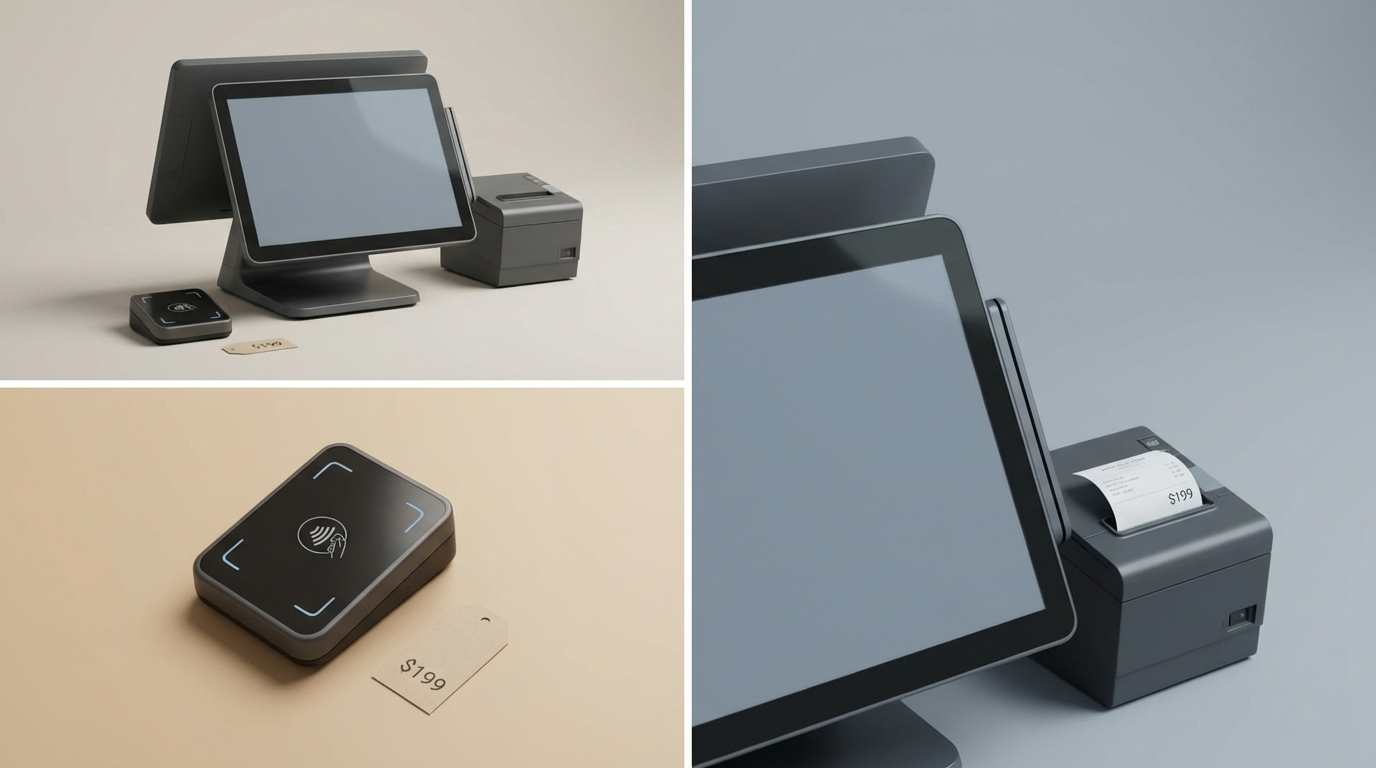
- Hardware: POS terminals, barcode scanners, receipt printers, payment devices, and other equipment may require separate purchases.
- Payment Processing: Transaction fees depend on the applicable payment arrangements and processing terms.
- Additional Registers and Locations: More checkout stations or stores may affect the quotation, particularly when multi-location capabilities are required.
- Third-Party Integrations: Accounting, ecommerce, payment, or specialized applications may involve setup or recurring charges.
- Add-ons and Specialized Functions: Certain inventory, marketing, or industry-specific capabilities may require a higher-tier plan.
- Implementation and Data Migration: Configuration, transferring existing records, onboarding, and employee training may introduce additional expenses.
Payment processing deserves particular attention when calculating the total cost of Rain POS. According to a Federal Reserve Financial Services study, 67% of surveyed retail businesses identified payment fees and costs as a challenge. This finding highlights why transaction charges should be assessed alongside software subscriptions and hardware expenses before committing to a POS investment.
Rain POS lists annual billing for Startup, while monthly options, contract terms, trials, and implementation fees should be confirmed with its sales team. The total investment depends on the selected configuration, making it important to compare subscription costs with the capabilities required for daily operations.
Is Rain POS Pricing Worth the Investment?
Rain POS pricing can represent good value when the platform’s checkout, inventory, and ecommerce capabilities meet daily operational needs without extensive customization or additional software. Its overall value depends on how well these functions support existing workflows.
According to KPMG’s 2025 Next Gen Retail report, 63% of surveyed consumers valued both a strong online experience and an attractive in-store offering. This highlights the importance of connected shopping experiences when assessing the value of Rain POS.
Rain POS May Make Sense When
Rain POS may be a worthwhile investment when its built-in capabilities align with existing retail operations without requiring extensive customization or additional software. The following scenarios highlight where the platform can deliver practical value while keeping long-term costs manageable.
- POS and Ecommerce Work Together: Native online selling and physical checkout can share inventory information, limiting the need to reconcile two separate product catalogs.
- Specialty Retail Tools Match Daily Operations: Classes, rentals, consignment, repairs, and product variations may justify a higher-tier subscription for stores that regularly depend on these functions.
- Inventory Requirements Fit the Available Plan: Product tracking and purchasing capabilities cover current stock management needs without extensive additional software.
- Customer Management Is a Priority: Purchase history, customer tracking, and selected marketing tools support ongoing customer relationships.
- Existing Integrations Are Sufficient: Required accounting, payment, and ecommerce connections are supported within an affordable configuration.
- Expansion Costs Remain Manageable: Additional stations, locations, and higher-tier capabilities do not make the total investment disproportionate to operational needs.
Rain’s integrated approach can be especially attractive when the same system handles activities that would otherwise require separate subscriptions.
The Investment May Become Harder to Justify When
Certain operational changes can alter the cost-benefit calculation, even when Rain POS continues to support the underlying functions.
- Store Expansion: Additional locations introduce more complex staff permissions, inventory allocation, and consolidated reporting requirements.
- More Sales Channels: Existing ecommerce platforms and marketplaces may require additional connections or higher-tier capabilities.
- Complex Inventory: Warehouses, transfers, large catalogs, and specialized stock movements may require closer examination of available inventory controls.
- Integration Requirements: ERP, CRM, accounting, and other systems may introduce implementation or ongoing maintenance expenses.
- Omnichannel Operations: Store pickup, distributed fulfillment, and cross-channel returns require dependable coordination between sales and inventory records.
- Additional Software Costs: Third-party applications, custom connections, and manual reconciliation can change the economics of the original subscription.
These considerations do not establish that Rain POS cannot support complex retail operations. They identify areas where merchants should test the proposed configuration and request a detailed cost breakdown.
Ultimately, Rain POS is worth the investment when its capabilities meet operational needs at a reasonable total cost, without creating persistent workarounds or unnecessary software expenses.
What to Compare Before Considering Another POS?
Switching POS systems involves more than comparing subscription prices or available features. Before considering an alternative to Rain POS, retailers should identify the limitations of their current setup and assess whether another platform can address them without introducing unnecessary migration costs or operational disruptions.
Key factors to compare include:
- Total Cost of Ownership: Calculate software subscriptions, registers, hardware, payment processing, integrations, implementation, and maintenance. A $99 monthly subscription amounts to $1,188 annually before additional expenses, so comparisons should reflect the complete operating cost.
- Inventory Requirements: Examine support for location-level stock tracking, warehouse management, transfers, product variants, and centralized inventory visibility. The system should accommodate existing stock movements and reporting needs.
- Ecommerce and Omnichannel Workflows: Check how online and in-store inventory, click-and-collect, store fulfillment, returns, and customer records are coordinated. Existing ecommerce platform compatibility also deserves attention.
- Integration Requirements: Review connections with ERP, CRM, accounting, payment, loyalty, and other applications. Consider data synchronization, integration costs, and ongoing maintenance responsibilities.
- Future Expansion: Estimate the additional investment required for new stores, registers, warehouses, or sales channels. Expansion costs should remain manageable as operational requirements change.
These comparisons help determine whether extending the existing Rain POS configuration is more practical than migrating to another platform. The preferred solution should address identified gaps while maintaining a reasonable total cost over time.
When to Consider a Long-Term POS Solution?
Rain POS pricing may remain reasonable when the platform’s capabilities meet daily operational needs without substantial additional costs. As operations expand, new stores, sales channels, and inventory locations can introduce more complex workflows and higher expenses. If maintaining the existing setup requires further integrations, specialized modules, or manual processes, comparing other POS solutions may help identify a better long-term fit.
ConnectPOS is one option worth examining, with POS integration capabilities that connect physical checkout, ecommerce platforms, and other business applications. Relevant areas of comparison include:
- Ecommerce Integration: Separate online and in-store systems can create inconsistent product and inventory records. ConnectPOS supports Shopify, Magento, WooCommerce, and BigCommerce, helping keep sales information connected across channels.
- Multi-Store Management: Managing several locations independently can complicate sales monitoring and operational coordination. Centralized store data gives teams greater visibility into activities across their network.
- Inventory Management: Stock discrepancies across stores and warehouses can affect replenishment and fulfillment. ConnectPOS supports stock transfers, stocktaking, and multi-source inventory tracking to maintain consistent records across locations.
- Omnichannel Workflows: Disconnected sales channels can complicate store pickup and order fulfillment. ConnectPOS supports click-and-collect and cross-channel order management, helping staff coordinate online purchases with physical store operations.
- Business System Integrations: Separate ERP, CRM, accounting, and payment applications can create repetitive administrative work. ConnectPOS supports system integrations and API-based connections for specialized workflows.
- Pricing: ConnectPOS Standard starts at $49/register/month, Advanced at $79, and Premium at $99. Annual billing rates are $39, $69, and $89, respectively, while Enterprise requires a custom quote. Hardware, implementation, and specialized integrations may involve additional costs.
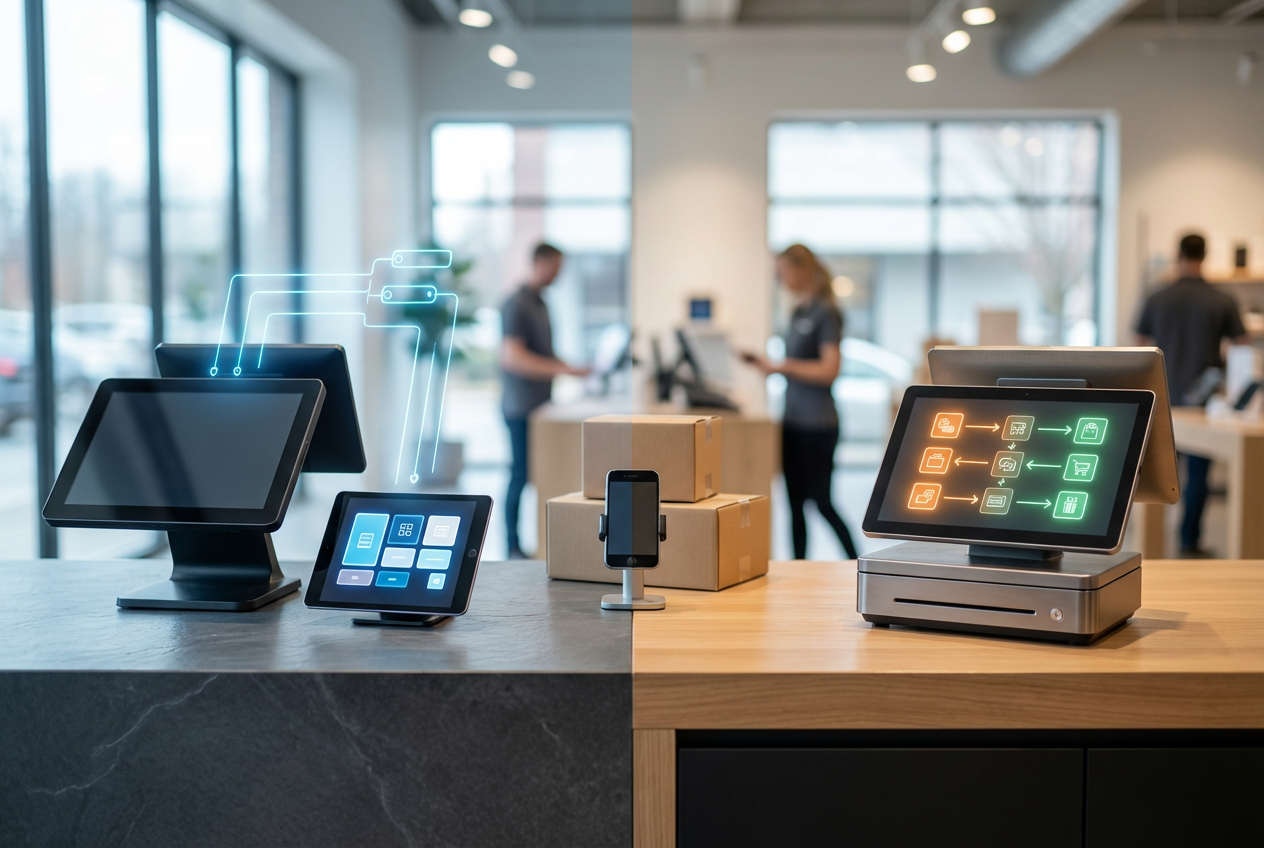
The two platforms follow different approaches to ecommerce. Rain POS includes a native ecommerce website in its Startup plan, while ConnectPOS connects supported ecommerce platforms with physical checkout operations. Comparing their capabilities and total costs against the same requirements can help determine which setup is more practical.
FAQs: Rain POS Pricing
How Much Does Rain POS Cost?
Rain POS Startup is listed at $99 per month with annual billing. Core and Plus require custom quotations. Total expenses depend on the selected configuration, hardware, payment processing, additional stations, integrations, and implementation requirements.
Is Rain POS Worth the Cost?
Rain POS may be worth the investment for specialty retailers whose checkout, inventory, ecommerce, and customer management needs align with its capabilities. The decision depends on total operating costs and the amount of additional configuration required.
What Should Retailers Compare Before Switching From Rain POS?
The main considerations are total ownership cost, inventory management, ecommerce compatibility, multi-store requirements, third-party integrations, hardware, and migration expenses. Testing real operating scenarios is more useful than comparing advertised features alone.
Conclusion
Rain POS pricing should be assessed against the functions a store actually needs, not just its starting subscription. Its combination of checkout, inventory management, native ecommerce, and specialty retail tools may represent good value when those capabilities match existing workflows.
As store networks, sales channels, and integration requirements change, the total cost of maintaining the system deserves another look. A different POS setup becomes relevant when it addresses specific limitations without introducing comparable expenses elsewhere. Review ConnectPOS plans and pricing to see how its options align with your business needs and budget.
See ConnectPOS PricingYou can also chat with the ConnectPOS team to discuss your business needs, evaluate available options, and find a suitable configuration for your retail operations.
►►► Optimal solution set for businesses: Shopify POS, Magento POS, BigCommerce POS, WooCommerce POS, NetSuite POS, E-Commerce POS