Numbers can look fine in one system and still be wrong in another. That gap is why accounting and inventory management software has become a buying priority for retailers that sell across stores, warehouses, and online channels. In this guide, we’ll show you what this software should do, what to check before you buy, and where connected POS tools make the whole setup work better.
Highlights
- Separate accounting and inventory tools create stock errors, slow reporting, and extra manual work across retail channels.
- The right software connects sales, inventory, purchasing, and finance in real time, so teams can make faster and cleaner decisions.
- Retail buyers should focus on live sync, inventory controls, reporting, integrations, and POS connectivity before choosing a system.
The Trouble from Having Accounting and Inventory Live in Separate Systems
Separate systems create small errors that keep piling up. A sale lands in your POS, stock drops in one place, and finance sees the update later, or not at all. Then your team starts chasing numbers instead of running the business.
Month-end gets messy fast. Staff export files, clean spreadsheets, match refunds by hand, and try to explain why inventory value does not line up with revenue. That delay slows reporting and makes basic decisions harder than they should be. Gartner found that 59% of accountants make several financial errors per month, and one-third make at least a few errors every week when teams are stretched. This shows how quickly manual cleanup can turn into unreliable reporting.
Stock problems also start here. A product can look available online while the store shelf is already empty. That gap is easy for shoppers to notice. Forrester found that three-quarters of US online adults say it is important for retailers to show in-store product availability on their websites before they visit a store. Slow movers can sit for months because no one sees the full picture. Margin leaks follow, then tax errors, then late buying decisions.
Growing retailers need one record of truth across every channel. That is where accounting and inventory management software start to matter. The right system keeps sales, stock, purchasing, and finance tied together, so your team can trust the numbers and act on them without second-guessing every report.
What Accounting and Inventory Management Software Should Actually Do for a Retail Business
A retail system should do more than record transactions. It should connect the movement of money and the movement of goods, then turn that into clear action for your team. That connection is important when McKinsey found store inventory accuracy often sits at 70 to 90%, while distribution centers typically run above 99.5%. So even a small mismatch can throw daily retail decisions off course.
- Tie sales to stock in real time: Every sale, return, exchange, and transfer should update inventory and financial records quickly. Retail moves too fast for yesterday’s numbers.
- Connect buying to business results: Purchase orders, supplier receipts, landed costs, and stock value should link back to margins and cash flow. Otherwise, buying stays disconnected from actual performance.
- Give retail-specific control: Generic bookkeeping tools can track income and expenses. Retail-ready software handles variants, store transfers, stock alerts, bundles, and channel-level sales without awkward workarounds.
- Keep daily decisions grounded: Your team should not wait for the month-end to see what is selling, what is stuck, and what needs reordering. Good software turns daily activity into a usable direction.
- Replace ‘patchwork’ processes: Many retailers start with accounting and inventory management software for small businesses that works for a short time. Growth exposes the limits fast, especially when channels, staff, and SKUs start to increase.
- Close the gap between accounting and operations: Some businesses rely on accounting software for inventory management, then discover the inventory side is too shallow for real retail work. A stronger retail setup covers both sides properly.
That’s the standard to use when you compare tools. If the system only supports the finance team or only the store team, it is not doing enough.
Functions to Look for in Accounting and Inventory Management Software, Before You Buy
A buying guide should make the shortlist smaller, not longer. When you review accounting software for inventory management, pay most attention to the functions that affect daily retail work.
Real-time sales, stock, and financial sync
Speed is also important here. A delay of a few hours can turn into a missed sale, a wrong reorder, or a refund that stays unmatched until someone notices it later. That risk is larger in a returns-heavy market. NRF and Happy Returns projected retail returns would reach $890 billion in 2024, equal to 16.9% of annual sales, so sales, refunds, and exchanges have to land in stock and finance quickly.
- Live transaction updates: Sales, refunds, exchanges, layaways, and stock adjustments should move into the system as they happen. Delayed syncing leaves room for bad stock counts and messy records.
- Linked inventory and finance entries: When stock moves, the accounting side should reflect that movement without manual re-entry. Your team should not have to push the same data into two places.
- Channel-wide visibility: Store staff, warehouse teams, and head office need to see the same numbers. That matters even more when online orders pull stock from physical locations.
- Faster reporting cycles: When sales and stock flow into finance quickly, daily summaries and month-end work become much cleaner. Teams spend less time fixing records and more time reading them.
Real-time sync does not sound flashy. Yet it is one of the first things that separates a tool that feels solid from one that always feels a step behind.
Inventory tools that help retailers avoid dead stock and stockouts
Retailers do not lose money only when stock runs out. They lose money when cash sits in products that do not move. Good stock tools help on both sides. The payoff can be real. McKinsey highlighted RFID-enabled retail networks reaching about 98% inventory accuracy, and in its State of Fashion 2025 work, it pointed to 15 to 25% improvements in stock-outs from better inventory practices.
- Variant and SKU control: Apparel, beauty, Home & Furniture, and Grocery & Supermarket retailers deal with size, color, scent, pack size, or bundled sets. The system needs to track each variation clearly.
- Reorder logic: Low-stock alerts, reorder points, and purchase order support help buyers react sooner. Guesswork is expensive, especially during busy periods.
- Transfer tracking: Stock should move cleanly between stores, warehouse locations, and pickup points. Internal transfers matter just as much as sales when you want accurate numbers.
- Sell-through and aging views: Your team should see what sells fast, what slows down, and what is just sitting there. That changes buying, markdown planning, and shelf space decisions.
- Back order and pre-order support: Some retailers still want to capture demand even when stock is tight. A better tool makes that possible without creating confusion later.
Done right, inventory tools help you buy less blindly. They also help you stop treating every stock problem like an emergency.
Accounting workflows that save time and reduce errors
The accounting side should feel controlled, not fragile. Bank reconciliation, payment matching, taxes, expenses, and refunds need a clear path into the books. When those tasks rely on exports and copy-paste steps, accuracy slips fast.
COGS visibility matters just as much. Retailers need to see margin at the product, channel, and store level, not just total revenue. Clean accounting workflows also cut the back-and-forth between POS, ecommerce, and finance tools. That saves hours every week and makes month-end much less painful.
Reporting that connects inventory performance with business health
Pretty charts are not enough. Strong report & analytics should answer clear questions about sales, stock, cash, and buying.
- Dashboards that show the basics fast: Revenue, margin, stock value, cash flow, and alerts should sit in one place. Your team should not click through five tabs to spot a problem.
- Breakdowns that match how retail works: Product, brand, category, location, channel, and staff views all matter. Broad summaries hide too much.
- Visibility into return patterns and slow movers: Returns change margin. Slow stock ties up cash. Reports should make those issues easy to find, not bury them.
- Useful signals for pricing and purchasing: Better reporting helps buyers place smarter orders and helps managers price products with clearer logic.
A retail report should tell you what to do next. That’s the real test.
Retail integrations that keep the whole business connected
No retailer runs on one tool alone. Stores rely on POS, ecommerce platforms, payment systems, accounting tools, CRM, ERP, and warehouse apps. The more disconnected these tools are, the more manual work your team inherits.
Look for direct integration across online and offline channels, plus room for workflows like click and collect, returns across channels, and order fulfillment when needed. A system that works well with the rest of your stack usually creates fewer surprises later.
Scalability, mobility, and support that hold up as you grow
Growth changes the workload fast. One store becomes three. One channel becomes five. One basic process becomes ten exceptions.
Cloud access helps store teams and the head office work from the same data. Mobile POS tools let staff check stock or sell from the floor. Multi-store POS support matters early, not just when a retailer gets large. Good onboarding and responsive support matter too. When checkout stalls or stock goes wrong, you need help now, not two days later.
Questions Retail Owners Should Ask Before Signing a Deal
A polished demo can hide weak spots. Before you commit to accounting and stock management software, ask the questions that expose how the system behaves under real retail pressure.
- Can it support your current channels and your next stage of growth? A tool that works for one store but struggles with e-commerce, pop-ups, or new locations will create fresh problems later.
- How fast does data move between sales, stock, and finance? Ask what happens after a sale, return, exchange, or stock transfer. Timing matters.
- Which systems does it connect with? Check accounting tools, ecommerce platforms, payment providers, CRM, and ERP. A vague answer is not a good answer.
- What is native, and what needs add-ons? Some vendors keep the starting price low, then charge extra for functions retailers assume are already included.
- How does pricing change as you grow? Look at register count, store count, users, integrations, support tiers, and data limits.
- What kind of onboarding do you get? Setup, training, migration help, and post-launch support all affect how quickly the system becomes usable.
These questions shift the conversation from sales promises to day-to-day reality. That is where the right choice becomes much clearer.
Red Flags That Make Retailers Regret Their Software Choice
Problems rarely appear all at once. A few weak signs show up early, then the system starts to feel heavy, slow, and hard to trust.
- Batch updates instead of live updates: If inventory changes show up late, staff will stop trusting the numbers.
- Spreadsheet cleanup still drives accounting: Exporting, editing, and re-importing data is a warning sign. The system is not carrying its weight.
- Weak variant or multi-store handling: Retail gets messy fast when size, color, store transfer, or omnichannel inventory is handled badly.
- Reports that look polished but say very little: If the dashboard looks nice but does not help with replenishment, pricing, or stock aging, it is mostly decoration.
- Too much dependence on custom work: Some customization is normal. But if every useful workflow needs a workaround, the base product is not a good fit.
- Slow support during live store hours: When staff cannot check out customers or cannot trust stock counts, every minute feels long.
Retailers often discover these issues after signing, not before. That is why another pass through your shortlist matters. Weak accounting and stock management software
rarely improves once the daily pressure starts.
How POS Integration Changes the Value of Accounting and Inventory Management Software
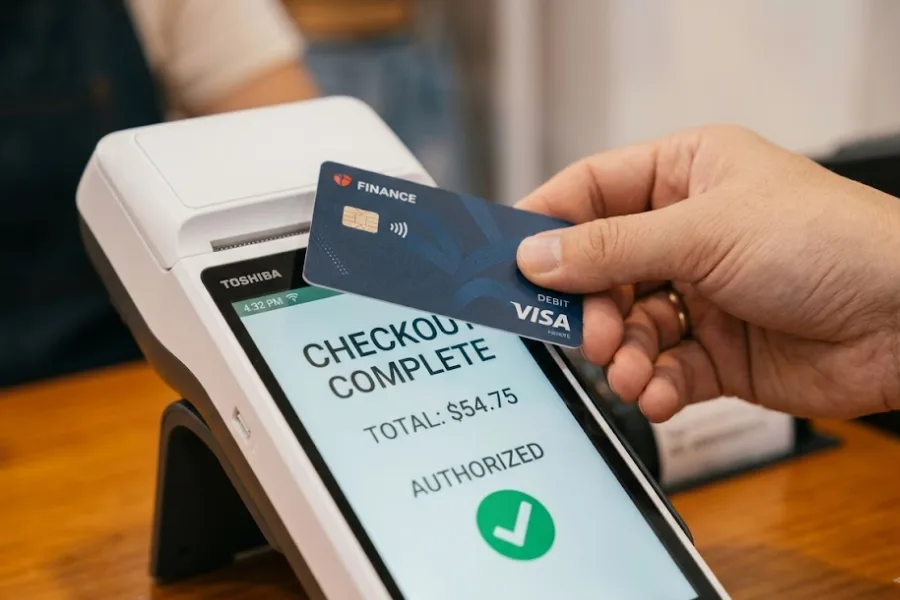
POS integration changes the whole setup. The value of accounting and inventory management software rises when sales data flows straight into stock records and finance without extra handling.
- Sales become usable data at once: A checkout event should update item counts, order records, and payment details in one motion.
- Reconciliation gets easier: Fewer manual steps mean fewer missing entries, fewer refund mismatches, and cleaner end-of-day work.
- Omnichannel retail works on shared data: Stores, ecommerce, and warehouse activity need one common layer. Without that, each channel creates its own version of the truth.
- Floor selling gets stronger: Mobile POS tools help staff check stock, complete purchases, and assist customers without running back to the counter.
- Customer context gets better: Self-service tools, membership data, and purchase history add more meaning to sales records. That helps retail teams make smarter decisions later.
POS-connected systems fit modern retail better because they capture the transaction where it happens. Then the rest of the business can act on it.
ConnectPOS – Keep Inventory and Accounting Data Aligned Across Every Channel
Retailers cannot afford gaps between what is sold, what is in stock, and what shows up in business reports. ConnectPOS closes that gap by connecting store operations, inventory control, and key business systems in one flow. That matters when you need cleaner records, faster decisions, and fewer manual fixes across stores and channels.
- Multi-store control: ConnectPOS helps retailers manage several stores within one connected system. Teams get tighter control over stock, store activity, and daily operations across locations.
- Unified omnichannel visibility: ConnectPOS brings online and offline retail channels together. Sales, exchanges, refunds, and fulfillment stay aligned, so inventory and business records are easier to track.
- Real-time inventory tracking: Retailers can keep a closer eye on stock movement as it happens. That helps cut stock mismatches, supports faster replenishment calls, and lowers the risk of missed sales.
- Variant and SKU management: ConnectPOS supports detailed product setups, including size, color, material, brand, and bundled items. That keeps inventory records more accurate, especially for stores with large catalogs and many variations.
- Low-stock alerts and order readiness: Built-in stock alerts help teams react before shelves run empty. Support for back orders and pre-orders also helps retailers keep demand alive instead of turning shoppers away.
- Accounting and business system integrations: ConnectPOS connects with accounting systems, ERP tools, CRM POS, payment gateways, eCommerce POS, and hardware. That keeps data moving together instead of splitting across disconnected tools.
- Reporting and analytics: ConnectPOS gives retailers dashboards, sales breakdowns, and inventory alerts. Teams can spot product trends, review store performance, and make better buying calls from one place.
- HQ-level visibility: Retailers can monitor stores from a central team and use past data to guide planning. One clear view across locations makes daily management much easier.
- Flexible payment support: ConnectPOS supports cash, cards, mobile banking, and store credit. Checkout stays smooth, and sales records stay more complete.
- Scalable retail setup: ConnectPOS is built for growing operations. As a business adds stores, channels, or new workflows, the system can keep stock, reporting, and connected tools aligned.
FAQ: Accounting and Inventory Management Software
1. What is the difference between accounting software and accounting and inventory management software?
Basic accounting software tracks money. Accounting and inventory management software tracks money and stock together, so sales, purchasing, inventory value, and margins stay connected.
2. Can small retailers use one system for POS, inventory, and accounting?
Yes. Small retailers often benefit most from one connected setup because it cuts manual work early and keeps records cleaner as the business grows.
3. What features matter most for multi-store retail businesses?
Real-time stock visibility, store transfers, variant tracking, reporting by location, POS integration, and shared data across channels matter most.
4. How does integrated software help with stock accuracy and cash flow?
It links sales, stock movement, and finance records. That gives teams clearer reorder timing, better margin visibility, and fewer cash-draining stock mistakes.
5. When should a retailer move on from spreadsheets or basic accounting tools?
Move when stock counts drift, reconciliation takes too long, channels start to split data, or your team no longer trusts the numbers.
Final Thoughts
Buying accounting and inventory management software is really about buying clarity. Retailers need clean records, live stock visibility, and direct links between checkout, inventory, and finance. When those pieces work together, daily decisions get easier, and growth feels less chaotic. If you’re reviewing tools and want a retail setup that keeps every channel aligned, contact us and see how ConnectPOS can fit your business.