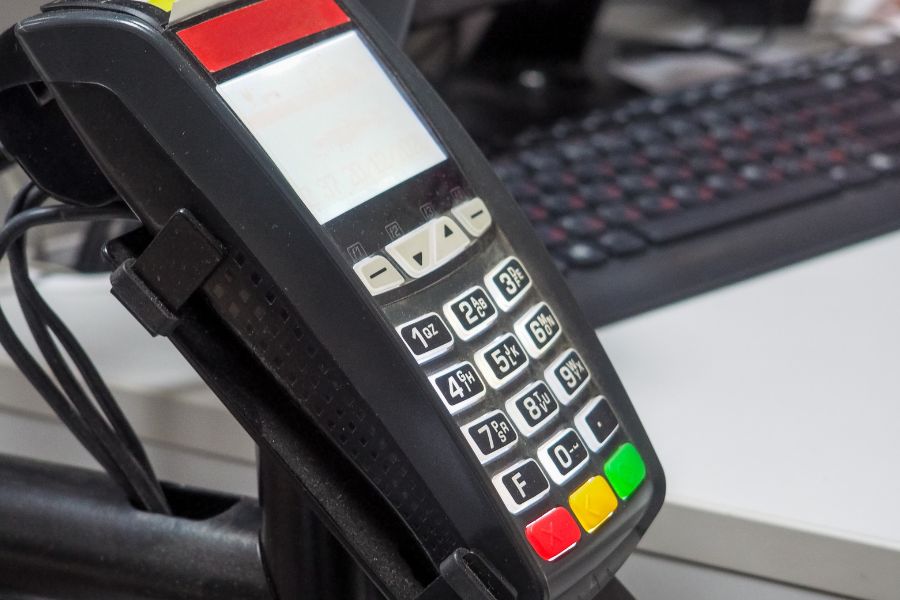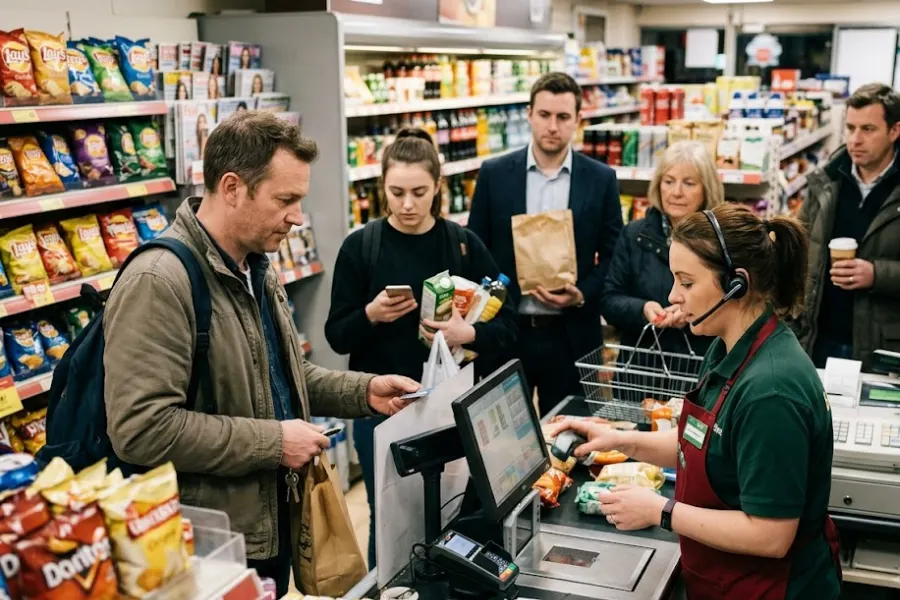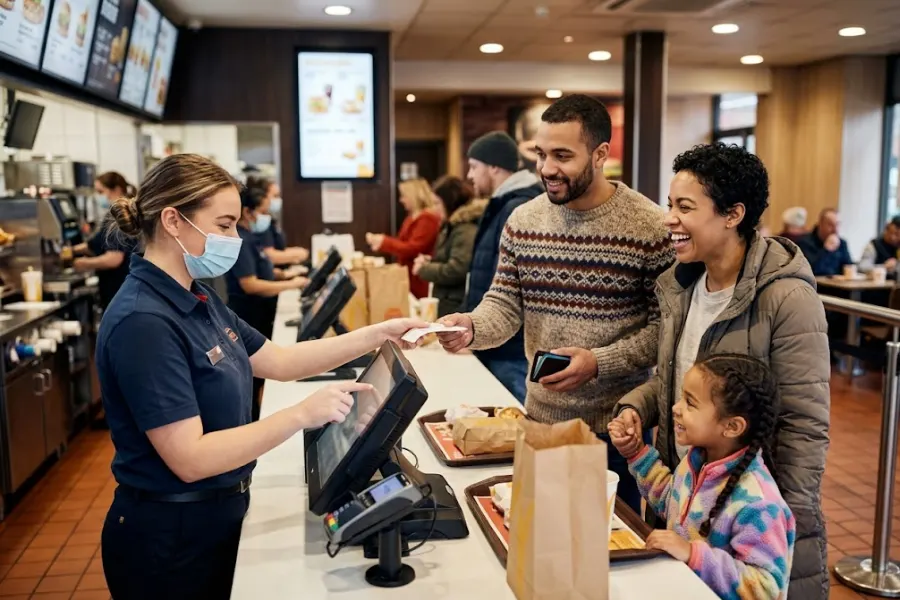
A POS system plays a central role in fast-food restaurant operations, influencing everything from order accuracy and kitchen communication to inventory management and customer service. The wrong platform can create operational friction that affects daily performance, while the right one supports consistency, visibility, and long-term business development. Restaurant operators often face dozens of POS options with similar claims and feature lists. Understanding what truly matters during the evaluation process helps businesses identify a solution that aligns with operational requirements and plans. This article from ConnectPOS explores the factors on how to choose a pos for fast-food restaurant that deserves careful consideration before making a POS investment.
Highlights
- Choose a POS based on operational needs, including order management, kitchen integration, inventory control, payments, reporting, and scalability.
- Avoid common selection mistakes such as focusing only on price, overlooking integrations, ignoring staff usability, and choosing a system that cannot support future growth.
Key Factors To Consider When Choosing A POS For Fast-Food Restaurants
Understanding how to choose a POS for a fast-food restaurant requires more than comparing prices or software features. The right solution should align with daily operational demands, enable staff productivity, and provide visibility into business performance. Evaluating the factors that influence long-term value can help restaurant operators make a more informed investment decision.
Fast and User-Friendly Order Processing
Speed at the point of sale shapes the customer experience more than many restaurant owners realize. During peak periods, staff members handle long queues, special requests, promotional items, and delivery orders at the same time. A POS system should enable quick order entry through an intuitive interface that minimizes the number of steps required to complete a transaction.
Staff turnover remains a common challenge in the fast-food sector. A complicated POS platform often leads to longer training periods and a higher risk of order mistakes. Clear menu layouts, customizable buttons, and simple workflows help new employees become productive in a shorter timeframe while allowing experienced staff to maintain consistent service quality during busy operating hours.
Restaurant operators should also evaluate how the system performs under heavy transaction volumes. A POS platform that responds slowly during lunch or dinner rushes can create bottlenecks that affect both customer satisfaction and revenue generation.
Kitchen and Order Management Integration
Fast-food restaurants depend on constant coordination between front-of-house teams and kitchen staff. Delays in communication often result in incorrect orders, longer preparation times, and unnecessary food waste. When considering how to choose a POS for fast-food restaurant, direct integration between the POS system and kitchen display technology should be a priority, as it allows orders to move instantly from the cashier to the preparation station.
Order management capabilities become even more valuable when restaurants handle dine-in, takeaway, drive-thru, mobile ordering, and third-party delivery requests. A centralized system helps teams track incoming orders through each stage of fulfillment while maintaining visibility across all sales channels.
Restaurant managers should pay close attention to workflow configuration options. Different menu items require different preparation processes, and a POS system should support kitchen routing rules that match operational requirements rather than forcing staff to adapt to software limitations.
Inventory and Menu Management
Food costs can fluctuate rapidly, making inventory oversight a priority for restaurant profitability. A POS platform that connects sales data with inventory records provides greater visibility into ingredient consumption patterns and stock levels. This visibility enables more accurate purchasing decisions and helps managers identify discrepancies before they become larger operational issues.
Menu management deserves equal attention. Fast-food businesses frequently introduce seasonal products, promotional bundles, and limited-time offers. Updating menu items across every ordering channel should require minimal administrative effort. Delays or inconsistencies often create confusion for both staff and customers.
Data accuracy carries long-term value as well. Reliable inventory and menu information gives restaurant operators a stronger foundation for forecasting demand, planning promotions, and evaluating product performance throughout the year.
Payment Flexibility and Security
Consumer payment preferences continue to shift as digital wallets, contactless cards, QR payments, and mobile payment applications gain wider adoption across the restaurant industry. A POS system should accommodate these payment methods while maintaining a smooth checkout experience for customers and staff.
Payment flexibility must be evaluated alongside security. Restaurants process a high volume of transactions every day, making payment data a valuable target for cybercriminals. Industry reports show that the average cost of a data breach in the hospitality sector, including restaurants, reached $3.82 million between March 2023 and February 2024, compared to $3.36 million during the previous year. Strong security controls, encrypted payment processing, and compliance with recognized industry standards help protect customer information and limit business risk.
Restaurant operators should also review how the POS system handles day-to-day payment scenarios such as refunds, split payments, gift cards, and loyalty rewards. These functions influence customer interactions on a regular basis and contribute to a more consistent service experience.
Reporting and Analytics Capabilities
Restaurant performance cannot be evaluated accurately through sales totals alone. Decision-makers need access to operational data that reveals what drives profitability, where inefficiencies exist, and which products generate the strongest results. A POS system should provide reporting tools that transform transaction data into practical business insights.
Sales trends, labor performance, peak operating hours, menu item popularity, and inventory movement all contribute to a clearer understanding of restaurant performance. Detailed reporting allows management teams to identify opportunities that may remain hidden within raw transaction records.
The value of analytics extends beyond historical review. Real-time visibility allows managers to respond quickly to changing conditions, monitor ongoing promotions, and make informed operational adjustments while business is still taking place.
Scalability for Future Growth
A POS system should meet current operational requirements while remaining capable of accommodating future expansion. Restaurant owners planning to open additional locations, introduce drive-thru services, expand online ordering, or develop franchise operations should assess scalability early in the evaluation process. Research shows that 86% of businesses use POS data to increase average order value, highlighting the growing role of POS platforms as business intelligence tools rather than simple transaction systems.
As restaurants grow, operational demands become more complex. Multi-location reporting, centralized menu management, customer loyalty programs, and performance tracking across locations require technology that can maintain visibility and control at scale. Systems that struggle to accommodate expansion often create operational inefficiencies and fragmented data across the business.
A platform that can grow alongside the business helps avoid costly migrations and disruptions in the future. As customer expectations, sales channels, and operational models continue to evolve, the POS system should remain capable of accommodating new initiatives without requiring a complete replacement of existing technology investments.
Common Mistakes To Avoid When Selecting A Fast-Food POS
Knowing how to choose a POS for fast-food restaurant involves more than comparing software features or subscription costs. A solution that appears suitable today may create operational limitations in the future if key requirements are overlooked. Restaurant owners should evaluate each option carefully to avoid common mistakes that can affect profitability, operational performance, and long-term growth.
- Choosing a POS Based Only on Price: A lower-priced solution may appear attractive during the purchasing stage, yet limited functionality can lead to higher costs over time. Features such as inventory tracking, reporting, and integration capabilities often have a greater impact on business performance than the initial investment.
- Ignoring Integration Capabilities: A POS system should work effectively with other business tools, including online ordering platforms, accounting software, loyalty programs, and delivery services. Poor integration can result in fragmented workflows and increased administrative workload.
- Overlooking Ease of Staff Training: Fast-food restaurants often need to train new employees quickly. A complicated system can slow onboarding, increase order errors, and affect customer service quality during peak periods. User-friendly interfaces help staff adapt faster and perform tasks with greater confidence.
- Selecting a System That Cannot Scale: Business growth may introduce new operational requirements such as additional locations, expanded menus, or new ordering channels. A POS platform with limited scalability can become a barrier to expansion and may require a costly replacement in the future.
How ConnectPOS Supports Fast-Food Restaurant Operations
Fast-food restaurants operate in an environment where speed, accuracy, and operational visibility directly influence daily performance. ConnectPOS is designed as a quick service POS to assist these demands through a centralized system that connects order management, kitchen workflows, inventory tracking, payments, and business reporting. The platform helps restaurant teams maintain operational consistency while handling high transaction volumes across different service channels.
- Real-Time Kitchen and Order Coordination: ConnectPOS connects front-counter orders with kitchen display systems, allowing orders to move directly into preparation queues without manual handoffs. This structure supports faster communication between staff and helps maintain order accuracy during busy service periods.
- Inventory Control at the Ingredient Level: The system tracks raw-material usage through real-time inventory monitoring linked to each transaction. Restaurant operators can monitor stock movement, identify consumption patterns, and make purchasing decisions based on actual sales activity rather than estimates.
- Flexible Ordering and Payment Experiences: ConnectPOS enhances self-service kiosks, QR ordering, contactless payments, e-wallets, and traditional payment methods within a unified workflow. This flexibility helps restaurants manage customer traffic more effectively while maintaining a smoother checkout experience.
- Business Intelligence Through Real-Time Analytics: Restaurant managers gain access to live sales data, peak-hour trends, product performance insights, and operational reporting. These insights support more informed decisions related to staffing, menu adjustments, and daily business management.
- Customer Retention and Revenue Growth Tools: The platform includes loyalty program integration, customer data management, and smart combo recommendations during checkout. These capabilities boost repeat purchases while creating opportunities to increase average order value without disrupting service flow.
- Support for Multi-Location Expansion: ConnectPOS provides centralized control across locations through unified reporting, menu management, and operational oversight. This structure helps growing restaurant brands maintain consistency while expanding into new markets or service channels.
FAQs About How To Choose a POS For Fast-Food Restaurants
1. What features should a fast-food POS system include?
A fast-food POS system should boost quick order entry, kitchen integration, inventory tracking, flexible payment options, and detailed reporting. Features such as self-service ordering, loyalty programs, and online order management can also help restaurants improve customer experience and operational control.
2. How much does a POS system for a fast-food restaurant cost?
Costs vary depending on the provider, deployment model, number of terminals, and included features. Some solutions charge a monthly subscription fee, while others require upfront software and hardware investments. Restaurant owners should evaluate total ownership costs rather than focusing solely on the initial price.
3. Why is kitchen integration important in a fast-food POS system?
Kitchen integration allows orders to move directly from the POS to preparation stations, reducing manual communication between staff. When evaluating how to choose a POS for a fast-food restaurant, kitchen connectivity deserves close attention because it helps improve order accuracy, shorten preparation times, and maintain smoother operations during busy service periods.
4. Can a POS system help manage inventory in a fast-food restaurant?
Yes. Many modern POS systems track ingredient usage based on sales activity and update inventory records automatically. This visibility helps restaurant operators monitor stock levels, identify waste, and make more informed purchasing decisions.
Conclusion
A POS investment has a lasting impact on restaurant performance, employee productivity, and customer experience. Understanding how to choose a POS for fast-food restaurant involves evaluating integration capabilities, reporting tools, inventory management, payment support, and scalability in relation to long-term business objectives rather than short-term costs.
ConnectPOS helps fast-food restaurants manage orders, inventory, payments, customer engagement, and multi-location operations through a unified platform. Contact us to discuss your restaurant’s requirements and discover how ConnectPOS can strengthen sustainable business growth.
►►► Optimal solution set for businesses: Shopify POS, Magento POS, BigCommerce POS, WooCommerce POS, NetSuite POS, E-Commerce POS