Emotion sits behind every diamond you sell. A single piece can represent an engagement, an anniversary, or a family legacy. That level of meaning demands more than a basic checkout tool, which is why a POS for jewelry store operations must support precision, memory, and trust. In this guide of ConnectPOS, we’ll show you how the right jewelry retail POS helps you strengthen client relationships, safeguard high-value inventory, and build long-term loyalty in luxury environments.
Highlights
- Luxury jewelry retailers need systems that combine serialized inventory tracking with structured client profiles to protect margin and personalize every interaction.
- A connected jewelry retail POS aligns in-store consultations, online activity, custom orders, and repair workflows into one unified client journey.
- Secure transaction logs, tier-based segmentation, and real-time reporting help transform high-value purchases into long-term relationships.
The Unique POS Requirements of Luxury Jewelry Stores
Luxury jewelry retail operates under different rules. Transactions are larger. Client expectations run deeper. Every detail, from gemstone certification to anniversary reminders, shapes trust.
- High-Value Inventory Demands Precision: A bracelet may look simple in the display case, yet its cost and sourcing history matter greatly. Jewelry retailers need serialized tracking for diamonds, gold purity records, and detailed SKU management. Strong inventory management software for high-value items helps prevent shrinkage and protect margin. One real-world example of item-level tracking comes from Vogue. Ganni said inventory accuracy in one store rose from 93.4% to 99.5% in two weeks after adding RFID.
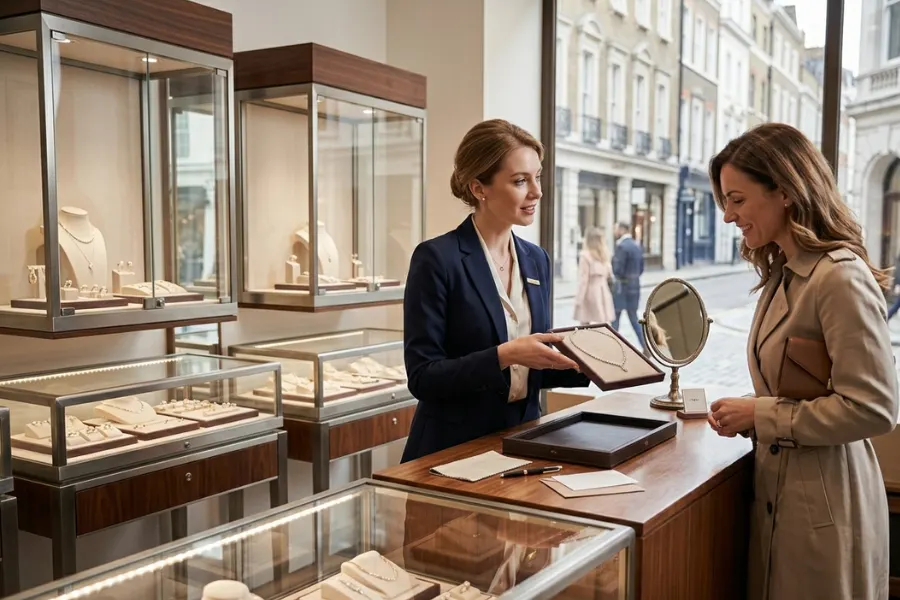
- Personalized Service Drives Loyalty: Luxury buyers expect recognition. They want staff to remember ring sizes, preferred designers, and past milestone purchases. A jewelry store POS system that stores this data allows associates to respond quickly and with confidence.
- Disconnected Systems Create Risk: Separate spreadsheets, paper repair logs, and standalone CRM tools often lead to missed follow-ups or duplicate records. VIP relationships suffer when client history sits in different places. A retail management system for jewelry shops keeps customer data unified. Salesforce research shows 79% of customers expect consistent interactions across departments, yet 55% say it often feels like they’re dealing with separate departments rather than one company. This is exactly what fragmented tools create.
- Operational Control Supports Relationship Building: A specialized POS for jewelry store use links inventory accuracy with client insights. When stock counts match reality and sales history stays accessible, conversations feel informed rather than improvised.
- Omnichannel Journeys Require Unified Platforms: Modern jewelers sell through boutiques, websites, and private appointments. A Harvard Business Review study of 46,000 shoppers found omnichannel customers spent 4% more in-store and 10% more online than single-channel shoppers. They also made 23% more repeat shopping trips within six months. Systems like ConnectPOS connect these touchpoints into one synchronized platform, allowing smoother client experiences across channels.
Luxury boutiques can’t rely on standard retail setups. They require a point of sale system for jewelers that protects inventory, organizes client data, and supports refined service at every interaction.
The Key Role of a POS for Jewelry Store in Luxury Client Relationship Management
Luxury retail runs on relationships, not transactions alone. A well-structured POS for jewelry store operations connects purchase history, service records, and inventory accuracy into one steady flow of information. When your jewelry inventory and sales system aligns data with human interaction, conversations feel intentional instead of reactive.
1. Building Detailed Client Profiles for Personalized Service
Great clienteling starts with memory. Not casual recall, but structured, searchable information that guides each conversation. That’s where POS software for jewelry stores moves beyond checkout and into relationship management.
- Complete Purchase Histories: Every ring, necklace, and custom piece stays recorded under one profile. Associates see preferred metals, gemstone types, and past budgets in seconds. That context shapes smarter suggestions.
- Precise Size and Specification Records: Ring sizes, engraving details, and certification notes stay attached to the client’s account. When a customer returns months later, staff don’t rely on guesswork.
- Milestone Tracking: Engagement dates, anniversaries, and special occasions can be stored inside the system. A reminder before an anniversary creates a thoughtful follow-up rather than a generic sales call. Deloitte research shows that among consumers interested in personalized products or services, 1 in 5 are willing to pay 20% more. These details can raise both trust and order value.
- Lifetime Value Visibility: The platform calculates spending patterns and visit frequency. You gain clarity on which relationships deserve exclusive previews or early access events.
- Digital Client Book Structure: Instead of handwritten notes or scattered spreadsheets, this retail setup creates a clean digital client book. Sales teams operate with confidence because information sits in one place.
When detailed profiles guide conversations, luxury service feels intentional. Clients notice when you remember.
2. Enabling In-Store Clienteling with Real-Time Data
Luxury purchases often require discussion, comparison, and reassurance. During those moments, access to accurate data builds credibility.
- Instant Profile Access: Staff open a customer record during consultation. Past purchases and preferences appear immediately, helping them continue the story rather than restart it.
- Smart Product Recommendations: If a client previously purchased a white gold bracelet, the jewelry retail POS can highlight matching earrings or upgraded pieces. Suggestions feel natural because they’re data-driven.
- Appointment Support: VIP clients often schedule private viewings. This system logs appointments and notes, keeping preparation organized before the client walks in.
- Online and In-Store Synchronization: When someone browses online and later visits the boutique, their activity reflects inside the point of sale system for jewelers. That continuity prevents awkward repetition.
- Trust Through Transparency: Real-time inventory and pricing information prevent uncertainty during high-ticket discussions. Confidence rises when numbers are accurate. PwC found 32% of customers would stop doing business with a brand they love after one bad experience. Small moments of confusion can cost more than people expect.
Clienteling improves when data flows in real time. Conversations become informed. Decisions feel easier.
3. Segmenting VIP, Loyal, and New Clients Strategically
Not every client relationship requires the same approach. Luxury boutiques thrive when communication aligns with value and intent.
- Clear Customer Tiers: The jewelry store POS system categorizes buyers into VIP, repeat clients, or first-time shoppers. That classification shapes marketing and in-store attention.
- Exclusive Event Targeting: High-spending clients receive invitations to private previews or limited collection launches. The software identifies them automatically through spending thresholds.
- Tailored Communication Plans: Frequent buyers may respond to anniversary reminders, while prospects react to curated product updates. The solution allows personalized outreach instead of blanket promotions.
- Rising Client Identification: Sales reporting for luxury retail reveals emerging high-value customers. A client who increases purchase frequency over time deserves strategic attention.
- Integrated Loyalty Program Structure: Tier-based rewards operate directly inside this retail management system for jewelry shops. Points, perks, and exclusive benefits stay organized under each profile.
Structured segmentation turns guesswork into strategy. When communication aligns with data, relationships deepen and retention strengthens.
4. Managing Custom Orders, Repairs, and Special Requests with Precision
Luxury jewelry rarely fits into a simple sales flow. Clients request custom designs, resizing, engraving, and long-term repair services. A structured POS for jewelry store setup keeps those complex processes organized instead of scattered across notebooks and emails.
- Detailed Custom Design Records: The platform stores metal choices, gemstone specifications, sketches, and client notes under one order profile. Designers and sales staff see the same information, which limits miscommunication.
- Deposit and Installment Tracking: High-ticket pieces often involve partial payments or layaways. The jewelry inventory and sales system logs deposits clearly, so balances stay transparent.
- Repair Workflow Monitoring: Resize requests, stone replacements, and polishing jobs move through defined stages. Staff check status in seconds instead of searching through paperwork.
- Clear Order Transparency: Clients receive accurate updates on timelines and progress. That clarity builds confidence, especially when sentimental pieces are involved.
- Structured Internal Accountability: Every change links to a user and timestamp. This retail management system for jewelry shops keeps responsibility visible.
Custom service feels refined when processes remain organized. Precision strengthens trust.
5. Creating a Unified Omnichannel Luxury Experience Through Real-Time Sync
Luxury clients move between channels without hesitation. They browse collections online, visit the boutique later, and expect continuity. A connected jewelry retail POS keeps those interactions aligned.
- Centralized Data Synchronization: Online activity and in-store purchases sync into one client profile. When someone views a diamond ring online, staff can reference that interest during an appointment.
- Real-Time Inventory Visibility: Serialized product tracking for precious metals updates instantly across locations. Stock levels remain accurate whether items sell online or at the counter.
- Consistent Pricing and Promotions: The platform maintains aligned pricing rules across channels. Limited offers reflect identically online and in-store.
- Click-and-Collect Support: Clients reserve pieces digitally and collect them at the boutique. This retail setup links convenience with personal service.
- Elimination of Duplicate Records: Customer data enters once and flows through the system. That prevents conflicting information across databases.
- Proven Omnichannel Results: Retailers using synchronized platforms like ConnectPOS report smoother sales journeys and clearer reporting accuracy across locations.
Luxury retail thrives on cohesion. When channels connect in real time, client experience feels unified rather than fragmented.
6. Strengthening Client Trust Through Secure and Compliant Transactions
High-value transactions demand discretion and accuracy. A jewelry store POS system protects sensitive information while maintaining clear records.
- Role-Based Access Control: Staff access depends on responsibility. Sales consultants view client profiles, while financial data remains restricted.
- Comprehensive Audit Trails: Every adjustment, return, or price change records automatically. This documentation supports transparency during disputes.
- Secure Payment Handling: Large transactions process through encrypted gateways. Clients feel comfortable completing significant purchases.
- Certification and Compliance Tracking: Precious metal records and gemstone certificates stay attached to each serialized product.
- Transparent Transaction History: Customers can review invoices and service logs when needed. That openness builds long-term confidence.
Security reinforces credibility. A well-structured point of sale system for jewelers protects both revenue and reputation.
What to Look for in the POS Software for Jewelry Stores
Selecting the right technology shapes daily operations more than many retailers expect. Luxury boutiques handle expensive stock, detailed client histories, and custom service requests. That’s why choosing POS software for jewelry stores requires more than checking a feature list. The system must support precision, transparency, and growth without adding complexity.
- Serialized Inventory and Certificate Tracking: Each diamond or gold piece should carry its own identity. Serialized product tracking for precious metals links certificates, appraisals, and sourcing records to individual SKUs. This prevents confusion and protects value.
- Custom Product Attributes: Jewelry rarely fits into generic categories. A custom POS platform should record karat levels, gemstone grades, metal colors, and designer collections. Detailed attributes allow clearer filtering and reporting.
- Integrated CRM Functionality: A jewelry store POS system must store purchase history, notes, and milestone dates in one place. Sales teams access profiles instantly and continue conversations naturally.
- Repair and Engraving Management: Luxury boutiques require software that tracks resizing, polishing, and engraving requests. Structured workflows prevent delays and miscommunication.
- Multi-Store and Multi-Currency Support: Growing brands may expand into new cities or tourist hubs. The retail management system for jewelry shops should handle diverse currencies and centralized inventory visibility.
- Cloud-Based Scalability: Cloud architecture allows data access across locations. It supports growth without requiring heavy infrastructure changes.
Choosing the right solution strengthens control and client confidence. When the system supports inventory accuracy and relationship data together, operations feel steady rather than reactive.
ConnectPOS: The Smart POS for Jewelry Store Brands That Prioritize Client Relationships
ConnectPOS is a powerful cloud-based POS for jewelry store businesses that want more than just billing software. Built for omnichannel retail, ConnectPOS helps jewelry brands manage high-value inventory, personalized client service, and synchronized online and offline operations in one centralized system. For luxury jewelers, where long-term relationships and trust matter as much as the products themselves, ConnectPOS supports structured client management while maintaining operational accuracy and security.
- Real-Time Omnichannel Synchronization: Two-way sync between eCommerce platforms and physical stores keeps customer data, pricing, and inventory fully aligned. This prevents data silos and ensures every client interaction is consistent across channels.
- Centralized Customer Profiles: Store detailed purchase history, preferences, contact information, and lifetime value metrics. Sales associates can instantly access client data to deliver personalized recommendations.
- VIP Client Segmentation: Categorize customers into tiers such as VIP, loyal buyers, or new prospects. This allows targeted promotions and exclusive previews tailored to luxury shoppers.
- Serialized Inventory Management: Track high-value items individually with SKU-level precision. Monitor diamonds, gold pieces, and limited collections with accuracy across multiple locations.
- Multi-Store & Multi-Warehouse Management: Maintain centralized control over inventory across boutiques and warehouses. Jewelry brands expanding into new locations can scale without losing visibility.
- Click-and-Collect Support: Allow clients to reserve pieces online and pick them up in-store. This strengthens the omnichannel luxury experience.
- Secure Role-Based Access Control: Assign staff permissions based on responsibility. Sensitive financial and customer data remain protected within the system.
- Detailed Audit Trails: Record every transaction and adjustment. This builds transparency for expensive purchases and strengthens compliance.
- Flexible Payment Integration: Accept multiple payment methods including split payments and digital wallets. The system supports smooth processing for large-ticket transactions.
- Offline Mode Capability: Continue operating even if internet connectivity is interrupted. All data syncs automatically once the connection is restored.
- Advanced Reporting & Analytics: Access real-time dashboards for sales performance, customer behavior, and inventory turnover. Use data insights to refine marketing and product strategies.
- Custom Staff Permissions: Define specific access levels for sales consultants, managers, and administrators. This enhances internal control in high-value retail environments.
- Integrated Loyalty & Promotion Tools: Launch personalized campaigns based on purchase history and customer segment. Encourage repeat purchases from luxury buyers.
- Multi-Currency Support: Serve international customers seamlessly. Ideal for jewelry brands located in tourist destinations.
- Scalable Enterprise Options: Manage 100+ stores with dedicated support and onboarding assistance for growing jewelry chains.
ConnectPOS combines structured inventory control with relationship-driven client management, making it a strong pos for jewelry store brands that operate in luxury environments. With synchronized data, secure transactions, and detailed customer insights, jewelry retailers can strengthen trust, deliver personalized service, and support long-term growth through one unified platform.
FAQs: POS for Jewelry Store
What is a POS for jewelry store and how is it different from a regular retail POS?
A POS for jewelry store is designed to manage high-value, serialized inventory and detailed product attributes such as metal type, karat, gemstone quality, and certifications. Unlike a generic retail POS, it supports custom orders, repair tracking, and secure transaction logging, which are essential in luxury jewelry environments.
How does a POS software for jewelry stores improve client relationship management?
It stores detailed customer profiles, including purchase history, preferences, anniversaries, and lifetime value. Sales associates can access this data instantly to provide personalized recommendations, exclusive previews, and tailored loyalty rewards, strengthening long-term relationships with high-value clients.
Can a POS for jewelry store handle custom orders and repairs?
Yes. A specialized system tracks deposits, design specifications, engraving notes, and repair status in one centralized workflow. This ensures transparency for clients and prevents miscommunication when handling high-value custom pieces or service requests.
Is a jewelry store POS system secure enough for high-ticket transactions?
Modern systems include role-based access control, encrypted payment processing, and detailed audit trails. These features protect sensitive customer data, prevent internal misuse, and provide clear transaction records for expensive purchases.
Does a POS for jewelry store support omnichannel selling?
Yes. Advanced solutions like ConnectPOS offer real-time synchronization between eCommerce and physical boutiques. This allows inventory visibility across locations, unified pricing, and services such as online reservation with in-store pickup, ensuring a seamless luxury shopping experience.
Final Thoughts
Luxury jewelry retail depends on trust, precision, and memory. A well-structured POS for jewelry store operations connects inventory control with refined client management, turning every transaction into a lasting relationship. When your system aligns serialized tracking, client profiles, and omnichannel data, service feels intentional and organized. If you’re ready to strengthen client loyalty and gain tighter operational control, you can contact us and explore how ConnectPOS can support your jewelry business growth.
►►► Optimal solution set for businesses: Shopify POS, Magento POS, BigCommerce POS, WooCommerce POS, NetSuite POS, E-Commerce POS