Growth looks exciting on paper. In reality, expanding retail operations can expose weak systems fast. That’s why top rated POS systems for retail have become a serious priority for enterprise brands that manage high volumes, large catalogs, and multi-store operations. In this guide of ConnectPOS, we’ll compare the five leading retail POS systems for enterprises and highlight which one best supports your growth strategy.
Highlights
- Enterprise retailers rely on unified, scalable retail POS systems to control inventory, reporting, and omnichannel sales across multiple locations.
- The top 5 platforms reviewed include ConnectPOS, Shopify POS, Lightspeed Retail, Square for Retail, and Clover POS.
- Choosing the right solution depends on integration depth, real-time synchronization, pricing structure, and long-term scalability.
The Real Impact of Enterprise-Grade Retail POS Systems on Business Growth
Retail technology has moved far beyond ringing up sales. In the U.S., e-commerce sales accounted for 16.4% of total retail sales in Q3 2025. Enterprise brands now depend on centralized control, unified data, and systems that scale without friction. The difference between average software and highly rated retail point of sale solutions shows up in daily operations, not just technical specs.
- From registers to centralized command centers: Traditional cash registers handled transactions. Modern retail POS systems manage pricing rules, customer profiles, promotions, inventory, and report & analytics in one place. A store manager no longer checks five separate dashboards. Everything lives in a single interface. That shift changes how decisions happen.
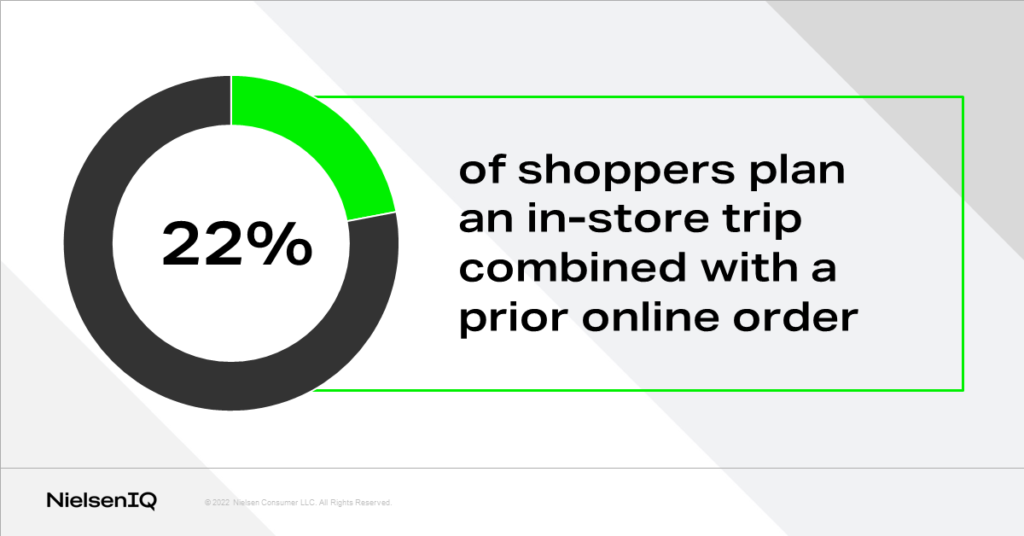
- Omnichannel isn’t optional anymore: Customers expect to browse online, buy in store, return through another channel, and keep their loyalty points intact. NielsenIQ found that more than one in five (22%) of shoppers plan an in-store shopping trip combined with a prior online order. Leading retail POS platforms synchronize data across channels so information stays consistent. When product availability, customer history, and promotions update instantly, confusion disappears. That consistency builds trust.
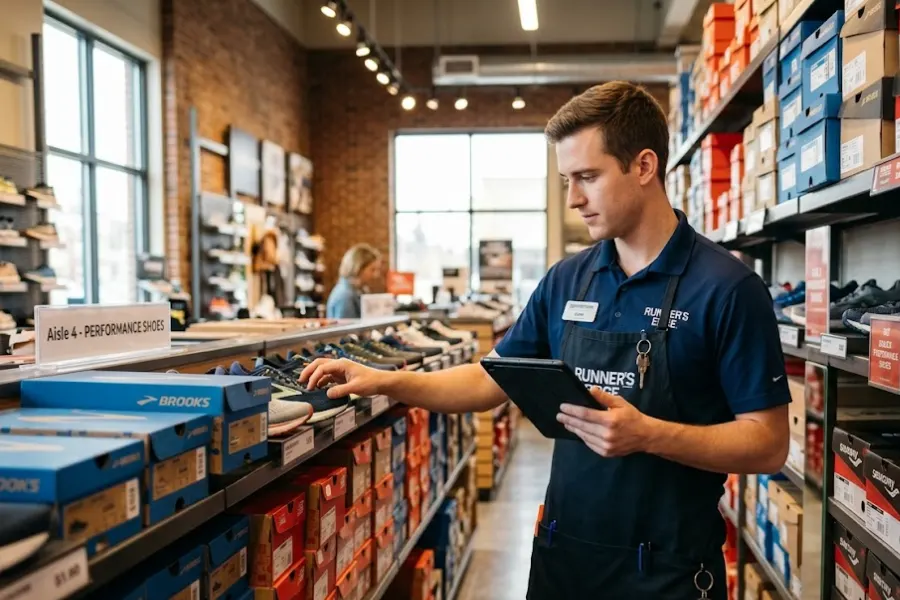
- Inventory visibility drives smarter planning: Large retailers can’t rely on manual stock checks or delayed updates. Real-time inventory across locations allows teams to move stock, adjust purchasing, and prevent lost sales. The strongest retail POS leaders in the market treat inventory as live data, not static records.
- Cloud architecture supports expansion: Enterprise growth rarely stays in one region. Scalable, cloud-based systems support new stores without complex installations. McKinsey estimates cloud value drivers could deliver more than $3 trillion in EBITDA by 2030. Adding a location should feel controlled, not chaotic. Premium point of sale systems for stores allow teams to manage dozens of branches from a central view.
- The cost of choosing the wrong system: Poor integrations create double entries. Limited reporting blocks forecasting. Compliance gaps expose financial risk. These problems rarely appear in sales demos, yet they surface quickly when operations scale. Trusted POS tools for retail businesses prevent those setbacks before they slow momentum.
Growth demands stability. Retailers that adopt top-rated POS systems early position themselves for cleaner expansion, better reporting, and stronger customer retention. The software behind the counter often shapes what happens across the entire organization.
Key Traits of High-Performing Retail POS Systems for Enterprises
Not all retail POS systems can handle enterprise pressure. High transaction volume, layered pricing rules, and cross-channel fulfillment demand structure beneath the interface. The difference between average tools and top rated POS systems for retail becomes clear when you examine architecture, integration depth, and operational control.
- True omnichannel synchronization: Leading retail POS platforms connect online and in-store sales without delays. Orders, returns, and customer profiles update instantly across channels. When a shopper buys online and returns in store, data reflects that change immediately. This level of coordination prevents stock errors and inconsistent loyalty records.
- Granular inventory control across locations: Highly rated retail point of sale solutions track inventory at store, warehouse, and variant levels. Enterprises need visibility down to size, color, or batch. In a Macy’s case study covered by Forbes, RFID raised inventory accuracy from an average of 63% to 95%. Transfers between locations should update live, not overnight. Accurate stock intelligence directly influences purchasing decisions and seasonal planning.
- Real-time reporting with decision-level depth: Retail POS leaders in the market move beyond basic sales summaries. They generate performance dashboards by store, category, employee, and time frame. Instead of waiting for end-of-month reports, managers can adjust pricing or promotions the same day. Data becomes actionable, not archival.
- Structured staff permissions and accountability: Premium point of sale systems for stores allow role-based access control. Cashiers, supervisors, and regional managers see different data sets. This protects financial records and reduces operational errors. Clear permission layers also simplify compliance audits, especially when paired with a custom POS setup.
- Deep integration capabilities: Top retail POS software options integrate directly with eCommerce platforms, ERP systems, CRM databases, and payment gateways. Double-entry weakens accuracy and wastes labor. Gartner estimates poor data quality costs organizations at least $12.9 million a year on average. Strong API connections remove that friction and maintain clean records across departments.
- Transparent and scalable pricing models: Trusted POS tools for retail businesses align cost with growth. Per-register pricing, modular add-ons, and enterprise tiers allow retailers to scale gradually. Unexpected fees often signal long-term problems, so clarity at the pricing stage builds confidence.
- Dedicated onboarding and continuous support: Large teams require structured training. Reliable providers supply onboarding assistance and 24/7 support channels. Enterprise retail rarely pauses, so technical help must remain accessible at all times.
Enterprises don’t invest in software lightly. They evaluate reliability, scalability, and operational control before committing. The strongest retail POS systems combine architectural depth with day-to-day usability. That combination separates high-performing platforms from tools that struggle under expansion pressure.
5 Top-Rated Retail POS Systems for Retail Enterprises in 2026
Enterprise retailers don’t look for simple checkout tools. They evaluate infrastructure. The strongest top rated POS systems for retail support expansion, unify data, and maintain accuracy across stores and channels. Below, we examine five leading retail POS platforms that consistently appear among retail POS leaders in the market, based on scalability, integration depth, and operational control.
1. ConnectPOS
ConnectPOS is built for enterprises that operate across stores, warehouses, and online channels. Designed to integrate directly with major eCommerce ecosystems, it keeps sales, inventory management, and customer data synchronized in real time. Among highly rated systems designed for stores, ConnectPOS consistently ranks as one of the best POS systems for retailers pursuing unified commerce at scale.
Unlike disconnected setups that rely on third-party connectors, our platform creates direct two-way synchronization. That structure reduces data conflicts and improves reporting clarity. Large retail teams gain centralized oversight without sacrificing local store flexibility.
Key features:
- Real-time inventory and sales synchronization
- Direct integration with Magento, Shopify, BigCommerce, and other platforms
- Multi-store and multi-warehouse management
- Mobile POS functionality
- Assisted selling and endless aisle functionality
- Advanced reporting and analytics dashboard
- Flexible payment integrations
- Offline mode with automatic data sync
- Custom staff roles and permission management
Best for: Enterprise retailers managing multiple physical stores alongside eCommerce operations.
Why it stands out: ConnectPOS maintains direct integration without middleware. Inventory, pricing, and customer records update instantly across channels. That structure supports operational accuracy as brands expand. Enterprise clients also receive scalable pricing tiers and consultation support aligned with growth plans.
Pricing:
- Standard: $49/register/month
- Advanced: $79/register/month
- Premium: $99/register/month
- Enterprise: Custom pricing
2. Shopify POS
Shopify POS serves retailers that already operate within the Shopify ecosystem. It links online and in-store activity through a shared dashboard, keeping product data and customer records aligned. Among top retail POS software options, this platform attracts brands that began online and now want physical locations without rebuilding their infrastructure.
Retailers benefit from native synchronization between eCommerce and storefront sales. Inventory adjusts automatically when an online order is placed. Customer profiles remain consistent whether purchases happen in-store or through a mobile checkout. That built-in alignment simplifies expansion into brick-and-mortar environments.
Key features:
- Unified inventory and order management
- Buy Online, Pick Up In Store (BOPIS) support
- Customer profiles synced across channels
- Extensive app marketplace integrations
- Customizable checkout experience
- Mobile POS functionality
Best for: Online-first brands expanding into brick-and-mortar retail.
Why it stands out: Strong native integration with Shopify’s core platform reduces compatibility issues. Retailers who already rely on Shopify for online operations often prefer maintaining a single ecosystem rather than adding separate software layers.
Pricing:
- POS Pro: From $79/month/location
- Requires a separate Shopify eCommerce subscription
3. Lightspeed Retail
Lightspeed Retail targets specialty retailers with detailed catalogs and high SKU volumes. Its cloud-based system handles product variants, supplier relationships, and multi-location inventory tracking. Within highly rated retail point of sale solutions, this platform is often recognized for strong stock management controls.
The system organizes matrix inventory across sizes, colors, and attributes. Purchasing teams can generate supplier orders directly from low-stock alerts. Multi-store retailers gain visibility into stock distribution and can transfer items across locations when demand shifts.
Key features:
- Matrix inventory and product variants
- Multi-store inventory tracking
- Supplier and purchase order management
- Advanced reporting tools
- Integrated eCommerce capabilities
- Loyalty and marketing add-ons
Best for: Retail enterprises with high SKU volumes and detailed inventory requirements.
Why it stands out: Detailed inventory matrices and supplier tools support retailers with complex assortments. Brands managing extensive product variations often favor such software for structured stock oversight.
Pricing:
- Basic: $89/month
- Core: $149/month
- Plus: $289/month
4. Square for Retail
Square for Retail is often associated with startups, yet it has matured into one of the more accessible top retail POS software options for growing store networks. Its appeal lies in simplicity. Retailers can launch quickly, manage transactions, and expand features as operations become more complex.
The platform combines payment processing, inventory tracking, and customer management in a clean interface. Real-time stock updates reduce manual checks. Built-in CRM tools help track purchase history and loyalty engagement. For retailers testing new locations or pop-up formats, this structure keeps overhead manageable.
Key features:
- Free POS plan available
- Real-time inventory tracking
- Built-in CRM and loyalty tools
- Integrated payment processing
- Online store builder integration
- Affordable hardware ecosystem
Best for: Retailers seeking a cost-conscious POS with dependable retail foundations.
Why it stands out: Accessible pricing lowers entry barriers. Retailers can start with a free plan and scale gradually, making it attractive for brands that want structured control without heavy upfront commitments.
Pricing:
- Free plan available
- Plus: $49/month
- Premium: $149/month
5. Clover POS
Clover POS takes a modular approach. Retailers select hardware, software tiers, and add-on applications that align with operational needs. Among trusted POS tools for retail businesses, this platform attracts brands that value hardware customization and flexible payment processing.
Its ecosystem supports multi-register environments and integrates with a broad marketplace of third-party applications. Store owners can extend functionality through apps for scheduling, reporting, or inventory management. That flexibility suits retailers that prefer tailored configurations rather than standardized setups.
Key features:
- Multi-register and multi-location management
- Extensive third-party app integrations
- Built-in employee management tools
- Custom reporting capabilities
- Competitive card processing rates
- Hardware bundles for retail environments
Best for: Retail enterprises seeking hardware flexibility and adaptable POS configurations.
Why it stands out: Hardware and software combine in a customizable structure. Retailers can assemble a setup that reflects their workflow rather than adjusting operations to rigid templates.
Pricing:
- Starter: Hardware from $349 + $0/month software
- Standard: $84.95/month
- Advanced: $104.90/month
Comparison Table: Top-Rated Retail POS Systems (2026)
Evaluating top rated POS systems for retail often becomes overwhelming once feature lists start blending. A structured comparison clarifies differences in pricing, multi-store depth, and integration strength. Below, we summarize five leading retail POS platforms side by side so you can quickly identify which model aligns with your operational priorities and budget expectations.
| POS System | Best For | Starting Price | Multi-Store Support | Omnichannel Capabilities | Key Strength |
| ConnectPOS | Enterprise retailers with multi-channel operations | $49/register/month | ✔ Advanced multi-store & warehouse | ✔ Full two-way real-time sync | Deep eCommerce integration without middleware |
| Shopify POS | Online-first brands expanding offline | $79/month/location + Shopify plan | ✔ Location-based management | ✔ Strong online + in-store sync | Native Shopify ecosystem integration |
| Lightspeed Retail | Retailers with complex inventory | $89/month | ✔ Multi-location inventory | ✔ Integrated eCommerce tools | Advanced inventory matrix & supplier tools |
| Square for Retail | Cost-conscious growing retailers | Free plan available | ✔ Multi-location (paid plans) | ✔ Online store integration | Affordable entry with retail features |
| Clover POS | Retailers wanting hardware flexibility | $0/month (Starter) + hardware | ✔ Multi-register & location support | ✔ App-based integrations | Flexible hardware and competitive processing |
How to Choose Among the Top-Rated Retail POS Systems for Your Enterprise?
Selecting among the top-rated POS systems for retail requires more than scanning feature lists. Enterprise software decisions shape reporting accuracy, inventory control, and expansion speed for years. The strongest retailers evaluate structure, compatibility, and long-term flexibility before signing contracts.
- Match system capability with business model: A fashion retailer managing size variants requires different controls than a consumer electronics chain. Leading retail POS platforms vary in depth. Clarify whether your growth strategy includes new stores, international expansion, or omnichannel fulfillment before committing to one of these solutions.
- Calculate total cost, not just subscription price: Monthly fees rarely tell the full story. Hardware bundles, payment processing rates, and add-on modules affect overall investment. Premium point of sale systems for stores may appear higher in price, yet they often prevent costly data gaps later.
- Review integration architecture carefully: Retail rarely operates in isolation. ERP systems, accounting tools, and eCommerce platforms must communicate smoothly. Trusted POS tools for retail businesses maintain strong API connections. Weak integration creates duplicate records and reporting inconsistencies.
- Evaluate scalability under real conditions: Expansion exposes limitations quickly. Retail POS leaders in the market support new locations without disruptive migrations. Confirm whether system performance remains stable as transaction volume increases.
- Test real-time synchronization during demos: Sales presentations can appear polished. Request live demonstrations that show inventory updates across channels instantly. Seeing data change in real time reveals how reliable these platforms truly are.
Enterprise decisions demand clarity. The best POS systems for retailers combine operational control, integration depth, and financial transparency. When those factors align with your strategy, growth feels structured rather than reactive.
Related articles: White Label POS Systems for Resellers and Software Brands
FAQs: Top-Rated Retail POS Systems for Retail Enterprises
1. What are the top-rated retail POS systems for retail enterprises?
Top-rated retail POS systems for retail enterprises are advanced platforms designed to support multi-location operations, high transaction volumes, and complex inventory structures. They typically include real-time inventory sync, centralized reporting, CRM tools, employee management, and omnichannel integration to help large retailers manage both online and in-store sales efficiently.
2. How do top-rated retail POS systems support multi-store management?
These systems allow enterprises to manage pricing, inventory, promotions, and staff permissions across all locations from a single dashboard. Retailers can track performance by store, transfer stock between branches, and access consolidated reports to maintain operational consistency.
3. Are top-rated retail POS systems suitable for omnichannel retailing?
Yes. Most top-rated retail POS systems are built with omnichannel capabilities, enabling retailers to sync online and offline inventory, process buy online, pick up in store orders, handle cross-channel returns, and unify customer data for a seamless shopping experience.
4. What features should enterprises prioritize when selecting a retail POS system?
Retail enterprises should focus on scalability, advanced inventory control, role-based staff access, integrated payments, detailed analytics, CRM functionality, and strong integration capabilities with ERP, accounting, and eCommerce platforms.
5. How much do top-rated retail POS systems cost for large retailers?
Pricing varies depending on the provider and feature set. Most enterprise-ready retail POS systems charge per register or per location, typically starting from around $49 to $149 per month per register, while enterprise plans often offer custom pricing based on scale, integrations, and support requirements.
Final Thoughts
Choosing among the top-rated POS systems for retail is less about trend and more about control. The right platform shapes inventory accuracy, reporting clarity, and long-term scalability. Enterprise growth demands structure behind every transaction. If you’re evaluating leading retail POS platforms and want a solution built for unified commerce at scale, we’re ready to guide you. Learn how ConnectPOS fits your strategy and contact us to start the conversation.