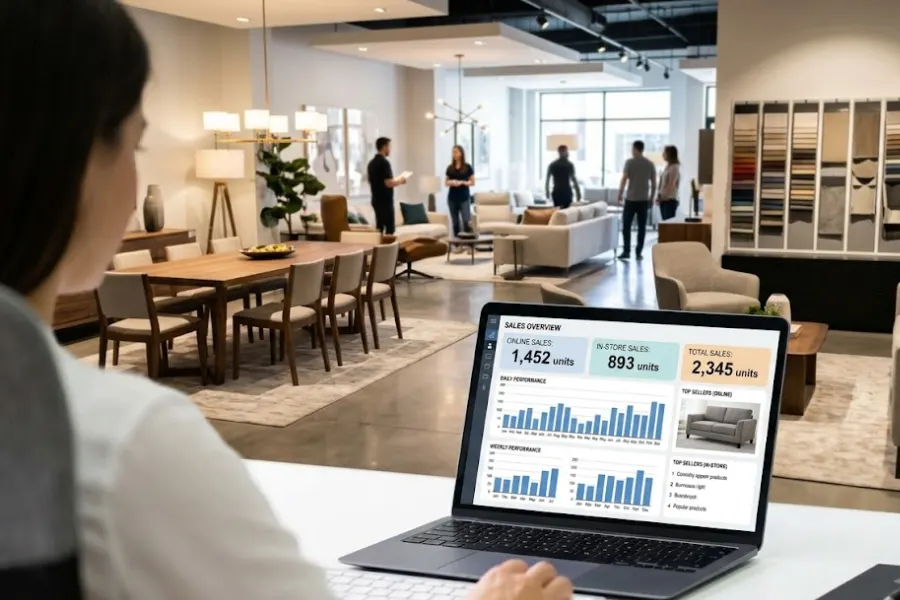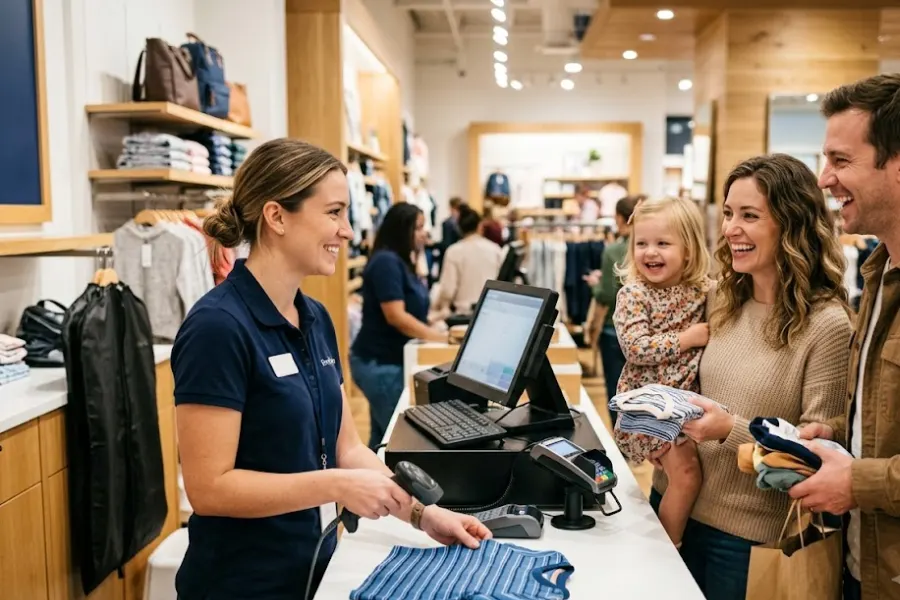
A POS system with a barcode scanner supports faster checkout, fewer manual entry mistakes, and cleaner inventory data. In 2026, many solutions also connect scanning with real-time stock updates, product management, reporting, and omnichannel sync in one place. Choosing the right system depends on your store size, product volume, hardware setup, and sales channels. This article reviews five of the best POS systems with barcode scanner support for retailers in 2026, so you can compare key features and pick the right fit.
How to Choose a POS System with Barcode Scanning?
Choosing a POS system with barcode scanning can streamline sales and inventory processes, but the best choice depends on your business size, industry, and day-to-day workflow. We’ll look into more details now.
Hardware: Types of Barcode Scanners
Different barcode scanners fit different retail environments. Knowing the options makes it easier to select the right device.
- Laser Scanners: The most common type, using a laser beam to read barcode patterns. Ideal for UPC codes in retail stores.
- Linear Imagers: Capture images of 1D barcodes, processing data through optical recognition.
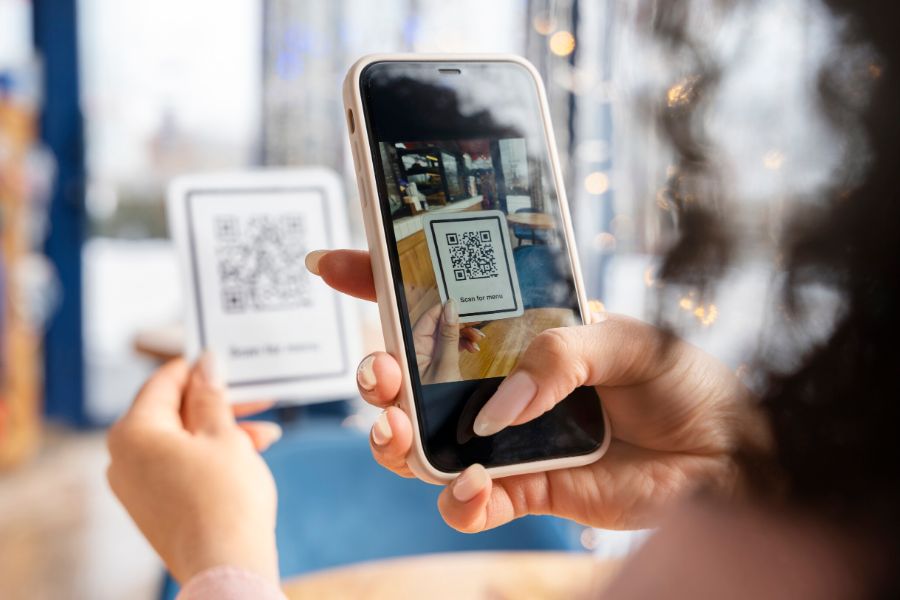
- 2D Area Imagers: Scan stacked or 2D barcodes from any angle, making them useful for QR codes and mobile payments.
The choice depends on what barcode formats you scan most often. For example, grocery stores often rely on laser scanners, while warehouse operations may prefer 2D imagers for more complex labels.
Software: Compatibility with POS Systems
A POS barcode scanning setup must work smoothly with your inventory and product catalog. Many modern barcode scanners connect directly to computers and POS systems without extra drivers.
Still, you should confirm:
- Integration with inventory software: The scanner should sync with stock management systems to update inventory in real time.
- Decoding capabilities: Some scanners process encrypted or specialized barcodes, which may require specific software support.
- Cloud vs. local storage: Cloud-based POS systems may need barcode scanners that support real-time data syncing.
Retailers running multi-channel sales should prioritize scanners and POS software that work well with both physical and online stores.
Portability: Wired vs. Wireless Scanners
Think about how mobile your staff needs to be. Wireless handheld models support scanning across the store floor, while wired scanners stay stable at the counter.
The mobility of a POS system with barcode scanning affects how quickly employees can manage products and process transactions:
- Wired scanners: Connect via USB or serial ports, giving a stable connection but limiting movement.
- Wireless & Bluetooth scanners: Provide flexibility, letting staff scan products anywhere in the store or stockroom.
For high-traffic retail, wireless handheld scanners can cut checkout delays. Meanwhile, fixed-position scanners fit supermarkets and self-checkout stations.
Read more: All-in-One eCommerce POS Software
Top 5 POS Systems With Barcode Scanner 2026
From our experience, we’ve created a list of five POS systems that support barcode scanning, each matching different retail needs.
ConnectPOS
ConnectPOS is a cloud-based POS designed for retailers running in-store and online sales. It supports barcode scanning across common retail devices and focuses on keeping inventory and product data consistent across locations.
Key features:
- Barcode scanning support: Scan items at checkout and during receiving, stock counts, and transfers.
- Real-time inventory management: Stock updates as sales happen, which is useful for fast-moving catalogs.
- Multi-location & multi-warehouse management: Manage inventory across stores and warehouses from one dashboard.
- Omnichannel sync: Works with platforms like Shopify, Magento, WooCommerce, and BigCommerce to keep catalog and inventory aligned.
- Offline mode: Continue checkout during outages and sync data after the connection returns.
- Flexible payments: Supports multiple payment methods, including split payments, gift cards, and layaway (depending on setup).
- Employee management & permissions: Set role-based access, track activity, and control sensitive actions at the register.
- Hardware compatibility: Works with barcode scanners, receipt printers, and card readers for a smooth checkout flow.
- Reporting: Track sales and product performance across locations with centralized reports.
ConnectPOS pricing (per register, per month):
- Premium: $99 per register/month
- Standard: $49 per register/month
- Advanced: $79 per register/month
For details, plese visit our Pricing page.
Lightspeed POS
Lightspeed POS is a point-of-sale system known for strong retail and restaurant features. It focuses heavily on inventory workflows and reporting, which suits businesses that need deep product control.
Key Features:
- Advanced Barcode Scanning: Supports hover scanning for faster product lookup.
- Inventory Management: Tracks stock levels, supplier information, and cost breakdowns.
- Multi-Location Support: Manage inventory across different store locations.
- Built-in eCommerce Integration: Syncs with online stores for unified inventory management.
- Comprehensive Reporting: Offers detailed sales reports to analyze business performance.
Lightspeed can fit retailers that need detailed inventory control and multi-store features.
ShopKeep POS
ShopKeep POS is built for small businesses that want an easy-to-run POS with barcode scanning. It supports daily retail operations like checkout, returns, discounts, and staff access control.
Key Features:
- Barcode Scanning & Inventory Syncing: Quickly adds scanned products to sales transactions.
- Cloud-Based Access: Business owners can monitor sales remotely.
- Employee Management: Assign roles and track staff performance.
- Custom Pricing Plans: Tailored pricing for small businesses.
- Offline Payment Processing: Supports transactions even during internet outages.
ShopKeep is ideal for small business owners looking for an easy-to-use POS with barcode scanning.
Shopify POS
Shopify POS is a retail POS that connects tightly with Shopify’s ecommerce platform. It supports barcode scanning and multi-channel selling, which makes it a strong match for online-first brands moving into physical retail.
Key Features:
- Barcode Scanning & Product Lookup: Helps speed up checkout and inventory management.
- Unified Online & Offline Sales: Syncs product catalogs between the POS system and Shopify store.
- Staff PINs & User Management: Secure access control for employees.
- Multiple Payment Methods: Accepts credit cards, mobile payments, and store credits.
Pricing for Shopify POS is tiered to accommodate different business needs and budgets, offering Basic Shopify at $29 per month, Shopify at $79 per month, and Advanced Shopify at $299 per month. For those looking to explore the platform’s capabilities, there is a 14-day free trial available. This trial period is an excellent opportunity to evaluate the system’s features and determine if it meets your business requirements before committing to a paid plan.
For businesses already using Shopify for eCommerce, Shopify POS makes managing both online and in-store sales effortless.
Square POS
Square POS is a simple all-in-one option with barcode scanning compatibility and built-in payment processing. Many small retailers like it for quick setup and accessible hardware.
Key Features:
- Barcode Scanning Compatibility: Works with Square-compatible barcode scanners for quick transactions.
- Built-in Payment Processing: Accepts credit cards, contactless payments, and mobile wallets.
- Cloud-Based Inventory Management: Updates stock levels in real time.
- Affordable Hardware Options: Works with Square Reader, Square Stand, and Square Register.
- Online Ordering & Invoicing: Businesses can accept orders online and send invoices directly from the POS.
Square POS is an excellent choice for small businesses looking for an affordable, easy-to-set-up barcode scanning POS system.
Wrap Up
A POS system with barcode scanner support can speed up checkout and tighten inventory accuracy, but the right pick depends on how your retail operation is growing. Some tools stay comfortable for a single location with a simple catalog. Yet the moment you add complexity, the gaps show up fast, especially in inventory consistency, staff control, and cross-channel reporting.
These maturity milestones are a practical way to decide:
- You’re opening a second store: You’ll likely need multi-location inventory and centralized reporting.
- You’re selling online and offline: Look for strong ecommerce integration and consistent product data across channels.
- You need real-time inventory sync across warehouses: Prioritize multi-warehouse support and fast syncing logic.
- You need staff permissions: Role-based access and activity logs matter once you have a larger team.
If your business matches one or more of these milestones, ConnectPOS is typically the best fit on this list because it’s built around multi-store control, omnichannel sync, and real-time inventory across locations, without forcing you to stitch together separate tools.
Contact us and tell us how many stores you run, where you sell (in-store, Shopify, Magento, WooCommerce, etc.), and how many warehouses you track. We’ll recommend the ConnectPOS setup that fits your workflow.
Contact our team