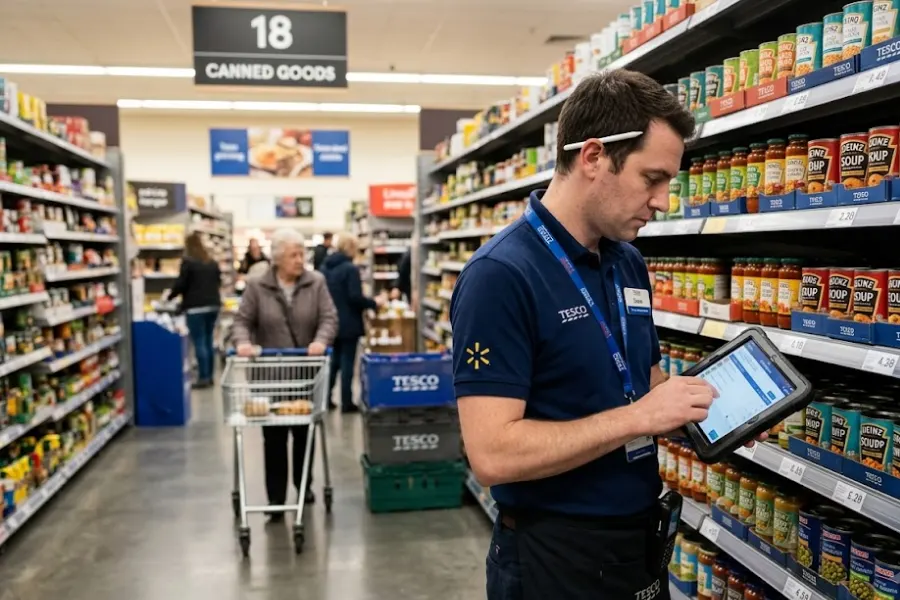
Stock problems rarely start in the warehouse. They start in small delays, wrong counts, missed sales patterns, and reports nobody checks until it’s too late. That’s where tips for optimizing stock levels with POS data become useful. In this guide of ConnectPOS, we’ll help you understand how retailers can turn daily POS data into clearer stock choices, better reorder timing, and fewer ‘where did that item go?’ moments.
Highlights
- POS data helps retailers spot stockouts, overstocks, slow movers, and store-level demand gaps faster.
- SKU-level sales history, live stock records, and promotion data support better reorder choices.
- Regular audits keep POS inventory data clean enough for forecasting and replenishment.
Getting Stock Levels Right Is a Bigger Challenge Than Ever in 2026
Retail stock control looks simple on paper. Keep enough products to meet demand, avoid too much leftover stock, and keep shelves ready for customers.
Real stores don’t run that neatly. A product sells well online but sits in one branch. A weekend promotion drains a bestseller. A supplier delay turns a normal reorder into a stockout. Then the team has to fix it while customers are already asking questions.
Stock errors hit money fast. Overstock ties up cash in products that may need markdowns later. Stockouts hurt sales and push shoppers toward another store. Slow-moving items take up shelf space that could go to better products.
The scale is hard to ignore. IHL Group’s 2025 research found that global retailers still lose $1.73 trillion each year due to inventory distortion, which includes out-of-stocks and overstocks. That number makes a messy stockroom feel less like a small problem and more like a margin leak.
Demand also moves faster now. A product can rise after a social post, a local event, or a short online campaign. Stores need data that updates close to real time, not a spreadsheet from last Friday.
POS data already sits near the action. Every sale, return, refund, discount, and stock movement tells a small part of the story. The real value comes when those signals guide daily stock choices.
What Your POS Data Can Tell You About Inventory Performance
POS data is more than a sales record. It shows how products move, where demand changes, and which items quietly drain cash.
A good POS report won’t make decisions for your team. It gives them the right facts before they order, transfer, mark down, or hold stock.
- Sales volume by SKU: SKU-level sales show which items actually sell, not just which category looks strong. A shoe store may see high footwear sales, but the POS report can reveal that only three sizes are carrying most of the demand.
- Category and location trends: Store-level data shows where a product works best. A home decor item may move fast in a city branch but sit untouched in a suburban store.
- Inventory turnover: Turnover tells you how fast stock sells and gets replaced. A low turnover rate often points to weak demand, poor placement, or too much buying.
- Sell-through rate: Sell-through shows how much received stock has sold during a set period. This helps you judge whether the original buying plan matched real demand.
- Slow-moving stock: POS data can flag items that haven’t sold for weeks. That gives teams time to move, bundle, or discount them before they become dead stock.
- Peak sales patterns: Daily and hourly reports reveal rush periods, seasonal spikes, and product timing. A grocery store may see certain fresh items sell fast every Friday evening, then slow after Sunday lunch.
- Returns and refunds: Return data points to product fit, quality, or expectation gaps. It also affects available stock, so it shouldn’t sit outside inventory planning.
- Supplier and replenishment clues: When POS data connects to purchase orders and supplier records, managers can compare sales speed against lead time. That’s where better reorder timing begins.
Omnichannel sales make this harder. The U.S. Census Bureau reported that U.S. e-commerce sales made up 16.9% of total retail sales in Q1 2026, and e-commerce grew 9.8% year over year. Online demand is no longer a side note for stock planning.
POS data gives retailers a shared view of sales and stock reality. The point is simple: fewer guesses, faster action, cleaner replenishment.
7 Tips for Optimizing Stock Levels with POS Data
Good stock planning starts when teams stop treating inventory as a monthly task. POS data changes every day, and the best decisions come from watching those changes closely.
These seven tips for optimizing stock levels with POS data focus on practical store work. No theory for the sake of it, just better ways to read sales, stock, and demand.
1. Track Real-Time Inventory Before Making Reorder Decisions
Old stock reports cause late orders and wrong orders. A report from last week may show enough stock, but today’s shelf might tell another story. Real-time POS data helps you see current stock before placing a purchase order. That matters most for bestsellers, limited items, and products tied to a campaign.
- Check live stock before every reorder: Don’t reorder based only on last month’s average. Review current stock, open orders, and recent sales together.
- Track SKU and barcode data: Barcode-level tracking cuts guesswork. It helps staff see whether a product is available, sold, returned, damaged, or transferred.
- Watch movement across locations: A branch may look low on stock, while another branch holds too much of the same item. Real-time transfer data can solve that faster than new buying.
- Compare system stock with shelf stock: POS records still need checks. A product may show as available in the system but sit in the wrong aisle or be missing due to shrinkage.
Retailers using inventory management software can keep sales and stock data closer together. That helps teams catch gaps before a customer hears “sorry, we’re out.”
Real-time stock tracking doesn’t remove every mistake. But it gives your team a cleaner starting point before money goes into new inventory.
2. Use Sales History to Forecast Demand by SKU
Sales history is the retailer’s memory. It shows what customers bought, when they bought it, and how demand changed across stores or channels.
A good forecast looks at SKU-level movement, not a broad category total. The more detailed the sales view, the better your reorder plan becomes.
- Look at product-level demand: A category may look stable, but one SKU may be rising while another fades. POS reports help separate real demand from broad averages.
- Check season and campaign periods: Holiday sales, weather changes, and discount events can bend demand. Don’t let one strong week become the new normal.
- Compare online and store sales: A product may sell fast online but need slower shelf replenishment. Channel-level POS data keeps stock closer to actual buying behavior.
- Study local store patterns: A branch near offices may sell different items than a branch near schools. Flat stock plans often miss these small but costly patterns.
AI can make forecasting sharper when the data is clean. McKinsey notes that AI can cut inventory levels by 20% to 30% through better demand forecasting, machine learning, and segmentation. That’s a strong case for better data habits before the forecast even starts.
Forecasting still needs human judgment. POS data shows patterns, but your team still knows local events, supplier issues, and customer habits that numbers may miss.
3. Set Reorder Points Based on Sales Speed and Lead Time
A reorder point tells your team when to buy again. Set it too low, and you run out. Set it too high, and cash sits in the stockroom. POS data helps find the middle ground. The best reorder point looks at how fast an item sells and how long it takes to replace.
- Start with sales speed: Review average daily or weekly sales for each SKU. A product selling ten units a day needs a different reorder trigger than one selling ten units a month.
- Add supplier lead time: Lead time changes the risk. A bestseller with a two-week supplier delay needs an earlier reorder point.
- Set safety stock for risk items: Some items deserve a buffer. Bestsellers, seasonal products, and supplier-sensitive SKUs need extra care.
- Change reorder points often: Demand shifts. A reorder point set in January may fail during summer, holiday weeks, or a major campaign.
- Review after stockouts: Every stockout gives a lesson. Check whether the issue came from weak demand planning, late ordering, supplier delay, or wrong stock records.
Take a quick case. A fashion retailer sells black jackets faster in one store after a local cold snap. POS data shows the spike before the monthly review, so the team raises the reorder point for that store only.
Reorder points should breathe with demand. Static numbers look tidy, but retail rarely behaves that politely.
4. Separate Bestsellers from Slow-Moving Stock
Every SKU doesn’t deserve the same attention. POS reports make that clear quickly.
A few products often carry a large share of sales. Others sit quietly, taking up money, space, and attention. Treating them the same creates ‘average’ decisions that fit no product well.
Group your products by sales value and movement. Fast sellers need close tracking, earlier reorders, and cleaner supplier planning. Slow movers need a different path, such as markdowns, bundles, returns to suppliers, or transfer to a better store.
This is where an ABC-style view helps. Keep it simple. A-items are your strongest products. B-items need steady review. C-items need lighter stock and more control.
POS data can also reveal ‘fake winners.’ A product may sell well only during discounts. Once the promotion ends, it slows down. That kind of item shouldn’t receive the same reorder plan as a full-price bestseller.
A simple case is a furniture store with two lamp designs. One sells steadily every week. The other sells only after a 30% discount. POS data keeps those stories separate, so the buyer doesn’t reorder both at the same level.
Slow stock needs early action. Waiting too long turns a small buying mistake into a clearance problem.
5. Compare Stock Performance Across Stores and Channels
Store averages hide a lot. One location may sell out of a product while another location has too much of it.
POS data helps compare store-level sales, channel demand, and on-hand stock. That view supports better transfers, smarter buying, and fewer ‘why is this still here?’ moments.
- Review each store separately: Branches don’t share the same customer mix. A product can be a bestseller in one area and a slow mover somewhere else.
- Use transfers before new orders: Moving stock between branches can be faster and cheaper than buying more. This works well for apparel, accessories, and seasonal goods.
- Compare online and offline demand: Online orders may drain stock that store teams expected to sell locally. POS and e-commerce sync keeps teams aligned.
- Watch fulfillment pressure: Click-and-collect, ship-from-store, and local delivery all affect stock. Stores need stock data that includes these movements.
- Plan stock by channel: A store that supports online pickup needs different stock rules. Standard shelf planning may leave that branch exposed.
A multi store POS helps managers see branch-level data without jumping between systems. Retailers using Shopify POS integration can also keep online and in-store stock closer to one shared record.
Better stock placement starts with a fair question: where does this product actually sell? POS data gives the answer in plain numbers.
6. Review Promotion Data Before Restocking
Promotions can make demand look stronger than it really is. A big sales spike may come from price pressure, not long-term product demand. POS data helps separate real demand from discount-driven demand. That matters before you reorder the same item at full stock volume.
- Compare promoted and non-promoted periods: Check sales before, during, and after the campaign. If sales drop right after the discount ends, reorder carefully.
- Review margin, not only units sold: A promotion may move units but lower profit. Stock planning should reflect the quality of sales, not only the count.
- Watch basket behavior: POS reports can show whether the promoted product brought extra items into the basket. That helps decide whether the campaign deserves repeat stock support.
- Plan post-campaign stock: Some items keep selling after exposure. Others stop moving. The week after a promotion often tells the real story.
- Check refunds and exchanges: A campaign may drive impulse buying, then returns. Returned goods can create messy stock records if teams don’t update them fast.
A good Report & Analytics setup helps retailers compare customer, discount, refund, and sales trends by custom dates. That makes promotion review less painful and far more useful.
Restocking after a campaign needs discipline. POS data keeps the team from mistaking a discount rush for stable demand.
7. Audit POS Inventory Data Often
Bad data ruins stock planning. A forecast built on wrong counts simply creates a smarter-looking mistake. Audits keep POS records close to physical stock. They also catch shrinkage, misplaced goods, damaged items, and staff errors before they spread into reorders.
- Use cycle counts: Count smaller stock groups often instead of waiting for one large annual count. This keeps errors easier to find.
- Focus on high-risk SKUs: Bestsellers, high-value items, and items with frequent returns deserve more checks.
- Match POS records with shelf counts: A product listed as available should be easy to find. If staff can’t find it, the system count needs attention.
- Track returns and damaged goods: Returned items can break stock accuracy when they’re not inspected, relabeled, and placed correctly.
- Record adjustments properly: Every adjustment should have a reason. This creates a trail for future buying and audit checks.
Shrinkage adds another layer of pressure. NRF’s 2024 report found that retailers reported a 93% rise in average annual shoplifting incidents in 2023 compared with 2019, plus a 90% rise in dollar loss over the same period. Inventory data can’t stay trusted without regular checks.
Audits shouldn’t feel like punishment. They’re a habit that keeps stock records honest enough to guide buying.
Common Mistakes When Using POS Data for Stock Planning
POS data can guide better choices, but the setup matters. A messy report can still lead to messy decisions. Most mistakes come from reading too little data, reading it too late, or reading it without store-level detail.
- Looking only at total sales: Total sales can hide SKU problems. A category may rise while certain items lose demand.
- Ignoring lead time: Fast sales don’t help if the supplier takes too long. Reorder planning must include delivery timing.
- Treating every store the same: Store-level demand can differ by neighborhood, price range, season, and customer habits.
- Trusting dirty product data: Duplicate SKUs, wrong barcodes, and missing variants create false stock pictures. Clean product records first.
- Restocking after one strong week: A single spike may come from a holiday, campaign, weather change, or bulk buyer. Check the pattern before buying more.
- Forgetting returns: Returns affect available stock and demand signals. A high return rate may mean the product needs review, not replenishment.
- Waiting too long to act: Dead stock gets harder to move with time. POS reports should trigger small actions early.
Customer loyalty also sits close to stock availability. Salesforce reports that about 72% of consumers remain loyal when brands provide a consistent and contextual experience. A customer who finds the right product at the right time feels that consistency in a very practical way.
POS data works best when teams treat it as a daily tool. Not a report folder. Not a meeting slide. A working guide for buying, moving, and clearing stock.
Introducing ConnectPOS: Real-Time Inventory Data for Smarter Retail Decisions
Stock decisions get messy when sales, inventory, and store data live in different places. ConnectPOS brings those signals together so retailers can see what’s moving, what’s stuck, and what needs action before stock issues grow.
- Real-time inventory tracking: ConnectPOS gives instant stock visibility across locations. Retailers can check SKU or barcode-level data before placing new orders.
- ConnectPOS AI forecasting: Our AI POS helps retailers predict future stock needs based on sales and inventory data. This supports better planning during peak seasons, campaigns, and quick demand shifts.
- Automated inventory alerts: Teams can receive low-stock or overstock alerts. This helps them act before bestsellers run out or slow items take up too much space.
- Smart stock replenishment: It supports custom stock thresholds and alerts. Retailers can plan reorders based on demand, not guesswork.
- Centralized multi-location management: Managers can monitor stock across stores and warehouses from one place. Transfers, stock balancing, and branch-level planning become easier to manage.
- Detailed reporting and analytics: ConnectPOS provides reports on sales, inventory, customers, staff performance, and store operations. Retailers can use real-time dashboards and custom reports to make data-backed decisions.
- Sales data breakdown: Retailers can review customer, discount, refund, and sales trends by day, month, or custom dates. These reports make demand shifts easier to spot.
- Inventory performance reports: It shows stock movement, inventory turnover, best-selling products, slow-moving items, and stock value. These details help retailers improve inventory levels and cut carrying costs.
- Stock reconciliation and auditing tools: Retailers can find stock gaps faster through audit and reconciliation tools. Cleaner records lead to better buying decisions.
- Connected retail systems: It connects with ERP, e-commerce, inventory, CRM, payment, and other retail tools. Stock data stays closer to real store activity.
ConnectPOS helps retailers turn POS data into clear stock actions. Instead of waiting for end-of-month reports, teams can adjust stock, reorder faster, and plan across locations with more confidence.
FAQs: Tips for Optimizing Stock Levels with POS Data
1. What are the best tips for optimizing stock levels with POS data?
The best tips include tracking real-time inventory, forecasting demand by SKU, setting reorder points, reviewing store-level data, checking promotion results, and auditing stock records often. These actions help retailers buy closer to real demand. They also lower the chance of stockouts, overstocks, and dead stock.
2. How does POS data help cut stockouts?
POS data shows which products sell fastest and where demand is rising. It also helps teams spot low stock before shelves go empty. When POS data connects with stock alerts and reorder rules, staff can respond earlier. That turns stockout prevention into a daily habit.
3. Which POS reports are most useful for inventory planning?
Useful reports include SKU sales, inventory turnover, sell-through rate, low-stock alerts, stock movement, returns, discounts, and branch-level stock reports. Promotion reports are also important. They show whether demand came from real customer interest or short-term discount pressure.
4. How often should retailers review stock levels in POS reports?
Fast-moving products may need daily checks. Slower items may only need weekly or monthly review. Retailers should also review stock after campaigns, seasonal peaks, supplier delays, and store transfers. Timing matters as much as the report itself.
5. How can retailers manage stock across online and offline stores?
Retailers need one shared view of inventory across stores, warehouses, and e-commerce channels. POS data should update when customers buy, return, exchange, or collect orders. Store transfers can also help. If one branch has too much stock and another branch is running low, moving products may beat buying more.
Final Thoughts
Better stock planning starts when POS data moves into daily decisions. Sales history, live inventory, audits, promotion reports, and store-level demand all help retailers place the right stock in the right spot. The best tips for optimizing stock levels with POS data work when your team can see and act on inventory signals quickly. ConnectPOS supports that work through real-time tracking, alerts, forecasting, reports, and connected retail tools. Ready to build smarter stock control across your stores? Contact us to discuss your retail setup.
►►► Optimal solution set for businesses: Shopify POS, Magento POS, BigCommerce POS, WooCommerce POS, NetSuite POS, E-Commerce POS