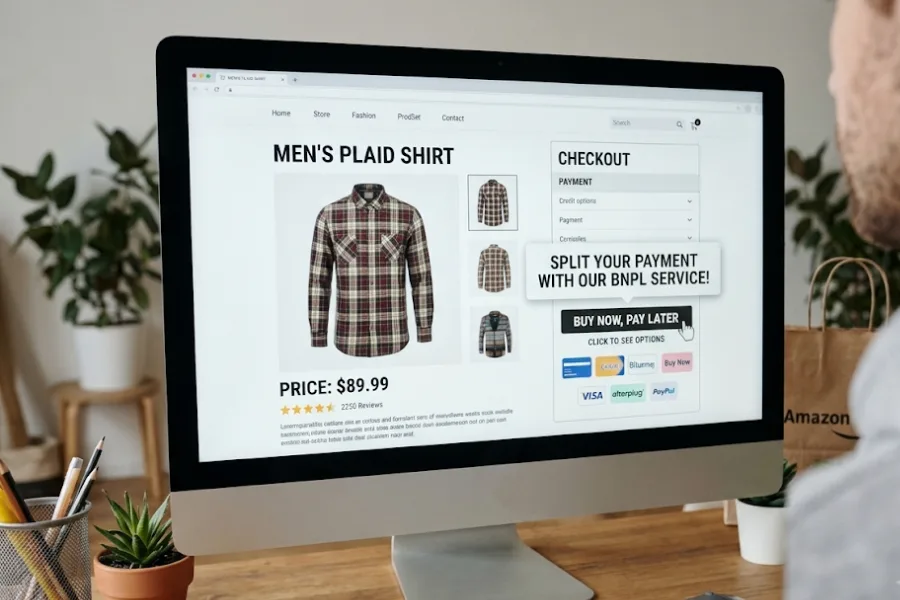
Retail customers increasingly expect flexible payment options at checkout, particularly when purchasing electronics, furniture, appliances, and other higher-priced products. Buy Now Pay Later (BNPL) gives eligible shoppers an alternative to paying the entire purchase amount immediately. However, introducing installment payments into retail operations can create complications when the payment provider operates separately from the point-of-sale (POS) system. Buy now pay later POS integration connects installment payment options with retail checkout workflows, helping retailers coordinate payment confirmation, transaction records, refunds, and settlement information. Understanding how these connections work, their potential benefits, and their operational requirements can help retailers decide whether BNPL fits their business.
Highlights
- Buy now pay later POS integration allows eligible customers to select installment payment options during checkout through supported payment providers.
- BNPL can help retailers address purchase hesitation and offer more payment flexibility, while transaction records and settlement processes depend on the provider and integration method.
- Provider compatibility, merchant fees, refunds, and payment reconciliation should be considered before introducing BNPL into retail operations.
What Is Buy Now Pay Later POS Integration?
Buy Now Pay Later POS integration connects a retail checkout system with a payment service that allows eligible customers to purchase products and repay the purchase amount over an agreed period.
Three parties typically participate in the transaction:
- The POS system: Records the sale, processes checkout information, and updates relevant transaction records.
- The BNPL provider: Evaluates customer eligibility, presents installment terms, authorizes the payment, and manages customer repayments.
- The customer: Selects the payment option, completes any required verification, and repays the provider according to the agreed schedule.
BNPL generally involves a separate installment agreement managed by a third-party provider. Traditional credit cards usually place the purchase on a revolving credit account, while BNPL products commonly divide purchases into a fixed number of payments.
BNPL also differs from retailer-managed installment plans. With a retailer-managed plan, the merchant may be responsible for collecting installments and maintaining payment records. A third-party BNPL provider typically manages customer repayment arrangements, subject to its contractual terms.
Approval decisions, repayment schedules, interest charges, and applicable fees depend on the provider and the payment product.
How Does Buy Now Pay Later POS Integration Work?
A typical BNPL transaction connects customer checkout with the provider’s payment approval and merchant settlement processes. While the exact workflow depends on the POS platform, payment processor, and BNPL provider, most transactions follow several common steps.
- Payment Selection: The customer chooses an available BNPL option during checkout instead of paying the full purchase amount immediately. For example, a customer purchasing a television at a physical store selects an installment payment option.
- Customer Verification and Approval: The BNPL provider evaluates the customer’s eligibility through identity verification, credit assessment, or other required checks. The customer reviews the applicable installment schedule and payment terms before proceeding.
- Transaction Confirmation: After approval, the provider communicates the payment status through the supported integration or payment processing method. The POS records the transaction according to its integration capabilities.
- Merchant Settlement: The retailer receives payment according to the provider’s settlement schedule and merchant agreement. The final settlement amount may differ from the original transaction value because of merchant fees or other contractual deductions.
- Customer Repayment: The customer repays the BNPL provider according to the agreed installment schedule. When the provider manages repayment arrangements, the retailer generally does not collect each installment directly.
- Refunds and Adjustments: If a customer returns a product or cancels an order, the retailer follows the provider’s refund procedures. Depending on the integration, the adjustment may involve the POS, payment gateway, or BNPL provider.
Example: A $400 Purchase Through Four Installments:
Consider a customer purchasing a $400 electronic device through a four-installment BNPL plan. Assuming the customer qualifies and the provider offers this plan:
- Purchase amount: $400
- Installment plan: Four payments of $100
- Initial payment: $100 at checkout
- Remaining payments: Three additional installments of $100 each
The retailer records a $400 sale, while the BNPL provider manages the customer’s repayment arrangement. The merchant’s actual settlement amount depends on applicable fees and contractual terms.
BNPL can also be offered through different integration methods:
- Direct POS connections: The POS communicates with a supported BNPL service or payment processor.
- Payment gateways: Customers access BNPL through a connected payment gateway.
- QR codes: Customers scan a code to access the provider’s checkout or approval process.
- Virtual cards: Customers use a provider-issued card or card credential through a compatible payment terminal.
These methods offer different integration capabilities. Retailers should verify which transaction details, approval statuses, refunds, and settlement records can be transferred automatically.
Why Do Retailers Need A Buy Now Pay Later POS Integration?
BNPL can introduce additional payment flexibility, but its business value depends on customer demand, product pricing, provider availability, and operational execution. Integrating BNPL with a POS system can connect the payment option with existing sales processes while improving transaction visibility and consistency across retail channels.
Offer Greater Payment Flexibility at Checkout
Some customers prefer spreading payments over an agreed period rather than paying the full amount upfront. A buy now pay later POS integration can offer eligible shoppers this flexibility without requiring retailers to manage installment collections directly. For example, a furniture retailer could offer BNPL on higher-value sofas and dining sets, letting customers review installment terms before checkout.
The option becomes particularly relevant when a substantial upfront payment could influence a customer’s purchasing decision. Retailers should nevertheless assess actual customer demand and determine whether the available payment terms align with their target market.
May Improve Checkout Conversion Rates
A large upfront payment can influence whether customers complete a purchase immediately or postpone their decision. BNPL may address this hesitation by presenting an alternative payment arrangement during checkout, allowing eligible customers to review installment terms and decide whether the purchase fits their budget. Research published in the Journal of Retailing examined the effects of BNPL adoption on online purchase behavior and found that customers adopting BNPL spent 6.42% more than customers who did not adopt it. The study also identified differences across customer groups and product categories.
Although the findings suggest that BNPL can influence purchasing behavior, retailers should not assume that it will produce the same results across every business. Conversion outcomes depend on customer demand, product category, eligibility requirements, checkout experience, and merchant costs. Comparing actual conversion rates before and after implementation provides a more reliable basis for evaluating its commercial impact.
Can Support Higher Average Order Values
Installment payments can influence how customers evaluate higher-priced products by making costs more manageable over time. For example, an electronics shopper comparing two laptops may choose a more expensive model after reviewing the available payment terms and deciding it better meets their needs. A buy now pay later POS integration can make these payment options available at checkout, potentially encouraging customers to consider higher-value purchases.
The potential impact on average order value (AOV) is particularly relevant in categories where shoppers frequently compare products at different price points. However, retailers should evaluate basket values alongside profitability, since merchant fees, discounts, returns, and other expenses can reduce the financial benefit of higher-value purchases.
Enhance Consistent Online and In-Store Payment Experiences
Customers who shop across multiple channels may expect familiar payment options when browsing online, visiting a physical store, or collecting an order. Retailers offering BNPL through ecommerce may therefore want to introduce the same payment option at physical checkout. Compatible integrations can help coordinate payment experiences across channels, although availability depends on the BNPL provider and the retailer’s payment infrastructure.
An installment plan available to online shoppers, for instance, may not be supported at a physical store using a different payment terminal. Before promoting BNPL as an omnichannel payment option, retailers should verify provider coverage, transaction limits, and supported payment methods for each channel.
Coordinate Payment Records and Reconciliation
BNPL transactions add information retailers need to track, including approval status, settlements, fees, refunds, and cancellations. When payment details remain separate from POS records, staff must cross-check multiple systems, adding work for finance and store teams. A compatible integration may link transaction statuses to sales records and reduce manual checks, depending on the data exchanged.
During daily reconciliation, finance teams may need to identify approved and pending transactions, confirm refunds and cancellations, compare settlement amounts with provider reports, and account for differences between sales totals and deposits. Retailers should confirm which records transfer automatically and which still require manual reconciliation before choosing an integration.
Provide an Additional Payment Option Without Managing Customer Installments Directly
Retailers may want to offer installment payments without taking responsibility for collecting each customer’s repayment. A third-party BNPL provider typically manages customer repayment arrangements, including payment schedules and applicable collection procedures, while the retailer remains responsible for the merchant transaction, settlement, fees, refunds, disputes, and contractual obligations.
Using a third-party provider can therefore be attractive compared with retailer-managed installment plans, but it does not eliminate financial or operational responsibilities for the merchant. Settlement timing, refund obligations, transaction fees, and liability for disputes vary between providers, making it important to review the provider agreement and confirm merchant obligations before implementation.
What Makes Buy Now Pay Later POS Integration Difficult for Retailers?
Introducing BNPL into retail checkout can create operational complications when POS software, payment providers, and sales channels are not properly connected. Although installment payments offer customers greater flexibility, retailers must also manage transaction records, refunds, settlement information, and integration expenses.
Where BNPL Implementation Gets Complicated
- Limited Provider Compatibility: Some BNPL services may not connect directly with existing POS systems, payment terminals, or ecommerce platforms. Retailers may need additional connectors or custom development to enable the required payment workflows.
- Fragmented Payment Records: Transactions processed outside the POS can create separate records, making payment tracking and reconciliation more complicated. Finance teams may need to compare POS transactions against payment provider reports manually.
- Complicated Refund Processes: Returns and cancellations may require separate updates across POS software, payment gateways, and BNPL provider systems. Incomplete synchronization can create discrepancies between sales records and payment statuses.
- Inconsistent Payment Experiences: Customers may encounter different installment options or checkout procedures online and in physical stores. Retailers need to verify whether their selected provider supports BNPL across all intended sales channels.
- Additional Integration Expenses: BNPL implementation may involve merchant transaction fees, payment gateway charges, connector fees, custom development, hardware requirements, and ongoing maintenance. Retailers should evaluate these expenses alongside their POS subscription costs to understand the total investment.
These challenges become more significant as retailers expand across multiple locations and sales channels. A single-store retailer may be able to manage separate payment records manually, but businesses operating several stores, ecommerce platforms, warehouses, and finance systems often need a more connected retail infrastructure.
For retailers reaching this operational threshold, a POS platform that connects payment services with sales, inventory, and order management can help coordinate these workflows. ConnectPOS offers several capabilities relevant to this requirement, although compatibility with specific BNPL providers must be confirmed before implementation.
- Payment Integration: ConnectPOS supports integrations with payment solutions such as Stripe, Adyen, and other compatible providers. Retailers can assess whether their selected payment gateway supports the required BNPL transaction workflow. Provider compatibility and payment functionality depend on the specific integration. ConnectPOS payment integrations.
- Multi-Store Management: Retailers can manage multiple store locations through a centralized POS environment, helping coordinate sales operations across branches.
- Real-Time Inventory Synchronization: ConnectPOS synchronizes inventory across supported retail channels and locations, helping maintain consistent stock information as orders are processed.
- Omnichannel Order Management: Connected online and in-store operations help retailers coordinate orders across sales channels, reducing the need to manage each channel independently.
- Refund and Exchange Management: Supported refund and exchange workflows help retailers manage product returns and adjustments within their POS operations. BNPL-specific refund processing still depends on the payment provider and integration.
- Ecommerce Platform Integration: ConnectPOS integrates with platforms including Shopify, Magento, WooCommerce, and BigCommerce, helping retailers coordinate online and physical store operations.
- Centralized Sales Reporting: Retailers can access sales and operational information across supported locations and channels, helping finance and management teams review transaction activity and reconcile business records.
These capabilities are particularly relevant when retailers need to coordinate payment transactions, sales records, and order information across multiple systems rather than simply add another payment option at checkout. Before implementation, retailers should confirm whether the selected BNPL provider can integrate with ConnectPOS through a supported payment gateway or connector, and whether the required transaction statuses, refunds, and settlement details can be synchronized.
Retailers evaluating a connected POS setup can compare ConnectPOS pricing plans to determine which solution fits their store operations and integration requirements.
- Standard: $49/register/month ($39 with annual billing)
- Advanced: $79/register/month ($69 with annual billing)
- Premium: $99/register/month ($89 with annual billing)
- Enterprise: Custom quotation
FAQs: Buy Now Pay Later POS Integration
Can buy now pay later be used in physical stores?
Yes. Supported providers offer in-store BNPL through compatible POS integrations, payment terminals, QR codes, or virtual cards. Availability depends on the provider, merchant account, payment processor, and market.
Do retailers receive the full payment upfront with BNPL?
Retailers commonly receive settlement from the BNPL provider according to their merchant agreement rather than waiting for every customer installment. The actual settlement amount may be reduced by applicable merchant fees, refunds, or other contractual adjustments.
How much does BNPL POS integration cost?
Costs may include BNPL merchant transaction fees, POS subscription charges, payment gateway fees, integration expenses, hardware requirements, and ongoing maintenance. The total depends on the provider, retailer’s existing infrastructure, and required integration capabilities.
Conclusion
Buy now pay later POS integration introduces installment payment options into retail checkout while connecting payment approval, transaction records, refunds, and settlement processes. For retailers, the potential value lies in offering greater payment flexibility and coordinating BNPL transactions with existing sales operations. However, implementation requires careful evaluation of provider compatibility, customer demand, refund procedures, settlement requirements, and total costs.
For retailers managing multiple locations or ecommerce channels, integrating BNPL into the existing POS and payment infrastructure requires careful planning. Looking to integrate BNPL into your retail operations? Talk to the ConnectPOS team to explore an integration approach that aligns with your checkout workflows and system requirements.
Chat with our team►►► Optimal solution set for businesses: Shopify POS, Magento POS, BigCommerce POS, WooCommerce POS, NetSuite POS, E-Commerce POS