Finding the best point of sale system for clothing store operations means looking for a solution that bridges the gap between your physical shelves and your digital storefront. Whether you are managing a single local boutique or a growing fashion empire, your software must simplify the chaos of daily transactions.
In this guide from ConnectPOS, we will explore why inventory complexity is your biggest hurdle and how the right clothing store POS system can transform your operational efficiency and bottom line.
Highlights
- Managing multi-SKU apparel inventory demands real-time variant tracking, centralized multi-store visibility, and seamless omnichannel synchronization to eliminate ghost stock, prevent overselling, and maintain accurate size–color availability across physical and digital storefronts.
- The best point of sale system for clothing store success boosts profitability through data-driven buying decisions, faster mobile checkout, automated reordering, and cloud-based control, transforming inventory complexity into operational efficiency and sustainable growth.
Why Multi-SKU Inventory Is the Biggest Challenge in Apparel Retail
Unlike a hardware store or a grocery shop, where a “can of soup” is just one item, fashion retail is a matrix of variables. A single shirt design can quickly balloon into 24 different Stock Keeping Units (SKUs) when you account for four sizes (S, M, L, XL) and six colorways.
The challenge isn’t just counting items; it’s maintaining accuracy across every possible variation. When a customer asks for a “Floral Midi Dress in Navy, Size 8,” your system must tell you instantly if it’s in the backroom, at a sister branch, or currently sitting in an online shopper’s cart. Without a specialized POS for apparel retail, “ghost inventory” (items that appear in the system but aren’t on the shelf) leads to cancelled orders and frustrated customers.
Furthermore, the fashion industry moves at the speed of seasons. With 4 to 12 inventory refreshes a year, retailers are constantly “onboarding” thousands of new SKUs while trying to liquidate the old ones.
Data shows that only 55% of retailers feel they have the systems necessary for real-time inventory visibility. This lack of transparency is costly; research indicates that omnichannel consumers spend 13% more than single-channel shoppers, yet you cannot serve them without pinpoint SKU accuracy.
Core Features Every Clothing Store POS System Must Have
Choosing the best point of sale system for clothing store success requires a checklist of non-negotiable features designed specifically for the garment industry’s unique workflows.
- Advanced SKU & Variant Management: Your POS should allow you to create “parent” products with multiple “child” variants. Instead of entering 20 different items, you enter one style and select the size and color attributes. This keeps your backend organized and your reporting clean
- Real-Time Inventory Synchronization: Whether a sale happens on your website at 2:00 AM or in-store at 2:00 PM, your stock levels must update everywhere instantly. This prevents the nightmare scenario of selling the last “Large Red Sweater” twice.
- Smart Reordering & Low-Stock Alerts: Fashion is about timing. A high-quality fashion retail POS software will alert you when a popular size is running low, allowing you to generate purchase orders for your suppliers before you lose out on potential sales.
- Centralized Multi-Store Inventory Control: If you have more than one location, you need a “bird’s-eye view” of your entire operation. This allows for easy stock transfers between stores, ensuring that inventory is always where the demand is highest.
- Integrated eCommerce & Omnichannel Selling: The modern shopper expects to buy online and pick up in-store (BOPIS). An omnichannel POS for clothing stores integrates your physical inventory with platforms like Shopify or Magento, creating a unified shopping experience that keeps customers coming back.
How the Right POS Improves Profitability for Clothing Stores
Profitability in fashion isn’t just about high margins; it’s about minimizing the “hidden costs” of inefficiency, human error, and missed opportunities caused by outdated legacy systems.
Faster Checkout Experience
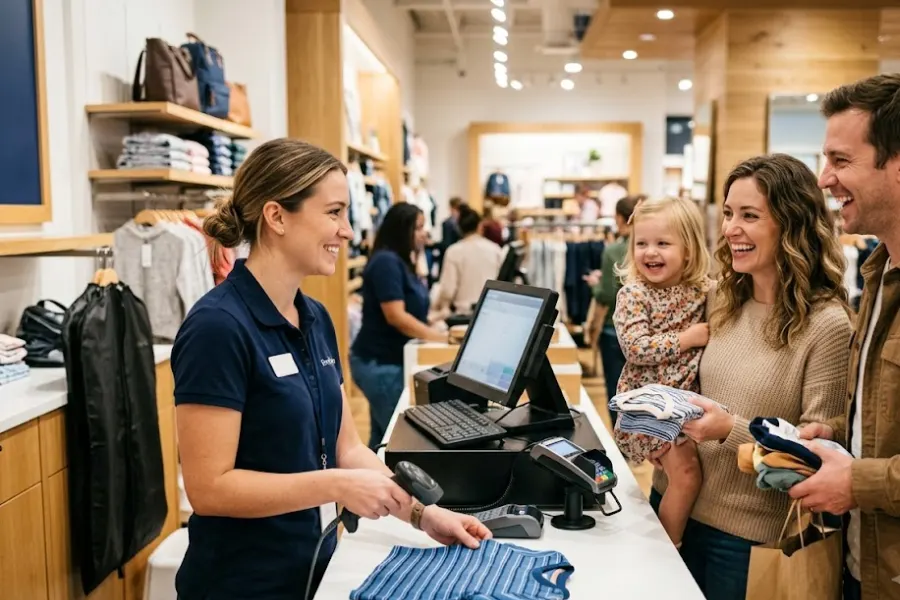
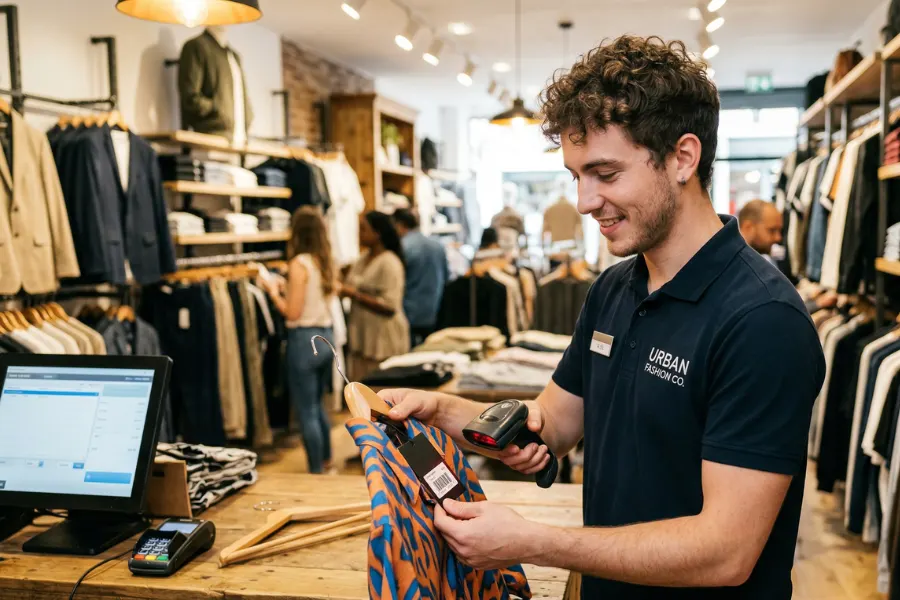
In a boutique environment, the checkout should be an extension of the brand experience, not a bottleneck. A mobile clothing store POS system allows associates to scan items and take payments anywhere on the floor, decreasing wait times and preventing “line abandonment.”
Better Buying Decisions
The best point of sale system for clothing store owners is one that provides “sell-through” reports. By seeing exactly which colors and sizes are moving and which are gathering dust, you can make data-driven decisions for next season’s buy, significantly cutting the need for aggressive markdowns.
Decreased Shrinkage & Errors
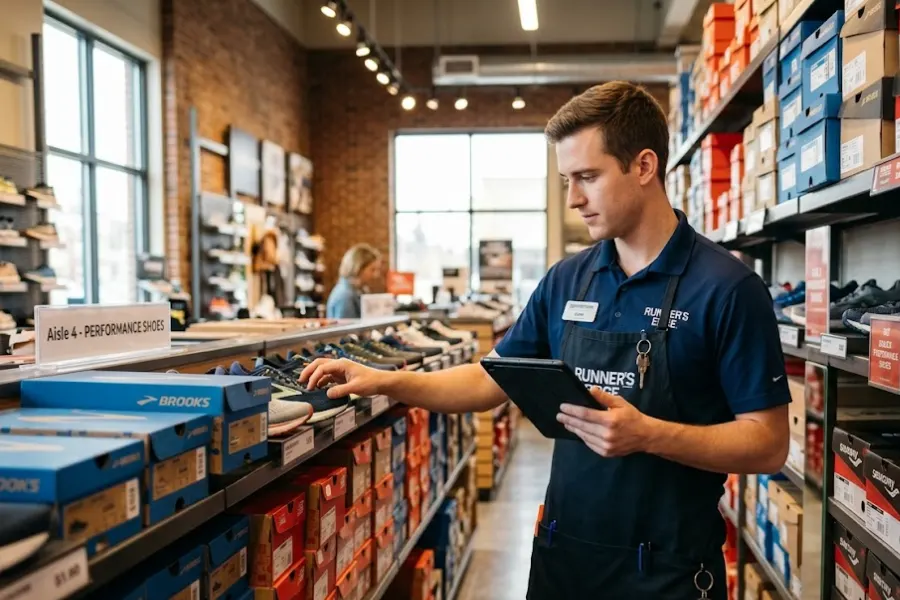
Manual inventory counts are prone to error. When using integrated barcode scanning and automated stocktakes, you can pinpoint exactly where “shrinkage” is occurring. This level of oversight guarantees that your capital isn’t disappearing through administrative mistakes or unrecorded losses.
Customization for Fashion Workflows
Fashion retail often involves “soft” services like alterations, layaways, or personal shopping appointments. The right POS allows you to add these custom services to a transaction easily, confirming that all revenue streams are tracked in a single, cohesive dashboard.
Cloud-Based Performance
Moving to the cloud, you eliminate the need for expensive on-site servers. You can access your store’s data from your phone while at a trade show or from your home office, giving you the flexibility to manage your business from anywhere in the world.
Top 5 Best Point Of Sale Systems For Clothing Store
To narrow down the best point of sale system for clothing store operations, it’s smart to compare tools side by side. Each POS below shines in a different scenario – high-SKU catalogs, multi-store inventory, online-to-store workflows, or fast setup for smaller teams.
ConnectPOS
ConnectPOS is purpose-built for apparel retailers that run both physical stores and eCommerce. It handles high-volume, multi-SKU inventory well and keeps data aligned across channels with fast, reliable syncing.
Key features:
- Real-time synchronization across warehouses, storefronts, and online channels, with a “high-speed” sync approach for busy catalogs
- Advanced SKU matrix that supports unlimited combinations of size, color, style, and other variant attributes
- Omnichannel workflows such as BOPIS and in-store returns for online orders
- Multi-warehouse and multi-store inventory visibility, useful for transfers, replenishment, and stock lookups
- Mobile POS so staff can check inventory, create carts, and take payments anywhere on the floor
- Deep eCommerce integrations with platforms like Magento, Shopify, and BigCommerce
- Offline mode so checkout continues during internet issues, then syncs when connectivity returns
- Flexible payments with no compulsory payment processing and no extra fees for third-party payment gateways (provider-dependent)
- Support for multiple currencies, which suits tourist-heavy areas and cross-border operations
- Custom receipts and loyalty flows that match boutique branding and customer experience goals
Pricing: Starts at $49/month per user. Custom enterprise pricing is available.
Ideal for: Mid-to-large apparel brands and multi-store retailers.
Square POS
Square POS is widely used by small retailers because it’s simple to start and quick for staff to learn. It combines POS basics with built-in payments and a solid set of retail tools in higher tiers.
Key features:
- Clean, easy interface that shortens training time
- Integrated payment processing with flat-rate fees
- Barcode scanning and label basics for faster checkout
- Customer directory with digital receipts and purchase history
- Retail-focused features in paid plans, such as purchase orders and low-stock alerts
Pricing:
- Free Plan ($0/month + transaction fees)
- Plus Plan ($49/month per location)
Ideal for: New boutiques, pop-up shops, and market traders.
Lightspeed
Lightspeed is known for strong catalog structure, which makes it a solid match for apparel stores with lots of variants and supplier relationships.
Key features:
- Retail Matrix and master SKU management are designed for clothing variants
- Vendor catalogs to speed up ordering and replenishment
- Advanced reporting for margin, staff performance, and top sellers
- Built-in loyalty for repeat purchase behavior
- Multi-location controls for chain-level inventory visibility
Pricing:
- Basic: $89/month
- Core: $149/month
- Plus: $289/month
Ideal for: Medium-sized retailers with complex, high-volume inventory needs.
Shopify POS
Shopify POS is a natural fit if your store already runs on Shopify online. It keeps customer, inventory, and order data connected across channels, with a large app ecosystem for specialized needs.
Key features:
- Unified customer profiles that connect online and in-store activity
- Inventory tools that support location-based stock management
- Email cart for shoppers who want to complete the purchase later online
- Discount rules that stay consistent across web and store
- App ecosystem for marketing, accounting, loyalty, and fulfillment add-ons
Pricing:
- POS Lite: Included with Shopify plans
- POS Pro: Additional $89/month per location
Ideal for: eCommerce-first brands expanding into physical retail.
Clover
Clover is a practical option for clothing stores that want an all-in-one POS experience with packaged hardware and a broad app marketplace.
Key features:
- All-in-one hardware options (counter terminals, handheld devices) suited to small retail spaces
- App marketplace for add-ons like loyalty, promotions, scheduling, and advanced reporting
- Inventory tracking and category management for everyday retail operations
- Employee permissions and shift-level controls for day-to-day accountability
- Customer profiles and digital receipts to support repeat shopping
Pricing: Varies by reseller, hardware bundle, and processing plan.
Ideal for: Small-to-mid clothing stores that prefer bundled hardware and an app-based setup.
FAQs: Best Point Of Sale System For Clothing Store
- Is cloud-based POS software better for clothing retailers?
Yes. Cloud-based POS systems update inventory in real time, reduce on-premise hardware costs, allow remote access, and scale easily as your business grows.
- Can POS systems integrate with online clothing stores?
Absolutely. Modern POS systems sync directly with online storefronts (Shopify, Magento, WooCommerce, etc.), ensuring stock levels remain accurate across all platforms.
- How does a POS system improve profitability for apparel retailers?
A POS improves profitability by reducing shrinkage and errors, speeding up checkouts, optimizing inventory purchases through data insights, and supporting omnichannel sales.
Wrap Up
In sum, finding the best point of sale system for clothing store success is about more than processing payments. It’s about gaining total control over your multi-SKU inventory, synchronizing online and offline channels, and making smarter business decisions. If you are ready to experience how high-speed synchronization and advanced variant management can transform your boutique or retail chain, ConnectPOS is the specialized solution designed to lead the way. Ready to streamline your fashion retail operations? Contact us today for a personalized demo and take the first step toward a more efficient storefront.