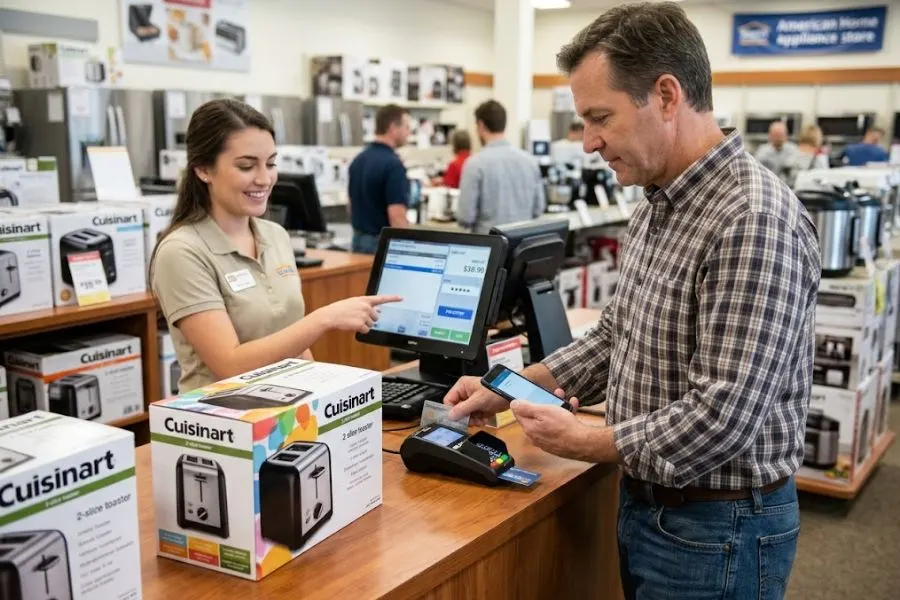
Credit card payments feel instant and effortless at checkout, yet a complex process runs in the background. For retailers, understanding how point of sale credit card processing works can help improve efficiency and reduce costs. Each tap, swipe, or insert triggers a series of secure steps involving multiple parties, all within seconds. This blog breaks down the key stages behind POS credit card processing, explains the roles of different players, and highlights what retailers should know to manage payments with confidence.
Highlights
- Point of sale credit card processing involves multiple secure steps, from card data capture to authorization, fraud checks, and final fund settlement, all completed within seconds.
- A reliable POS system combines hardware, software, payment gateways, and merchant services to ensure smooth transactions across retail operations.
What is the Point of Sale Credit Card Processing?
Point of sale (POS) credit card processing refers to the steps that happen when a customer pays with a credit card at checkout. It covers everything from capturing card details to getting approval from the issuing bank and completing the transaction.
While payment processing encompasses all transaction types across channels, POS credit card processing focuses on in-store or device-based payments via a POS system.
A merchant POS system serves as the central hub connecting payment terminals, software, and backend systems. It records sales, syncs data, and ensures smooth transactions.
For omnichannel businesses, POS credit card processing keeps payments consistent across online and offline channels while supporting a unified view of sales and customers.
How Point of Sale Credit Card Processing Works (Step-by-Step)
Every time a customer pays with a credit card, a series of actions takes place in just a few seconds. Here’s a clear breakdown of how the process works from start to finish.
Step 1 – Card Data Capture
The process begins when the customer presents their card or device. This can happen through a swipe (magnetic stripe), a dip (EMV chip), a tap (NFC), or a mobile wallet. The POS terminal reads the card information and prepares it for transmission.
At this stage, sensitive data is encrypted immediately to prevent unauthorized access. Modern POS systems use strong encryption standards to ensure that cardholder data remains protected from the moment it is captured.
Step 2 – Payment Authorization
Once the data is captured, the POS system sends the transaction details to a payment gateway. This gateway acts as a bridge, forwarding the request to the appropriate card network (such as Visa or Mastercard), which then routes it to the issuing bank.
The issuing bank checks the customer’s account for sufficient funds or credit availability. This entire communication happens within seconds, allowing the transaction to move quickly to the next stage.
Step 3 – Authentication & Fraud Check
Before approval, the transaction goes through authentication and fraud screening. Depending on the payment method, this may include CVV verification, PIN entry, or tokenization for digital wallets.
Advanced fraud detection tools also analyze transaction patterns, location, and risk signals. These checks ensure that the payment is legitimate and reduce the risk of fraud for both the retailer and the customer.
Step 4 – Transaction Approval or Decline
After verification, the issuing bank sends a response back through the same chain – card network, payment gateway, and finally the POS system.
The transaction is either approved or declined. The POS system instantly displays the result, allowing the customer to confirm the payment. If approved, a receipt is generated, and the sale is completed.
Step 5 – Settlement & Fund Transfer
At the end of the business day, approved transactions are grouped into a batch for settlement. The payment processor submits this batch to the relevant banks for clearing.
Funds are then transferred from the customer’s bank to the merchant account, usually within one to a few business days. This step ensures that the retailer receives payment for completed transactions.
Key Components of a Merchant Point of Sale System
A merchant point of sale system consists of several components that work together to handle transactions smoothly and securely.
- POS Hardware
POS hardware includes the physical devices used at checkout, such as card readers, payment terminals, and mobile POS devices. These tools allow businesses to accept different payment methods, including chip cards, contactless payments, and mobile wallets. Reliable hardware ensures fast transactions and a seamless customer experience.
- POS Software
POS software powers the entire system by managing transaction processing and generating reports. It also integrates with other business tools, such as inventory management and CRM systems. Then, retailers can track stock levels, monitor sales performance, and understand customer behavior in real time.
- Payment Gateway
A payment gateway acts as the secure communication bridge between the POS system and financial institutions. It encrypts transaction data and transmits it to card networks and issuing banks for authorization.
- Point of Sale Merchant Services
Merchant services include the financial infrastructure that supports transactions. This covers merchant accounts, payment processors, and service providers that facilitate the movement of funds from the customer’s bank to the retailer’s account.
Types of Point of Sale Credit Card Processing Methods
Retailers can choose from several POS credit card processing methods depending on their business model and customer needs.
- Traditional In-Store POS Systems
Traditional POS systems are commonly found in physical retail stores. They usually include countertop terminals connected to cash registers and card readers. These systems are stable and reliable for high-volume environments such as supermarkets and department stores. They support a wide range of payment methods and often come with built-in receipt printers and barcode scanners.
- Mobile POS (mPOS)
Mobile POS systems allow businesses to accept payments using smartphones or tablets. With a small card reader attached, staff can complete transactions anywhere in the store or even on the go. This setup is popular among small retailers and pop-up shops that value flexibility and shorter checkout lines.
- Cloud-Based POS Systems
Cloud-based POS systems store data online, enabling real-time synchronization across multiple devices and locations. Retailers can access sales reports, inventory, and customer data remotely.
- Contactless & Digital Wallet Payments
Contactless payments use NFC technology to enable quick tap-and-go transactions. Digital wallets like Apple Pay and Google Pay store card details securely on mobile devices. These methods offer speed, convenience, and enhanced security.
Fees Involved in Point of Sale Merchant Services
Understanding the fees behind point of sale credit card processing helps retailers manage costs and choose the right provider.
- Transaction Fees: Charged each time a payment is processed. They often include interchange fees, which go to the card-issuing bank, and assessment fees set by card networks. These are usually a percentage of the transaction value plus a small fixed amount.
- Monthly & Service Fees: Many providers also charge ongoing fees for service use. These may include subscription costs for POS software, payment gateway access fees, and PCI compliance fees.
- Hidden Fees to Watch Out For: Some costs are less obvious but can add up over time. Chargeback fees apply when customers dispute transactions, while early termination fees may be charged if a contract is terminated before its term ends.
Benefits of Efficient POS Credit Card Processing for Retailers
An efficient POS credit card processing system supports smooth daily operations and helps retailers deliver a better shopping experience.
- Faster checkout experience: Quick, seamless payments reduce wait times and keep lines moving, especially during peak hours.
- Improved cash flow management: Faster authorization and settlement enable businesses to access funds more quickly and maintain healthy cash flow.
- Enhanced customer satisfaction: Reliable and flexible payment options create a convenient experience, encouraging repeat purchases.
- Better sales tracking and reporting: Integrated systems provide real-time insights into transactions, allowing retailers to make informed decisions.
- Increased security and fraud prevention: Advanced encryption and fraud detection tools protect sensitive data and reduce the risk of chargebacks.
How ConnectPOS Enhances Point of Sale Credit Card Processing
A modern POS solution can streamline operations, improve accuracy, and support business growth across channels. ConnectPOS is designed to enhance credit card processing while keeping everything connected and efficient.
- Cloud-based, real-time processing: Transactions are handled instantly with real-time data sync, helping retailers stay updated on every sale.
- Seamless integrations: ConnectPOS integrates smoothly with major platforms, including Shopify, Magento, and WooCommerce, ensuring a consistent payment experience across systems.
- Flexible architecture: Its API-first, microservices design allows easy customization without disrupting existing operations.
- Multi-store & MSI synchronization: Manage inventory across multiple locations and sources with accurate, real-time updates.
- Offline mode: Continue processing transactions without internet access, with automatic sync upon reconnection.
- Advanced reporting & automation: Gain clear financial insights and automate workflows to reduce manual work.
- Omnichannel support: Deliver a unified commerce experience by connecting online and in-store payments seamlessly.
FAQs: Point of Sale Credit Card Processing
1. What is the difference between a payment gateway and a payment processor?
A payment gateway captures and transmits card data from the POS system to the payment network. A payment processor, on the other hand, handles the actual movement of funds between the customer’s bank and the merchant account. In simple terms, the gateway sends the request, while the processor executes the transaction.
2. How long does it take for funds to reach a merchant account?
Funds are typically deposited into a merchant account within 1 to 3 business days after the transaction is completed. The exact timing depends on the payment provider, bank policies, and the type of transaction.
3. Is POS credit card processing secure?
Yes, modern POS systems use strong security measures, such as encryption, tokenization, and PCI compliance, to protect sensitive card data. Many systems also include fraud-detection tools to reduce risk.
4. Can small businesses afford merchant point of sale systems?
Yes, many POS providers like ConnectPOS offer flexible pricing models, including subscription-based plans and mobile POS options. This makes it easier for small businesses to choose a solution that fits their budget and scale as they grow.
5. What should I look for in point of sale merchant services?
Key factors include transparent pricing, reliable transaction processing, strong security features, easy integration with other systems, and responsive customer support. Flexibility and scalability are also important as your business expands.
In Conclusion
Point of sale credit card processing involves a well-coordinated system working in real time to keep transactions fast, secure, and reliable. Understanding how each step functions allows retailers to control costs and deliver better customer experiences. With the right POS solution, businesses can turn payment processing into a strategic advantage.
If you’re looking to streamline your payment operations and support seamless omnichannel growth, ConnectPOS is ready to help. Get in touch with our team today to explore how our powerful, flexible POS system can elevate your retail business.