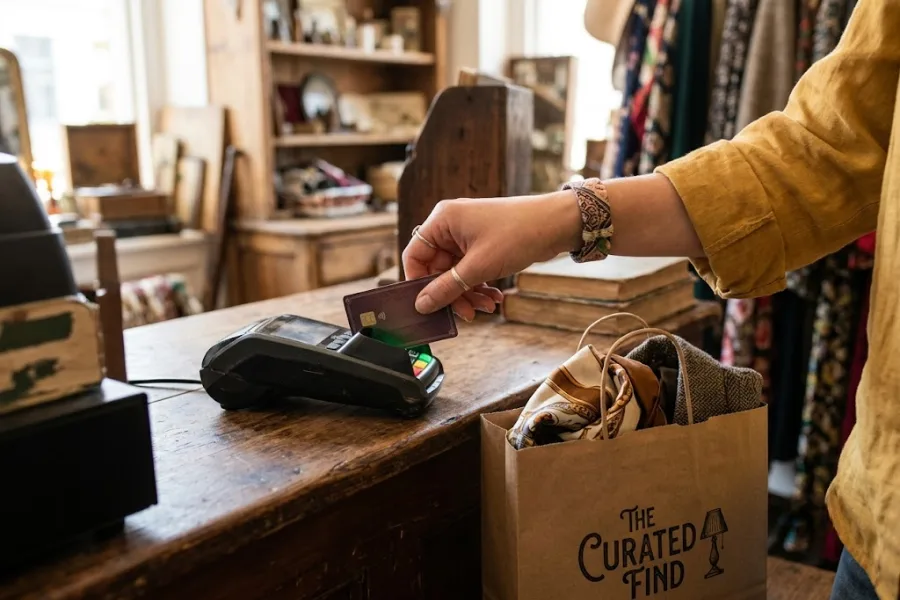
The checkout experience is often the “make or break” moment for customer loyalty. Central to this experience is point of sale payment processing, the invisible engine that turns a shopper’s intent into a completed sale. As consumer preferences shift toward digital wallets and contactless interactions, business owners must ensure their technology keeps pace. In this article from ConnectPOS, we’ll explore how point of sale payment processing works, the most common payment methods supported by modern POS systems, and the emerging payment technologies shaping the future of retail transactions.
Highlights
- Modern POS systems must support a “Swiss Army Knife” of methods from cash and cards to NFC and BNPL to meet evolving customer preferences.
- Advanced platforms unify omnichannel data and offer high-tech security, turning payment processing into a competitive retail advantage.
What is Point of Sale Payment Processing?
Point of sale payment processing refers to the system and technology used to complete financial transactions between a customer and a business at the checkout point. It involves securely transferring payment information, verifying funds, and approving or declining the transaction in real time.
In retail environments, the POS system acts as the central hub that connects payment hardware, software, and financial networks. This allows businesses to accept multiple POS payment methods, track transactions, and manage sales data efficiently.
A typical POS transaction processing setup includes:
- A POS terminal or device
- Payment acceptance hardware (card reader, NFC terminal)
- Payment gateway
- Payment processor
- Issuing and acquiring banks
Together, these components enable retailers to accept digital payments in retail, traditional payment methods, and emerging payment technologies while maintaining high levels of security.
How are payments processed by a point of sale system?
Understanding the workflow behind point of sale payment processing helps businesses appreciate the technology that powers seamless retail transactions.
Below is a simplified overview of how a POS payment transaction works.
- Payment Initiation: The customer presents their payment method (card, phone, or QR code) to the POS terminal.
- Authorization through Payment Gateway: The POS sends the encrypted transaction details to a payment gateway, a digital tunnel that connects the merchant to the banking network.
- Payment Processor Communication: The gateway passes the information to the payment processor, which acts as the intermediary between the merchant’s bank and the customer’s bank.
- Bank Approval: The customer’s issuing bank checks for available funds and fraud indicators. It then sends an “Approved” or “Declined” code back through the chain.
- Transaction Confirmation: The POS system receives the approval, prints or emails a receipt, and updates the store’s sales records instantly.
Common Payment Methods Supported by Point of Sale Payment Processing
To stay competitive, your point of sale payment processing must be a “Swiss Army Knife” of acceptance. Here are the methods today’s consumers expect:
Traditional Payment Methods
Cash
Despite the rise of digital payments, cash remains widely used in many markets. Cash transactions are simple and immediate, making them a reliable option for certain customer segments.
POS systems still track cash transactions for:
Even in the era of digital payments in retail, supporting cash ensures accessibility for all customers
Physical Credit and Debit Cards
Card payments remain one of the most dominant POS payment methods worldwide. Customers can use:
- Chip cards (EMV)
- Magnetic stripe cards
- Contactless-enabled cards
Card-based point of sale payment processing offers benefits such as:
- Faster checkout
- Reduced need for cash handling
- Increased average order value
Contactless and Mobile Proximity Payments
Contactless payments have grown rapidly as consumers seek faster and safer checkout experiences.
NFC (Near-Field Communication)
NFC technology allows customers to make payments by simply tapping their smartphone, smartwatch, or contactless card on the POS terminal.
Popular NFC payment solutions include:
- Apple Pay
- Google Pay
- Samsung Pay
These contactless payment POS transactions are highly secure thanks to tokenization and encryption technologies.
SoftPOS (Tap-on-Phone)
SoftPOS, also known as Tap-on-Phone, transforms smartphones into payment terminals without requiring additional hardware.
Retailers can accept contactless card payments directly through a mobile device, which offers several advantages:
- Lower hardware costs
- Increased mobility for staff
- Faster deployment for small businesses
SoftPOS is gaining popularity among pop-up stores, delivery services, and mobile retailers.
Digital and Alternative Payment Methods (APMs)
Consumers increasingly prefer flexible and digital payment options when shopping both online and in physical stores.
QR Code Payments
QR code payments allow customers to scan a code using their mobile wallet or banking app to complete a purchase.
These payments are widely used in many Asian markets and offer advantages such as:
- Low infrastructure costs
- Fast transaction speed
- Easy mobile integration
QR payments are becoming a key component of digital payments in retail.
Buy Now, Pay Later (BNPL) at POS
Buy Now, Pay Later (BNPL) services allow customers to split purchases into multiple installments.
BNPL at POS offers benefits for retailers:
- Higher average order value
- Increased conversion rates
- Improved customer affordability
Many point of sale payment processing platforms now integrate directly with BNPL providers.
Cryptocurrency and Stablecoins
Although still emerging in retail environments, some businesses are experimenting with cryptocurrency payments.
Stablecoins and crypto payments can provide:
- Lower international transaction fees
- Faster cross-border payments
- Increased financial innovation
However, adoption remains limited due to regulatory and volatility concerns.
ConnectPOS – A Flexible POS for Multi-Payment Processing
Modern retailers require POS systems that can handle diverse POS payment methods while maintaining seamless transaction workflows. This is where advanced platforms such as ConnectPOS come into play.
ConnectPOS is designed to support flexible point-of-sale payment processing across retail environments, from single stores to global chains.
- Multiple Payment Integrations: ConnectPOS integrates with global leaders such as PayPal, Adyen, Stripe, and Moneris, giving you the freedom to choose the best rates and most reliable providers for your region.
- Omnichannel Payment Acceptance: Whether a customer buys online and returns in-store, or buys in-store for home delivery, our system ensures a unified payment profile, providing a frictionless experience across all touchpoints.
- Real-Time Synchronization: Sales data from all payment methods is synced instantly across your ERP and e-commerce platforms (like Shopify, Magento, or BigCommerce), guaranteeing your inventory and accounting are always accurate.
- Robust Offline Mode for Uninterrupted Sales: Internet outages shouldn’t stop your business. ConnectPOS allows point of sale payment processing to continue even without a connection; once you’re back online, all transaction data syncs automatically.
- Custom Payment Method Creation: For unique business models, we allow you to create custom payment options such as local bank transfers, in-store credits, or loyalty point redemptions, giving you total control over how you collect revenue.
- Advanced Deposit and Partial Payments: Perfect for high-ticket items or custom orders, this feature allows customers to pay a deposit or split their total across multiple POS payment methods, increasing conversion rates for expensive inventory.
- Support for Modern Hardware: From traditional Verifone and Ingenico terminals to mobile iPad setups for line-busting, ConnectPOS ensures your contactless payment POS setup is sleek, functional, and professional.
- Global Readiness with Multi-Currency: Expand your reach without the headache. ConnectPOS supports multi-currency transactions, automatically handling exchange rates and local payment preferences for international shoppers.
- Security & PCI Compliance: We prioritize your customers’ trust. By utilizing encrypted data transmission and adhering to strict PCI-DSS standards, we ensure that sensitive financial information never touches your local servers.
Emerging & High-Tech Payment Frontiers (2026 Trends)
Payment technology continues to evolve rapidly. The next generation of point of sale payment processing will likely include innovations that transform the checkout experience.
- Biometric Checkout
Forget cards or phones; your face or palm is the credit card. Retailers are increasingly adopting palm-scanning (like Amazon One) or facial recognition to link a physical identity directly to a stored payment method. This reduces friction to near zero.
The global biometric payment market is projected to reach $13.48 billion in 2026, with facial recognition expected to see the fastest growth as retailers move toward hands-free, “log in and pay” environments
- Agentic Commerce
With the rise of AI agents, we are seeing the beginning of “Agentic Commerce.” This is where a customer’s personal AI assistant negotiates a price or applies loyalty points and completes the point of sale payment processing on the customer’s behalf via secure API handshakes, often before the customer even reaches the counter.
- Digital Identity Integration
The integration of Government-issued Digital IDs into mobile wallets allows for age-restricted purchases (like alcohol or tobacco) to be verified and paid for in a single “tap,” removing the need for manual ID checks.
FAQs: Point of Sale Payment Processing
- Which payment methods should a POS system support?
At a minimum, your system should support EMV chip cards, NFC contactless (Apple/Google Pay), and at least one local alternative payment method (like a popular QR code app or BNPL provider) to ensure you never turn a customer away.
- Are mobile wallet payments secure?
Yes, often more so than physical cards. Mobile wallets use tokenization, which replaces actual card numbers with a one-time digital token. Even if a hacker intercepted the signal, the data would be useless.
- How much does POS payment processing cost?
Costs typically involve a monthly software fee (for the POS) and a transaction fee (charged by the processor). Transaction fees usually range from 1.5% to 3.5% depending on the card type and volume.
Wrap Up
In sum, the landscape of point of sale payment processing is shifting from a simple utility to a strategic advantage. By supporting a diverse array of POS payment methods from traditional cash to cutting-edge biometrics, retailers can reduce friction, increase sales, and meet customers exactly where they are.
Modern POS systems are the heartbeat of this evolution. If you are ready to upgrade your checkout experience and future-proof your business with a truly flexible solution, contact us today for a free consultation and see how we can streamline your global payment processing.