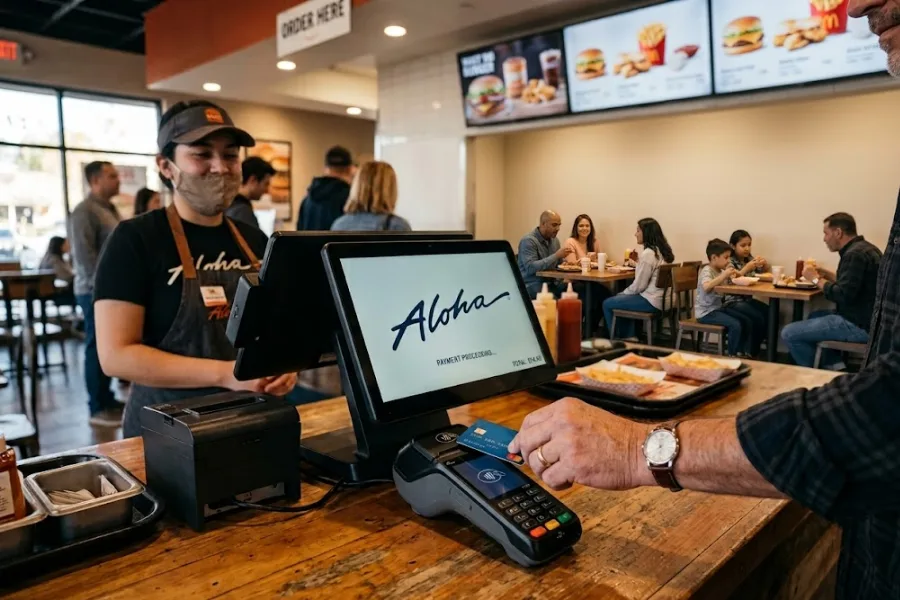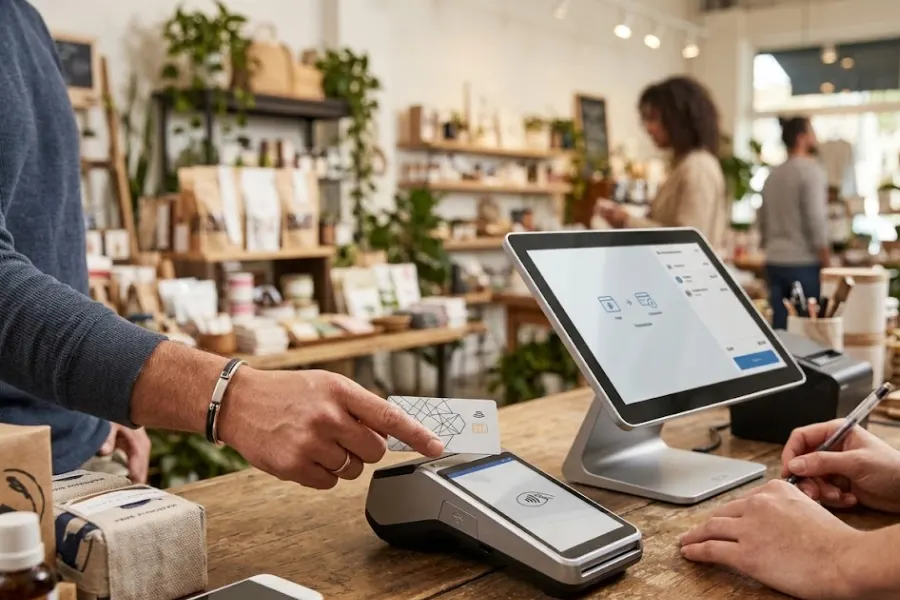
Selecting a point-of-sale system is no longer a tactical decision limited to checkout speed. It shapes financial visibility, operational governance, inventory discipline, and long-term scalability. POS system PayPal enters this landscape as a payment-centered solution tied directly to the PayPal ecosystem, appealing to merchants already active in digital wallet transactions and online commerce. Its positioning reflects a broader shift in retail, where payment infrastructure increasingly influences back-office clarity and reconciliation processes.
Still, payment integration alone does not define long-term suitability. Retailers must examine the depth of reporting, multi-location oversight, integration capacity, and data control before committing to a platform. This article from ConnectPOS advises business leaders on how to assess the PayPal POS against operational complexity and growth objectives.
Highlights
- POS system PayPal centers on direct integration with the PayPal Business ecosystem, connecting in-store transactions to digital payment processing and simplifying reconciliation within a single financial environment.
- The system focuses on checkout execution, payment acceptance flexibility, and basic reporting tools, making it suitable for businesses that prioritize transaction visibility over complex operational governance.
Core Features of the POS System PayPal
Digital wallets now account for more than half of global e-commerce transaction value, reinforcing the role of payment-centric ecosystems in modern retail.
PayPal POS operates within the PayPal ecosystem, positioning itself as a checkout solution tied directly to digital payments and merchant services. Its structure centers on transactional speed, app-based management, and direct integration with PayPal Business accounts.
- Simple and Fast Payments: Transaction flow defines customer experience at checkout. POS system PayPal supports card payments, digital wallets, QR codes, and contactless methods through PayPal’s payment network. Settlement connects directly to the merchant’s PayPal Business account, limiting friction between transaction approval and fund visibility. This structure supports retailers that prioritize predictable payment processing and broad payment acceptance.
- Intuitive POS App for Sales and Products: The PayPal POS app centers on usability for frontline staff. Product catalogs, pricing, discounts, and tax rules are managed inside a unified interface. Sales history, refund processing, and order tracking remain accessible without layered configurations. For retailers managing lean teams, this structure supports faster onboarding and lower training overhead.
- Inventory Management & Reporting: Inventory tracking operates alongside transaction data, allowing stock levels to update as sales occur. Sales summaries, product performance reports, and daily transaction breakdowns help merchants evaluate turnover and margin trends. Reporting functions focus on clarity and accessibility, supporting operational review without reliance on external analytics tools.
- Integrated Hardware Options: PayPal POS supports card readers and compatible hardware designed for in-store payment acceptance. Retailers can deploy mobile readers for counter service or flexible selling environments. Hardware and software alignment reduces compatibility concerns, particularly for businesses seeking straightforward implementation.
- Integrated with PayPal Business Account: A defining characteristic of the POS system PayPal lies in its direct connection to the PayPal Business account. Transaction records, balance visibility, dispute management, and fund transfers reside within a single ecosystem. This integration supports tighter control over reconciliation processes and financial oversight, especially for merchants already operating within PayPal’s digital payment infrastructure.
POS System PayPal: Is It the Right Fit for Your Business?
The global point-of-sale terminal market was valued at USD 123.15 billion in 2025 and is projected to reach USD 226.87 billion by 2033, highlighting continued investment in retail payment technology. As POS systems become more embedded in retail operations, system selection directly influences governance, reporting, and scalability.
POS system PayPal centers its value on payment processing integration, connecting in-store transactions to the PayPal Business ecosystem. For merchants already using PayPal, this structure creates continuity between online and offline revenue tracking. The platform emphasizes checkout execution, transaction transparency, and simplified reconciliation, while the key consideration remains whether its operational depth matches the business’s structural needs.
Who POS system PayPal Is Best For
POS system PayPal aligns most naturally with businesses that prioritize payment clarity, manageable system configuration, and direct financial oversight. Retailers operating with contained operational structures often find it suitable for their scale.
- Single-location retailers seeking a direct link between in-store sales and PayPal Business account balances, enabling faster reconciliation and clearer daily cash position tracking
- Small boutiques and specialty stores managing limited SKUs and straightforward pricing models, where complex inventory hierarchies are not required
- Pop-up stores, market vendors, and mobile sellers needing portable card readers and app-based checkout without extensive infrastructure setup
- Service-based businesses, such as salons, repair shops, or consultancies, where transactions revolve around services rather than layered inventory management
- E-commerce merchants expanding into brick-and-mortar retail who already process online payments through PayPal and want unified reporting across channels
For these business profiles, PayPal POS supports controlled growth while maintaining alignment between sales activity and merchant account oversight.
Who Might Need a More Advanced POS
Retailers operating at scale or managing distributed teams may require broader system architecture. As store counts increase and operational governance becomes more layered, payment integration alone may not satisfy enterprise reporting and inventory control requirements.
- Multi-location retailers requiring centralized dashboards that consolidate performance metrics across regions, districts, and store branches
- Businesses managing warehouse distribution and inter-store transfers, where real-time stock movement tracking and allocation visibility shape purchasing and replenishment decisions
- Organizations with layered management structures that require role-based access controls, audit trails, and activity logs for compliance and internal governance
- Retailers dependent on category-level analytics and historical trend analysis to guide pricing, purchasing, and promotional planning
- Enterprises integrating POS data into accounting platforms, ERP systems, or CRM environments for consolidated financial reporting and operational planning
In these environments, decision-makers often look beyond payment processing toward broader operational governance and data consolidation capabilities. POS system PayPal performs effectively within payment-centered retail models, while larger enterprises may evaluate systems built around distributed retail management.
ConnectPOS: A Strong Alternative for Retailers Needing Advanced Capabilities
Retailers operating beyond basic payment acceptance often require broader operational architecture than payment-centered POS systems can provide. While PayPal focuses primarily on transaction processing within its payment ecosystem, growing retail businesses frequently need deeper inventory governance, cross-location visibility, and integration across enterprise systems.
ConnectPOS positions itself as a retail-driven platform built to support operational complexity. Rather than centering exclusively on payments, the system connects in-store transactions with e-commerce platforms, ERP environments, and centralized reporting structures. This approach supports retailers managing expansion, distributed teams, and layered inventory models.
Features
- Centralized Multi-Location Control: Consolidated dashboards provide real-time visibility into sales performance, inventory levels, and store activity across branches, supporting leadership oversight and regional management review.
- Real-Time Inventory Synchronization Across Channels: Stock updates reflect across online and offline touchpoints, maintaining accurate inventory data and supporting inter-store transfers and warehouse coordination.
- Enterprise Reporting & Performance Analytics: Detailed reporting enables analysis by location, product category, staff activity, and time period, supporting data-driven retail planning and financial governance.
- Integration with E-commerce & ERP Systems: ConnectPOS integrates with platforms such as Magento, Shopify, BigCommerce, and ERP systems, aligning storefront operations with back-office processes through its comprehensive POS integrations.
- Role-Based Access & Operational Governance: Layered permission controls support structured management hierarchies, internal compliance requirements, and audit transparency.
- Customer Management and Engagement Tools: Retailers can build and maintain customer profiles, track purchase history, support loyalty programs, and deliver personalized interactions based on transaction data captured at the point of sale.
- Flexible Checkout and Order Handling: The POS supports standard sales, refunds, exchanges, on-hold orders, and buy-online-pay-in-store workflows, giving stores operational flexibility for various customer preferences.
- Customizable Workflow and Tax Rules: ConnectPOS accommodates regional tax configurations, discount structures, and custom sales processes, enabling alignment with local regulations and business policies.
For retailers seeking broader operational oversight beyond payment processing, ConnectPOS presents a platform aligned with long-term retail growth and structural scalability.
FAQs: POS System PayPal
1. Who is the POS system PayPal designed for?
PayPal POS is commonly suited for small retailers, single-location stores, pop-up shops, and service-based businesses that prioritize payment processing integration and straightforward reconciliation.
2. What are the pros and cons of the POS system PayPal?
Its main advantage lies in direct integration with the PayPal ecosystem and simplified payment reconciliation, while limitations may appear in areas such as enterprise reporting depth, complex inventory structures, and large-scale multi-store governance.
3. What alternatives should businesses consider?
Retailers requiring broader operational control, centralized multi-location management, and deeper integration with e-commerce or ERP systems may consider platforms such as ConnectPOS as an alternative to payment-centered POS solutions.
4. Is PayPal’s POS suitable for multi-location retailers?
It can support basic multi-store operations, but retailers managing distributed inventory, layered reporting, and centralized governance may evaluate systems designed specifically for multi-location control.
Conclusion
POS system PayPal aligns well with merchants seeking direct payment integration and simplified settlement visibility within the PayPal environment. For businesses operating at a modest scale, this alignment may provide adequate control over transactions and account reconciliation. As operational layers expand, leadership teams often require broader oversight, deeper analytics, and tighter coordination across stores and systems.
Retail growth demands more than transaction processing; it requires operational architecture that supports inventory governance, performance transparency, and cross-channel integration. ConnectPOS supports retailers that seek this broader control framework. Businesses evaluating PayPal POS should also explore ConnectPOS to determine which platform aligns more closely with long-term operational direction and expansion strategy. Contact us now!
►►► Optimal solution set for businesses: Shopify POS, Magento POS, BigCommerce POS, WooCommerce POS, NetSuite POS, E-Commerce POS