Retail businesses are rethinking how they manage sales, inventory, and customer experiences across multiple channels, as traditional systems often struggle to keep up with growing data volumes. This shift has led many enterprises to explore cloud-based solutions with greater flexibility and real-time control. Enterprise cloud POS solutions are now shaping a new standard in retail operations. They bring together in-store and online activities, support large product catalogs, and help teams access data instantly from anywhere. With scalable architecture and seamless integrations, these systems make it easier to adapt to changing business needs.
This article examines why enterprise cloud POS solutions are gaining traction and how they help retailers build more connected, efficient operations.
Highlights
- Enterprise cloud POS solutions are becoming the new standard in retail, enabling centralized control, real-time data access, and seamless omnichannel operations across multiple stores and channels.
- Key features such as multi-store management, real-time inventory synchronization, advanced analytics, and eCommerce integrations help large retailers improve efficiency and make better business decisions.
- Despite challenges like system migration and staff training, the long-term benefits, including scalability, improved customer experience, and lower operational costs, make cloud POS a strategic investment for enterprise growth.
Definition of an Enterprise Cloud POS System
An enterprise cloud POS system is a centralized, web-based platform that manages sales, inventory, customer data, and store operations across multiple locations. Instead of running on local servers, it stores and processes data in the cloud. This allows businesses to access real-time information from any device with an internet connection.
With this system, transactions can still be completed offline and then synced automatically to the cloud. This setup helps large retailers maintain consistent operations while scaling.
Compared to traditional POS systems, cloud POS offers greater flexibility and easier updates. Legacy systems often require on-site installation, manual upgrades, and separate databases. In contrast, cloud POS connects all locations within a single system, enabling instant updates, centralized reporting, and seamless integration with e-commerce platforms. This reduces IT complexity and improves overall efficiency.
Enterprise cloud POS solutions are widely used across industries that manage high transaction volumes and complex inventories. Retail chains, grocery stores, and fashion brands are among the most common adopters. Other sectors, such as beauty, electronics, and specialty stores, also rely on cloud POS to unify their operations.
Why Enterprise Cloud POS Solutions Are Becoming the Standard in Retail
Retailers are placing more focus on connected operations, faster decision-making, and consistent customer journeys. Enterprise cloud POS solutions support these priorities by bringing flexibility and real-time visibility into daily operations.
Several key factors are driving their widespread adoption:
- Growing demand for omnichannel retail POS systems
Retailers are no longer operating in a single channel. Customers move between online stores, mobile apps, and physical locations before making a purchase. A cloud POS connects all these touchpoints in one system, ensuring consistent pricing, promotions, and order management across channels.
- Need for real-time inventory management across locations
Managing inventory across multiple stores and warehouses can be complex without accurate, up-to-date data. Cloud POS systems provide real-time inventory tracking, allowing businesses to monitor stock levels between locations. This visibility helps improve replenishment planning and ensures products are available.
- Shift toward scalable and flexible cloud infrastructure
As retail businesses grow, they need systems that can expand without disruption. Cloud POS solutions offer a flexible infrastructure that supports the addition of new stores, users, and integrations with minimal effort. Updates are deployed centrally, reducing maintenance work and allowing businesses to adopt new features quickly.
- Rising expectations for a seamless customer experience
Customers expect smooth, fast, and personalized shopping experiences at every touchpoint. Cloud POS systems help retailers meet these expectations by centralizing customer data, enabling personalized promotions, and supporting flexible services such as buy online, pick up in store.
Must-Have Features in the Best Enterprise Cloud POS Systems
Large retailers need a solution that can handle complex operations, support growth, and provide clear insights across all business areas. The following features play a key role in building a reliable and future-ready POS ecosystem.
Multi-store POS management and centralized control
Enterprise retailers often operate across multiple locations, sometimes across regions or countries, with different requirements. Strong enterprise cloud POS solutions allow businesses to manage all stores from a single dashboard.
Headquarters can monitor performance in real time, control user roles and permissions, and roll out updates instantly. This centralized inventory management software reduces operational complexity while allowing individual stores to adapt to local demand and customer preferences.
Real-time inventory synchronization and tracking
Accurate inventory management is critical for maintaining smooth operations and meeting customer expectations. Cloud POS systems provide real-time synchronization across stores, warehouses, and online channels. This helps retailers avoid issues such as overselling or stockouts while enabling efficient stock transfers between locations.
Advanced retail analytics and reporting dashboards
Enterprise retailers rely on data to make informed decisions quickly. Modern cloud POS systems offer advanced analytics tools and customizable POS reporting dashboards that provide insights into sales, customer behavior, and product performance.
Managers can track key metrics such as revenue by location, conversion rates, and average transaction value. With easy access to actionable data, businesses can refine their strategies, improve marketing efforts, and drive more consistent growth.
POS integration with eCommerce platforms (Shopify, Magento, etc.)
A seamless connection between in-store and online operations is essential for delivering a unified shopping experience. Enterprise cloud POS systems integrate with leading eCommerce platforms such as Shopify and Magento, keeping product information, inventory, and customer data synchronized. This integration supports omnichannel services such as buy online, pick up in store, ship-from-store, and easy returns across channels.
Security, compliance, and cloud data protection
Enterprise retailers handle large volumes of sensitive customer and transaction data, making security a top priority. Cloud POS systems are built with advanced security measures, including end-to-end encryption, secure authentication protocols, and regular system updates.
Key Benefits of Cloud POS for Enterprise Retailers
Enterprise retailers need systems that simplify operations while supporting growth and customer expectations. Cloud POS solutions bring clear advantages by improving visibility, reducing manual work, and connecting every part of the business in one platform.
Key benefits include:
- Improved operational efficiency and automation. Cloud POS systems streamline daily tasks such as sales processing, inventory updates, and reporting. Many workflows can be automated, reducing manual input and minimizing errors. This allows staff to focus more on customer service and less on administrative tasks.
- Better inventory accuracy and reduced stockouts. With real-time synchronization, inventory data is always up to date across stores and warehouses. Retailers can track stock levels accurately, plan replenishment more effectively, and avoid issues like overselling or running out of popular items.
- Enhanced omnichannel customer experience. Cloud POS connects online and offline channels, allowing customers to enjoy flexible shopping options such as buy online, pick up in store, or return items at any location. It also enables personalized experiences by using unified customer data.
- Faster, data-driven business decisions. Access to real-time reports and analytics helps managers respond quickly to changes in demand and performance. Retailers can identify trends, adjust pricing or promotions, and optimize operations based on accurate insights.
- Lower IT infrastructure and maintenance costs. Since cloud POS systems do not require heavy on-site hardware or complex installations, businesses can reduce upfront investment and ongoing maintenance costs. Updates and system improvements are handled centrally, saving time and reducing the need for dedicated IT resources.
Common Challenges When Adopting Enterprise Cloud POS (And Solutions)
Switching to an enterprise cloud POS system brings clear advantages, but the transition can come with a few challenges.
- Migrating from legacy POS systems. Moving from older systems to a cloud-based platform can feel complex, especially when dealing with large volumes of historical data. The key is to plan the migration in phases, prioritize critical data, and work with experienced implementation teams.
- Staff onboarding and training. Employees may need time to adapt to a new system. Providing structured training sessions and ongoing support can help staff gain confidence quickly. Choosing a user-friendly interface also reduces the learning curve and speeds up adoption across stores.
- Integration with existing business systems. Enterprise retailers often rely on multiple tools such as ERP, CRM, and eCommerce platforms. Ensuring seamless integration can be challenging without the right technology. Opting for a cloud POS with strong API capabilities and pre-built integrations helps connect systems more efficiently.
- Ensuring data security and compliance. Handling sensitive customer and payment data requires strict security measures. Retailers should choose cloud POS solutions that offer encryption, secure access controls, and compliance with standards like PCI DSS.
How to Choose the Best Enterprise Cloud POS System for Your Business?
Selecting the right enterprise cloud POS solution requires careful evaluation to ensure it aligns with your current needs and future growth plans. A well-chosen solution can support long-term efficiency and flexibility across your operations.
First, evaluate scalability and performance. The system should be able to handle high transaction volumes and multiple store locations without performance issues. As your business expands, it should allow you to easily add new stores, users, and features.
Next, consider integration capabilities and the overall ecosystem. A strong cloud POS should connect seamlessly with your existing tools, including eCommerce platforms, ERP systems, CRM software, and payment providers.
It is also important to assess inventory and reporting features. Look for a system that offers real-time inventory tracking and detailed reporting tools. Access to accurate data on sales performance, inventory movement, and customer behavior will help you optimize your operations.
Cost is another key factor. Instead of focusing only on the initial investment, consider the total cost of ownership, including subscription fees, hardware, maintenance, and future upgrades.
Finally, review vendor support and customization options. A reliable provider should offer responsive support, regular updates, and the ability to tailor the system to fit your specific business needs.
ConnectPOS – Best Cloud POS Solution for Omnichannel Retail
Retailers looking for reliable enterprise cloud POS solutions that combine flexibility, performance, and seamless integration. ConnectPOS is designed to support complex retail operations while keeping systems connected and easy to manage across all channels.
- API-first cloud POS with microservices architecture. ConnectPOS is built on a modern, API-first, microservices-based architecture, allowing businesses to customize features and scale operations without affecting the entire system. This structure supports faster updates, easier integrations, and greater flexibility for enterprise retailers with unique workflows.
- Real-time online and offline synchronization. The system ensures continuous operations with real-time data synchronization between online and offline modes. Even during internet disruptions, transactions can still be processed and automatically updated once the connection is restored.
- Multi-source inventory (MSI) for enterprise-level control. ConnectPOS offers advanced multi-source inventory management, enabling retailers to track stock across multiple warehouses, stores, and channels. This improves inventory accuracy, supports better fulfillment strategies, and gives full visibility into stock movement.
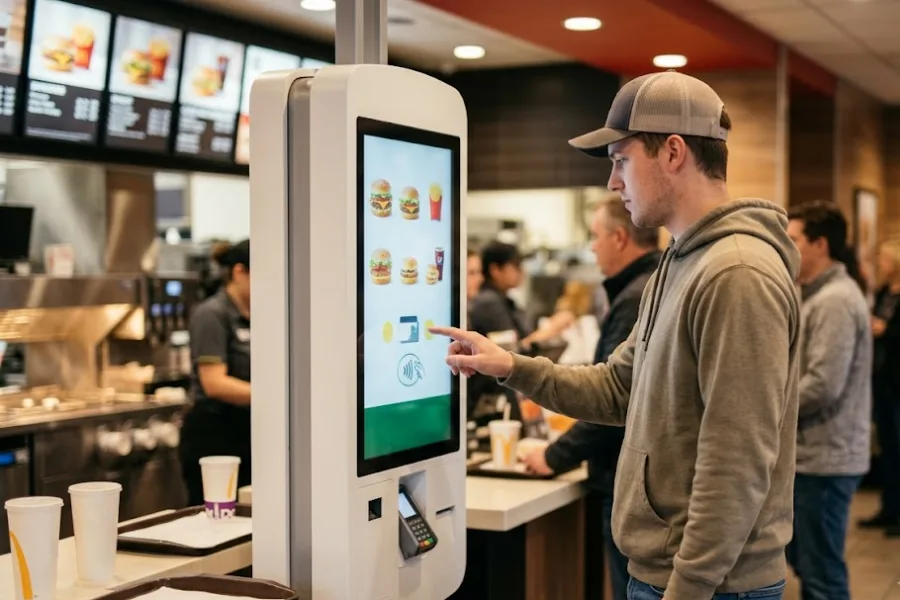
- Omnichannel features (BOPIS, self-checkout, mobile POS). The platform supports key omnichannel capabilities such as buy online, pick up in store (BOPIS), self-checkout, and mobile POS. These features help retailers deliver flexible shopping experiences and reduce friction during the purchasing process.
- Seamless integrations (Shopify POS, Magento POS, BigCommerce POS). ConnectPOS integrates smoothly with leading eCommerce platforms, ensuring synchronized data across systems. This e-commerce integration allows retailers to manage both online and offline operations in one unified ecosystem.
FAQs: Enterprise Cloud POS Solutions
1. What is the best enterprise cloud POS system?
The best enterprise cloud POS system depends on your business size, industry, and operational needs. Retailers should look for solutions that offer strong scalability, real-time data synchronization, multi-store management, and seamless integrations with eCommerce and back-office systems. A reliable provider should also offer customization options and responsive support to match complex enterprise requirements.
2. How much does a cloud POS system cost for enterprises?
The cost of a cloud POS system varies based on the number of stores, users, features, and integrations required. Most providers use a subscription-based pricing model, which may include monthly software fees, hardware costs, and optional add-ons.
3. Is cloud POS secure for large retail businesses?
Yes, cloud POS systems are designed with strong security measures to protect sensitive data. These typically include data encryption, secure user authentication, and compliance with industry standards such as PCI DSS.
4. Can cloud POS handle multi-store and omnichannel operations?
Cloud POS systems are built to support multi-store environments and omnichannel retail. They allow businesses to manage multiple locations from a centralized platform while synchronizing data across online and offline channels.
5. What are the key benefits of switching to cloud POS?
Switching to a cloud-based POS improves operational efficiency, inventory accuracy, and decision-making through real-time data access. It also supports scalability, reduces IT maintenance efforts, and enhances the overall customer experience.
Summing Up
Enterprise cloud POS solutions are quickly becoming the foundation for modern retail operations. They help businesses stay connected, manage inventory with accuracy, and deliver consistent customer experiences across every channel. With the ability to scale, integrate, and provide real-time insights, these systems support both daily operations and long-term growth.
For enterprise retailers, choosing the right solution can make a significant difference in efficiency and competitiveness. ConnectPOS stands out with its flexible architecture, powerful omnichannel features, and enterprise-ready capabilities.
If you’re looking to upgrade your retail operations and build a future-ready system, now is the time to act. Get in touch with ConnectPOS to explore how it can support your business growth and transform your retail experience.
►►► Optimal solution set for businesses: Shopify POS, Magento POS, BigCommerce POS, WooCommerce POS, NetSuite POS, E-Commerce POS