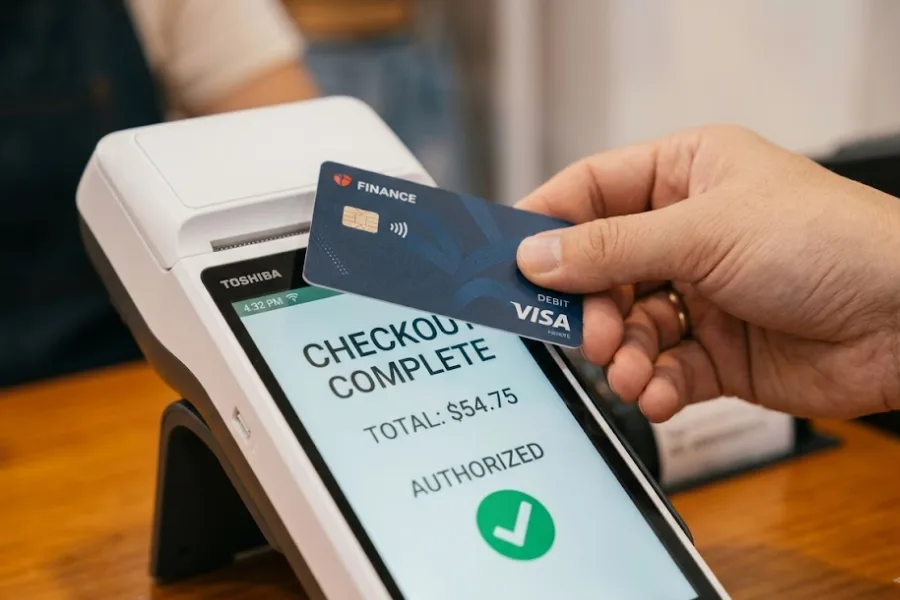
Retailers process millions of sensitive transactions daily. This massive volume makes payment systems a prime target for cybercriminals. Protecting customer payment information requires immediate and decisive action. This article from ConnectPOS advises retailers on practical POS data protection controls.
Business owners must prioritize payment security to maintain customer trust. A single breach can destroy years of brand loyalty. You need concrete security measures to defend your infrastructure. We will break down the top threats and actionable defenses you can implement this quarter.
Highlights
- Retail POS systems face increasing threats from malware, unsecured networks, and physical tampering, making proactive security essential to protect payment data and business operations.
- Implementing encryption, role-based access, network segmentation, automated updates, and regular PCI DSS audits significantly reduces security risks and strengthens long-term compliance.
Top Security Threats Targeting Retail POS Systems
Retail POS systems are exposed to a wide range of security threats that can disrupt business operations and compromise sensitive customer data. From malware and ransomware to unsecured networks and physical device tampering, each threat poses significant financial and reputational risks. Understanding these attack methods is the first step toward building a stronger and more resilient POS data protection strategy.
Sophisticated POS Malware and Ransomware
Cybercriminals constantly develop new malicious software to infiltrate retail systems. These programs scrape system memory to steal unencrypted credit card data. Hackers then sell this stolen information on the dark web for immense profit. This underground market fuels a continuous cycle of retail cyberattacks.
Ransomware attacks lock retailers out of their own sales systems completely. The Sophos State of Ransomware in Retail 2023 report reveals alarming statistics. It shows that 69% of retail organizations suffered devastating ransomware attacks. Attackers demand massive cryptocurrency payments to restore critical system access.
These malicious attacks halt daily operations and cause severe financial damage. Retailers lose significant revenue during extended periods of system downtime. The average cost of a retail data breach reached 2.96 million U.S. dollars in 2023. Recovery efforts often take months to complete fully.
Unsecured Networks and Remote Access Vulnerabilities
Many retail stores operate on poorly secured local area networks. Store managers often use default passwords for routers and remote access portals. This negligence leaves the entire store network completely exposed to outside attackers. Cybercriminals actively scan the internet for these exact vulnerabilities.
Hackers target open remote desktop protocols to bypass perimeter defenses. They crack weak administrative passwords to gain direct entry into the store network. Once inside, they move laterally to infect the main payment terminals. This silent infiltration often goes unnoticed by store staff.
This lateral movement leads to massive and prolonged data exfiltration. Attackers can monitor live transactions and siphon data undetected for many months. Without strong POS data protection measures, store owners eventually face severe regulatory fines and catastrophic public relations crises. The business loses customer trust that took years to build.
Physical Device Tampering and Card Skimming
Digital threats do not replace physical security risks in modern retail stores. Criminals physically tamper with payment terminals to install hidden card skimmers. These small devices capture magnetic stripe data when customers swipe their cards. Criminals also install hidden cameras to record PIN entries.
Thieves often distract store clerks to install these overlays incredibly quickly. Modern skimmers look identical to the original card reader hardware. They transmit stolen card numbers via Bluetooth to nearby criminals instantly. Store employees rarely notice these modifications without strict inspection routines.
Physical tampering compromises hundreds of cards before anyone detects the issue. Customers experience direct financial fraud shortly after visiting the compromised store. The retailer suffers immense reputational damage when victims trace the fraud back. Banks often hold the retailer liable for these specific fraudulent charges.
Practical POS Data Protection Controls to Implement This Quarter
Protecting POS data requires more than basic security measures. Retailers should implement practical controls such as encryption, role-based access, network segmentation, automated software updates, and regular PCI DSS audits to reduce cyber risks and safeguard payment data. These best practices strengthen overall security, improve compliance, and enhance business continuity.
Mandate End-to-End Encryption (E2EE) and Tokenization
Unencrypted card data presents the highest risk during any retail transaction. Intercepting raw card numbers allows criminals to commit immediate financial fraud. Protecting this data in transit and at rest is a vital priority. Businesses must adopt modern cryptographic standards to secure their operations.
End-to-End Encryption scrambles card information the moment it enters the terminal. The data remains completely unreadable as it travels to the payment processor. Tokenization replaces the actual card number with a random string of characters. The system stores this harmless token instead of the real card data.
These two technologies render stolen data completely useless to external hackers. Even if cybercriminals breach your network, they only find meaningless tokens. POS data protection becomes significantly stronger through encryption and tokenization, reducing financial liability while protecting customer information and preventing identity theft.
Enforce Role-Based Access Controls and Multi-Factor Authentication (MFA)
Unrestricted system access creates massive internal and external security vulnerabilities. Entry-level employees do not need administrative rights to process simple daily sales. Excessive permissions increase the risk of accidental data exposure and internal theft. System administrators must apply the principle of least privilege strictly.
Role-based access restricts employees to functions necessary for their specific jobs. Managers receive override capabilities, while cashiers only access standard checkout tools. Multi-factor authentication requires a second verification step before granting system entry. This step usually involves a unique code sent to a mobile device.
This strict access model prevents unauthorized users from altering vital security settings. Stolen passwords alone cannot compromise the system if MFA blocks the login attempt. Store owners maintain a clear and accurate audit trail of every employee action. This transparency deters internal fraud and simplifies security investigations.
Segment Your POS Network from Public Retail Wi-Fi
Mixing guest internet traffic with payment processing data creates severe risks. Customers connecting to store Wi-Fi can unknowingly introduce malware to the network. Hackers actively exploit shared networks to intercept sensitive business communications. A flat network architecture invites disaster for retail operations.
Network segmentation isolates the payment system on its own dedicated virtual network. Strict firewalls block all communication between the public Wi-Fi and the transaction servers. The payment terminals only communicate with verified payment processors and internal servers. This setup creates a secure vault for your financial data.
This isolation contains potential threats strictly within the public network zone. A compromised customer smartphone cannot infect the isolated transaction hardware. As a core POS data protection strategy, network segmentation helps retailers maintain fast guest Wi-Fi without sacrificing their internal security posture and supports payment compliance.
Automate POS Software Updates and Security Patching
Outdated software contains known vulnerabilities that hackers actively exploit every day. Software vendors release patches specifically to close these critical security gaps. Ignoring these updates leaves your entire business exposed to documented digital threats. Manual updating processes often lead to dangerous delays and inconsistencies.
Automated update systems push new patches to all terminals simultaneously. Administrators schedule these updates during non-business hours to prevent operational disruptions. The system verifies the successful installation of every security patch automatically. It alerts the IT team immediately if any update fails to install.
Consistent patching blocks attackers from using old exploits against your business. Terminals run at peak performance while maintaining the highest possible security standards. IT teams save hours of manual maintenance work across multiple store locations. This automation guarantees uniform protection across your entire retail chain.
Conduct Regular PCI DSS Compliance Audits
The Payment Card Industry Data Security Standard sets strict rules for businesses. Failing to meet these requirements results in heavy fines and lost processing privileges. Continuous compliance requires regular testing and validation of all security controls. Retailers cannot treat compliance as a simple annual checklist.
Compliance audits evaluate every single aspect of your payment environment thoroughly. Security professionals run detailed vulnerability scans to identify weak points in your network. They review access logs carefully and test incident response procedures extensively. These audits simulate real-world attacks to test your defenses.
Regular audits catch hidden security gaps before criminals can exploit them. Retailers avoid expensive non-compliance penalties from major credit card brands. A strong compliance record demonstrates a serious commitment to customer privacy. It proves that the business takes financial security seriously.
ConnectPOS: A Secure Alternative to Elevate Your Retail Operations
Upgrading your payment infrastructure requires a secure and scalable POS data protection solution. ConnectPOS helps retailers protect transaction data while enabling seamless omnichannel operations through secure integrations, role-based access, and real-time synchronization.
- Security, Encryption & Compliance: ConnectPOS uses secure data transmission and encryption technologies to protect sensitive transaction information. The platform is designed to support industry security standards and secure payment processing.
- Granular User Permissions: Administrators can assign role-based access permissions to control what each employee can view or modify. This helps reduce unauthorized access to sensitive business information.
- Real-Time Data Synchronization: Sales, inventory, and customer data are synchronized securely across stores and online channels in real time. Retailers always have access to accurate, up-to-date business information.
- Secure Cloud Architecture: Built on a cloud-based infrastructure, ConnectPOS delivers reliable performance, secure data storage, and the flexibility to scale as your business grows.
- Offline Mode Protection: Stores can continue processing sales even without an internet connection. Once connectivity is restored, offline transactions are automatically synchronized with the central system.
- Flexible Payment Gateway Integrations: ConnectPOS integrates with trusted payment gateways, enabling retailers to accept multiple payment methods while maintaining secure transaction processing.
- Omnichannel Data Synchronization: The platform unifies sales, inventory, and customer information across physical stores and eCommerce channels, ensuring consistent data throughout the retail ecosystem.
- API-First Third-Party Integrations: ConnectPOS connects seamlessly with ERP, CRM, accounting software, and other business systems through flexible APIs, enabling secure and efficient data exchange.
- GDPR Compliance: ConnectPOS is designed to support GDPR requirements by helping retailers securely collect, process, and manage customer data. The platform promotes responsible data handling practices, giving businesses greater confidence in protecting customer privacy and meeting regulatory obligations.
FAQs: POS Data Protection
1. What is the most critical step in securing payment terminals?
Implementing end-to-end encryption ranks as the most critical defense measure available. It scrambles data immediately to render it useless to potential interceptors. This single step prevents the majority of catastrophic data exfiltration attacks.
2. How often should a retail business update its payment software?
Retailers must apply security patches the moment vendors release them publicly. Automating this process guarantees that terminals never run vulnerable software versions. Daily checks for new updates provide the best defense against emerging threats.
3. Why is network segmentation necessary for modern retail stores?
Shared networks allow public users to interact with internal business systems directly. Segmentation builds an impenetrable digital wall between guest Wi-Fi and payment servers. This separation stops malware from crossing over into your transaction environment.
4. Does tokenization replace the need for data encryption?
Tokenization and encryption serve different but highly complementary security purposes. Encryption protects the sensitive data while it travels across the public network. Tokenization protects the data when the system stores it for future use.
Conclusion
Protecting customer payment information requires constant vigilance and strict technical controls. Retailers must implement encryption, enforce access limits, and segment their networks immediately. These practical steps block cybercriminals and prevent catastrophic financial losses. Ignoring these controls leaves your entire operation vulnerable to devastating attacks.
Prioritizing POS data protection builds lasting trust with your loyal customer base. A secure transaction environment protects your brand reputation and your financial bottom line. Upgrading your digital defenses today prepares your business for the threats of tomorrow. Security is an ongoing commitment to your business and your customers. Ready to secure your retail transactions and protect your business from cyber threats? Contact us today to discuss our highly secure retail management solutions.