The retail landscape has officially shifted from “selling products” to “orchestrating experiences.” As we navigate 2026, the traditional boundaries between a physical storefront and a digital marketplace have dissolved into what experts call “unified commerce.” For business owners, staying competitive demands a seamless, AI-integrated approach to every customer touchpoint. In this guide from ConnectPOS, we will explore essential retail sales tips for business owners in 2026 to help you turn these technological shifts into measurable revenue growth.
Highlights
- Success in 2026 requires dissolving the barriers between digital and physical channels, using predictive AI to create a seamless, “borderless” shopping journey for the value-seeking consumer.
- Business owners must pivot from transactional sales to “Experience Ambassadors,” leveraging physical stores as brand galleries where human connection complements automated efficiency.
Retail Market in 2026
The retail landscape in 2026 has reached a definitive tipping point where “digital” and “physical” are no longer separate strategies; they are a single, unified reality. This year, the industry is defined by two primary forces: the Value-Seeking Consumer and the rise of Agentic AI. Shoppers today expect a brand to recognize their preferences instantly, whether they are interacting with a social media AI agent or stepping through a physical front door.
A Structural Shift in Spending
The current market is underpinned by a massive “flight to value.” According to Bain & Company’s 2026 Global Retail Sales Outlook, retail sales in key markets such as the U.S. are projected to reach $5.3 trillion. This growth is increasingly driven by consumers who prioritize efficiency and personalized deals over brand loyalty.
For business owners, this means that every square foot of your store and every pixel of your website must work together to prove its value to a more discerning, price-conscious audience.
The Rise of Agentic Commerce
We have moved past the era of simple chatbots. In 2026, Agentic AI, artificial intelligence capable of making autonomous decisions, is actively searching for, comparing, and even purchasing products on behalf of consumers. This shift is reflected in the explosive growth of unified shopping channels. Data from Revenue Memo indicates that multichannel e-commerce sales are expected to hit $892.4 billion this year, representing a 15% increase year-over-year.
10 Retail Sales Tips For Business Owners in 2026
The following retail sales tips for business owners in 2026 are designed to help you bridge the gap between digital efficiency and physical connection, guaranteeing your brand remains a destination rather than just a transaction point.
Focus on Omnichannel Retail Experiences
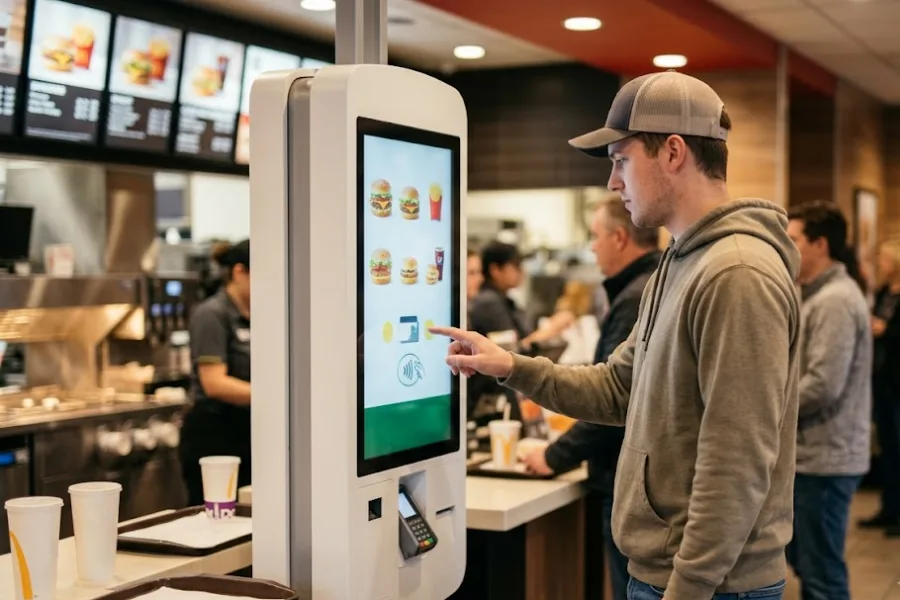
In 2026, omnichannel is no longer a luxury; it’s a survival mechanism. Customers expect a “borderless” shopping journey where they can start an order on a voice-activated smart speaker, modify it via a mobile app, and pick it up at a physical kiosk.
- Inventory Synchronization: Use a centralized system to ensure that “Out of Stock” online means “Out of Stock” in-store. Real-time accuracy is non-negotiable for the $5.3 trillion market.
- Seamless Returns: Allow customers to return online purchases in-store (BORIS) without friction. In addition to reducing shipping expenses, this strategy encourages customers to revisit your physical store, creating more opportunities for additional purchases and upselling.
Use AI and Data Analytics to Understand Customers
The rise of Agentic AI means that data is your most valuable asset. While previous years focused on historical data, 2026 is about predictive intelligence.
- Anticipatory Shipping: Larger retailers are already using AI to move stock to local hubs before a customer even clicks “buy.” As a business owner, use analytics to predict seasonal surges and hyper-local trends.
- Sentiment Analysis: Use AI tools to scan social media mentions and in-store feedback to understand the “why” behind the “what.” If customers are complaining about long wait times in specific aisles, your data should tell you before your staff does.
Personalize the Shopping Experience
One of the most effective retail sales tips for business owners in 2026 is to move beyond generic marketing. We are now in the era of “Segment of One.”
- Dynamic Storefronts: Your website should look different for a first-time visitor than it does for a loyal VIP. Show them products based on their specific browsing history and Agentic AI preferences.
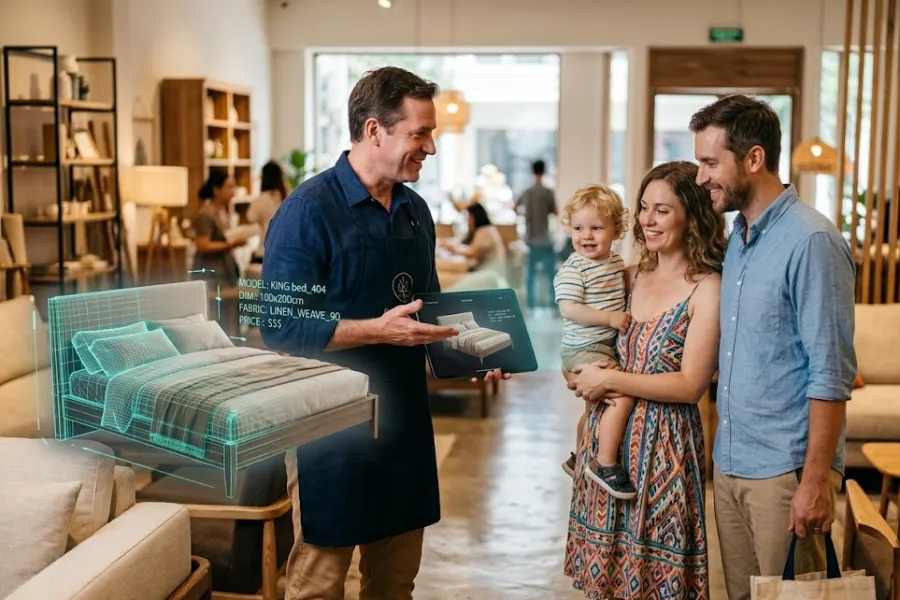
- Augmented Reality (AR) Assistance: Allow customers to “try on” clothes or see how furniture looks in their home via their smartphones. Decreasing the uncertainty of a purchase is the fastest way to increase conversion rates.
Train Retail Staff to Deliver Exceptional Customer Service
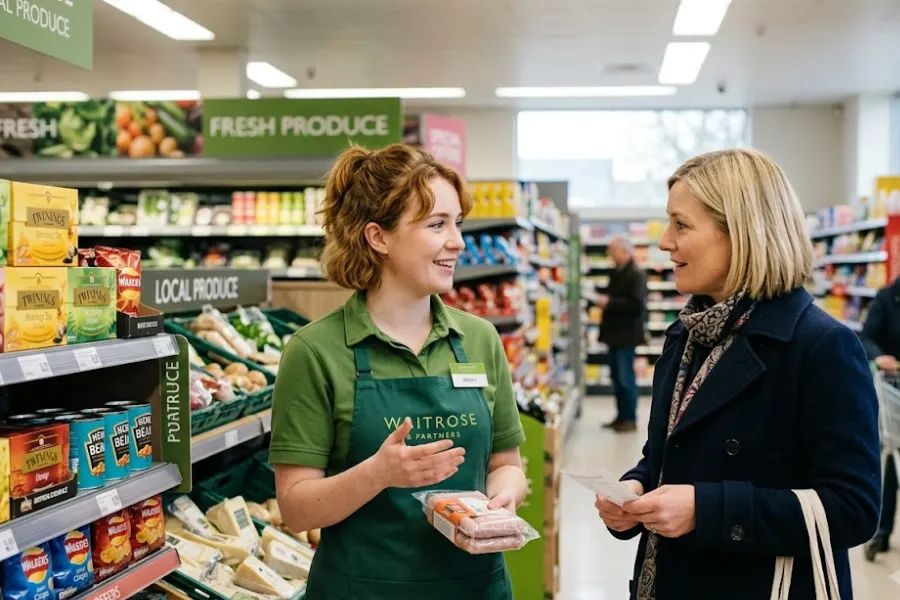
As automation handles the mundane tasks (like checking prices or stock levels), your human staff must transition into Brand Ambassadors.
- Consultative Selling: Train your team to act as stylists or technical experts. In a world of AI-driven bots, the “human touch” has become a premium service.
- Empowerment through Tech: Equip your staff with tablets that show a customer’s full purchase history and “wishlist.” This allows them to make highly relevant, personalized recommendations on the spot.
Optimize Your Store Layout and Product Placement
Physical stores are becoming “galleries” rather than warehouses. The goal in 2026 is to maximize the Experience per Square Foot.
- Experiential Zones: Dedicate space for product demos, workshops, or “Instagrammable” corners. The more time a customer spends in your store engaging with your brand, the higher their average order value (AOV) becomes.
- Neuro-Retail Tactics: Use lighting, scent marketing, and strategic pathing to guide customers through a journey. For example, placing high-margin “impulse” items near mobile checkout stations can significantly boost bottom-line revenue.
Implement Smart POS Systems
A “cash register” is a relic of the past. A smart POS system like ConnectPOS serves as the heartbeat of your operations, integrating sales, inventory, and customer relationship management (CRM) into one dashboard.
- Mobile Checkout: Don’t let a long line be the reason a customer walks out. Enable your staff to ring up sales anywhere on the floor.
- Unified Data: Ensure your POS talks to your e-commerce platform. When a customer walks in, your staff should know if they have an abandoned cart online so they can offer a “finishing” discount in person.
Offer Flexible Payment Options
The 2026 consumer values financial flexibility. If you don’t offer their preferred way to pay, they will find someone who does.
- Biometrics & Digital Wallets: From palm-scanning to facial recognition, “invisible” payments are trending. At the very least, support all major digital wallets and “Tap-to-Pay.”
- BNPL 2.0: “Buy Now, Pay Later” has evolved. Offering interest-free installments at the point of sale is a proven way to increase the purchase of big-ticket items among value-seeking consumers.
Leverage Loyalty Programs and Rewards
In 2026, loyalty is about emotional connection, not just points.
- Gamified Rewards: Use your mobile app to “gamify” the shopping experience. Offer badges for visiting new locations or rewards for sharing a purchase on social media.
- Tiered Exclusivity: Provide “inner circle” benefits like early access to new collections or private after-hours shopping events. This creates a community around your brand that transcends price competition.
Use Social Media and Influencer Marketing
Social commerce is no longer a side channel; for many, it is the primary channel.
- Live-Stream Shopping: Host live events where viewers can buy products in real-time as they see them demonstrated. This creates a sense of urgency and “FOMO” (Fear Of Missing Out) that traditional retail lacks.
- Micro-Influencer Partnerships: Instead of chasing celebrities, partner with local “niche” influencers who have high trust scores. Their recommendation carries more weight with the modern, discerning consumer.
Analyze Sales Performance and Continuously Optimize
The final, and perhaps most critical, of our retail sales tips is to stay agile.
- Real-Time Dashboards: You shouldn’t wait until the end of the month to see how you’re performing. Use real-time reporting to spot slow-moving inventory or peak traffic hours.
- A/B Testing the Floor: Treat your physical store like a website. Try moving a display from the front to the back and measure the impact on sales. Constant iteration is the hallmark of a successful 2026 retailer.
Common Mistakes Retailers Should Avoid
Even with the best strategies in place, certain pitfalls can silently erode your margins and drive customers toward more agile competitors. In 2026, the margin for error is slimmer than ever. Here is how these common mistakes can derail your success:
- Data Stagnation: Retailers must move beyond simple data collection to automated activation. Failing to use predictive analytics for “Next Best Action” prompts results in missed revenue and lost replenishment opportunities.
- Technological Invisibility: Relying on legacy systems creates an Integration Gap. Without open APIs and unified backends, retailers remain invisible to AI shopping bots and suffer from “phantom inventory” errors across sales channels.
- The Human Bottleneck: Investing in tech without upskilling staff creates a sterile experience. Employees must shift from transactional roles to “Experience Ambassadors” who use digital tools to provide the emotional connection AI cannot.
Future Trends Shaping Retail Sales in 2026
To stay ahead, you must keep an eye on the horizon. The following trends are no longer “futuristic”; they are the current drivers of market share.
- AI-Powered Retail
AI has graduated from managing logistics to becoming a Co-Pilot for the Consumer. In 2026, we are seeing the rise of “Concierge AI”, virtual assistants that live in the customer’s phone and interact with your store’s sensors to provide a curated path through the aisles based on the shopper’s health goals, budget, or style preferences.
- Automation in Checkout and Inventory
“Just Walk Out” technology and RFID-based smart carts are becoming affordable for mid-sized business owners, not just retail giants.
– Frictionless Flow: Automated checkout eliminates the #1 deterrent for in-store shoppers: the queue.
– Robotic Inventory: Small, unobtrusive robots or overhead shelf-sensors now provide 99.9% inventory accuracy, alerting staff to restock in real-time without manual counts.
- Experiential Retail
The physical store is no longer just a place to hold inventory; it is a brand clubhouse. We are seeing furniture stores that host interior design workshops and apparel brands that offer on-site tailoring and “upcycling” stations.
ConnectPOS: A Smart POS Solution for Modern Retailers
To implement these 10 retail sales tips for business owners in 2026 effectively, you need a technological foundation that doesn’t just record transactions but actively drives growth. ConnectPOS is engineered specifically for the modern era of unified commerce, acting as the central nervous system of your retail operation.
- Real-Time Synchronization: Stop worrying about overselling or mismatched data. Your inventory levels, customer profiles, and loyalty points are updated across all channels the millisecond a change occurs, ensuring a seamless experience for both staff and shoppers.
- AI Capabilities: ConnectPOS AI automatically analyzes and forecast to give you a “predictive edge.”
- Multi-Store Management: Effortlessly scale your business from one location to one hundred. ConnectPOS allows you to manage multiple outlets, warehouses, and regions from a single dashboard, providing localized insights with global control.
- Flexible Integrated Payments: Catering to the “Value-Seeking Consumer,” the system supports a wide array of payment methods, including digital wallets, contactless biometrics, and integrated “Buy Now, Pay Later” (BNPL) options directly at the point of sale.
- Click-and-Collect (BOPIS) Mastery: Simplify the logistics of modern retail. ConnectPOS provides dedicated workflows for “Buy Online, Pick Up In-Store” and “Ship from Store,” turning your physical locations into efficient fulfillment centers.
FAQs: Retail Sales Tips
- How can technology improve retail sales performance?
Technology improves performance by eliminating friction and enabling precision. In 2026, tools like automated checkout and real-time inventory synchronization ensure customers never face a queue or an “out-of-stock” surprise.
- What tools help retailers increase sales in 2026?
The most effective tools include ConnectPOS that unify multi-channel data, Agentic AI for personalized customer outreach, and Augmented Reality (AR) for virtual product trials.
- How do loyalty programs impact retail sales?
In 2026, loyalty programs are about emotional retention rather than just discounts. Customer Lifetime Value (CLV) increases when retailers create engaging, gamified shopping experiences and reward loyal customers with exclusive perks like VIP events and early collection access.
Wrap Up
Navigating the 2026 marketplace requires a strategic blend of high-tech precision and personalized service. Implementing these retail sales tips for business owners in 2026 can help transform your business from a conventional retail store into a scalable unified commerce powerhouse. The goal has shifted from simple transactions to orchestrating seamless experiences that respect customer time and reward loyalty.
To turn these insights into measurable growth, you need a technological foundation built for the future. ConnectPOS provides the real-time synchronization and AI-ready tools necessary to thrive in this new era. Ready to future-proof your retail operations? Contact us today for a demo and start building your success story.
►►► Optimal solution set for businesses: Shopify POS, Magento POS, BigCommerce POS, WooCommerce POS, NetSuite POS, E-Commerce POS