A full class schedule does not always mean strong retention. Many fitness brands lose members through small service gaps, unclear billing, slow check-in, and disconnected sales touchpoints. In this guide, we’ll show you how a POS system for fitness center in USA can help fitness business decision-makers create smoother member experiences, support repeat visits, and build stronger loyalty over time.
Highlights
- Member loyalty often depends on simple daily experiences like check-in speed, clear billing, and easy booking, not just the workout itself.
- An efficient POS supports fitness centers in managing memberships, classes, retail sales, and member data in one place, resulting in smoother service and repeat visits.
- Better visibility into attendance, spending, and member behavior helps fitness businesses spot churn early and act before loyal members leave.
Reasons Member Loyalty Is Harder to Win Than Many Fitness Centers Think
Loyalty in fitness does not come from equipment alone. It grows from habits, and habits depend on convenience. ABC Fitness found that 57% of active consumers say social interaction and connection are the main reasons they join a fitness community. This is a useful reminder that loyalty is tied to the full experience, not just the gym floor. When joining, booking, paying, and buying feel easy, members keep showing up.
McKinsey found that 71% of consumers expect personalized interactions, and 76% get frustrated when they do not get them. Small annoyances do more damage than many owners expect. A line at check-in, a failed renewal, or a confusing class booking page can push people into that quiet zone where they stop coming, then cancel later.
That pressure is higher now in the US fitness market because members move across more than one touchpoint. A record 77 million Americans, or 25% of people aged six and older, belonged to a fitness facility in 2024. And nearly 96 million used one in some way, so every broken handoff now affects a very large customer base. They may buy a plan at the front desk, book a class on their phone, ask about a trainer online, and grab a drink after a workout. If each step feels disconnected, your brand feels disconnected too.
A fitness center in the USA that uses one tool for payments, another for scheduling, and another for retail often ends up with scattered data and slower service. Staff spend more time fixing gaps. Members feel the friction.
That’s why choosing the right POS is so important. A connected system gives your team cleaner workflows, gives members a smoother experience, and gives people more reasons to stay instead of drifting away.
Factors a POS System for Fitness Center in USA Should Actually Help You Manage
A fitness POS should support the full relationship between your business and each member, before the workout, during the visit, and after they leave for the day. For US fitness businesses, that usually means handling memberships, classes, retail sales, and member data inside one connected system.
- Memberships and recurring payments: A fitness center lives on repeat revenue. Your POS should manage sign-ups, plan renewals, billing cycles, freezes, upgrades, and cancellations without turning every month into a manual cleanup job.
- Classes, sessions, and drop-ins: Group classes, personal training, and one-time visits all need clear handling. A good system keeps schedules, availability, and payments tied together so staff do not jump between screens.
- Retail at the front desk: Many gyms sell drinks, supplements, towels, apparel, and branded items. Your POS should track those sales and keep stock records current, so retail feels like a real income stream, not a side task.
- Online and in-person activity: Members do not think in channels. They just expect things to work. Your system should connect online orders, in-store purchases, and account activity in one place, especially when your business depends on a connected eCommerce POS setup.
- Member profiles and visit history: Staff should be able to see purchase history, attendance habits, and plan details quickly. That kind of visibility helps service feel personal, not random.
- Reports and retention workflows: Sales totals matter, but so do warning signs. A POS should help you spot inactive members, weak-selling services, and repeat buyers worth rewarding.
That wider view is what separates a fitness POS from a basic checkout setup. It supports sales, service, retention, and day-to-day control at the same time.
How You can Attract More Loyal Members with a POS System for Fitness Center in USA
A POS system for fitness center in USA earns its place when it helps people return more often and stay longer. Loyalty is built in ordinary moments, not just in big promotions.
It Speeds Up Check-In and Checkout
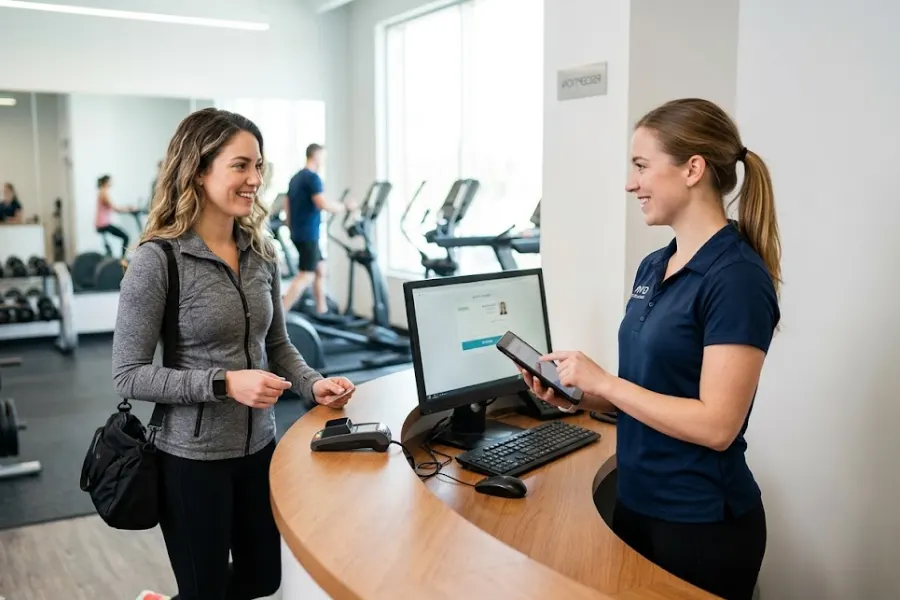
The first few minutes of a visit shape the mood of the whole session. Quick check-in helps members get moving right away instead of standing in line and watching the clock.
That same speed also shows up at checkout. When someone buys a drink, gloves, a T-shirt, or a one-off session, the process should feel fast and clean. As digital habits keep rising, that expectation gets even higher. McKinsey says 60% of US consumers now use digital payments for in-app purchases, and in-store digital wallet adoption rose from 19% in 2019 to 28% in 2024. A gym that moves well feels more professional, and members notice that.
It Keeps Membership Billing Simple and Reliable
Billing problems create frustration fast. The HFA says average member retention was 66.4% in 2024, which shows how sensitive retention can be, and every preventable billing problem puts both cash flow and trust at risk. A member may love your classes and still leave because a payment failed twice, a renewal was unclear, or a front-desk conversation turned awkward.
A better system keeps recurring charges, plan dates, and payment records in order, which is important for US gyms and fitness studios that depend on recurring revenue. It also helps staff answer questions quickly. That kind of consistency builds trust, and trust sits close to loyalty.
It Makes Class and Session Booking Easier to Stick With
People stay committed when the next step feels easy. If booking a class or trainer session takes too many clicks, members start skipping. A few skipped visits can turn into a lost routine.
A connected setup makes class access simpler and keeps availability current. That helps members hold on to momentum, especially in busy weeks when convenience decides whether they show up or stay home.
It Gives Staff Better Member Context at the Right Moment
Good service feels personal. Staff should know whether someone is new, whether they usually buy post-workout drinks, whether they book PT often, or whether their attendance has dropped lately.
That context helps teams speak to members in a more natural way. A simple suggestion about a class pack, a retail item, or a plan upgrade lands better when it fits the person standing there.
It Connects Retail, Services, and Memberships in One Journey
Fitness centers do not sell one thing. They sell access, sessions, classes, products, and often a whole lifestyle around the brand. Those parts should connect instead of sitting in separate systems.
When a member can renew a plan, add a class package, and buy merchandise inside one flow, the buying journey feels much smoother. Better yet, connected sales data helps teams create bundles and promotions that match real buying patterns.
It Spots Churn Signals Before Members Leave
Most members do not announce that they are about to quit. They start visiting less, stop buying extras, or disappear from class bookings. If your data is scattered, those signs stay hidden until it is too late.
A better POS gives you clearer visibility into attendance, spend, and account activity. That makes retention work more timely. Staff can follow up earlier, reward loyalty sooner, and re-engage people before they fully drift away.
The Features US Fitness Centers Should Prioritize Before Choosing a POS
Not every system fits the way a fitness business runs. Some are good at checkout and weak at member management. Others handle plans well but fall apart when retail, reporting, and online sales enter the picture.
- Recurring billing support: Monthly memberships, family plans, class packs, and renewals should be easy to manage without constant manual fixes.
- Booking control: Trainers, sessions, workshops, and classes need one clear system for availability, payment, and attendance.
- Member account visibility: Staff should see plan details, purchase history, and visit behavior quickly. That saves time and makes service feel more informed.
- Retail stock tracking: Supplements, apparel, drinks, and accessories should stay tied to live records inside reliable inventory management software, so front-desk sales stay organized.
- Mobile checkout: Flexible payment tools help staff serve people faster during busy times or outside the usual desk setup.
- Reporting that goes beyond sales: You need a view of retention, service demand, staff activity, and customer behavior, not just end-of-day totals.
- Omnichannel support: If you sell online, run reservations through digital channels, or manage more than one location, your system should connect those touchpoints.
- Customization and integrations: Every fitness business runs a little differently. Your POS should work well with your accounting, CRM, eCommerce, and internal workflow needs, especially when you need a more tailored Custom POS setup.
A smart shortlist starts there. The right system should fit your business model now and still make sense as your services grow.
Where Fitness Centers Lose Members Without Realizing It
Member loss usually starts in quiet places. Not in the gym floor energy. Not in the music. It starts in the parts of the business that feel clumsy or outdated.
- Manual payment follow-ups: Chasing members for routine renewals makes the brand feel behind the times.
- Disconnected tools: When booking, billing, and retail live in separate systems, staff create extra work and members see the confusion.
- Weak stock visibility: Retail items that show up as available but are actually gone create small trust issues that add up.
- Front-desk traffic jams: Peak-hour lines make regular visits feel harder than they should.
- No view of inactive members: If no one sees attendance drop-offs early, retention work happens too late.
- Generic promotions: Discounts sent to everyone often feel lazy. Members respond better to offers that match their habits.
- Guesswork at service level: Staff who cannot see customer history have to improvise. That leads to weaker recommendations and a less personal experience.
Loyalty can fade without any dramatic failure. Sometimes it is just too many small frustrations stacked together.
Questions to Ask Before Buying a POS for Your Fitness Center
Choosing a POS system for fitness center in USA should involve more than a quick demo and a price quote. The better questions sit closer to your daily operations and your long-term plans.
- Can it handle memberships and retail together? Many fitness centers earn money from several streams. Your system should keep those flows connected.
- Will it still fit as you grow? New classes, more trainers, a second location, or a larger retail mix can expose system limits fast.
- Does it connect to your existing tools? A POS should work well with your eCommerce platform, accounting setup, CRM, and payment tools.
- Can staff learn it quickly? A clean user experience matters. If training takes too long, daily service slows down.
- Will reports help you act? Raw data is not enough. You need dashboards and records that help teams make better decisions.
- Can it match your workflow? Every fitness center has its own rhythm. The system should support that rather than forcing awkward workarounds.
- What extra costs may appear later? Setup, support, custom work, and integration fees should be clear before you commit.
Those questions save time later. They also help you separate a nice sales pitch from a system that truly fits your business.
ConnectPOS – A Smarter POS for Fitness Businesses That Want More Loyal Members
Fitness businesses do not keep loyal members through training alone. They keep them through smooth, connected experiences every time someone pays, checks out, buys a product, or comes back for another visit. That is where ConnectPOS stands out for fitness businesses in the USA. It brings customer management, loyalty tools, mobile checkout, promotions, analytics, and omnichannel support into one system, so every touchpoint feels more consistent and personal.
- Connected customer profiles: ConnectPOS gives staff a clearer view of customer data in one place. That makes it easier to recognize returning members, understand past purchases, and serve them in a more personal way.
- Built-in loyalty tools: ConnectPOS supports reward and loyalty programs that strengthen repeat buying. It also supports tiered loyalty program rules and exclusive discount setups, which can give fitness brands more ways to keep members engaged.
- Omnichannel member experience: ConnectPOS is built to support customer journeys across online and in-store touchpoints. That matters for fitness businesses that want one smooth experience across front-desk sales, online purchases, and member-facing promotions.
- Mobile POS for faster service: ConnectPOS mobile POS helps businesses move checkout faster, even in flexible selling environments. For fitness centers, that can mean less waiting at the counter and a smoother experience when selling drinks, apparel, accessories, or add-on services.
- Personalized promotions and discounts: ConnectPOS supports targeted offers based on customer insights. That gives fitness businesses a better way to re-engage inactive members or reward loyal ones with deals that match real behavior.
- Analytics that support retention decisions: ConnectPOS includes reports and analytics tools that help businesses study customer behavior, segment data, and act on sales trends. That kind of visibility helps fitness operators spot what drives repeat visits and what may be hurting retention.
- Flexible integrations and customization: ConnectPOS connects with CRMs, payment gateways, ERP systems, and marketplaces, and it also supports tailored workflows and customization. That gives growing fitness businesses more room to shape the system around their own sales flow and customer journey.
ConnectPOS makes more sense for fitness businesses that want loyalty to feel built into daily operations, not added on later. When customer data, checkout, promotions, and reporting all work together, it becomes much easier to turn simple transactions into repeat visits and stronger long-term member relationships.
FAQs: POS System for Fitness Center in USA
1. What is the difference between a gym management tool and a fitness POS system?
A gym management tool often focuses on scheduling, members, and admin tasks. A POS system for fitness center in USA also handles payments, retail sales, customer data, and connected reporting.
2. Can a POS system help improve member retention?
Yes. Faster service, cleaner billing, better member data, and targeted promotions all support stronger retention over time.
3. Does a fitness center need a POS if it already uses booking software?
Usually, yes. Booking software may handle reservations, but it often leaves gaps in payments, retail, loyalty, and sales reporting.
4. Can one POS handle memberships, classes, PT sessions, and retail sales?
The right setup can. That is usually the goal for fitness centers that want fewer manual tasks and better visibility.
5. What should small fitness studios look for first?
Start with billing, booking, customer records, and ease of use. If retail matters to your business, stock tracking should be on that list too.
6. How important are mobile POS and omnichannel tools for modern fitness brands?
Very important. Members expect quick service and connected experiences across phone, desk, and online touchpoints.
Final Thoughts
A strong POS system for fitness center in USA helps fitness businesses keep more than sales records. It helps keep routines, trust, and repeat visits alive. When billing, bookings, retail, customer data, and reporting stay connected, loyalty gets easier to build and easier to protect. If you want a setup that supports smoother service and stronger member retention, contact us and see how ConnectPOS can fit your fitness business.