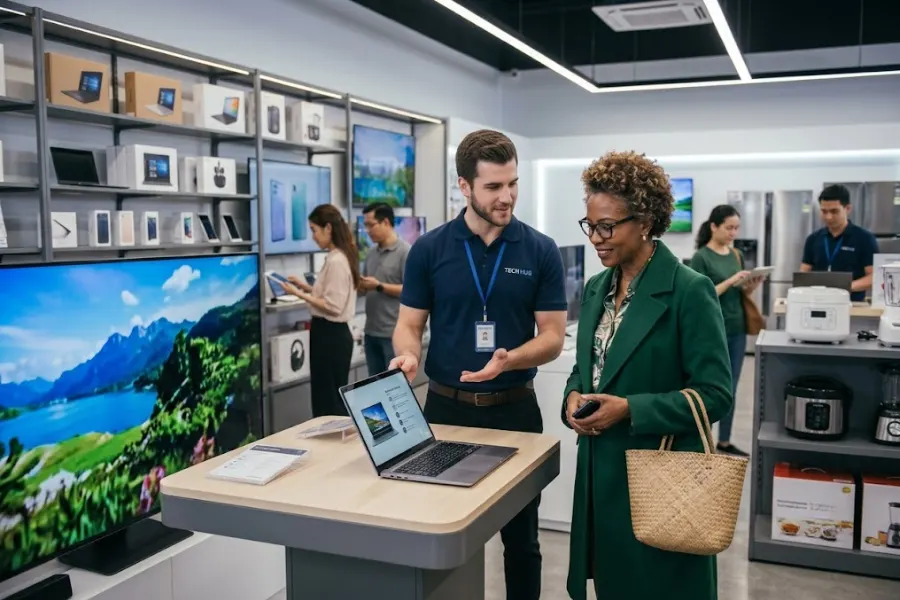
A POS loyalty program keeps customer data, rewards, and promotions tied directly to checkout, so retailers can run consistent incentives across online and in-store sales. It supports repeat purchases, strengthens customer relationships, and gives teams a clear view of what drives return visits.
In this article below, we share the top 5 POS loyalty programs that should be integrated into your system to retain customers and keep engagement steady across channels.
Why Is Loyalty Program Important for Retailers?
A loyalty program builds repeat purchasing through points, rewards, and targeted promotions. Retailers use it to increase purchase frequency, reduce churn, and keep customer interactions consistent across channels.
We’ll look into more details now on what retailers gain from a POS loyalty program and what to plan before launching one.
Benefits of POS Loyalty Program
In omnichannel retail, a POS loyalty program ties rewards to real transactions across stores and online channels. Thus, retailers get a clearer view of retention performance and can run incentives with fewer gaps.
- Increase Customer Retention – A common example is a membership signup that gives 5% off the next purchase. This type of incentive gives shoppers a clear reason to return and makes redemption easy at checkout.
- Better Customer Experience – Loyalty members can receive member-only pricing, early access, birthday rewards, or free shipping thresholds. As a result, customers feel recognized, and the experience stays consistent across touchpoints.
- Better Tracking Customer Behavior – Loyalty activity shows what customers buy, when they buy, and what promotions they respond to. Hence, retailers can segment customers, tighten discounting, and keep future promotions relevant.
- Increase Brand Loyalty – When rewards feel fair and easy to redeem, customers talk about the brand and recommend it to their circle. That steady word-of-mouth has a direct impact on long-term revenue.
- Higher basket size with smarter incentives – Points multipliers, tier perks, and bundle rewards can push customers toward higher-value carts without relying on blanket discounts.
To keep these benefits sustainable, retailers need the right structure and controls. The next section covers what to focus on when building a POS loyalty program.
Notices When Building Loyalty Program
Have a long-term vision
Many business owners focus heavily on short-term returns because acquiring new customers feels like the fastest path to revenue. Yet acquiring new customers typically costs more than retaining existing ones.
For that reason, loyalty programs should be designed as a long-term system with clear rules for earning, redeeming, and communicating rewards.
Set a reward budget (for example, a % of revenue) so discounts stay controlled. Also, define an expiration policy that fits your category, so points don’t become an accounting burden.
Determine the potential of the business
Start by reviewing your data so the loyalty structure matches real customer behavior. Focus on:
Primary data: data collected directly from transaction history, purchase frequency, and customer surveys.
Secondary data: data from market research or third-party surveys.
Once the review is done, you can map your market position, growth potential, and competitive pressure. This supports stronger customer segmentation and tighter promotions.
Identify your repeat drivers (items customers buy again) and anchor rewards around them. Also, check return rates and discount sensitivity so rewards don’t attract bargain-only buyers.
Define the Goals of The Loyalty Program
Clear goals make the program measurable and easier to manage. Typical goals include increasing repeat rate, raising average order value, driving referrals, or increasing omnichannel engagement.
Understanding and identifying the right customer groups supports a loyalty structure that fits their demographics and shopping patterns. It also keeps promotions relevant and easier to redeem.
Attach KPIs to each goal, such as repeat purchase rate, redemption rate, churn rate, and member share of revenue. Then set a target review window (30/60/90 days) so you can adjust rules and campaigns on time.
Using Software to Support Building a Loyalty Program
Software is necessary for running a loyalty program across channels without manual tracking. A POS loyalty program works best when it connects customer profiles, transactions, and rewards in one system, so staff can enroll members, apply points, and redeem rewards directly at checkout.
Besides product quality, service quality strongly influences repeat visits. You can create reward tiers, point rules, and targeted incentives that keep loyal customers engaged and coming back.
Confirm omnichannel sync, so points and rewards stay consistent online and in-store. Confirm fraud controls, such as duplicate account checks and redemption limits. Keep redemption simple for staff, with minimal taps and clear prompts at checkout. Review the reporting depth to track enrollment rate, redemption rate, and margin impact per campaign.
5 Loyalty Program Should Be Integrated Into Your POS System
These POS loyalty program tools are widely used across eCommerce ecosystems and can be connected to POS workflows through native integrations, partner apps, or API-based setups (depending on your platform and POS).
A POS loyalty program works best when it keeps the reward logic consistent across channels. Retailers can run one set of rules for earning and redeeming points, while customers get the same experience in-store and online, with rewards, store credit, member-only perks, and targeted campaigns.
Moreover, flexible bonus-point rules support smarter promotions. You can run double-points weekends, category-based multipliers, or VIP tiers without rewriting your whole discount strategy. That creates a stronger incentive to return, keeps redemption simple at checkout, and keeps your margin under control.
1. LoyaltyLion
LoyaltyLion is a points-based retention platform built for ecommerce brands that want structured loyalty tiers, referrals, and behavioral rewards. Founded in 2012, LoyaltyLion is used by many retailers on platforms such as:
- Magento
- Shopify
- BigCommerce
With a rating of 4.8/5 on Getapp, LoyaltyLion deserves to be considered in the top POS Loyalty Program for retailers. A quick summary of some of the pros and cons is as follows:
Pros
- Easy setup
- Automated Segmentation Strategy
- Recommendation Board
- Feature Customization Rewards
- Feature Gift Cards or Discount Codes at Checkout
Cons
- High price
- Don’t have free trials or demo
LoyaltyLion tends to fit brands with frequent repeat cycles and strong community engagement. It also supports behavior-based rewards, such as points for creating an account, sharing on social, writing reviews, or hitting spend thresholds, which keeps engagement going between purchases.
- Health/Wellness
- Beauty
- Fashion
2. SLoyalty
Founded in 2012 and deployed on Shopify and BigCommerce, SLoyalty is a popular choice for merchants that want a clean loyalty structure without heavy setup. SLoyalty focuses on building repeat purchases through points, bonuses, and targeted communications tied to reward activity.
Highlighted features include:
- Advanced Theming & Design
- Rewards
- Program Customization
- Points Campaign
- Special Bonus
- Shoppers Notification
With 4.08/5 reviews on Cuspera, SLoyalty is commonly chosen by teams that want a loyalty program that matches their storefront branding and keeps campaigns easy to launch.
Pros
- Have 14-day free trials
- Personalization Customer Loyalty Program
- Collection for customizing reward
Cons
- Lack of features and support in the free plan compared to others.
SLoyalty can work particularly well for merchants running frequent short campaigns, since bonus points and time-based promotions are easy to communicate through shopper notifications.
3. Yotpo
Yotpo is an eCommerce marketing platform with strong capabilities in reviews, loyalty, and referrals. Many brands choose it because loyalty can sit close to review collection and retention marketing. Yotpo’s loyalty and referral features support repeat purchases, while reviews and UGC can improve conversion across product pages and campaigns. It also includes detailed analytics reports that provide intuitive metrics to help you improve your sales and marketing strategies.
Highlighted features include:
- Review & Rating
- Loyalty & Referral
- SMS Marketing
- Visual UGC
With a 7.9/10 score on TrustRadius, Yotpo is often considered by customer-centric retailers that want loyalty data tied to lifecycle marketing, such as post-purchase flows, win-back campaigns, and referral prompts.
Pros
- Automatic Review Request
- Display Customization
- Simple, Easy Web Integration
Cons
- Lack of features and support in the free plan compared to the premium plans
Yotpo is typically a good match when you plan to run loyalty and referrals as part of a broader retention engine, not as a stand-alone points tool.
4. Smile.io
Starting in 2012, Smile.io has served a large customer base globally across popular e-commerce platforms. It is known for fast setup and straightforward points + referral programs. Smile.io supports retailers that want to start with simple rewards and expand into VIP tiers as they scale.
- Loyalty Programs
- Referral Tracking
- Membership Management
- Rewards Management
When using Smile.io for your POS Loyalty Program, there are some notifications about pros and cons that should be considered below
Pros
- Free trials & free version
- Easy to set up & use
- Easy to track transactions through loyalty programs
Cons
- Only the Enterprise version has an API
- Limited to a few POS systems
Smile.io often fits SMB retailers that want a predictable loyalty structure quickly, with clear rules like “earn points per dollar,” birthday rewards, and referral credits that customers understand without extra explanation.
5. Amasty
Amasty is a premier Magento extension builder (since 2009) that provides loyalty program extensions for Magento merchants. It’s widely used by teams that prefer Magento-native control over reward logic.
Typical capabilities include:
- Reward users for purchase, registration, etc
- Add manually or deduct points automatically
- Pay with points fully or partially
- Setpoints exchange rate
- Gain time with actions available off-the-shelf
This extension is available for both Magento 1 and Magento 2.
Amasty is often a strong fit for Magento-first retailers that want loyalty rules managed close to catalog, pricing, and customer accounts. That said, the smoothness of the omnichannel flow depends on how your POS reads and applies Magento promotions and customer reward balances.
| POS loyalty program | Best for | Key strengths | Watch-outs |
| LoyaltyLion | Fast-growing ecommerce brands | Segmentation, tiers, behavior-based rewards | Higher cost, limited trial access |
| SLoyalty | Shopify/BigCommerce merchants | Branded loyalty programs, bonus campaigns, notifications | Free plan limitations |
| Yotpo | Brands focused on retention marketing | Loyalty + referrals + reviews + SMS options | Premium plans often needed for deeper features |
| Smile.io | SMB/mid-market retailers | Fast setup, easy points and referral structure | API and POS compatibility limits on lower tiers |
| Amasty (Magento) | Magento merchants | Magento-native reward rules and redemption | Integration scope depends on POS setup |
How ConnectPOS Supports POS Loyalty Program Success
ConnectPOS is a next-gen POS built for retailers that want fast checkout, consistent customer data, and loyalty workflows that stay reliable across every selling channel.
- POS loyalty program integrations: Connect loyalty platforms to your checkout flow so points earning and redemption stay consistent across channels.
- Real-time inventory management: Update stock levels as sales happen, so reward redemptions and promo demand don’t disrupt availability.
- Omnichannel sync: Align pricing, promotions, and customer activity across online and in-store transactions for one consistent loyalty experience.
- Flexible payments: Support split payments and digital wallets within one checkout flow, so redemption and payment stay smooth in the same transaction.
- Unified customer profiles: Keep purchase history and customer data in one place, so staff can recognize members and apply rewards quickly.
- Mobile POS: Run loyalty actions at the counter, on the floor, or at pop-ups, with the same workflow across devices.
- CRM POS + CX Solution: Use customer segments and profiles to run more relevant loyalty campaigns and improve repeat visits.
- Multi-location management: Centralize menus, pricing, and loyalty settings so every store follows the same rules and staff training stays consistent.
Final Thoughts
Retail loyalty succeeds when the program protects margin while staying frictionless for customers and staff. A strong POS loyalty program uses clear earn/redeem rules, tracks refunds and returns accurately, and runs targeted incentives instead of blanket discounts, so points translate into repeat visits and predictable revenue. Pick a loyalty tool that matches your platform, keeps customer identities clean across channels, and gives reporting you can act on. Contact ConnectPOS to explore how our POS and loyalty integrations support long-term customer loyalty.
►►► Optimal solution set for businesses: Shopify POS, Magento POS, BigCommerce POS, WooCommerce POS, NetSuite POS, E-Commerce POS