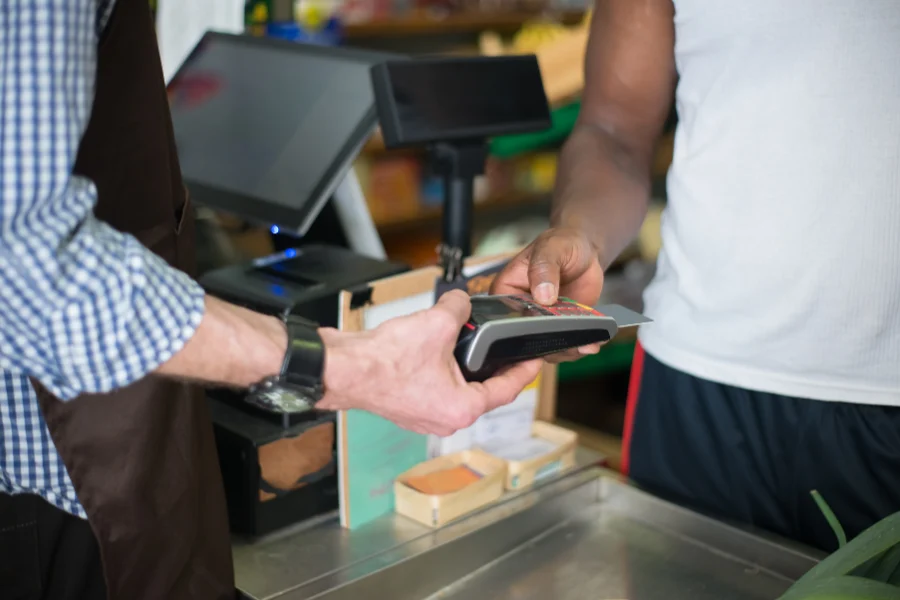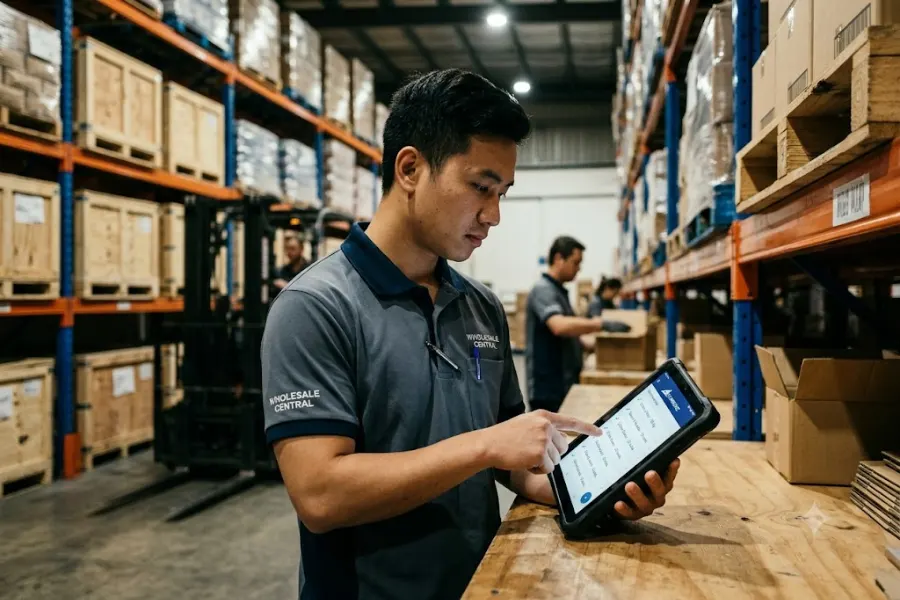
When retail businesses grow more complex, with operations spanning multiple stores, regions, and sales channels, managing this scale requires more than a basic point-of-sale system. That’s where an enterprise POS comes in. So what is an enterprise POS?
An enterprise POS is designed to handle high transaction volumes, unify data across locations, and support advanced integrations with other business systems. In this guide, we’ll break down what an enterprise POS is, how it differs from traditional systems, and why it plays a critical role in helping large and fast-growing retailers operate efficiently.
Highlights
- Enterprise POS systems are built for scale, offering centralized data management, real-time synchronization, and advanced integrations to support omnichannel retail operations.
- Compared to traditional POS systems, enterprise solutions provide deeper functionality, greater scalability, and a broader integration ecosystem, making them ideal for complex and fast-growing businesses.
What is an Enterprise POS?
An enterprise POS system supports retailers operating at scale, managing multiple stores, large product catalogs, and high transaction volumes. Unlike traditional or small-business POS solutions that focus mainly on basic sales processing, an enterprise POS provides a centralized platform for managing inventory, customer data, and orders across all locations.
What sets it apart is its ability to integrate complex retail environments into a single unified system. Businesses can maintain consistent pricing, track stock across warehouses, and gain real-time visibility into performance without relying on disconnected tools. This control is essential for brands expanding into new markets or running omnichannel models.
At its core, an enterprise POS helps retailers streamline operations, reduce manual work, and maintain accuracy while scaling across regions, stores, and sales channels.
Enterprise POS vs Traditional POS: What’s the Difference?
The difference between an enterprise POS and a traditional POS becomes clear when looking at scale, capabilities, and business fit.
Scalability: Traditional POS systems are designed for single stores or small chains, where operations are relatively simple. Enterprise POS systems support hundreds of locations, large inventories, and high transaction volumes without slowing down performance.
Functionality depth: A traditional POS focuses on core features like sales processing and basic inventory tracking. Enterprise solutions provide advanced tools such as centralized management, detailed reporting, demand forecasting, and customer data analysis. These features help businesses make faster and more informed decisions.
Integration ecosystem: Traditional systems often have limited integration options. Enterprise POS platforms are built to integrate with ERP, CRM, eCommerce, and other third-party tools, creating a unified retail system.
Target business size: Traditional POS works best for small- to mid-sized retailers with simple needs, while enterprise POS is built for large retailers, franchises, and fast-growing brands that manage complex operations.
Key Features of an Enterprise POS System
Enterprise POS systems are built to support retailers dealing with complex operations, large volumes of data, and multiple sales channels. With the right features in place, retailers can maintain control, improve accuracy, and respond quickly to changing demands.
Centralized Data Management
A key feature of an enterprise POS is its ability to store all critical data in one centralized system. Inventory levels, customer information, and order history are managed within a unified database, making it easier to access and update data. This also reduces inconsistencies and improves accuracy.
Multi-Store & Multi-Warehouse Support
Enterprise retailers often operate across multiple locations, including physical stores and warehouses. An enterprise POS allows businesses to manage all these locations from a single platform. Retailers can monitor stock levels, transfer inventory between stores, and coordinate fulfillment processes efficiently. This level of visibility is essential for maintaining smooth operations across regions.
Real-Time Synchronization
Keeping data aligned across channels is critical for modern retail. Enterprise POS systems ensure that every transaction updates inventory and sales data instantly. This helps prevent issues like overselling or stock discrepancies and supports a consistent experience for customers.
Advanced Reporting & Analytics
Detailed reporting tools give businesses deeper insight into their performance. Retailers can track sales trends, evaluate product performance, and understand customer behavior. These insights help leaders identify opportunities, adjust strategies, and improve overall efficiency.
Customization & Integration Capabilities
Enterprise POS platforms are designed to fit into a broader technology ecosystem. They can integrate with ERP, CRM, and eCommerce systems, allowing data to flow seamlessly between platforms. In addition, businesses can customize workflows and features to match their specific operational needs, ensuring the system remains flexible as the business grows.
Why Do You Need an Enterprise POS?
An enterprise POS system plays a critical role in helping retailers manage complexity while maintaining consistent performance across all operations. As businesses grow, the need for a more powerful and connected system becomes essential.
By centralizing processes such as sales, inventory, and reporting, businesses can reduce manual work and streamline daily tasks. Teams spend less time switching between systems and more time focusing on growth.
An enterprise POS also supports an enhanced customer experience across channels. With unified data, retailers can deliver consistent pricing, promotions, and service whether customers shop online or in-store. Real-time tracking also allows businesses to monitor stock levels across all locations, reducing the risk of overselling or stockouts.
In addition, it provides a scalable infrastructure for business growth. Retailers can expand into new stores, regions, or channels without needing to replace their system.
Finally, enterprise POS solutions offer better compliance and security controls, helping businesses protect sensitive data and meet industry regulations as they scale.
Who Needs an Enterprise POS System?
Not every business requires an enterprise POS system, but for retailers operating at scale and with complex operations, it becomes a critical tool. An enterprise POS is especially valuable for the following types of businesses:
- Large retail chains and franchises. Businesses operating multiple stores need a centralized system to manage pricing, inventory, and performance across all locations. An enterprise POS ensures consistency while allowing control at both global and store levels.
- Omnichannel retailers with online and offline presence. Retailers selling through eCommerce and physical stores benefit from a unified platform that keeps data aligned. This allows for smoother customer journeys, accurate inventory tracking, and flexible fulfillment options.
- Fast-growing brands expanding into physical stores. Brands moving from online to offline retail require a system that can support rapid expansion. An enterprise POS provides the infrastructure needed to open new locations without operational disruption.
- Businesses with complex inventory and fulfillment needs. Companies managing multiple warehouses, suppliers, or fulfillment methods need advanced tools to track and allocate inventory efficiently. An enterprise POS helps simplify these processes and improve overall accuracy.
How ConnectPOS Powers Enterprise Retail Operations
Enterprise retailers need a platform that connects every part of their operations in real time. ConnectPOS is built to meet these demands, helping businesses manage complexity with speed, accuracy, and flexibility across all channels.
Key enterprise POS capabilities of ConnectPOS include:
- Real-time synchronization across eCommerce platforms. ConnectPOS integrates seamlessly with leading platforms such as Shopify and Magento, enabling automatic, real-time synchronization of inventory, orders, and customer data. This ensures that all sales channels, both online and in-store, remain fully aligned.
- Omnichannel fulfillment capabilities. Retailers can offer flexible purchasing and delivery options, including Buy Online, Pick Up In Store (BOPIS), ship-from-store, and click-and-collect. These features allow businesses to optimize fulfillment processes and meet evolving customer expectations.
- Multi-store and multi-warehouse management. A centralized dashboard provides full visibility and control over multiple stores and warehouses. Businesses can easily track stock levels, manage transfers between locations, and monitor performance across regions.
- Unified customer profiles and loyalty programs. By consolidating customer data into a single system, retailers can gain a complete view of shopping behavior and preferences. Integrated loyalty programs enable personalized promotions, rewards, and experiences that strengthen customer engagement and retention.
- Advanced reporting and offline mode. Access comprehensive, real-time reports on sales, inventory, and staff performance to support data-driven decisions. Additionally, the offline mode ensures uninterrupted transactions during internet outages, with all data automatically synced once connectivity is restored.
Moreover, ConnectPOS AI transforms everyday retail data into clear, actionable insights that teams can use immediately. By analyzing sales patterns, inventory levels, and supplier timelines, it delivers real-time forecasts for revenue, demand, and sales volume with up to 92% accuracy over 7-day periods.
FAQs: What is an Enterprise POS?
1. What makes a POS “enterprise-level”?
An enterprise POS is designed to handle complex, large-scale operations. It typically includes centralized data management, multi-store and multi-warehouse support, real-time synchronization, advanced reporting, and deep integration with systems such as ERP, CRM, and eCommerce platforms. Scalability, customization, and high performance across multiple locations are key defining factors.
2. Is an enterprise POS suitable for mid-sized businesses?
Yes, especially for mid-sized businesses planning to scale. While it may offer more features than immediately needed, an enterprise POS provides the infrastructure to support growth, expansion into new channels, and increasing operational complexity without requiring a system change later.
3. How much does an enterprise POS system cost?
Costs vary widely depending on features, customization, number of locations, and integrations. Pricing can range from a few hundred to several thousand dollars per month, often including setup fees, hardware costs, and ongoing support or licensing.
4. Can enterprise POS systems integrate with eCommerce platforms?
Yes. Most enterprise POS systems are built to integrate seamlessly with platforms like Shopify, Magento, and others, ensuring synchronized inventory, orders, and customer data across online and offline channels.
5. How long does it take to implement an enterprise POS?
Implementation timelines depend on business size and complexity. It can take anywhere from a few weeks for simpler setups to several months for large enterprises requiring customization, integrations, and staff training.
In Conclusion
Choosing the right enterprise POS system can directly impact your ability to scale and deliver seamless customer experiences across all channels. It is a solution that goes beyond basic transactions to provide real-time insights, centralized control, and true omnichannel capabilities.
ConnectPOS is built to meet these demands, empowering enterprise retailers with flexibility, performance, and advanced intelligence to stay ahead in a competitive market. So, are you ready to transform your retail operations? Contact ConnectPOS today to discover how a tailored enterprise POS solution can drive your business forward.
►►► Optimal solution set for businesses: Shopify POS, Magento POS, BigCommerce POS, WooCommerce POS, NetSuite POS, E-Commerce POS