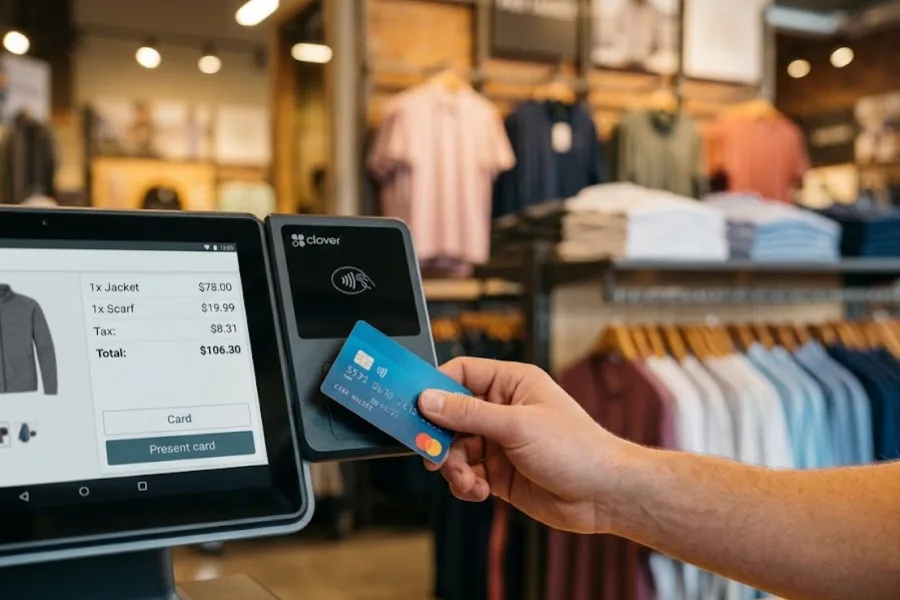
AI is no longer an experimental layer in retail operations. It now sits within POS systems and reshapes how transactions, inventory control, customer interactions, and decision-making processes are handled at the core level. The impact is not limited to automating routine tasks. It extends into how data is interpreted, how actions are suggested in real time, and how operational flow adapts to shifting demand patterns across channels. Retail businesses evaluating this shift are not looking at isolated features. They are assessing how AI integration with POS systems changes the structure of daily workflows, how it interacts with existing POS logic, and how it supports decision-making across store networks. This article from ConnectPOS provides information on which parts of the operation flow are being influenced most by AI integration inside POS environments.
Highlights
- AI integration in POS systems adds a data-driven intelligence layer that changes how transaction records, inventory movement, and customer behavior are interpreted across retail operations, shifting system logic toward more adaptive responses.
- Core workflows such as checkout processing, stock management, and customer interaction move toward behavior-based and demand-based decision flow, where real-time signals guide operational actions across stores and channels.
Overview of AI Integration with POS Systems
AI integration with POS systems is reshaping how retail and service businesses manage daily operations by turning transaction data into continuous, actionable intelligence. Instead of functioning only as a sales recording tool, modern POS platforms connected with AI can interpret customer behavior, identify demand patterns, and detect operational gaps in real time. This creates a more responsive environment where decisions around pricing, staffing, and inventory are grounded in live data rather than static reports.
At the operational level, AI strengthens core POS functions by connecting sales activity with forecasting, customer insights, and risk detection. It supports more accurate demand prediction, improves checkout flow through behavior analysis, and flags irregular transaction patterns that may indicate fraud or loss. Over time, this integration empowers businesses to move toward more consistent performance, where store operations, supply planning, and customer experience are closely aligned within a single intelligent system.
Key Areas Where AI Enhances POS Operational Workflows
AI integration with POS systems reshapes POS operations through turning raw transaction data into real-time decisions across inventory, customer engagement, risk control, and workforce coordination. It shifts the system from a passive recorder of sales into an active layer that interprets patterns, flags irregularities, and guides frontline actions. Retailers that apply AI within POS workflows gain tighter control over daily execution while keeping decisions grounded in data rather than guesswork.
Automated Inventory Management and Predictive Analytics
Inventory management moves beyond static stock counts once AI models start learning from historical sales, seasonal shifts, and local demand signals. The system can anticipate which SKUs will move faster in specific locations and adjust reorder timing before shelves run empty. This reduces reliance on manual forecasting and limits the risk of overstock tied to slow-moving items.
Predictive analytics also connects inventory with external variables such as promotions, weather patterns, or regional events. A spike in demand no longer comes as a surprise. The POS environment feeds live sales data into forecasting models, allowing procurement teams to react earlier and with more precision. This level of responsiveness becomes especially valuable in high-turnover sectors like grocery, fashion, or quick-service retail.
Over time, AI refines its accuracy through continuous learning. It identifies anomalies such as sudden demand drops or unusual return rates and prompts investigation. Inventory decisions become less reactive and more structured, supported by patterns that human analysis would struggle to detect at scale.
Personalized Customer Experiences and Dynamic Upselling
AI integration with POS systems enables the POS system to recognize customer behavior at a granular level, using purchase history, visit frequency, and basket composition to shape interactions at checkout. Instead of generic promotions, the system can surface tailored suggestions that align with individual preferences, increasing the likelihood of conversion without disrupting the buying experience.
Dynamic upselling becomes more contextual. The POS can recommend complementary items based on what similar customers purchased in the same scenario or what tends to pair well with items already in the cart. These suggestions appear at the right moment, guided by timing and relevance rather than static rules defined months earlier.
Customer engagement improves as interactions feel more aligned with actual needs. Loyalty programs gain depth when rewards and offers reflect real behavior instead of broad segments. Over time, this builds stronger retention, as customers perceive value in recommendations that feel considered rather than intrusive.
Advanced Fraud Detection and Loss Prevention
Data from Statista shows that in 2024, roughly two-thirds of online merchants were already using or planning to adopt generative AI in e-commerce fraud management, reflecting a clear shift toward more adaptive risk control.
AI strengthens fraud detection by analyzing transaction patterns in real time and identifying deviations that signal risk. Suspicious refunds, unusual discount applications, or rapid high-value transactions trigger alerts before damage escalates. This approach contains exposure earlier compared to traditional rule-based systems that respond after issues appear.
Loss prevention also extends beyond payment fraud into internal activities. AI can flag irregular staff behavior, such as repeated voids or price overrides outside normal patterns. These insights support audit teams and help limit shrinkage without relying solely on manual review, where subtle patterns often go unnoticed in large datasets.
Optimized Staff Management and Checkout Optimization
Data from Forbes shows that 78% of surveyed organizations adopted AI in 2024, a clear rise from 55% in 2023, reflecting how quickly businesses are integrating intelligent systems into daily operations.
Within retail environments, AI supports workforce planning with staffing levels aligned to predicted foot traffic and transaction volume. Scheduling reflects real demand patterns, which helps reduce idle time during slower hours and balance workload during peak periods. Managers gain clearer visibility into performance data, making role assignment more aligned with individual strengths and past results.
At checkout, AI integration with POS systems refines the flow of transactions through continuous analysis of queue length, processing speed, and payment behavior. It can signal when to open additional lanes, guide customers toward self-checkout, or adjust in-store processes to keep lines moving at a steady pace.
Over time, these adjustments create a more consistent in-store experience while maintaining control over daily operations.
Optimize Your Operations With ConnectPOS and Advanced AI Capabilities
ConnectPOS integrates AI into core retail operations to help businesses move from reactive management to data-informed decision making. Sales, inventory, and customer behavior data are connected within a single system, supporting more consistent planning across stores and channels. The focus shifts toward turning daily transactions into actionable insights that improve forecasting accuracy, operational coordination, and supply alignment.
Key Benefits
- Improved demand visibility: AI analyzes historical sales patterns, seasonal shifts, and customer behavior to provide clearer signals for future demand, helping retailers plan with fewer gaps between expectation and actual sales performance.
- Stronger revenue planning: Forecasting models interpret revenue trends across products, categories, and locations, allowing businesses to understand what drives performance and how different factors influence overall sales outcomes.
- Better staffing alignment: Customer traffic predictions and peak-hour detection help managers allocate staff more effectively, reducing underutilization during slow periods and easing pressure during high-traffic hours.
- More accurate promotion evaluation: AI measures how campaigns influence sales volume and customer response, giving clearer insight into which promotional strategies generate real returns and which require adjustment.
- Enhanced inventory control: Demand forecasting and stock monitoring reduce situations where products are either overstocked or unavailable, supporting more balanced inventory flow across stores.
- Supply chain awareness: Early detection of potential disruptions helps businesses prepare for delays or shortages, improving continuity in product availability and reducing operational interruptions.
- Supplier performance tracking: Delivery consistency, fulfillment speed, and reliability are monitored to help businesses evaluate supplier quality and make more informed sourcing decisions over time.
FAQs: AI Integration with POS Systems
1. What role does AI integration with POS systems play in modern POS systems?
AI inside POS systems supports real-time interpretation of transaction data, customer behavior, and inventory movement. It works within operational layers rather than outside them, shaping how information is processed during daily retail activity.
2. Which part of the POS operation flow is most affected by AI?
Checkout processing, demand forecasting, and inventory coordination show the strongest impact. These areas rely on continuous data input, where AI can interpret patterns and support faster operational responses.
3. Does AI change how inventory is managed through POS systems?
Yes. Inventory management becomes more data-driven through demand signals extracted from sales patterns. Stock movement tracking and replenishment planning shift toward predictive logic instead of manual review cycles.
4. How does AI affect customer interaction at the POS level?
Customer interaction gains more context through purchase history and behavioral signals. POS systems can surface relevant product suggestions or support more tailored engagement during transactions.
Conclusion
AI integration with POS systems is reshaping how retail operations function at a structural level. Transaction handling becomes more context-aware, inventory decisions gain predictive direction, and customer engagement moves closer to behavior-based responses rather than static rules. Each layer of the operation flow is affected in different ways, yet the overall direction points toward more data-responsive execution across stores and channels.
Retailers reviewing this shift are focusing on how AI aligns with their operational complexity, not just on individual capabilities. The value lies in how well these systems adapt to real workflows rather than replacing them.
Businesses that want to understand how AI can fit into their POS structure can connect with ConnectPOS to explore solutions aligned with real operational needs and long-term retail direction.