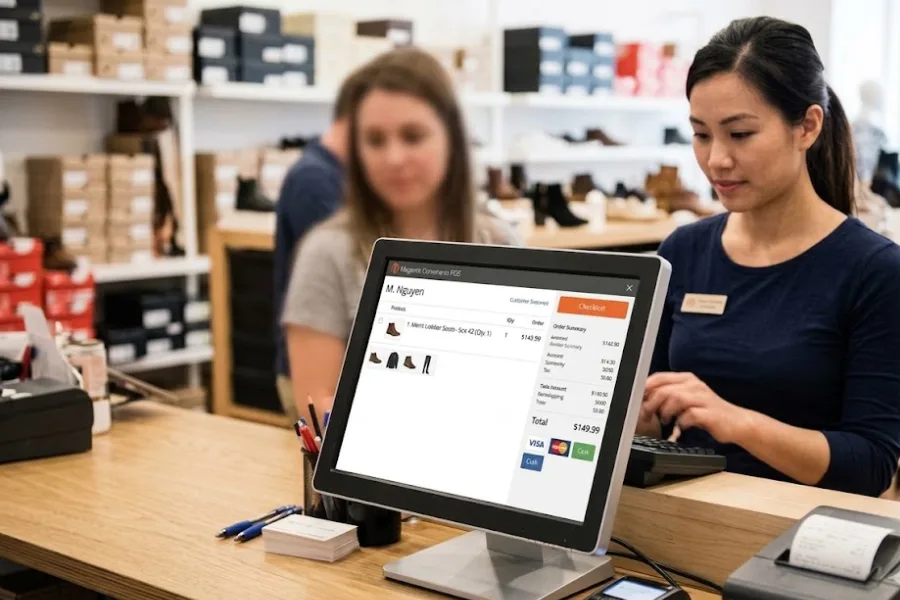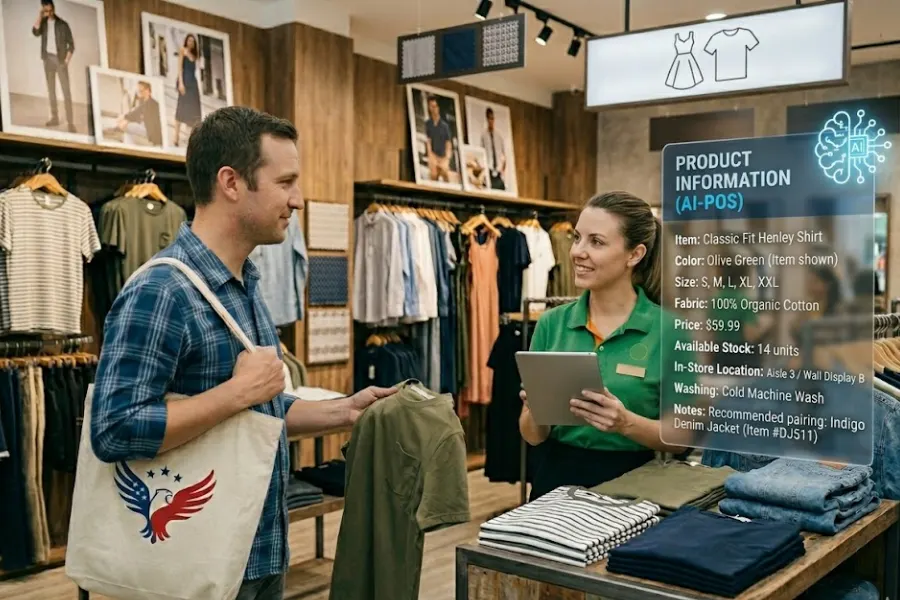
Artificial intelligence has shifted the role of POS systems from transactional recorders to decision engines embedded in daily retail execution. Sales terminals now interpret demand signals, flag irregular behavior, guide pricing adjustments, and generate predictive insight at the point where revenue is captured. Retail leadership teams increasingly evaluate POS platforms based on their analytical intelligence rather than checkout speed alone. The competitive landscape reflects this transition. Retailers are prioritizing data visibility, forecasting accuracy, fraud monitoring, and customer insight as board-level concerns tied directly to margin protection and long-term growth. This article from ConnectPOS advises on seven practical use cases that illustrate how best AI for POS systems translates technical capability into measurable commercial impact.
Highlights
- Predictive analytics and real-time data interpretation can translate into measurable outcomes such as margin control, healthier inventory flow, and stronger compliance governance.
- Successful adoption depends on data integrity, system alignment, and operational accountability, as outlined in the considerations for applying AI-powered capabilities into sales operations.
Top 7 Use Cases That Highlight the Best AI for POS Systems
Artificial intelligence is moving from experimentation to operational deployment inside retail environments. According to McKinsey & Company, retailers that apply AI in core commercial functions such as demand forecasting and pricing analytics report inventory reductions of up to 20 percent alongside measurable margin improvement. This signals a direct financial link between predictive intelligence and stock discipline at the store level.
An IBM Institute for Business Value report states that 81% of retail executives and 96% of their teams already apply AI across planning, supply chain, customer service, and operations. This adoption rate shows how deeply AI is integrating into core retail functions.
As POS platforms shift toward becoming data intelligence hubs instead of simple transaction tools, this momentum sets the stage for seven use cases of the best AI for POS systems.
AI-Powered Demand Forecasting
Demand forecasting powered by AI interprets historical sales, seasonal patterns, promotional cycles, and local purchasing behavior to anticipate future sales volumes. Unlike static forecasting models, AI adapts continuously as new transactions enter the system. This dynamic recalibration improves purchase planning and supports more accurate replenishment decisions.
Retailers gain greater confidence in open-to-buy planning and supplier negotiations. Instead of reacting to past performance, management teams work with forward-looking projections grounded in real transaction data. Over time, this approach stabilizes cash flow allocation and aligns purchasing strategies with actual demand signals captured at the POS.
AI-Driven Sales Data Analytics
Sales data analytics supported by AI moves beyond summary reporting. It identifies hidden correlations between product categories, time-of-day trends, customer segments, and promotional impact. These insights allow leadership teams to evaluate pricing strategies, campaign effectiveness, and cross-selling opportunities using predictive interpretation rather than static dashboards.
At the store level, AI-driven analytics can guide staff recommendations and suggest complementary items based on purchasing patterns. At the executive level, it refines revenue modeling and long-term category planning. The value lies in transforming raw sales data into strategic intelligence that informs both short-term tactics and multi-year growth planning.
Intelligent Inventory Management
Inventory distortion remains one of retail’s most persistent financial drains. Best AI for POS systems analyzes sell-through velocity, shrinkage anomalies, and supplier lead times to refine reorder logic and highlight irregular stock movement. This visibility improves stock allocation across locations and prevents capital from sitting idle in slow-moving items.
Beyond replenishment, intelligent inventory management supports assortment rationalization and lifecycle tracking. AI identifies declining SKUs early and surfaces emerging demand trends before they become obvious through manual review. Retailers gain tighter control over inventory discipline while protecting margins and preserving working capital stability.
Automated Identity and Age Verification
Compliance-driven sectors such as liquor, tobacco, and regulated goods require accurate age verification at checkout. AI-powered identity verification tools integrated into POS systems use document scanning and pattern recognition to validate identification documents in real time. This minimizes manual interpretation errors and lowers regulatory exposure.
Retailers benefit from consistent enforcement across locations. Staff turnover no longer introduces uneven compliance standards. Audit trails linked to each transaction create defensible documentation in case of inspections or disputes. In regulated environments, AI-driven identity verification transforms compliance from a training burden into a system-level safeguard.
Smart Personalized Recommendations
AI-driven personalization at the POS level interprets purchase history, frequency patterns, basket composition, and customer lifecycle stage to generate contextual product suggestions. Within the best AI for POS systems, machine learning models continuously learn from new transactions, refining relevance over time and aligning recommendations with individual purchasing behavior rather than broad demographic assumptions.
For retailers, this translates into higher average transaction value and stronger customer retention without relying on blanket discounts. Sales associates receive guided prompts grounded in data rather than guesswork. Over time, personalization builds measurable loyalty impact, as customers experience interactions shaped by their real buying patterns rather than generic campaign messaging.
Fraud Detection & Transaction Anomaly Prevention
Transaction-level AI monitors irregular purchasing patterns, refund frequency, void activity, and behavioral inconsistencies across locations. Instead of waiting for monthly audits, anomaly detection operates in real time, flagging suspicious activity before financial exposure escalates. The system learns typical transaction behavior and identifies deviations that may signal internal misconduct or external fraud attempts.
This capability supports tighter governance across distributed store networks. Risk teams gain visibility into abnormal patterns tied to specific terminals, users, or product categories. Fraud prevention becomes an embedded operational control rather than a reactive investigation process. Retailers preserve margin integrity while maintaining smoother checkout experiences for legitimate customers.
Pricing & Promotion Optimization
AI-supported pricing intelligence, a defining capability of the best AI for POS systems, evaluates elasticity patterns, competitor benchmarks where integrated, historical sell-through rates, and promotional lift data.
Instead of relying on static markdown calendars, the system interprets how price adjustments influence demand at the SKU and category levels. Retailers gain clearer visibility into which pricing actions generate incremental revenue and which weaken margin without delivering meaningful volume impact.
Promotion planning benefits from predictive modeling that estimates campaign performance before launch. Management teams can compare projected outcomes across discount tiers or bundle structures. Over time, this approach refines promotional discipline and supports a more data-driven pricing architecture, aligning revenue objectives with measurable consumer response patterns captured directly through the POS.
Considerations When Applying AI-powered Features to Your Sales Operations
Integrating AI into sales operations changes how decisions are made at the transaction level. Forecasting models, recommendation engines, and anomaly detection tools influence pricing, inventory, and customer engagement in real time. The real impact depends on operational readiness rather than the algorithm alone.
Retail leaders should evaluate data governance, system integration, compliance controls, and team alignment before deployment. AI delivers stronger commercial outcomes when embedded within a disciplined sales framework instead of being added onto disconnected processes.
Key Considerations
- Data integrity and consistency: AI models rely on clean SKU structures, accurate transaction records, and standardized customer profiles. Poor data hygiene weakens forecasting accuracy and pricing intelligence.
- System interoperability: POS AI should align with ERP, CRM, inventory, and eCommerce platforms. Disconnected systems create blind spots in reporting and distort predictive outputs.
- Operational accountability: Clear ownership over AI-generated recommendations prevents confusion at the store level. Staff must understand how to interpret system prompts in pricing, replenishment, and customer engagement scenarios.
- Compliance and audit visibility: AI-driven age verification, fraud detection, and pricing adjustments require documented audit trails. Governance standards should be defined before automation influences regulated transactions.
- Performance measurement framework: Define measurable KPIs tied to revenue growth, margin stability, stock health, and shrinkage control. AI initiatives should be evaluated against commercial impact rather than technical deployment milestones.
ConnectPOS: A POS Platform Supporting Businesses in the AI Era
Artificial intelligence is changing how retailers handle sales, inventory, and customer intelligence at the POS level. ConnectPOS is investing in AI-driven capabilities aimed at bringing predictive insight and data intelligence into everyday store operations, with a roadmap focused on integrating decision support directly into transactional workflows.
Current capabilities already support business performance across daily operations:
- Real-time Inventory Tracking: Keeps stock movement aligned with each transaction, providing continuous visibility into availability
- Omnichannel Order Management: Connects in-store, online, and third-party orders within one system to maintain operational consistency
- Reporting and Analytics: Converts sales and operational data into clear insights for both immediate actions and long-term planning
- Customer Management and Loyalty: Builds customer profiles through transaction history, supporting more relevant engagement and retention
- Flexible System Architecture: Supports different retail models and expansion plans without disrupting existing workflows
At the same time, upcoming AI developments focus on practical applications that strengthen core operations:
- Demand Forecasting Intelligence: Improves planning through data-driven sales predictions
- Sales Analysis Expansion: Provides deeper visibility into trends and product performance
- Predictive Inventory Insights: Connects real-time data with forward-looking stock analysis
- Compliance Monitoring: Tracks operational consistency and identifies potential risks
These AI initiatives reflect a long-term direction toward data-driven retail operations, with new AI capabilities expected to be released in the near future.
cái này state là CPOS đang phát triển các AI features và sẽ ra mắt sớm nhé
FAQs: Best AI for POS Systems
1. What distinguishes AI-driven POS systems from traditional POS software?
Traditional POS platforms record transactions and generate historical reports. AI-driven POS systems interpret live data, detect patterns, and generate predictive insights that influence pricing, inventory planning, fraud monitoring, and customer engagement at the point of sale.
2. Is AI in POS systems only relevant for large retail chains?
AI capabilities are increasingly accessible to mid-sized and growing retailers through cloud-based POS platforms. The scalability of modern infrastructure allows businesses of different sizes to apply forecasting, analytics, and anomaly detection without enterprise-level IT complexity.
3. How does the best AI for POS Systems improve demand forecasting in retail POS systems?
AI models analyze historical sales, seasonality, purchasing cycles, and local demand signals to predict future product movement. This supports more disciplined purchasing decisions and better alignment between inventory levels and expected sales volume.
Conclusion
Best AI for POS Systems represents a structural shift in how retailers manage planning, risk control, and customer engagement. When embedded into transactional workflows, predictive models and anomaly detection engines influence everyday decisions across pricing, inventory allocation, and compliance oversight. The retailers that gain measurable value are those that align AI deployment with governance, data discipline, and clearly defined performance metrics.
For organizations assessing the next stage of their POS strategy, ConnectPOS continues to expand its AI-driven roadmap to support data intelligence at the transaction level. Retail leaders seeking deeper forecasting visibility, stronger sales analytics, and clearer operational insight should connect with ConnectPOS and stay tuned for the upcoming AI-driven capabilities designed to support long-term commercial growth and data intelligence at the POS level.